
The State of Enterprise AI Adoption: LATAM Edition

Research report of 150+ business and IT leaders

Foreword

Competitive advantage will depend on how effectively people and AI agents work together

AI is gaining a place in everyday business operations across Latin America (LATAM). Our survey of 158 IT and business decision-makers shows that just over half of organizations have moved beyond experimentation. A quarter are already scaling AI across the organization or have embedded it throughout the business.

Plans for AI agents extend further. Most respondents say their organizations are already scaling agents across departments or expect to do so within twelve months. The challenge is to connect those plans to useful applications, reliable data and teams prepared to work differently.

As organizations expand adoption, decisions about how people and agents share responsibilities will become increasingly important. Success will depend on whether AI improves the work that matters to the business, and whether organizations can sustain those improvements as usage grows.

We hope the findings in this report help your organization identify where AI can deliver value today and what it needs to expand that value across the business.

John Arnold
John Arnold
Head of Product Marketing and Strategic Advisory, Creatio
81%
scaling AI agents within twelve months
Don’t wait for the future of AI

If your AI strategy is still focused on pilots, you risk falling behind the market. It's time to move beyond experimentation and develop a plan to scale AI agents across the organization.

Executive Summary

Seven findings shaping the next phase of enterprise AI

Enterprise AI adoption is becoming a business operating decision.

Organizations need to decide where AI belongs in their workflows, how people and agents share responsibilities, and how to measure the results.

Creatio’s survey of 158 IT and business decision-makers from LATAM shows organizations at different stages of this transition. Just over half have moved beyond experimentation, while four in ten are still evaluating opportunities or testing use cases. At the same time, most respondents expect their organizations to be scaling AI agents within a year.

The clearest benefits so far are operational. Respondents most often report higher productivity, faster decisions and improved customer experience. Revenue gains are less common and do not increase consistently with adoption depth.

AI Adoption Leaders represent 11% of the sample, while Deployers account for 29% and Explorers for 60%. Comparing Advanced AI Adopters (Leaders and Deployers combined) with Explorers shows differences in workflow adoption, governance and confidence. These findings help identify what organizations need to strengthen as they expand AI.

1. AI adoption is progressing, but many organizations are still at an early stage

Just over half of surveyed organizations have moved beyond AI experimentation. Deployment in selected business functions accounts for 30% of respondents, while a further 25% are scaling AI across the organization or have embedded it throughout the business.

A substantial group is still preparing for adoption. Organizations evaluating opportunities or experimenting with use cases account for 40% of the sample.

Plans for AI agents are more ambitious. Most respondents, representing 81% of the sample, say their organizations are already scaling agents across departments or expect to do so within twelve months.

The takeaway

Organizations need an expansion plan that reflects their starting point. Those still experimenting need to establish a useful application and measure its results. Those already deploying AI need to prepare their data, teams and controls for wider use.


54% are past experimentation
  • Still evaluating or experimenting 40%
  • Past experimentation 54%

2. AI is expected to expand what people can do

Almost all respondents expect AI agents to support people through augmentation, greater capacity or new roles. Together, these expectations account for 95% of responses. Only 3% expect significant headcount reductions.

Specifically:

  • Augmentation without major headcount change accounts for 35% of responses.
  • Greater capacity and growth for existing staff accounts for 34%.
  • New roles account for 26%.
  • Significant headcount reductions account for 3%.
  • Uncertainty accounts for the remaining 2%.

The findings place employees at the center of the AI business case. Organizations will need to decide how teams use the time agents release and what skills new responsibilities require.

The takeaway

Workforce planning should explain which tasks agents handle, where human judgment remains essential, and how employees will use the additional capacity. The value of AI depends on how work changes after deployment.

95%
expect AI agents to augment people and create new roles
3%
expect headcount reduction
  • 34% Create capacity and growth for current staff
  • 35% Augment teams without major headcount change
  • 26% Create new roles
  • 3% Reduce headcount
  • 2% Unsure

Percentages may not total 100% due to rounding.

3. Operational benefits are more common than revenue gains

Organizations are already reporting benefits from AI. Over the past six months, productivity improvements were reported by 61% of respondents, faster decision-making by 49%, and improved customer experience by 45%. Revenue gains were reported by 25%.

The relationship between adoption depth and revenue is less clear. Revenue gains do not increase consistently as organizations automate more workflows or make a larger share of their AI initiatives agentic.

This suggests that organizations should assess AI through the specific outcomes each application is intended to improve. Faster work and better decisions may create value even when their contribution to revenue is not yet established.

The takeaway

Business cases should measure the operational result AI is expected to change and assess revenue separately. Wider adoption alone does not demonstrate a stronger financial return.

61%
Report productivity improvements
49%
Report faster decision-making
25%
Report revenue gains

4. Broader AI adoption goes together with stronger governance and wider use

Advanced AI Adopters (Leaders and Deployers combined) represent 40% of surveyed organizations. Compared with Explorers, this group is more likely to use AI across a substantial share of its workflows and to have established governance.

These differences show how wider adoption is accompanied by changes in oversight and measurement.

The takeaway

Expanding AI requires attention to how it operates across the business. Governance and employee outcomes should be considered alongside deployment measures when executives assess progress.

Among Advanced AI Adopters
  • More than half of workflows are automated with AI in 35% of organizations, compared with 11% of Explorers.

  • AI is embedded across the organization in 16%, compared with 4%.

  • Governance is fully established in 33%, compared with 12%.

  • Employee satisfaction is used to measure AI success in 38%, compared with 20%.

5. Established governance is associated with greater confidence in scaling AI

Most respondents say their organizations are already scaling AI agents or expect to do so within a year. Yet only one in five organizations reports fully established AI governance.

Confidence differs considerably by governance status. Among organizations with fully established governance, 53% feel very confident about scaling AI. Among those still developing a framework, 13% say the same.

The findings show an association between governance and confidence. They do not establish that governance alone creates readiness, but they reinforce the importance of developing oversight alongside deployment.

The takeaway

Clear permissions, human review and accountability should develop with AI adoption. Organizations need to know who can authorize an agent’s actions, how exceptions are handled, and who is responsible for the result.

Very confident about scaling AI
53%
Established governance
13%
Developing governance framework

6. Data and integration challenges become more prominent as adoption broadens

Data quality and integration are the most frequently selected barriers to broader adoption among Advanced AI Adopters. This challenge is cited by 52% of the group, compared with 36% of Explorers.

Security and compliance are also more frequently selected, at 44% compared with 38%. Skills remain relevant in both groups, cited by 25% of Advanced AI Adopters and 23% of Explorers.

The findings suggest that wider adoption adds demands on shared data, systems and coordination. Organizations need to address these requirements while continuing to build the skills to use AI effectively.

The takeaway

Expansion plans should include the work needed to connect data and systems across departments. A successful application in one team does not establish that the same approach is ready for wider deployment.

Barriers to broader AI adoption (Explorers vs Advanced AI Adopters)
36% 52%
Data quality and integration
38% 44%
Security and compliance
23% 25%
Lack of AI skills

7. LATAM organizations do not always measure the outcomes they pursue with AI

Efficiency and productivity are the leading reasons organizations pursue AI agents, selected by 51% and 44% of respondents respectively. Longer-term goals also matter, including future readiness, customer experience and employee enablement.

Measurement does not always follow these objectives. Among organizations pursuing better customer experience, 57% measure customer satisfaction. Among those building for the future, only 26% measure innovation outcomes. Among those pursuing employee enablement, 28% measure employee satisfaction.

Without corresponding measures, organizations may struggle to establish whether AI is delivering the value that justified adoption.

The takeaway

Every major objective for AI should have a corresponding measure of success. Organizations need to track whether the intended outcome improves, alongside the cost and effort required to achieve it.

What executives should prioritize next

Creatio believes enterprise AI adoption should be treated as an ongoing business capability. Organizations should prioritize workflows with a clear business purpose and define how people and AI agents will work together within them.

Governance and performance measurement should develop alongside deployment. This allows executives to judge where AI is delivering useful results, where further preparation is needed, and which applications are ready for wider use.

For the organizations represented in this report, the opportunity is to connect strong plans for expansion with evidence of what works in everyday operations.

AI expansion plans are ahead of organizational readiness

Just over half of surveyed organizations have moved beyond experimentation, while most expect to be scaling AI agents within a year.

AI adoption across LATAM includes organizations establishing their first applications and others expanding across the business. Deployment in selected functions is the most common individual stage, while a quarter of respondents describe AI as scaling or embedded across their organization.

Plans for agents extend beyond this current level of adoption. Most respondents say their organizations are already scaling agents across departments or expect to do so within twelve months.

Delivering on these plans will require organizations to address their different starting points. Teams still experimenting need evidence that an application works. Organizations expanding deployment need the data, ownership and oversight to support more workflows.

This chapter examines current adoption, plans for agents and the business functions leading exploration and deployment.

Just over half of organizations have moved beyond experimentation

are past experimentation
17% Still evaluating
23% Experimenting
30% Deployed in selected functions
16% Scaling across the organization
9% Embedded across the organization
Embedded across the organization

Adoption ranges from selected applications to organization-wide use. A substantial share of respondents is still evaluating opportunities or experimenting, making the first useful deployment an important part of the regional story.

Base: 158 IT and business decision-makers from LATAM. Six percent of respondents reported having no plans to adopt AI. Percentages may not total 100% due to rounding.

Organizations need different next steps depending on how far adoption has progressed

Just over half of surveyed organizations have moved beyond experimentation. Deployment in selected functions accounts for 30% of respondents, while 25% are scaling AI or have embedded it across the organization.

Others are at an earlier stage. Organizations evaluating opportunities or experimenting account for 40% of the sample, and a further 6% have no plans to leverage AI.

For organizations still testing AI, the priority is to identify a useful application, establish a baseline and show whether the result improves. For those already deploying it, the challenge is to extend adoption without losing control of data access, quality or accountability.

The findings therefore point to different implementation needs. A first deployment requires evidence of usefulness. Wider adoption requires evidence that the application can work reliably across more teams and workflows.

Expert’s Perspective

AI is moving faster than human behavior can adapt. [...] The real competitive advantage won’t come from deploying agents faster, but from reimagining how humans and AI evolve together.

Dr. Ja-Naé Duane
Dr. Ja-Naé Duane
Futurist, Best-Selling Author and AI Researcher, Brown University School of Engineering and MIT CISR Academic Fellow

Most organizations will be scaling AI agents within a year

Plans to expand AI agents are widespread. Organizations already scaling agents across departments account for 28% of respondents. A further 30% expect to do so within six months, and 23% within a year.

Together, these groups represent 81% of the sample. Only 4% report having no timeline.

The 2025 LATAM report also showed strong strategic interest in AI agents. Four in five respondents considered them important or critical to their organizations’ goals over the following two to three years. The 2026 findings add a more immediate view of planned deployment.

What it means

Near-term plans need a clear delivery approach. Organizations should identify which workflows will expand, what data those workflows require, and who will be responsible for performance and oversight. A target date is useful only when the work needed to meet it is understood.

When organizations expect to scale AI agents across departments
81%
28% Already scaling
30% Within six months
23% Within a year
15% One to two years
4% No timeline
4% No timeline
2025
80%
of business and IT leaders said agents will be critical or important in two-to-three-years.
2026
81%
of all decision-makers say they are scaling agents across departments within twelve months.

Percentages may not total 100% due to rounding.

Base: 158 IT and business decision-makers from LATAM (2026). 2025: Creatio Global AI and No-Code Adoption Survey: LATAM Edition.

The front office leads IT and technical functions in agent exploration and deployment

59%
Exploring or deploying AI
IT and technical
IT operations, software development, R&D
Unified AI strategy and execution required

Front-office functions are the most widespread setting for exploring or deploying AI agents. This places customer-facing workflows at the center of the adoption story and makes coordination with IT important as use expands.

83%
Exploring or deploying AI
Front office
Sales, marketing, service, customer success

Base: 158 IT and business decision-makers from LATAM. Share of organizations exploring or deploying AI agents in each group.

Customer-facing demand makes coordination with IT essential

Most surveyed organizations are exploring or deploying agents in at least one front-office function. Front-office activity is reported by 83% of respondents, compared with 59% for IT and technical functions.

Marketing is the most frequently selected individual function, at 54%. Sales and customer success follow at 41% and 40%. Across all nine functions, organizations report exploration or deployment in an average of 3.1 functions.

These findings show where interest and activity are concentrated. They do not mean every reported application is already in production.

What it means

As customer-facing teams expand their use of agents, they need IT involvement in data integration, access and ongoing support. Business teams can identify where agents are useful, while shared technical standards help those applications work across the organization.

The practical priority is to connect local demand with a common approach to data and oversight before disconnected applications become harder to manage.

  • Marketing 54%
  • Sales 41%
  • Customer success 40%
  • Software development 39%
  • IT operations 35%
  • Finance/Procurement 34%
  • Service 30%
  • HR/Recruiting 19%
  • R&D/Innovation 15%

Base: 158 IT and business decision-makers from LATAM.

Scaling AI means rethinking how people and agents will work together

Almost all respondents expect agents to augment employees, create capacity or support new roles.

Workforce expectations are one of the clearest findings in the LATAM survey. Most respondents expect agents to improve what people can accomplish, while significant headcount reductions are anticipated by only a small minority.

This creates a management challenge beyond deployment. Organizations need to decide how responsibilities change when agents take on routine work, what employees do with the capacity released, and how people supervise or correct AI-supported decisions.

The 2025 LATAM research report also showed a strong expectation that agents would support people. The 2026 sample places greater emphasis on new roles, while augmentation and capacity growth remain central.

This chapter examines what respondents expect agents to change and what those expectations mean for workforce planning.

AI agents are expected to expand workforce capacity and support new roles

The main role respondents expect AI agents to play
95% expect AI agents to augment people
3% expect AI agents to reduce headcount
34% create capacity and growth for current staff
35% augment teams without major headcount change
26% create new roles
3% expect AI agents to reduce headcount
2% unsure
2% unsure

Base: 158 IT and business decision-makers from LATAM.

Expectations for new roles are more prominent in the 2026 results

The 2025 LATAM report found that most respondents expected AI agents to support employees through augmentation, growth opportunities or new roles. Those expectations remain dominant in 2026, although their mix has changed.

New roles account for 26% of responses in the 2026 sample, compared with 5% in the 2025 report. Capacity and growth for existing staff accounts for 34%, compared with 28%. Augmentation without major headcount change remains the largest individual category, at 35%, compared with 49% previously.

Expectations of significant headcount reductions are less common in the 2026 sample, at 3%, compared with 9% in 2025.

What it means

The comparison reinforces the importance of workforce development. Organizations need to consider both how existing jobs change and what additional responsibilities emerge around agent design, supervision and performance. These are expectations reported by separate samples, rather than evidence of actual changes in employment.

The role expected of AI agents: 2025 to 2026
Create new roles
5% 2025 26% 2026
Create capacity and growth
28% 2025 34% 2026
Augment teams, no major headcount change
49% 2025 35% 2026
Reduce headcount significantly
9% 2025 3% 2026

Base: 158 IT and business decision-makers from LATAM (2026 Creatio Global Enterprise AI Adoption Survey); 53 business and technology decision-makers from LATAM (2025 Creatio Global AI and No-Code Adoption Survey).

Expert’s Perspective

Agentic AI allows for autonomous IT, which means that organizations can now remove human effort from the lion’s share of their workflow. Another way to think about this is that rather than having human work augmented by AI, organizations now have AI work that is moderated by human oversight. The net result is that processes that used to take weeks can now be accomplished in just a few hours.

Rob Garmaise
Rob Garmaise
VP of AI Research, Info-Tech Research Group

Across LATAM, the opportunity for AI is to help teams accomplish more. In sales, that means reducing time spent on routine updates and follow-ups so people can focus on understanding customers and building relationships. Making this work takes more than deploying agents. Teams need the skills and confidence to use them, clear responsibilities, and a shared understanding of where human judgement matters.

Agustin Alaman
Agustin Alaman
SVP of Sales, LATAM, Creatio

AI benefits are clearest in productivity and decision-making

Operational improvements are more frequently reported than revenue gains.

Organizations in LATAM are reporting measurable benefits from AI. Productivity, faster decisions and customer experience are the most frequently selected outcomes from the past six months.

Revenue gains are reported by a quarter of respondents. However, the LATAM results do not show a consistent increase in revenue gains as organizations automate more workflows or make a greater share of their initiatives agentic.

This makes the choice of measures important. An application intended to improve service or shorten a process should be assessed against that purpose, alongside its cost. Its contribution to revenue requires separate evidence.

This chapter examines the benefits organizations report and how those benefits differ across levels of adoption.

Revenue gains are reported at every adoption level

Share of workflows automated with AI
Share of AI initiatives that are agentic

Share of organizations reporting increased revenue from AI in the past six months

Base: 158 IT and business decision-makers from LATAM.

Organizations report more operational improvements than revenue gains

Over the past six months, productivity improvements were reported by 61% of respondents, faster decision-making by 49%, and better customer experience by 45%.

Other benefits are less frequently selected. Improved employee experience is reported by 28%, revenue gains by 25%, lower operating costs by 23%, and better compliance by 20%.

These findings show where organizations currently recognize AI’s contribution. They do not establish the size of the gains or whether the financial value exceeds the cost of implementation.

What it means

AI business cases should reflect the work an application is intended to improve. A service application may justify investment through better resolution or customer satisfaction. An internal application may create value through faster decisions or reduced manual effort.

Organizations should measure those improvements directly, then establish how they contribute to broader business performance. Revenue remains an important measure where it is relevant to the use case.

Positive outcomes experienced from AI in the past six months
  • Increased productivity 61%
  • Faster decision-making 49%
  • Improved customer experience 45%
  • Improved employee experience 28%
  • Increased revenue 25%
  • Reduced operating costs 23%
  • Improved compliance 20%

Base: 158 IT and business decision-makers from LATAM.

Advanced AI Adopters more often report faster decisions and improved compliance

Advanced AI Adopters (Leaders and Deployers combined) are more likely than Explorers to report faster decision-making. This benefit is selected by 65% of Advanced AI Adopters, compared with 39% of Explorers.

The difference is also visible in compliance, reported by 32% of Advanced AI Adopters and 13% of Explorers. Productivity improvements are common in both groups, at 65% and 58% respectively.

Revenue does not follow the same pattern. Revenue gains are reported by 21% of Advanced AI Adopters, compared with 28% of Explorers. This reinforces the need to assess business outcomes individually.

What it means

The clearest differences associated with broader adoption concern how organizations make decisions and manage compliance. These outcomes deserve a place in the business case alongside productivity. The comparisons describe different organizations at one point in time. They do not establish that expanding AI caused the differences or predict what an individual organization will achieve.

Reported outcomes by adoption profile
  • Faster decision-making: Advanced AI Adopters (n = 63) 65%, Explorers (n = 95) 39%

  • Increased productivity: Advanced AI Adopters (n = 63) 65%, Explorers (n = 95) 58%

  • Improved compliance: Advanced AI Adopters (n = 63) 32%, Explorers (n = 95) 13%

  • Improved customer experience: Advanced AI Adopters (n = 63) 41%, Explorers (n = 95) 47%

Base: Advanced AI Adopters n = 63; Explorers n = 95. LATAM.

The path to AI leadership: what Advanced AI Adopters do differently

Broader adoption is accompanied by greater workflow coverage, more established governance and higher confidence in scaling.

Organizations vary in both the capabilities they have developed and the functions exploring or deploying agents. The report groups respondents into Leaders, Deployers and Explorers using a common adoption-breadth score.

Leaders account for 11% of the LATAM sample. Because this group contains only 17 respondents, the main comparisons combine Leaders and Deployers into one group, Advanced AI Adopters (n = 63), and compare them with Explorers (n = 95). Where Leader figures appear on their own, they are directional.

Advanced AI Adopters are more likely to automate a substantial share of workflows, have fully established governance and measure employee satisfaction as an AI outcome.

This chapter examines these differences, shows how the three profiles step up from Explorers to Deployers to Leaders, and what that suggests for organizations preparing to expand adoption.

Meet the AI Adoption Leaders

11% AI Adoption Leaders
89% Deployers and Explorers
11% AI Adoption Leaders

AI Adoption Leaders account for 11% of LATAM organizations (17 of 158). Deployers (29%) and Explorers (60%) make up the rest.

Base: 158 IT and business decision-makers from LATAM.

How we classified enterprise AI Adoption Leaders

We scored AI adoption maturity on two criteria added together into one AI adoption breadth score from 0 to 16. The two criteria are the number of seven different AI capabilities rated advanced and the number of nine different business functions exploring or deploying AI agents.

AI Adoption Leaders score 10 – 16 points, demonstrating both depth and breadth of adoption. They are advanced across most of the seven AI capabilities assessed and are exploring or deploying AI agents across 5.8 of nine business functions on average in LATAM (6.9 across all markets surveyed), showing that AI is becoming embedded across the business.

Seven possible AI capabilities
0-7 points

one for each capability the organization rates as advanced on the four-step scale

  1. Using AI in daily work
  2. Automating core processes with AI
  3. AI agents executing tasks
  4. AI in standard operations
  5. Measuring AI outcomes
  6. Building and configuring AI agents
  7. Overall breadth of AI adoption across the business
Nine possible business functions
0-9 points

one for each business function that is exploring or deploying AI agents today

  1. Sales
  2. Marketing
  3. Service
  4. Customer success
  5. Software development and DevOps
  6. IT operations
  7. Finance and procurement
  8. HR and recruiting
  9. R&D and innovation
16 possible points

Base: 608 IT and business decision-makers.

Three profiles of AI adoption maturity

Explorers make up the largest share of the sample. Advanced AI Adopters together account for 40% of respondents and provide the comparison group used to examine practices associated with broader adoption.

Leaders

Breadth score 10 to 16

Leaders score highest on the combination of advanced capabilities and functions exploring or deploying agents. Their organizations report agent activity across an average of 5.8 of the nine functions assessed.

  • 59% automate over half their workflows with AI
  • 59% make over half their AI initiatives agentic
  • 47% already scaling agents across departments
  • 41% very confident about scaling AI

Deployers

Breadth score 6 to 9

Deployers fall in the middle score range, with a combination of advanced capabilities and agent activity across functions. Their organizations report exploration or deployment in an average of 3.7 functions.

  • 26% automate over half their workflows with AI
  • 22% make over half their AI initiatives agentic
  • 33% already scaling agents across departments
  • 28% very confident about scaling AI

Explorers

Breadth score 0 to 5

Explorers have a lower combined score for advanced capabilities and functions exploring or deploying agents. They report agent activity across an average of 2.3 functions.

  • 11% automate over half their workflows with AI
  • 11% make over half their AI initiatives agentic
  • 23% already scaling agents across departments
  • 18% very confident about scaling AI

Base: 158 IT and business decision-makers from LATAM. Breadth score = capabilities rated Advanced (0-7) + functions with AI agents (0-9). Leaders 10-16, Deployers 6-9, Explorers 0-5. Leaders figures are directional (n = 17).

AI Adoption Leaders are few in LATAM but ahead on every measure

Explorers › Deployers › Leaders on five measures. The Leaders group consists of 17 respondents, so their figures are directional.

AI embedded across the organization
Fully established AI governance framework
AI is a formal board agenda item
Report productivity gains from AI
Business functions exploring or deploying AI agents (average)

Base: 158 IT and business decision-makers from LATAM. Explorers n = 95, Deployers n = 46, Leaders n = 17 (directional). Creatio State of Enterprise AI Adoption Survey, 2026.

Five practices associated with broader AI adoption

Advanced AI Adopters compared with Explorers

16% vs 4%

Embed AI across the business

AI is described as embedded across the organization more frequently among Advanced AI Adopters. This indicates a difference in the extent to which AI is embedded in business operations.

35% vs 11%

Automate a larger share of workflows

More than half of workflows are automated with AI in 35% of the Advanced AI Adopter group. The share making more than half of their AI initiatives agentic is also higher, at 32% versus 11%.

32% vs 18%

Report greater confidence in scaling

Advanced AI Adopters are more likely to feel very confident about scaling AI. However, even within this group, most respondents do not report the highest level of confidence.

33% vs 12%

Establish governance and executive oversight

Fully established governance is more common among Advanced AI Adopters. Formal board review of AI is also more frequent, at 35% versus 11%.

38% vs 20%

Measure employee outcomes

Advanced AI Adopters are more likely to include employee satisfaction among their measures of AI success, giving them a way to assess how adoption affects people’s experience of work.

Base: Advanced AI Adopters n = 63; Explorers n = 95. LATAM.

Expert’s Perspective

Some of the most useful AI work in any company is already happening, built quietly by individual teams to make their own jobs easier. The job of leadership now is to find those improvements and put them to work across the business, rather than waiting for a top-down strategy. In our own development team, that shift took us from asking what we could do with AI to asking what we can't.

Barney Holmes
Barney Holmes
Senior Vice President, CRM, Bits in Glass

AI transformation isn't a single moonshot. It's a Mars Landing, requiring multiple interconnected missions to succeed. The 17%* of organizations leading in AI understand that real transformation isn't about deploying more technology. It's about orchestrating people, governance, and AI as one interconnected system.

Dr. Ja-Naé Duane
Dr. Ja-Naé Duane
Futurist, Best-Selling Author and AI Researcher, Brown University School of Engineering and MIT CISR Academic Fellow

* 17% across all markets surveyed; 11% in LATAM.

How organizations are approaching AI governance

Established governance is linked to about 4x greater confidence in scaling AI.

Most surveyed organizations have begun putting AI governance in place. A fully or partially established framework is reported by 63% of respondents, but only 20% describe their framework as fully established.

Confidence differs by governance status. Among organizations with fully established frameworks, 53% feel very confident about scaling AI. Among those still developing a framework, 13% feel the same.

These findings do not establish that governance causes confidence. They do show that organizations with more established oversight are more likely to feel ready for expansion.

This chapter examines the progress organizations have made and the practices needed to govern agents as their responsibilities grow.

Most organizations have begun establishing governance, but fewer have completed it

State of AI adoption governance frameworks
have a fully or partially established AI governance framework
20% Fully established
42% Partially established
25% Currently developing
11% Planning to create one
2% No plans
2% No plans

Base: 158 IT and business decision-makers from LATAM.

Governance needs to develop alongside AI deployment

Most organizations have begun establishing AI governance, but the level of completion varies. Fully established frameworks are reported by 20% of respondents, while 42% have partial frameworks and 25% are developing them.

A further 11% are planning to establish governance, and 2% have no plans.

These findings matter alongside the expectation that agents will expand quickly. Organizations need to know how policies and responsibilities will apply when agents work across more functions, access additional data or take on more consequential tasks.

Governance therefore needs to become part of how applications operate. Clear permissions and human review are more useful when they are built into a workflow than when they remain separate policy statements.

Adoption of AI governance frameworks
63%
have a fully or partially established framework
  • 20% Fully established
  • 42% Partially established
  • 25% Currently developing
  • 13% Planning or no plans

Base: 158 IT and business decision-makers from LATAM.

Expert’s Perspective

AI governance isn’t just about guardrails. It’s about designing how humans and agents make decisions together. Organizations with established governance are four times as confident about scaling AI, yet only 36%* have human review in place. The real challenge isn’t how much autonomy we give AI, but how we ensure human judgment remains meaningful.

Dr. Ja-Naé Duane
Dr. Ja-Naé Duane
Futurist, Best-Selling Author and AI Researcher, Brown University School of Engineering and MIT CISR Academic Fellow

* Figures quoted refer to all markets surveyed (n = 608). In LATAM, 42% rate human review of AI decisions as mature.

Governance maturity varies across the practices needed to support AI

Security reviews are the most frequently selected mature governance practice, cited by 46% of respondents. Human review of AI decisions follows at 42%.

Other practices are less frequently selected. Risk assessments and employee training are each cited by 37%, while usage policies are cited by 36%. Mature ethics guidelines and vendor governance standards are selected by 19% and 16% respectively.

What it means

As agents take on more responsibilities, governance needs to cover how they are selected, used and reviewed. Organizations should establish where human approval is required and how problems are identified and corrected.

The appropriate controls will vary by application. A routine internal task and an action affecting a customer or financial decision may require different permissions and levels of oversight.

AI governance practices rated mature
  • Security reviews 46%
  • Human review of AI decisions 42%
  • Risk assessments 37%
  • Employee AI training 37%
  • AI usage policies 36%
  • Compliance reviews 32%
  • AI ethics guidelines 19%
  • Vendor governance standards 16%

Base: 158 IT and business decision-makers from LATAM. The practices question allowed up to three answers.

Organizations with established governance are more confident about scaling AI

Among organizations with fully established AI governance, 53% feel very confident about scaling AI. This compares with 19% among those with partially established frameworks and 13% among those still developing them.

Established governance is also more common among organizations with broader adoption. Advanced AI Adopters report fully established frameworks in 33% of cases, compared with 12% of Explorers.

These patterns suggest that governance develops alongside adoption and confidence. They do not establish the order in which these changes occur.

Run a fully established AI governance framework
33%
Advanced AI Adopters
12%
Explorers
How confident in scaling AI companies are, by governance establishment phase
  • Fully established 53%
  • Partially established 19%
  • Currently developing 13%

Base: 158 IT and business decision-makers from LATAM. Governance groups: n = 32/67/39. Planning and no-plans groups omitted from the confidence chart because of small bases. Adoption groups: Advanced AI Adopters n = 63; Explorers n = 95.

Expert’s Perspective

Consistency is what scales AI, not the boldest use case. In LATAM banking, the teams that win are embedding AI into everyday, repetitive work first, then expanding trust from there — treating governance and data readiness as the enabler of that scale, not a brake on it. The organizations getting ahead see AI adoption as an organizational discipline, not just a technology rollout.

Diego Valles
Diego Valles
CEO & Founder, Alkemia
What it means

The association between governance and confidence gives organizations a practical reason to develop oversight alongside deployment.

For each application, teams need to understand what an agent is permitted to do, when a person must review its work, and who takes responsibility if the result is wrong. Those arrangements should be tested as part of the workflow.

Everyday applications can provide a useful setting for establishing these practices. Organizations can assess reliability and clarify responsibilities before extending agents to more sensitive or complex work.

The challenges slowing AI adoption

Data quality, security and integration remain central to the challenge of expanding AI.

As organizations extend AI into more functions, they need dependable information and systems that can support connected workflows. The survey shows that data and integration are especially prominent concerns among organizations with broader adoption.

Skills remain relevant across adoption groups. Wider deployment also brings requirements around change management, technology and the commercial terms under which AI is used.

The challenge is therefore broader than selecting a capable AI tool. Organizations need to assess whether their operating environment can support the applications they intend to expand.

This chapter examines the barriers respondents identify and how their expectations of enterprise software are changing.

Data and integration are more prominent barriers among Advanced AI Adopters

Barriers that slow broader adoption by maturity
  • Data quality and integration 36% → 52%
  • Security and compliance 38% → 44%
  • Technology limitations 31% → 35%
  • Change management 24% → 32%
  • Per-user licensing costs 24% → 30%
  • Lack of AI skills 23% → 25%

Advanced AI Adopters more often name data quality, security and technology as barriers. Skills stay flat, a concern in both groups.

Base: LATAM Explorers 95, Advanced AI Adopters (Leaders and Deployers) 63.

The barriers to broader AI adoption shift as organizations mature

Data quality and integration are selected as barriers by 52% of Advanced AI Adopters, compared with 36% of Explorers. Security and compliance are also more frequently selected, at 44% compared with 38%.

Change management and per-user licensing costs show a similar pattern. Skills remain relevant in both groups, rather than falling sharply as adoption broadens.

The 2025 LATAM report also identified data quality and integration as a prominent concern, cited by 60% of respondents.

What it means

An application that works within one team may face additional requirements when it expands. Shared data, access permissions and responsibilities across departments need attention before wider deployment.

Organizations should assess these requirements alongside the application itself. Otherwise, expansion may expose weaknesses that were less visible during a limited implementation.

Top barriers to scaling AI: Explorers vs. Advanced AI Adopters

Base: LATAM Explorers 95, Advanced AI Adopters (Leaders and Deployers) 63.

Scaling AI requires reliable data, security and the skills to use it

When asked about barriers to scaling AI across the organization, respondents most frequently identify security concerns and data quality or integration. Each is selected by 44% of the sample.

Skills and expertise follow at 39%, with technology limitations at 34% and change management at 31%. Organizational structure is selected by 27%, while unclear ROI and governance are selected less frequently.

These findings show the range of preparation required for wider use. Organizations need to ensure that applications have access to relevant data and technical support, and that employees can use them effectively.

The relatively low selection of governance as a barrier should not be read as evidence that governance is complete. Only one in five respondents reports a fully established framework.

What enterprises need to address to scale AI
  • Security concerns 44%
  • Data quality / system integration 44%
  • Skills and expertise 39%
  • Technology limitations 34%
  • Change management 31%
  • Organizational structure 27%
  • Unclear ROI 11%
  • Governance 10%

Base: 158 IT and business decision-makers from LATAM. Multiple responses allowed.

Expert’s Perspective

AI is no longer just a feature layer we bolt onto legacy workflows – it is the new operating system for enterprise. The companies scaling AI successfully aren't just deploying more models; they are completely re-architecting their business from the ground up. AI is shifting from a personal productivity hack into the core engine driving our decisions, operations, and customer value. Ultimately, winning in this era means building an organization that is AI-first by design.

Anatoliy Troshyn
Anatoliy Troshyn
CEO, Banza
What it means

Enterprises should assess AI platforms against the workflows they expect to support as adoption expands. Integration and security need attention from the outset, particularly when applications depend on information from several systems.

A useful evaluation should consider whether business teams can adapt workflows while IT retains visibility over access, performance and control. The aim is to support wider use without rebuilding the technical approach for every new application.

The LATAM findings make these requirements practical priorities. Data and security are prominent barriers, and organizations planning near-term expansion need to understand how their platforms will address them.

The AI era is changing what buyers expect from enterprise software

Almost all respondents prefer software terms that allow adoption to expand without additional commercial barriers. Together, the three expansion-friendly options account for 98% of responses.

Deploying without buying additional licenses is selected by 35%. Growing the workforce without purchasing additional seats is also selected by 35%. Flexibility across users, agents, workflows and applications is selected by 28%.

These preferences reflect the need to understand how software costs change as AI becomes more widely used. An organization may add agents or workflows without adding employees, making user counts only one part of the commercial picture.

The findings do not imply that organizations expect AI consumption to be free. They indicate a preference for commercial arrangements that support expansion without repeated licensing constraints.

98%
expect software to scale freely to support AI
  • 35% Deploy AI without constantly purchasing additional licenses
  • 35% Scale as the workforce grows without buying seats
  • 28% Scale freely across users, AI agents, workflows, and applications
  • 2% No strong preference

Base: 158 IT and business decision-makers from LATAM.

Expert’s Perspective

Favor outcome-based or flat pricing or consumption caps, so vendor inefficiency doesn't become your cost. If the metrics you measure haven't moved after a set period, treat the AI as a cost rather than an investment, and don't scale it. This doesn't mean not to use AI at all, just that it was applied to the wrong problem – or in a wrong way. Analyze and find a better suited problem to solve using AI.

Thomas Wieberneit
Thomas Wieberneit
CEO and Principal Analyst, aheadCRM
What it means

Enterprise buyers need to understand both the initial price of an application and the cost of wider use. Model consumption, agent activity and the work required to monitor or correct results can all affect the economics of deployment.

Before expanding an application, organizations should assess what it costs to deliver a useful result and whether that cost remains acceptable as usage grows. Clear usage reporting and appropriate spending controls can support that assessment.

How organizations measure AI value and ROI

Organizations do not always measure the outcomes that motivate AI adoption.

Efficiency and productivity are the leading reasons respondents pursue AI agents. Customer experience, future readiness and employee enablement also form part of the business case.

However, organizations pursuing these objectives do not always track the corresponding outcomes. The gaps are particularly visible in employee satisfaction and innovation.

This matters because an application can be widely used without clear evidence that it has delivered its intended benefit. Organizations need measures that connect adoption to the business purpose behind it.

This chapter examines why organizations pursue agents, how those priorities differ across adoption groups, and where measurement needs to improve.

AI agent adoption is driven by immediate gains and long-term ambitions

  • 51% Pursue AI agents to increase efficiency
  • 44% Pursue AI agents to improve productivity
  • 39% Pursue AI agents to build for the future

Base: 158 IT and business decision-makers from LATAM.

Efficiency leads adoption, while Advanced AI Adopters place more emphasis on productivity

Efficiency is the most commonly reported reason for pursuing AI agents, followed by productivity. Preparing for the future and improving customer experience are also key priorities.

Productivity is more frequently selected by Advanced AI Adopters than by Explorers, at 52% compared with 39%. Customer experience and employee enablement are also somewhat more prominent in the Advanced AI Adopter group.

Future readiness is similar across the groups. The findings therefore do not suggest that every strategic objective becomes more important as adoption broadens.

What it means

Organizations need to make their own objectives explicit. A program intended to improve productivity requires a different assessment from one intended to improve customer experience or build new capabilities.

The business case should identify the intended result before deployment and establish how it will be measured. This makes it easier to decide whether an application is ready for expansion.

Main reasons for pursuing AI agents, by profile
AllExplorersAdvanced AI Adopters
Increased efficiency 51% 52% 51%
Productivity gains 44% 39% 52%
Building for the future 39% 39% 40%
Improved customer experience 34% 33% 37%
Cost savings 25% 24% 27%
Operational excellence 23% 23% 24%
Employee enablement 20% 18% 24%
Risk reduction 17% 15% 21%

Base: All respondents 158, LATAM Explorers 95, Advanced AI Adopters 63. Multiple answers allowed.

Expert’s Perspective

The question probably needs to be, should we do that with AI rather than can we do that with AI? Because you can probably do most things with AI, but it’s finding the right use case and then really getting that buy-in, realizing the value. I think that builds momentum within an organization and then you let it scale from there.

Christopher Burrows
Christopher Burrows
Director of Operational Systems and Digital Transformation, Veolia

LATAM organizations don’t always measure the outcomes they pursue with AI

Among respondents pursuing productivity gains, 69% measure productivity. Among those seeking better customer experience, 57% measure customer satisfaction.

The gaps are larger for some people and longer-term objectives. Employee satisfaction is measured by 28% of respondents pursuing employee enablement. Innovation outcomes are measured by 26% of those building for the future.

These gaps matter in a sample where most respondents expect agents to support people through augmentation, capacity or new roles. Organizations need evidence of how work improves if those expectations are to form a credible business case.

What it means

Each objective should have a corresponding measure that can be reviewed over time. Teams should establish a baseline before deployment and assess whether the intended outcome improves as use expands.

Adoption, activity and output measures can show that an application is being used. Outcome measures help establish whether that use is delivering value.

Who measures AI outcomes that match their reasons
Reason for adoptingMatching metricShare that measure it
Productivity gains Productivity gains
Increased efficiency Productivity gains
Improved customer experience Customer satisfaction
Cost savings Cost savings
Increased efficiency Time savings
Employee enablement Employee satisfaction
Building for the future Innovation outcomes

Base: organizations in LATAM naming each reason, in table order: n = 70/81/54/40/81/32/62. For example, among the 70 respondents pursuing productivity gains, 69% measure productivity.

Expert’s Perspective

As AI matures and scales, measuring AI quality and cost across CX, AI compute, and human effort isn't an audit burden, it's a massive strategic opportunity. It exposes where AI is creating real breakthrough value versus where false resolutions are silently shifting work back onto humans.

A company celebrating a low AI token cost on a customer interaction is blind to the human cost, orders of magnitude greater, generated when a failed fix forces a second call, requiring a human agent to untangle what went wrong, calm an emotional customer, and rebuild lost trust.

Michael Partridge
Michael Partridge
Partner Service Excellence, Deloitte

The next phase of enterprise AI adoption

The surveyed organizations are at different stages of AI adoption, but most expect to expand their use of agents soon. The immediate task is to connect those plans to useful workflows, prepared teams and clear measures of success.

The strongest reported benefits are operational. Productivity and faster decisions are more common than revenue gains, while workforce expectations center on augmentation, capacity and new roles.

At Creatio, we believe the next phase of AI adoption will be defined by these core principles:

AI should be embedded into workflows, not added as another disconnected tool. People and AI agents need to work across the same end-to-end processes, with the right level of autonomy and human involvement.

AI needs a unified foundation. As AI spreads across functions, organizations need a common environment to build, manage, and use AI agents. This gives business teams room to innovate while IT maintains enterprise-wide visibility and control.

Governance needs to scale with AI. Usage policies, human oversight, security, auditability, and monitoring should be built into how agents operate so organizations can scale AI with confidence.

Enterprise software needs to be built for AI at scale. Organizations need the freedom to expand agents, workflows, applications, integrations, and AI usage without technology or economics becoming a barrier every time adoption grows.

Enterprise AI is entering a new phase. The question is no longer whether organizations will adopt AI, but how they will scale it across the business. That requires a new foundation – one where people and AI agents work together at scale, governance is built in, and technology gives organizations the freedom to expand AI without adding complexity. This is the future of enterprise software we are building at Creatio.

Burley Kawasaki
Burley Kawasaki
SVP Industries, Creatio

About Creatio’s Enterprise AI Adoption Survey

Creatio’s State of Enterprise AI Adoption Survey was fielded between August and September 2026 and gathered 608 completed responses from IT and business decision-makers, director level and above, across sales, marketing, customer success, operations, IT, and executive roles in the United States, the United Kingdom, Mexico, and Colombia. Participants received no incentives for participating in the survey.

This LATAM edition examines the 158 responses from Mexico and Colombia. The report uses the same adoption-breadth classification as the other editions. Leaders and Deployers are combined into one group, Advanced AI Adopters, for the main subgroup comparisons because the LATAM Leader group contains only 17 respondents. Where Leader figures appear on their own they are labeled directional.

Historical comparisons use the separate 2025 LATAM report, based on 53 respondents. Differences in sample composition and questions limit direct comparisons. The surveys do not track the same organizations over time.

158

Business and technology decision-makers director level and above from LATAM

10+ industries
  • 25% Manufacturing and Distribution
  • 20% Professional services
  • 18% Telecommunications
  • 12% Technology
  • 8% Financial services
  • 17% Other industries
Company size
  • 39% 10,000+ employees
  • 22% 2,500 – 9,999 employees
  • 19% 250 – 2,499 employees
  • 20% <250 employees
The State of Enterprise AI Adoption: LATAM Edition
The full report, PDF, 52 pages
Download PDF

About Creatio

Creatio is an AI CRM and workflow platform where people and AI agents work together – with no limits on users, agents, or scale. We help midsize and large organizations run customer workflows in the AI era. Headquartered in Boston, MA, with a global team and a large ecosystem of partners, Creatio serves thousands of customers in over 100 countries and automates tens of millions of workflows daily. Genuine care for our clients and partners is at the heart of our DNA.

Bring AI into your everyday workflows

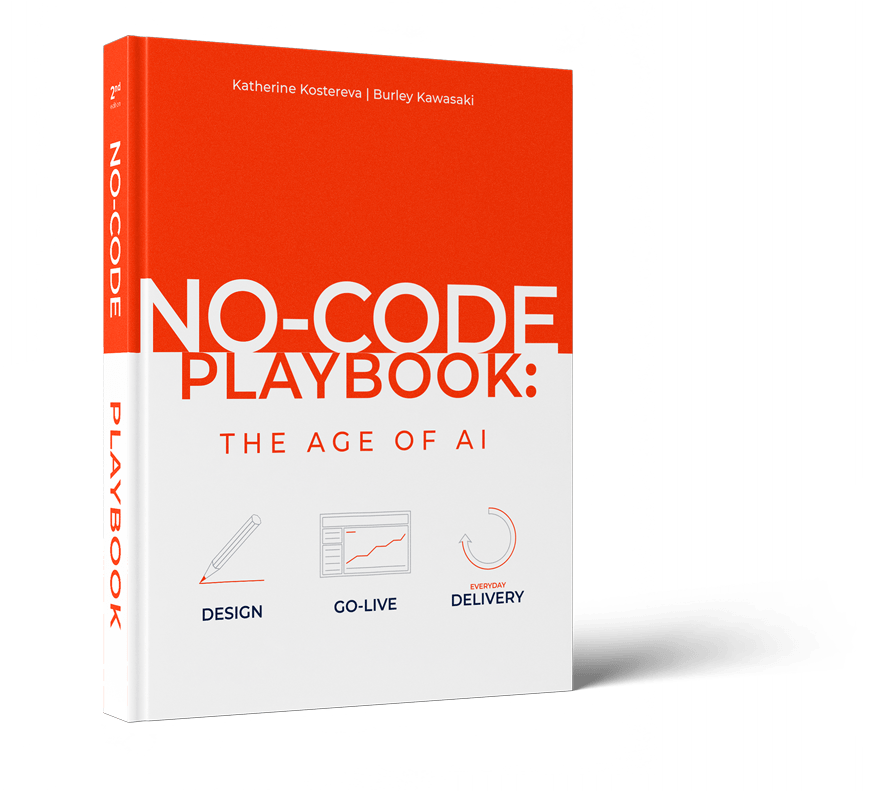
Creatio No-Code Playbook: The Age of AI

Become an AI expert!
Explore more materials

Meet with AI practitioners