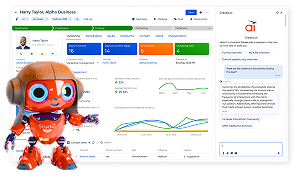
What is CRM?

Explore what CRM is, how it works, and how it helps strengthen customer relationships

For those unfamiliar with the concept of CRM, or wondering why it holds such significance, this is the ideal place to start. Today’s CRM systems play a vital role across organisations of all sizes, enabling teams to stay connected with customers, streamline processes, and make data-driven decisions that support sustainable growth

This guide offers a comprehensive overview of CRM: what it is, how it functions, and why it has become an essential asset for modern business.

Essential insights

  • CRM is a vital tool for businesses of all sizes, helping to consolidate data and workflows, support growth through insights and collaboration, and streamline complex processes with scalable automation.
  • CRM systems are widely used by sales, marketing, service, operations, and management teams to strengthen customer relationships, enhance operational efficiency, and improve decision-making.
  • Core benefits include increased sales, improved customer retention, centralised data, and reduced operational expenses.
  • Modern CRM platforms combine essential functionality with AI and autonomous CRM agents, enabling businesses to work more efficiently and grow more effectively.
  • More organisations are embracing the new generation of CRM, with agentic AI platforms such as Creatio enhancing productivity and delivering more intelligent customer experiences.

An introduction to CRM

CRM, short for Customer Relationship Management, refers to a system that helps businesses manage, organise, and automate interactions with customers throughout the entire lifecycle. The primary aim of a CRM system is to streamline operations, improve efficiency, and foster stronger relationships between a business and its customers, ultimately driving revenue and business growth.

At its core, a CRM platform serves as a central hub for customer and company data. It brings together information from across departments, enabling teams in sales, marketing, customer service, and beyond to make more informed decisions and deliver consistent, high-quality customer experiences.

Which business benefit from CRM software?

Whether a small business, a rapidly expanding mid-sized company, or a large enterprise, a CRM system provides the foundation for driving growth by enhancing sales, service, marketing, and operational efficiency at scale.

Small businesses

For small businesses, CRM software is invaluable for consolidating customer information, launching targeted B2C campaigns, establishing service frameworks, and identifying new opportunities as the business develops.

Midsize organisations

Midsize companies turn to CRM software to gain data-driven insights, uncover cross-sell and up-sell opportunities, enhance collaboration between teams, and manage complex processes across departments. By streamlining operations and improving visibility, CRM systems enable businesses to drive revenue and scale effectively as they move towards enterprise-level growth.

Enterprises

Large enterprises depend on CRM systems to bring together vast volumes of customer and operational data, remove data silos across international branches, integrate numerous industry-specific systems, and automate workflows within a single, robust platform used by every business unit.

What makes CRM so vital for business success?

Three fundamental pillars make CRM indispensable for businesses of all sizes:

Unified customer data

One of the most valuable functions of CRM software is the ability to bring all customer information together within a single platform. This creates a comprehensive, 360-degree view of each individual, encompassing contact details, engagement history, preferences, and even predictive insights. With this clarity, sales, marketing, customer service, and other teams are better equipped to understand client needs, deliver highly personalised experiences, and refine their approach to achieve stronger outcomes.

Alignment on business objectives and execution

A CRM system fosters alignment across departments by providing a single, reliable source of truth. With real-time access to customer data and context, teams across the organisations can collaborate more effectively, share insights, and coordinate actions to deliver consistent, high-quality customer experiences at every stage of the journey.

AI-powered business opportunities

AI-native functionality within modern CRM platforms is transforming how businesses operate and engage with their customers and prospects. Modern systems harness AI to score leads, generate personalised content and recommendations, and automate key processes such as audience segmentation, lead nurturing, and case routing.

A new era AI-powered CRM such as Creatio takes things a step further by introducing autonomous AI agents capable of preparing meeting briefs, drafting proposals, generating emails and marketing content, and even designing campaigns with minimal human intervention. These advanced capabilities empower organisations to operate more intelligently, scale with ease, and deliver highly personalised customer experiences at scale.

How does a CRM system work?

A CRM system functions by collecting customer data from a range of touchpoints, including email, phone, social media, websites, and more, and consolidating it into a centralised database. This unified platform provides teams with a current, comprehensive view of each customer, enabling them to develop consistent strategies, nurture prospects more effectively, and strengthen existing relationships to drive revenue growth.

From that point onwards, a CRM platform supports a wide range of day-to-day operations, from lead management and sales pipeline tracking to automating routine tasks such as follow-ups and marketing campaigns, as well as managing service enquiries. Modern CRM systems go even, incorporating AI capabilities that analyse customer behaviour, anticipate needs, suggest cross-sell and up-sell opportunities, and deploy autonomous CRM agents to manage routine tasks. This results in more intelligent collaboration and the delivery of highly personalised customer experiences.

Organisations that implement a CRM system often see measurable improvements across a range of performance indicators:

up to 60%
growth in sales
BSNsports case study
$1.4M YOY
increase in annual revenue
Ent Credit Union case study
61%
faster lead response times
Nucleus research
Over 90%
of inquiries resolved at first contact
Continental Farmers Group case study

Advantages of using CRM

With a broad suite of features that centralise data and support integration with external connectors and services, CRM platforms offer significant advantages to business, including:

1. Enhanced customer experience and loyalty

By consolidating customer and prospect information within a single platform, CRM systems equip teams with a complete view of interactions, preferences, and communication history across all channels. These insights enable businesses to deliver consistent, personalised engagement and targeted offers that genuinely resonate with customers. For example, by examining purchase patterns and behavioural data within the CRM, businesses can design effective loyalty programmes that boost retention and reduce churn. The outcome is stronger more meaningful relationships, greater customer satisfaction, and improved long-term loyalty, all of which support sustainable business growth.

2. Increased sales and revenue

A centralised CRM platform enables sales managers and marketing teams to efficiently capture, qualify and nurture leads, converting them into valuable opportunities and closed deals. Routine tasks throughout the sales funnel can be automated, improving consistency and freeing up time for more strategic activities. Built-in AI-powered analytics and predictive scoring help identify high-value prospects, directly enhancing win rates, as seen with Novaturas, which achieved a 45% improvement in conversion rates after adopting Creatio CRM.

AAI-native CRM systems go even further by delving into complex data sets to uncover cross-selling and up-selling opportunities, generate targeted content, from emails and landing page content to sales quotes and customer service responses, and deliver real-time pipeline insights that improve forecasting and deal prioritisation. Purpose-built CRM AI agents can also take on everyday tasks, supporting sales teams in working more efficiently, driving sustained revenue growth.

3. Greater productivity and operational efficiency

Modern CRM platforms are designed to streamline day-to-day operations by automating time-consuming tasks such as data entry, call logging, and follow-up emails. By reducing administrative work, teams can concentrate on delivering excellent customer service and closing more deals.

With AI-enhanced functionality, modern CRM systems help maintain consistency and efficiency throughout the entire customer lifecycle — from initial engagement to after-sale support. For example, Research by Nucleus found that sales teams using Creatio CRM experienced a 17% reduction in manual data entry when compared with those using older, less agile systems, a clear indicator of how innovative CRM contribute to greater productivity and smoother workflows.

4. Smarter, data-led business decisions

A CRM system turns raw customer data into meaningful, actionable insights through real-time dashboards, reports, and forecasting tools. By monitoring key performance metrics such as sales performance, campaign effectiveness, and customer behaviour, teams can improve the accuracy of forecasts and streamline strategic planning. For example, marketing teams can identify high-performing channels to better allocate budget, while sales leaders can identify blockages in the pipeline and assign the most promising opportunities to the appropriate sales representative. With clear visibility across the business, decision-makers are equipped to refine their approach, direct resources more efficiency, and deliver better-informed, longer-term outcomes.

5. Cost efficiency

Over the long term, a CRM platform enables organisations to reduce operational expenses and improve efficiency by automating workflows and simplifying complex processes. For example, businesses that implemented Creatio’s no-code, agentic CRM saw an average 37% reduction in total cost of ownership, according to Nucleus Research. Modern CRM systems also offer a unified interface that brings together core products on a single platform, helping to reduce costs associated with software licensing, integration, customisation, and ongoing support.

Core features to look for in a CRM system

A customer relationship management system should provide a comprehensive suite of tools to manage customer interactions, streamline workflows, and deliver meaningful insights. Below are the most essential features that enable organisations to strengthen customer loyalty and drive sustainable business growth:

Contact and account management

Offers a centralised system that provides a comprehensive, 360-degree view of every customer. It ensures that all teams have access to accurate, real-time information, including interaction history, communication preferences, purchase records, and essential account details.

Lead and opportunity management

Facilitates the capture, qualification, and tracking of leads throughout the entire sales cycle. This enables teams to identify and prioritise high-potential opportunities, ultimately improving conversion rates.

Sales automation

Enhances the sales process by automating key activities such as lead nurturing, follow-ups, deal updates, forecasting, goal-setting, analytics, and reporting. These capabilities enable sales representatives to focus on high-value interactions, improve productivity, and close deals more efficiently.

Marketing automation

Equips marketing teams with the tools needed to create, launch, analyse, and optimise multichannel marketing campaigns at scale. Features such as audience segmentation, tailored messaging, and digital advert management help increase engagement and deliver stronger return on marketing investment.

Customer service and support

Offers functionality for managing support tickets, tracking cases, and maintaining seamless communication across channels. This ensures quicker issue resolution and a more consistent, high-quality customer experience.

AI capabilities

enrich CRM functionality with intelligent tools designed to improve forecast accuracy, increase conversion rates, and boost overall productivity. Within sales, AI assist with lead and opportunity scoring, recommends next-best-offers, and automates reporting. In marketing, AI helps shape campaign flows, automate audience segmentation, and generate tailored content. For customer service, AI enables efficient case routing, sentiment analysis, and quicker resolution times. Beyond these, areas AI also supports a variety of tasks, such as content localization, activity summaries, meeting preparation, and task automation, empowering businesses to work more intelligently across all key functions.

CRM AI agents

A defining feature of the new era of CRM systems, designed to augment human teams by autonomously performing routine tasks and supporting operational scalability. These AI-native CRM agents can carry out account research, generate quotes and proposals, prepare meeting summaries, produce personalised marketing content and emails, assist service representative with case resolution, manage knowledge bases, and much more.

Workflow automation

Simplifies business processes across departments, providing a suite of CRM tools to support project management, corporate operations, finance and accounting, as well as risk and compliance functions.

Reporting and analytics

Delivers interactive, customisable dashboards and reports, offering clear, data-driven insights to support informed decision-making at both executive and department levels.

Document management

Enables teams to monitor document status and version history, generate invoices and contracts, and automatically create templates using data within the CRM system.

Integration capabilities

Facilitates smooth integration with essential tools such as calendars, payment gateways, telephony, messaging, and email services. This ensures a unified source of truth across operations and helps eliminate silos.

Who benefits from a CRM solution? A role-by-role overview

CRM systems offer value across a variety of business functions, helping teams to remain coordinated, efficient, and focused on delivering exceptional customer experiences. Below is a breakdown of how different roles can leverage CRM to foster growth and strengthen client relationships.

Sales teams

For sales professionals, a CRM software streamlines the entire sales process, from lead generating to deal closure. It provides full visibility into customer interactions, helping teams manage complex sales cycles with greater efficiency. With a 360-degree view of each customer, representatives can engage more strategically, shorten the sales cycle, and consistently drive revenue performance.

Core sales operations supported by CRM include:

  • Managing and nurturing sales leads at every stage of the pipeline
  • Tracking opportunities and producing accurate revenue forecasts
  • Building a comprehensive, real-time customer profile with interaction history
  • Maximising sales productivity and high-value opportunities
  • Enhancing core sales processes, such as opportunity scoring, predictive analytics, and tailored recommendations, through AI-powered CRM tools
  • Automating routine tasks and workflows, including follow-ups, meeting scheduling, or quote generation, with the support of Sales AI Agents
25%
increase in sales team efficiency
Novaturas case study
35%
increase in lead volume
Purplebricks case study

Marketing teams

Marketing experts rely on CRM systems to design and deliver targeted campaigns, automate lead capturing and nurturing, and manage content distribution across email, digital advertising, and social media channels. For example, CRM tools can measure email performance through open and click-through rates, support event budgeting and registration, and facilitate post-event engagement activities. With complete customer profiles and integrated marketing automation, CRM platforms enable marketers to provide highly personalised outreach and continually refine the campaigns for stronger, more consistent results.

Core marketing operations supported by CRM include:

  • Planning and delivering multichannel marketing campaigns
  • Automating lead capture, scoring, and nurturing workflows
  • Segmenting audiences using detailed firmographic and demographic data
  • Creating and managing landing pages to support lead generation and campaign activity
  • Monitoring campaign performance through analytics and ROI dashboards
  • Using AI to refine customer segmentation, generate personalised recommendations, and tailor content
  • Enhancing targeting and content with specialised Marketing AI Agents
  • Managing events from start to finish, including budgeting, registration, and post-event engagement
50%
increase in lead conversions
Purplebricks case study
25%
reduction in time spent by customers in the sales funnel
Novaturas case study

Customer service teams

Customer service teams greatly benefit from CRM solutions when it comes to managing customer enquiries and support requests across multiple channels. A unified customer relationship management platform allows agents to resolve issues more efficiently, maintain a consistent record of interactions, and provide high-quality support that strengthens customer satisfaction and loyalty.

Core customer service activities supported by CRM include:

  • Managing and prioritising support requests across email, phone calls, chat, and social channels
  • Maintaining a complete record of customer interactions
  • Automating case allocation and escalation processes to ensure timely resolution
  • Streamlining workflows to improve first-response and resolution times
  • Using analytics to monitor service performance and customer satisfaction metrics
  • Harnessing AI to support intelligent ticket routing, understand customer preferences, and conduct sentiment analysis
  • Equipping service teams with AI Agents to automate case handling and retrieve relevant information quickly
  • Managing and updating knowledge bases to ensure consistent, accurate information is available across the organisation
300%
increase in online inquiries
Pittsburgh CHR case study
18.75%
increase conversion rate
Howdens case study

Operations teams

Operations teams use CRM to keep business processes scalable, aligned, and efficient across all departments. With a unified platform, they can ensure smooth collaboration between sales, marketing, service, and back-office functions while keeping costs and errors under control.

Common operations supported by CRM include:

  • Coordinating cross-departmental workflows to ensure seamless handovers between teams
  • Standardising routine processes, such as approvals, order management, and invoicing, to reduce errors and improve operational efficiency
  • Monitoring key performance indicators, including SLA compliance, order fulfilment, and process effectiveness, via real-time dashboards
  • Enhancing workforce and resource planning through AI-driven recommendations
  • Designing and deploying AI Agents to automate task assignment, generate activity summaries, and assist with meeting preparation
70%
faster implementation
Nucleus research
17%
reduction in manual data entry
Nucleus research

Business management (all levels)

Business leaders at all levels rely on CRM systems to gain real-time visibility into performance and access the insights required to refine strategy and support sustainable growth. By bringing together up-to-date data from across departments, CRM systems enable decision-makers to allocate resources more effectively, identify opportunities and risks early, and ensure that teams remain aligned with business objectives.

Popular management tasks supported by CRM include:

  • Gaining a comprehensive view of business performance across the organisation, departments, and team members
  • Optimising the return on marketing investment by closely monitoring campaign outcomes and effectiveness
  • Forecasting growth more accurately through AI-powered predictive analytics
  • Identifying areas for improvement using actionable, data-led insights
  • Adjusting strategies swiftly in response to shifting market dynamics and evolving business priorities
127%
rise in processed change requests within the first year
Bank of Georgia case study
32%
shorter time to first contact than the industry average
Namutravel case study

Conclusion

A CRM system is a transformative tool that enables businesses to lead in the markets, streamline operations, foster collaboration, and enhance every stage of the customer journey. Once implemented, it delivers measurable results, from increased sales and improved customer loyalty to smarter decision-making, higher productivity, and significant cost savings.

The future of CRM lies in AI-native platforms, powered by predictive intelligence, role-specific AI agents, and advanced automation that replaces traditional workflows. As demand for agentic technologies continue to grow, Creatio stands at the forefront, offering a no-code AI-powered CRM that empowers organisations to scale efficiently and deliver outstanding customer experiences.

FAQs about CRM

What are the three main types of CRM systems?

The primary types of CRM software are Operational CRM, which automates sales, marketing, and service processes; Analytical CRM, which interprets customer data to provide insights and support informed decision-making; and Collaborative CRM, which enhances communication and coordination across departments to deliver a more cohesive and consistent customer experience.

What is the price of CRM?

The cost of CRM software typically varies depending on several factors, including the number of users, the range of features, the extent of customisation, and the level of support required. Pricing is usually calculated on a per user, per month basis. For example, Creatio CRM starts from approximately £30 per user per month.

What is an AI CRM?

An AI CRM is a customer relationship management system enhanced with artificial intelligence, designed to automate routine tasks, personalise customer engagement, and gain deeper insights from data, enabling businesses to strengthen customer relationships and accelerate growth.

What is an agentic CRM?

An agentic CRM is a new generation of customer relationship management software that incorporates autonomous AI agents capable of carrying out tasks and making decisions with minimal human involvement. These role-specific agents can analyse customer data, identify opportunities or potential risks, and independently perform activities such as lead nurturing, account research, campaign optimisation, or service case routing. By embedding AI agents directly into core workflows, agentic CRMs enable organisations to scale operations more effectively, enhance customer engagement, and support sustainable business growth.

What are the disadvantages of CRM?

Potential drawbacks of CRM systems may include high implementation costs, complex setup processes, challenges with user adoption, and the ongoing need for training and maintenance to ensure the system continues to deliver value effectively.

Where to begin with CRM adoption?

To begin using a CRM, start by clearly defining the objectives and selecting a platform that aligns with the organisation’s requirements. Next, customise it to reflect established workflows, import customer data, and integrate it with the tools already in use. Finally, ensure the team is properly trained and supported to encourage successful adoption from the outset.

How does CRM vary across industries?

CRM systems are tailored to suit the distinct need of different sectors, reflecting the specific ways businesses engage with the customers. Although managing customer data remains a central function, the features, priorities, and implementation strategies can differ considerably depending on the industry.
New Era of CRM
Built on AI. Ready to react.

Ready to explore Creatio CRM further?

Creatio CRM screenshot 1
Creatio CRM screenshot 2
Creatio CRM screenshot 3