According to McKinsey research, AI sales tools have the potential to increase lead generation by more than 50%, reduce costs by up to 60%, and cut call time by up to 70%, contibutin to improvements in sales productivity and operational efficiency. AI agents are also already in use across customer-facing functions: 67% of decision-makers report deploying AI agents, with sales (14%), marketing (13%), and customer service (12%) among the leading areas of adoption.
This article explores the role of AI in sales, its key applications and potential benefits, as well as some og the leading AI tools available. It also provides a practical roadmap for adopting AI across sales processes and examines how the technology can help teams work more efficiently and improve performance.
Key takeaways:
- AI is revolutionising sales efficiency and performance - from lead generation to forecasting, sales AI tools and agents are reshaping how sales teams operate - improving productivity, reducing operational costs, and supporting more effective customer engagement.
- AI agents can act as digital team members, taking on repetitive tasks, analysing data, and providing intelligent recommendations. This allows sales professionals to spend more time building customer relationships and progressing opportunities.
- Businesses are shifting from AI awareness towards broader AI adoption. With the emergence of no-code agentic platforms, organisations can deploy, customise, and scale AI agents more quickly and with less complexity.
- The future of AI for sales is autonomous and conversational. Gartner predicts that by 2027, 95% of seller research workflows will begin with AI, while by 2028, 60% of B2B sales tasks will be executed through AI-powered conversational interfaces.
- Organisations using Creatio Sales report 70% faster implementations, 37% lower total cost of ownership, and 67% faster lead response times compared with legacy CRM systems.
What is AI in Sales?
AI in sales refers to the application of artificial intelligence technologies to enhance, optimise, and automate various components of the sales process, enabling professionals to operate work with heightened efficiency and secure more deals. Through the utilisations of machine learning, natural language processing, and predictive analytics, AI empowers sales teams to streamline workflows, eliminate monotonous manual tasks, acquire profound customer insights, and drive significant revenue growth.
AI in sales spans a multitude of sophisticated applications, one of the most prominent being its integration within Customer Relationship Management (CRM) systems. By harnessing AI algorithms, these systems analyse customer data to predict behaviors, preferences, and potential outcomes. For instance, a sales manager might employ AI to scrutinise sales calls, identifying which leads are most likely to convert into paying customers based on historical interactions, demographic details, and purchasing tendencies. This targeted insight enables sales teams to concentrate on high-value prospects, thereby enhancing conversion rates and operational efficiency.
The State of AI Agents & No-Code
Learn how 560+ leaders across the world use AI and no-code to drive innovation today
Categories of AI in Sales
Outlined below are the principal categories of AI reshaping sales functions:
- Machine Learning (ML) - enables AI to continuously refine its performance by learning from data, improving decision-making capabilities over time. It facilitates automation of routine tasks, personalises recommendations, and optimises sales strategies.
- Natural Language Processing (NLP) – allows AI to comprehend and process human language, extracting insights from emails, calls, and customer interactions to enhance sales engagement.
- Conversational AI - uses natural language processing (NLP) and machine learning to support natural, human-like interactions with customers through chatbots and other conversational interfaces. Conversational AI receives and analyses customer input and provides relevant responses.
- Generative AI - employs deep learning models to create textual, visual, and other forms of content. It is used to generate bespoke sales materials, including proposals and personalised emails.
- Predictive AI - leverages machine learning to examine historical sales data, recognise patterns, and identify emerging trends to provide accurate sales forecasts.
- Agentic AI - can make decisions and take actions with minimal human intervention. By analysing real-time data, agentic AI executes and optimises sales workflows, supporting greater automation across sales processes.
- Computer Vision – harnesses AI to interpret and analyse visual data from images and videos.
By integrating these AI technologies, sales organisations can enhance their sales processes and secure a considerable competitive edge.
The State of AI Agents & No-Code: UK Edition
Learn how 180+ UK business leaders use
AI agents and no-code to drive innovation today
How AI can be used in sales
The growing use of AI in sales is creating new opportunities to improve efficiency and customer engagement. According to a recent Creatio report, The State of AI Agents and No-Code, 84% of business leaders agree that adopting AI agents can improve productivity while also creating development opportunities for existing employees and supporting the emergence of new roles within organisations.
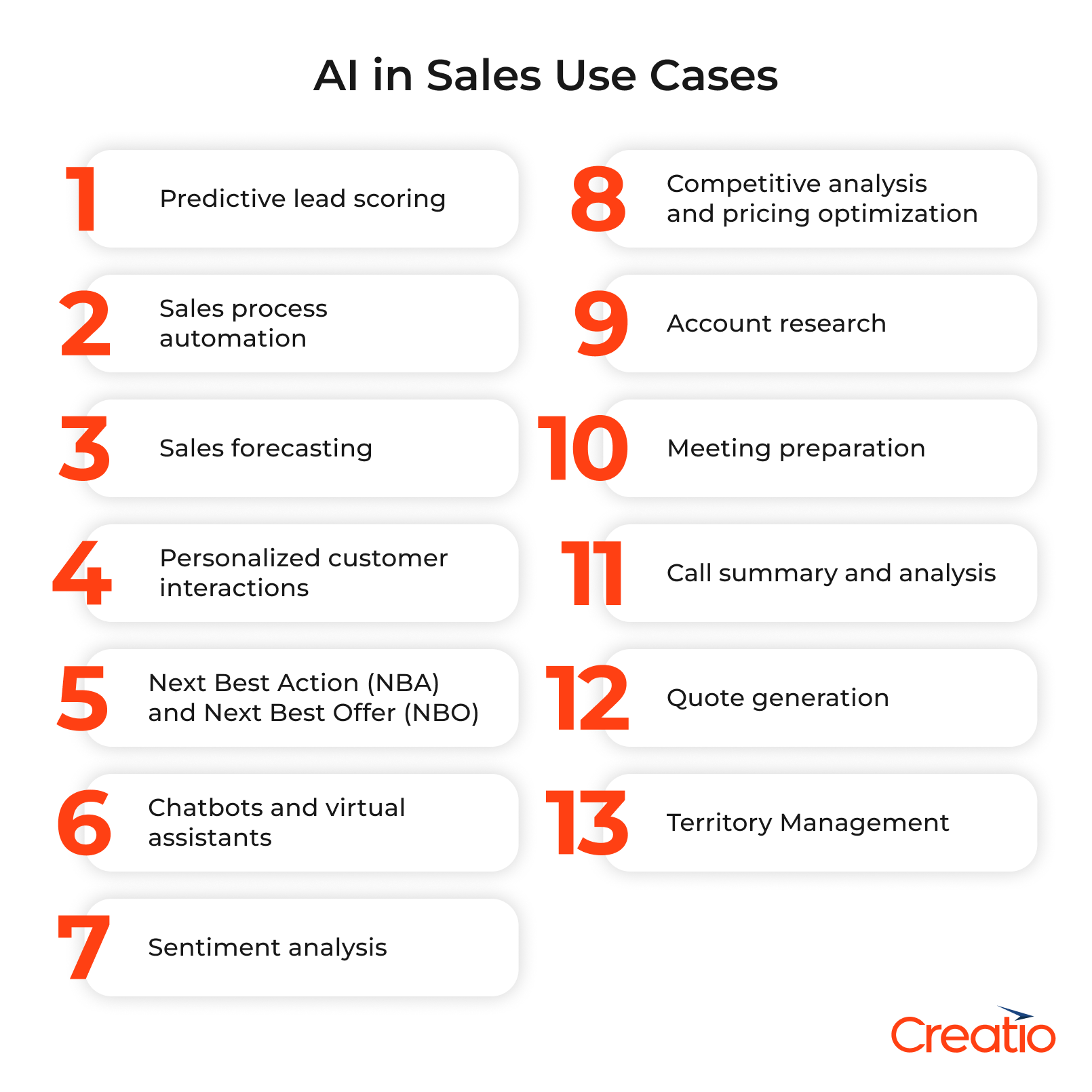
Here are several key use cases demonstrating how AI can be utilised in sales:
Predictive lead scoring
One of the applications of AI in sales is predictive lead scoring, which ranks prospects according to their potenti value and likelihood of becoming customers. Traditional lead-scoring methods often rely on manual processes and individual judgement, making them time-consuming and leaving greater scope for error.
AI-powered sales tools take a different approach, using machine learning algorithms to analyse large volumes of data, including past interactions, demographic information, and website behaviour. Autonomous AI agents can automatically assess leads and adjust scoring criteria in real time, helping to provide a more accurate indication of their potential value.
According to Gartner, sales professionals who use AI effectively for prospecting are 3.7 times more likely to meet sales targets.
By analysing available data, AI can help identify leads with a higher likelihood of conversion. This allows sales teams to focus higher-potential prospects, helping to improve conversion rates and overall sales performance.
According to McKinsey, sales professionals using AI reported a 50% increase in leads and appointments, contributing to improved business performance over time.
Lead and opportunity management
AI sales tools help sales teams manage and track leads and opportunities more effectively, reducing the risk of potential opportunities being overlooked. AI sales agents can monitor progress through the sales pipeline and provide real-time insights and alerts when key activities or milestones require attention. They can also collect and summarise relevant lead information and interactions, making important details easier to access. AI agents can further support saels pipeline management by optimising activities and automating lead distribution and follow-up based on AI-driven insights and recommendations.
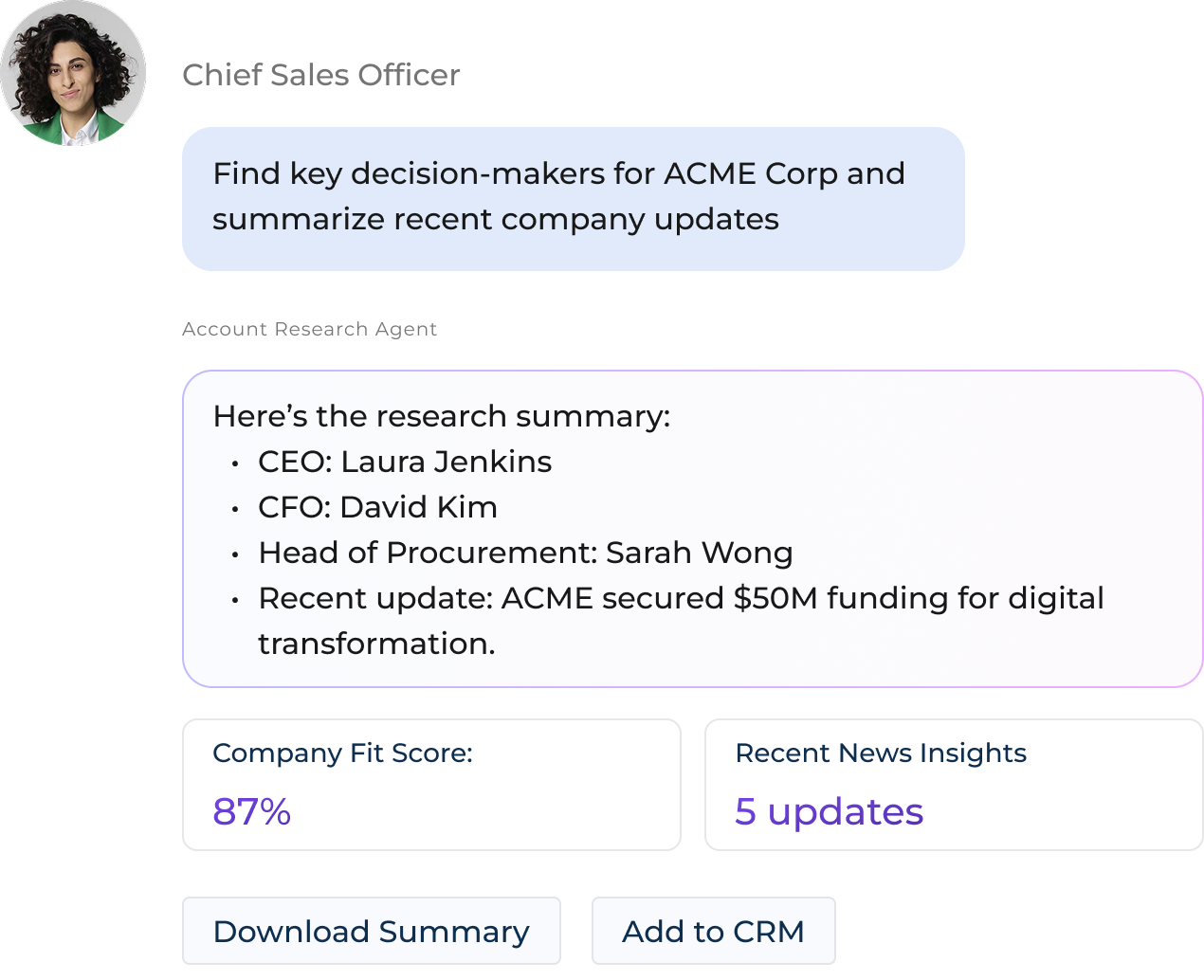
Account research
AI for sales can support account research by gathering, analysing, and summarising relevant information about prospects and organisations. Rather than spending hours reviewing websites, LinkedIn profiles, and recent news, sales teams can use AI agents to bring together hte information needed for account preparation.
Access to up-to-date information can help sales professionals prepare for conversations and tailor their approach to the specific needs and priorities of each account.
Sales outreach
AI for sales supports sales teams identify and engage potential customers through more targeted and personalised outreach. By analysing large volumes of data, including firmographic information, behavioural signals, and previous interactions, AI can identuify prospects that closely match the ideal customer profile and highlight those most relevant for future engagement.
AI agents can also support the outreach process by generating personalised messages based on available prospect data and delivering them through appropriate channels at relevant points in the customer journey.
AI tools can also schedule initial meetings and automatically send follow-up emails, helping to maintain engagement throughout the sales process. By incorporating AI into the outreach activities, sales teams can deliver more consistent and personalised communication across a larger number of prospects.
Sales process automation
AI-driven workflow automation streamlines numerous repetitive sales tasks, enhancing efficiency while minimising the risk of human error. This encompasses activities such as data entry, follow-up emails, meeting scheduling, and report generation.
With advancements in AI technology, businesses can now deploy agentic AI to autonomously manage these tasks with minimal human intervention. AI agents leverage data analysis and real-time inputs to execute specific workflows, further optimising sales processes. For instance, an AI agent can automatically prioritise leads and dispatch follow-up emails tailored to each lead’s specific requirements, eliminating the need for manual decision-making by sales representatives. Gartner forecasts that by 2030, 80% of sales leaders will regard AI integration within sales workflows as a pivotal factor in achieving a competitive edge.
By automating these routine tasks, sales AI tools help sales reps spend more time selling and less time on administrative work.
BCG in its AI Radar - global research involving 1,803 C-level executives on AI in 2025 - revealed that 67% of enterprises consider autonomous agents as a fundamental component of their AI transformation strategy.
Personalised product recommendations
Leveraging insights drawn from client data, purchase history, shopping behaviours, online interactions, and prior engagements with the company, AI-driven sales technology delivers relevant product recommendations. By utilising machine learning algorithms, sales AI continuously learns from customer interactions and refines its recommendations over time to make the most accurate suggestions at any given time.
For instance, if a customer has exhibited interest in a particular product category or has recently made a purchase, AI can propose complementary products or upgraded alternatives aligned with their preferences and buying patterns. This level of personalisation enhances the overall shopping experience, fostering strong customer loyalty and driving repeat business.
Meeting preparation
Rather than gathering customer information, previous interactions, and deal history manually, sales teams can use AI agents to prepare a detailed briefing ahead of each call or meeting. AI agents can analyse CRM data, communication records, and behavioral insights to provide a summary of meeting participants, open opportunities, and any recent pain issues or concerns.
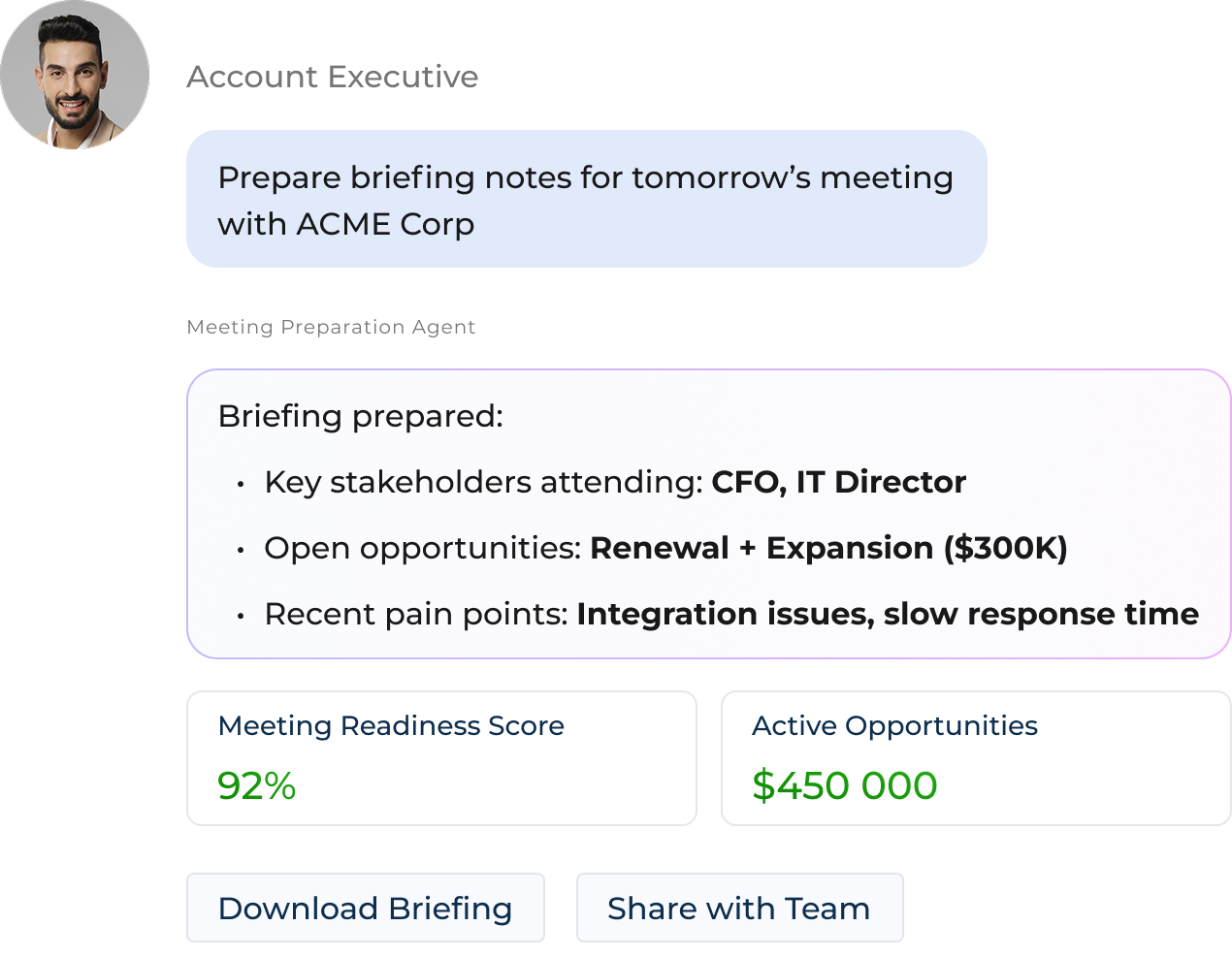
For example, ahead of a client meeting, an AI agent can summarise recent emails, identify changes in engagement and recommen relevan offers based on previous purchases or industry trends. This can help sales representatives prepare more efficienlty and approach each conversation with the relevant context.
Call summary and analysis
Sales professionals can focus more fully on conversations with prospective customers tather than dividing their attention between the discussion and taking notes. AI-powered sales tools can transcribe calls, summarise key points and automatically update the CRM records and sales pipeline.

Drawing insights from conversations, AI can generate task lists and recommend the next steps to facilitate a successful deal progression. It can also analyse emails, in-app messages, and follow-up interactions, updating key records in real time to provide sales teams with the most accurate and up-to-date information.
Moreover, by assessing sales calls, AI can identify common customer questions, concerns, needs, and objections. Based on this information, AI sales tools can provide useful insights to support improvements across sales proposals, future conversations, presentations, products, knowledge resources.
Quote generation
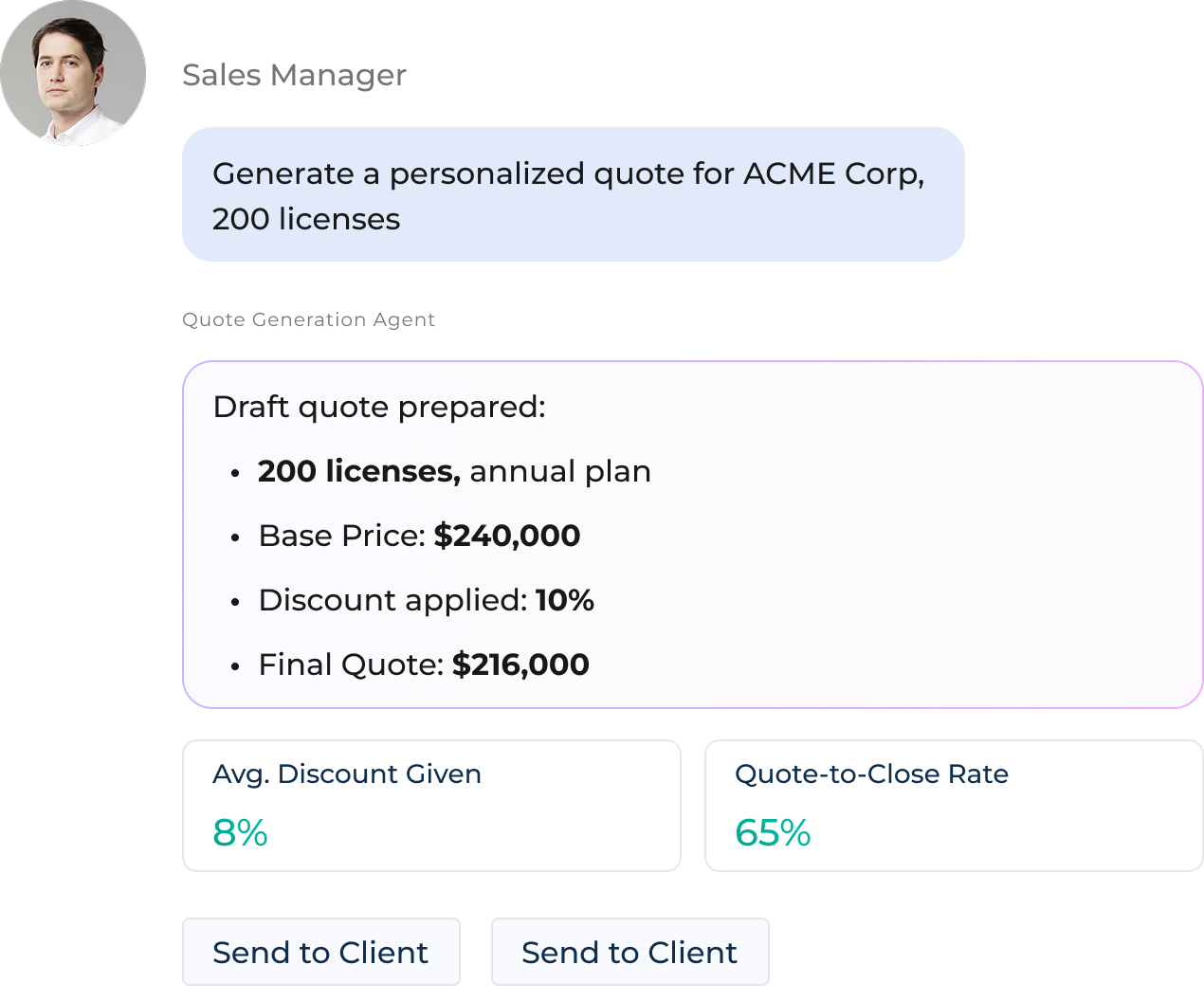
Prepating accurate and timely quotes is an important but often time-consuming part of the sales process. AI agents can streamline this process by generating personalised quotes based on customer requirements, pricing rules, and historical deal data. When integrated with a CRM system, they can draw on current information about discounts, product availability, and approval requirements to support more accurate proposals.
For instance, when a prospect requests a quote, an AI agent can instantly pull relevant data, calculate pricing, and produce a polished proposal ready for review or delivery. This not only reduces manual errors and approval delays but also enables sales teams to respond more quickly.
Personalised content creation
Generative AI for sales empowers teams to create personalised sales content at scale. Leveraging advanced AI capabilities, businesses can swiftly produce relevant materials to engage customers and prospects throughout the entire sales cycle. AI-generated content includes emails, sales proposals, knowledge articles, sales playbooks, case studies, presentations, and more. One of the key advantages of AI-driven content creation is its adaptability –messages can be tailored to specific languages, regions, and industries. This enables global businesses to deliver personalised content, regardless of geographical scope or customer base.

For instance, AI can craft tailored emails for potential clients who have expressed interest in the company’s products or services. AI-driven sales tools analyse customer data, adapting the standard outreach message to address specific pain points, industry trends, and business challenges. These messages can then be automatically translated, localised for different markets, and distributed to similar prospects worldwide.
By automating the creation of personalised content, sales teams can significantly enhance customer engagement and improve conversion rates.
According to Gartner, by 2026, B2B sales organisations leveraging generative AI for sales will reduce the time spent on prospecting and customer-meeting preparation by over 50%.
Data analysis and sales intelligence
AI-driven sales tools equip sales teams with critical insights, facilitating data-driven decision-making and enhancing overall performance. These advanced systems process vast volumes of data at a speed and scale far beyond human capability, which is crucial in maintaining business agility.
By analysing customer behaviour, market trends, economic shifts, and historical sales data, AI sales tools uncover emerging opportunities and potential risks. Businesses can leverage these actionable insights to refine their sales strategies, optimise operations, and introduce new products or services.
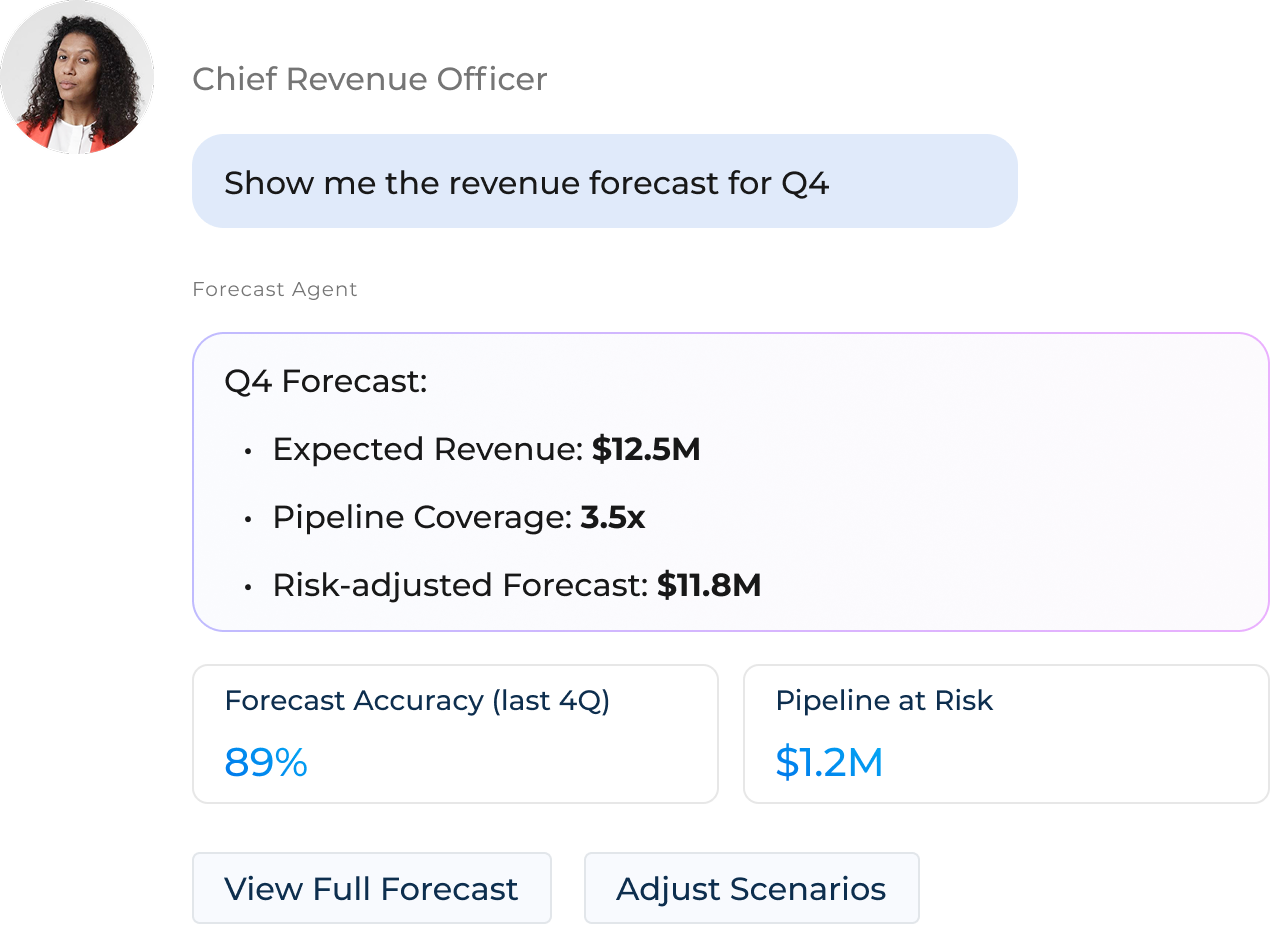
Sales forecasting
The integration of AI into sales forecasting introduces an unparalleled level of accuracy and sophistication. By analysing historical data, examining market trends, and accounting for external factors such as seasonal variations, AI offers a highly effective approach to predicting future sales outcomes.
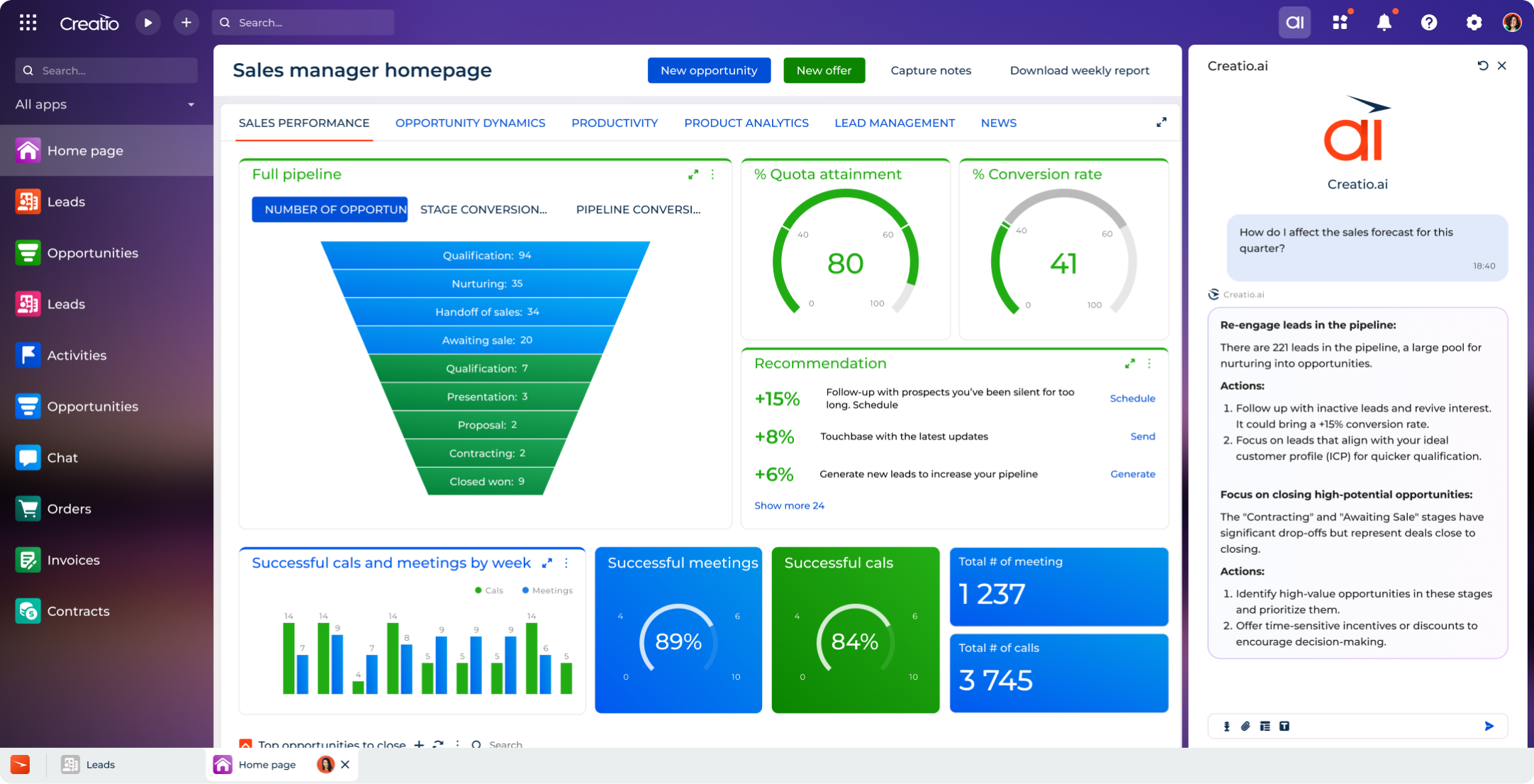
These AI-formed insights empower businesses to set realistic sales targets, optimise inventory levels, and make well-informed strategic decisions. Furthermore, AI-powered forecasting systems possess the ability to adapt dynamically to shifting market conditions, ensuring that businesses remain agile and responsive within an increasingly volatile commercial landscape.
Personalised customer interactions
AI enables a remarkable degree of personalisation within customer interactions, a critical component in fostering robust client relationships and driving revenue growth. Through the meticulous analysis of customer data, AI constructs comprehensive profiles of individual customers, encompassing their preferences and purchase history.
Instead of relying solely on standard templates, AI can generate personalised emails, proposals, and follow-up communications based on a customer’s interests and stage in the buying process. It can adapt tone, timing, and messaging using available customer insights, helping to make communications more relevant to each interaction.
For example, an AI agent can draft a tailored follow-up email after a demo, highlight the benefits most relevant to a customer’s pain points, or suggest appropriate offers based on recent engagement.
Next Best Action (NBA) and Next Best Offer (NBO)
AI's capacity to process vast datasets and predict outcomes rendersit an indispensable tool for informing strategies as the next best action (NBA) and next best offer (NBO). These AI-powered methodologies enable businesses to engage their customers with greater efficiency, providing tailored recommendations and timely actions.
AI can determine the most appropriate next step in a customer interaction, providing sales professionals with next-best-action recommendations. These might include sending a follow-up email, arranging a phone call, or offering a relevant discount to optimize customer engagement.
For example, a sales AI agent can connect with Outlook and analyse all emails exchanged with a prospect to assess the current stage of an opportunity and recommend suitable next steps. A natural language interface can make this functionality accessible without the need for additional configuration or coding. Sales professionals can ask the agent, “What is the next step for [prospect name]?” or “What could help move this opportunity from [stage] to [stage]?”, and receive relevan recommendations.
An AI agent can also use purchase history or customer preferences to recommend relevant products or services that may be of interest.
Territory management
For sales leaders, effective territory management involves more than allocating regions; it also requires careful consideration of team capacity and performance. AI agents can provide up-to-date insight into territory performance, workfload distribution and individual performance metrics.
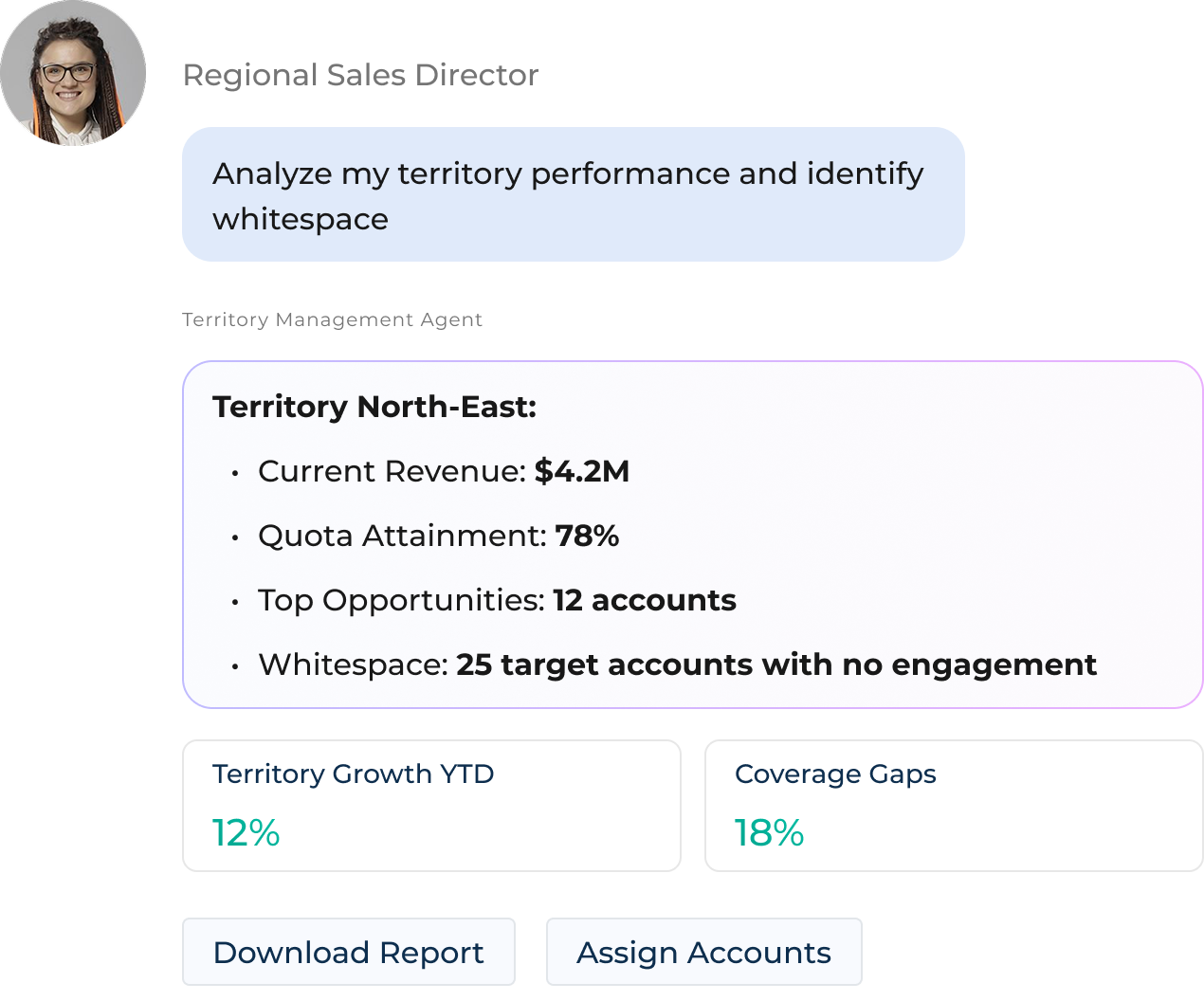
By analysing sales data, market potential, and customer engagement patterns, AI can identify territories that may be over- or under-resourced and recommend appropriate adjustments. These insights can support better coverage, more balanced quotas, and align experience with opportunity.
For example, an AI agent might identify a uneven distribution of sales coverage, highlighting areas where territories could be rebalanced to make better use of availability capacity. This data-led approach can help sales leaders make more timely and informed decisions.
Chatbots and virtual assistants
AI-powered chatbots and virtual assistants are revolutionising the manner in which businesses engage with their customers. These sophisticated tools are capable of managing a vast array of tasks, ranging from addressing frequently asked questions and offering product recommendations, to processing orders and scheduling appointments.
At the heart of this transformation lies Natural Language Processing (NLP), a technology that augments the efficacy of these AI systems. By enabling chatbots to comprehend and interpret human language, NLP ensures that interactions are not only more intuitive but also far more productive. This technology advancement allows chatbots to engage in meaningful conversations, understand customer needs, and provide relevant responses.
Moreover, chatbots operate without interruption, offering 24/7 assistance and ensuring that customers can receive help at any hour of the day. This availability enables businesses to engage with website visitors in real time, facilitating immediate responses to inquiries and driving improvements in lead generation and boosting customer satisfaction.
Sentiment analysis
Comprehending customer sentiment is of paramount importance when crafting effective sales strategies. AI is capable of analysing customer communications – ranging from emails and social media posts to reviews – thereby providing invaluable insights into their attitudes and feelings toward a brand or product.
Sentiment analysis, which relies upon the advanced capabilities of NLP, enables the interpretation of emotional nuances embedded within text. By identifying whether sentiments are positive or negative, AI empowers sales representatives to anticipate and address customer concerns with foresight, ultimately enhancing the customer experience. Moreover, this technology affords the opportunity to customise approaches in a manner that is more attuned to the individual needs of clients.
Competitive analysis and pricing optimisation
AI possesses the capacity to analyze competitors' pricing strategies, market demand, and customer purchasing behavior, thereby facilitating the optimisation of pricing strategies. In doing so, it ensures that products are priced competitively, thereby maximising both sales and profits.
The implementation of Artificial Intelligence in sales offers the distinct advantage of real-time pricing recommendations, which enables businesses to maintain their competitive edge and remain agile in response to shifting market dynamics. For instance, dynamic pricing algorithms continuously monitor prices, offering sales leaders timely suggestions based on market conditions and the activities of competitors.
How to incorporate AI into sales strategy
While AI can offer significant benefits for sales teams, many organisations face challenges when introducting these solutions. According to a recent Creatio report, the most common barriers are data quality and system integration (51%), followed by change management (26%), and unclear return on investment (18%).
Addressing these challenges requires a structured, phased approach that supports effective adoption over the longer term.
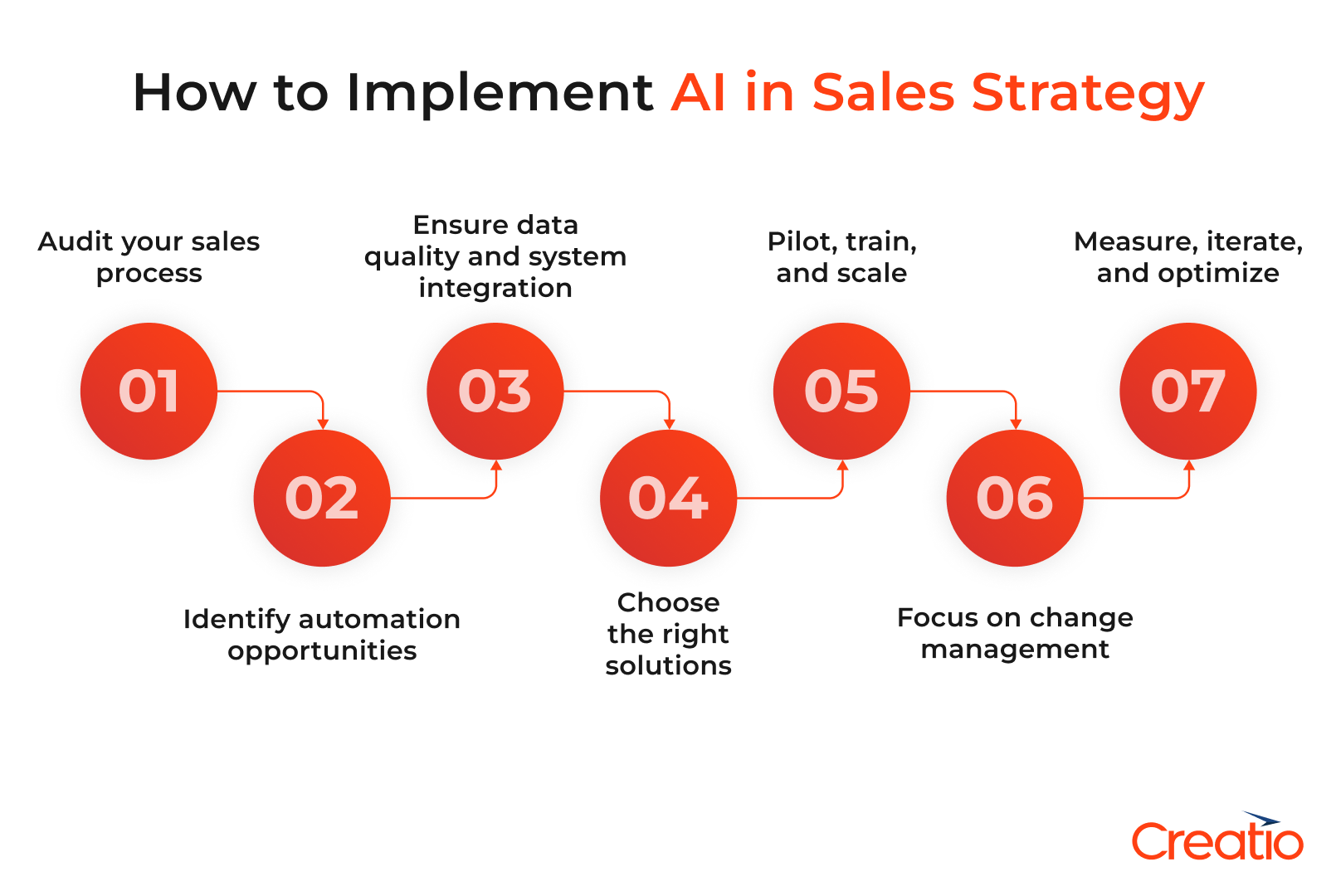
1. Audit sales process
Start by mapping existing sales workflows, from lead generation to deal closure, and identifying inefficiencies, manual handoffs, and data silos.
This provides a clearer view of current challenges and helps identify where AI could have the greatest impact, whether in forecasting, lead qualification, or customer engagement.
2. Identify automation opportunities
Once the sales process has been mapped, the next step is to identify repetitive and time-consuming tasks that could be automated. These might include lead scoring, follow-ups, quote generation, and data entry.
Using AI agents to handle routine activities can give sales teams more time to focus on building customer relationships and closing deals, rather carryin out administrative tasks.
3. Ensure data quality and system integration
AI relies on accurate, well-structured data. CRM and connected systems should be reviewed to identify duplicate records, address gaps, and consolidate customer information.
Effective integration across the technology stack provides AI models with access to consistent and reliable data, helping to improve the accuracy of predictions and insights.
4. Choose the right solutions
Selecting suitable technology is an important part of successful AI adoption. An agentic CRM platform, such as Creatio, can provide integration with existing systems, alongside the flexibility to customise and scale as requirements evolve.
Creatio enables teams to automate workflows, deploy ready-to-use and custom AI agents, and adapt sales processes with less reliance on IT teams.
Discover how Purplebricks leveraged Creatio agentic CRM
to increase lead volume by 35% and boost lead conversions by 50%, with intelligent automation and targeted engagement
5. Pilot, train, and scale
A focused pilot provides a practical starting point for introduction AI into sales process, with use cases such as automated lead scoring or next-best-offer recommendations. Teams should be given the guidance needed to understand and act on AI-generated insights, with performance measured against clearly defined objectives before wider adoption.
Once measurable improvements have been demonstrated, the initiative can be extended to other sales functions and regions. A phased approach can support wider adoption and help build confidence in the technology. Agentic platforms can accelerate the adoption by up to 70%, compared to inefficient, legacy solutions.
6. Focus on change management
Successful AI adoption depends on engagement across the organisation. Clear communication around the objectives, together with ongoing training and support, can help teams understand how AI fits into their work and encourage wider adoption.
Only executive-level vision and commitment can ensure that AI agent initiatives receive adequate funding, cross-functional collaboration, and the long-term strategic focus necessary to realize their full transformational potential rather than being relegated to departmental pilot projects with limited impact. - Creatio The State of AI Agents and No-Code report
Develop a culture of collaboration and innovation in which AI support people rather than replaces them. According to Creatio research, just 11% of business and technology decision-makers expect the adoption of AI agents to result in significant workforce reduction. This suggest that the greater value of AI lies in complementing human expertise and capabilities rather than replacing them.
7. Measure, refine, and optimise
Define clear KPIs from the outset, such as conversion rates, deal velocity, and forecast accuracy. Review performance regularly and use the insights from initial pilots to refine models, optimise processes, and extend successful approaches more widely.
Benefits of AI for Sales
Integrating AI and machine learning within sales operations offers a myriad of advantages, each poised to significantly enhance key sales metrics. A plethora of studies and industry reports consistently highlight the profound impact of AI on sales performance, demonstrating how enterprises can harness its potential to drive both growth and operational efficiency.
Here are some of the most notable benefits that AI affords to sales:
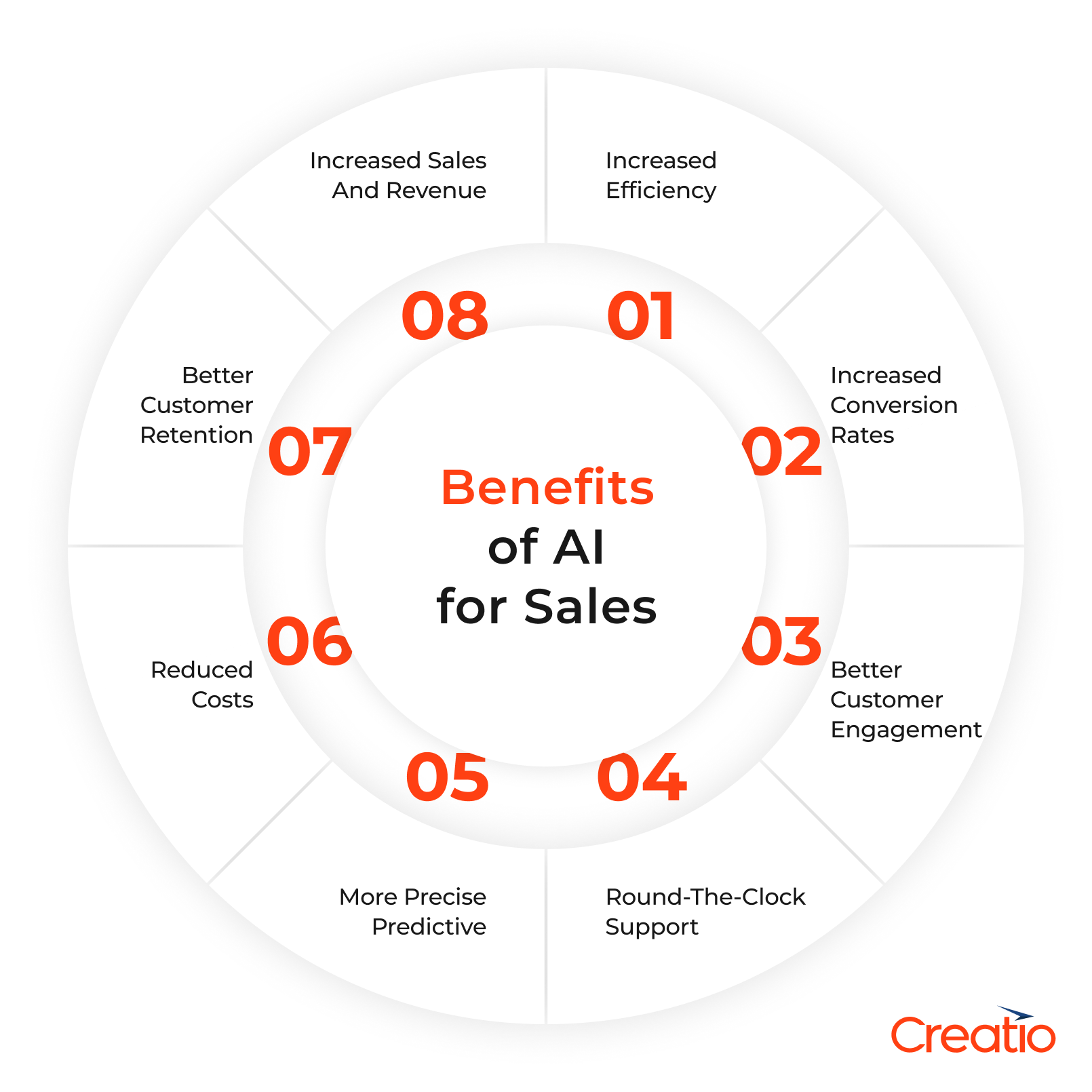
Increased efficiency
AI automates monotonous tasks such as data entry, follow-up communications, and meeting coordination, AI enables sales representatives to redirect their focus toward activities of greater strategic values, such as fostering client relationships and closing deals.
According to Deloitte, 33% of surveyed AI users reported a substantial boost in efficiency and productivity due to the automation of business processes.
Greater efficiency can help organisations scale sales operations without a corresponding increase in staffing or resources. According to Forbes, organisations using AI sales agents have been able to automate up to 90% of prospecting tasks, leading to improvements in productivity and operaitonal efficiency.
Enhanced conversion rates
AI-powered tools assist sales teams in identifying and prioritising the most promising leads. These systems generate personalised materials and suggest the optimal next steps to strengthen engagement with prospective clients. By concentrating their efforts on high-value opportunities, sales professionals leveraging AI can significantly improve their conversion rates.
A study by Harvard Business Review found that organisations implementing AI-driven lead scoring experienced a 51% increase in lead conversion rates.
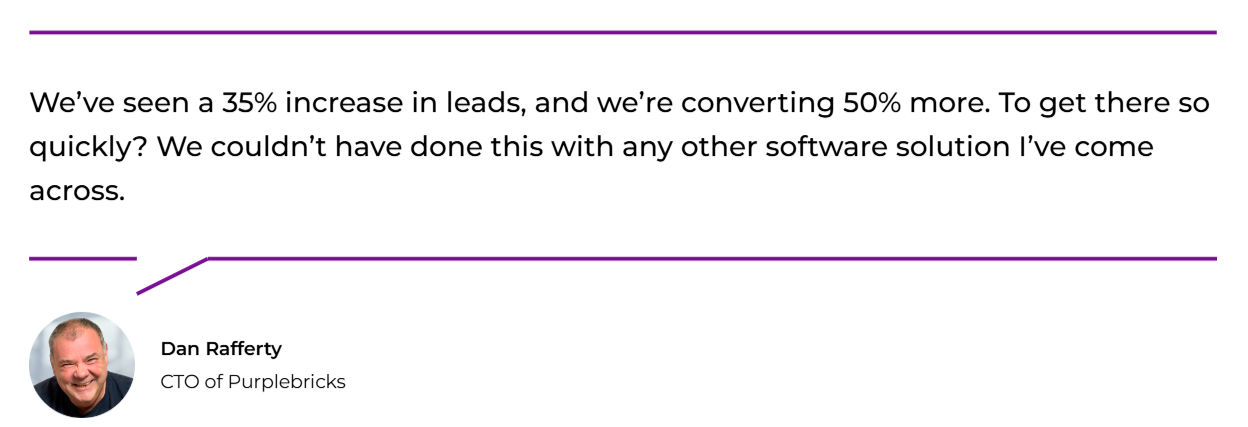
One of Creatio’s clients leveraged Creatio’s AI-native platform to automatically categorise and route thousands of leads each day, while providing real-time visibility across opportunities. This enabled the discovery of multi-step opportunities arising from individual customer requests and contributed to a 50% increase in conversion rates.
Improved customer engagement
According to a McKinsey report, as many as 71% of consumers now expect brands to deliver personalised interactions. Sales AI enables businesses to meet these expectations by rapidly analysing vast volumes of customer data, extracting key insights, and delivering tailored recommendations and communications. This level of personalisation enhances customer engagement and satisfaction, fostering stronger relationships and ultimately driving higher sales.
According to the Nucleus report, organisations using Creatio’s intelligent automation capabilities have reported a 15% increase in customer engagement, supported by more timely and personalised interactions.
Round-the-clock support
AI-powered chatbots and virtual assistants provide customers with 24/7 support, ensuring seamless assistance irrespective of time zones or business hours. These intelligent tools can handle routine queries, schedule meetings, deliver product demonstrations, provide pricing details, and guide customers through the purchasing process – all without human involvement. Organisations that implement such always-available customer support capabilities often experience increased satisfaction and improved retention rates.
Gartner forecasts that by 2025, AI will manage 95% of customer interactions, significantly enhancing responsiveness and overall customer experience.
More accurate predictive forecasting
AI has the capability to analyse extensive volumes of historical sales data and market trends, enabling more precise sales forecasting. It provides real-time insights into projected revenue, sales performance, potential risks, and emerging opportunities, empowering sales leaders to make informed, data-driven decisions. Unlike traditional forecasting methods, AI-driven predictions continuously refine their accuracy by incorporating newly available data. Forrester Research has found that organisations leveraging AI for sales forecasting achieve significantly higher predictive accuracy.
Quicker time-to-sale
AI-powered sales tools enable teams to shorten sales cycles and advance prospects more swiftly through the sales funnel by delivering 24/7 support, personalised interactions, and timely follow-ups. AI can prompt sales professionals to reconnect with prospects, suggest the most effective engagement strategies, and even automate aspects of communication beyond standard business hours.
Additionally, AI-driven tools assist sales representatives during calls and meetings by offering real-time recommendations and essential insights. By combining automation with advanced sales intelligence, AI enhances customer engagement and enables sales teams to close deals more efficiently.
According to Gartner, by 2026, B2B sales organisations using generative AI for sales are expected to reduce the time spent on prospecting and preparing for customer meeting by more than 50%.
Cost reduction
By automating repetitive tasks and streamlining operational processes, AI diminishes the reliance on manual labour, thus reducing overall operational costs. This is particularly advantageous for enterprises seeking to optimise their budgets and resources or expand operations to new markets.
Enhanced customer retention
Enterprises harnessing AI-driven customer insights can improve their retention rates and reduce churn. Sales-focused AI can anticipate customer behavior, flagging those at risk of disengagement and offering actionable recommendations for retaining these valuable clients.
According to Nucleus Research, tailoring outreach to individual customer preferences can improve retention rates by around 20%.
Growth in sales and revenue
By delivering real-time recommendations, refining lead prioritisation, and generating personalised content, sales AI empowers sales teams to convert a higher number of prospects into customers. With AI managing routine tasks, sales representatives can concentrate on high-value activities, resulting in increased deal closures and ultimately driving sales and revenue.
According to McKinsey, organisations investing in AI have reported revenue increases of 13-15% and improvements in sales ROI of 10-20%.
Creatio Sales. Support revenue growth with AI agents
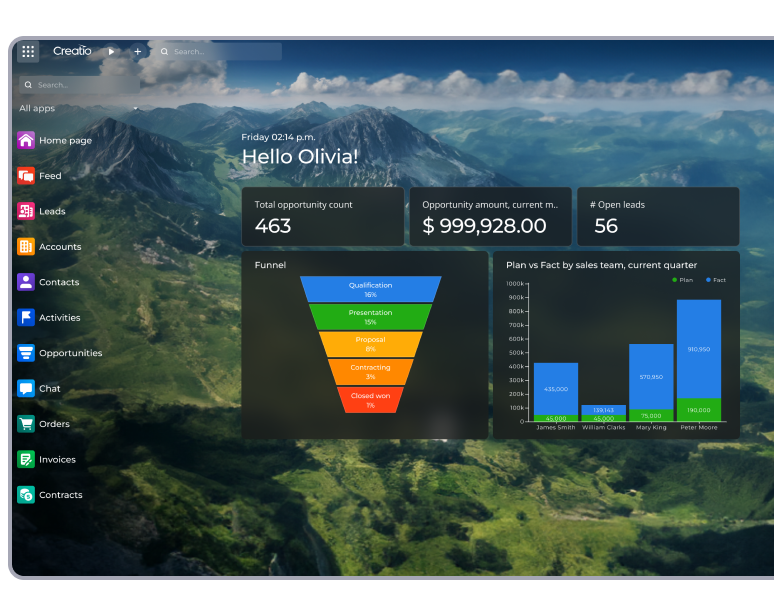
Creatio Sales is a new era sales platform designed to support the end-to-end sales cycle with no-code and AI capabilities at its core. It helps organisations manage sales processes from lead generation through to deal completion, while supporting greater efficiency and more informed decision-making. The platform combines CRM applications with ready-to-use AI agents that support sales teams with day-to-day tasks, helping to improve productivity and make better use of real-time.
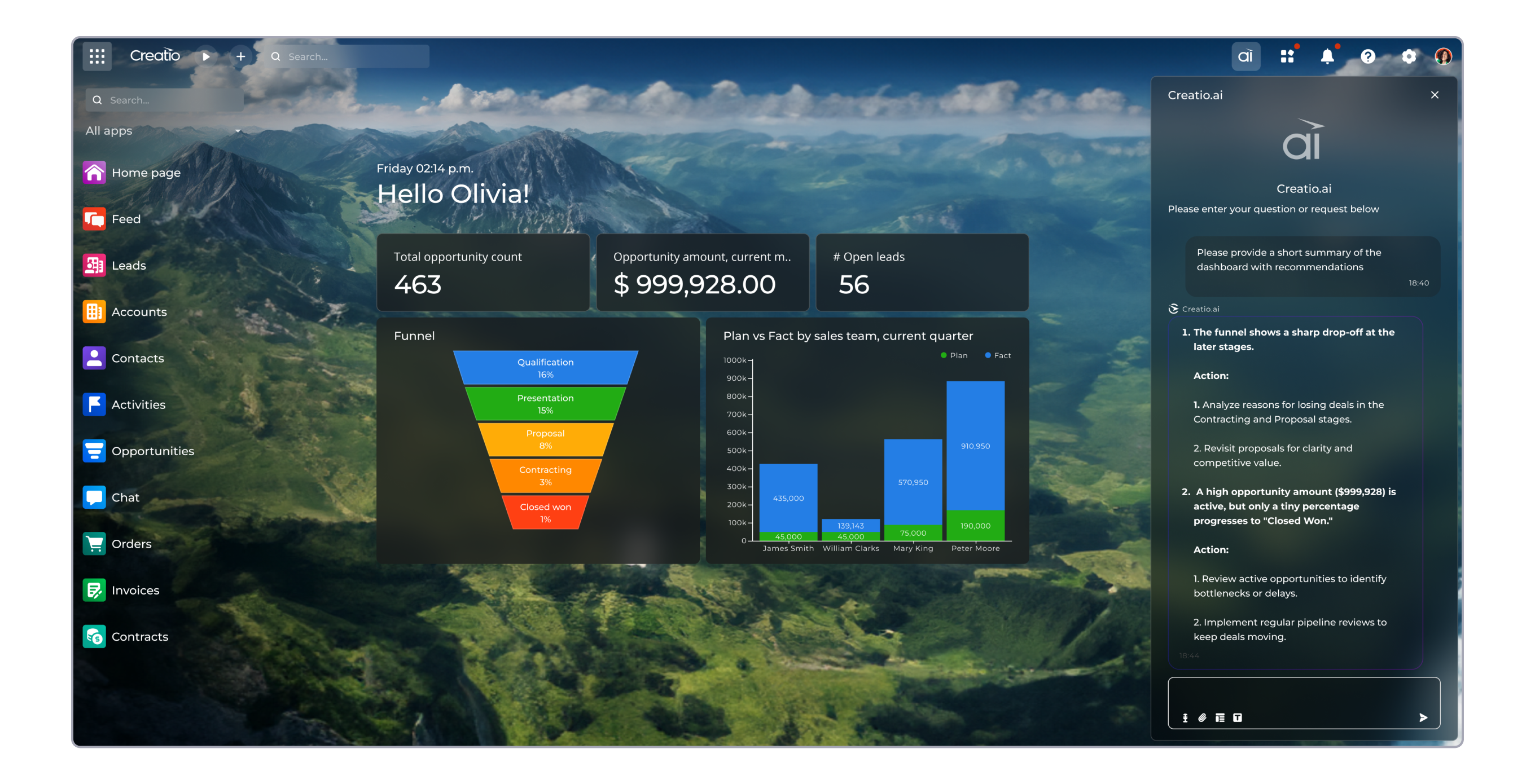
With Creatio Sales, sales teams have access to a unified workspace that brings together customer data, communication history, and performance metrics, providing a clear view of sales activities. The platform’s AI agents can analyse sales pipelines, support forecasting, and recommend next-best actions, helping sales professionals focus on higher-priority opportunities. AI agents also automate routine tasks, including lead qualification, quote generation, meeting preparation, and follow-ups, helping to reduce manual work and improve efficiency across the sales process.
Built on Creatio’s no-code agentic platform, Creatio Sales can be adapted to specific business requirements, enabling organisations to design, modify, and scale applications, workflows, and custom AI agents without extensive technical expertise. Industry research indicates that organisations using Creatio’s agentic no-code platform have achieved 70% faster imoplementation, a 37% lower total cost of ownership, and 67% faster lead response times compared with legacy systems.
Whether the priority is to progress opportunities more quickly, improve forecasting accuracy, or deliver more personalised customer experiences, Creatio Sales provides the capabilities needed to support more effective and efficient sales processes.
Drive Sales Excellence
Enhance sales performance and productivity with Creatio's AI agents for Sales
The future of AI in sales
As AI technology continues to develop, its use across sales processes is expected to become more widespread and more closely integrated into day-to-day operations.
With Forrester forecasting that the market for AI-driven platforms will reach $37 billion by 2025, AI adoption in sales is expected to continue, bringing together further improvements in efficiency, personalised engagement and data-led decision-making.
Key trends shaping the future of AI for sales include:
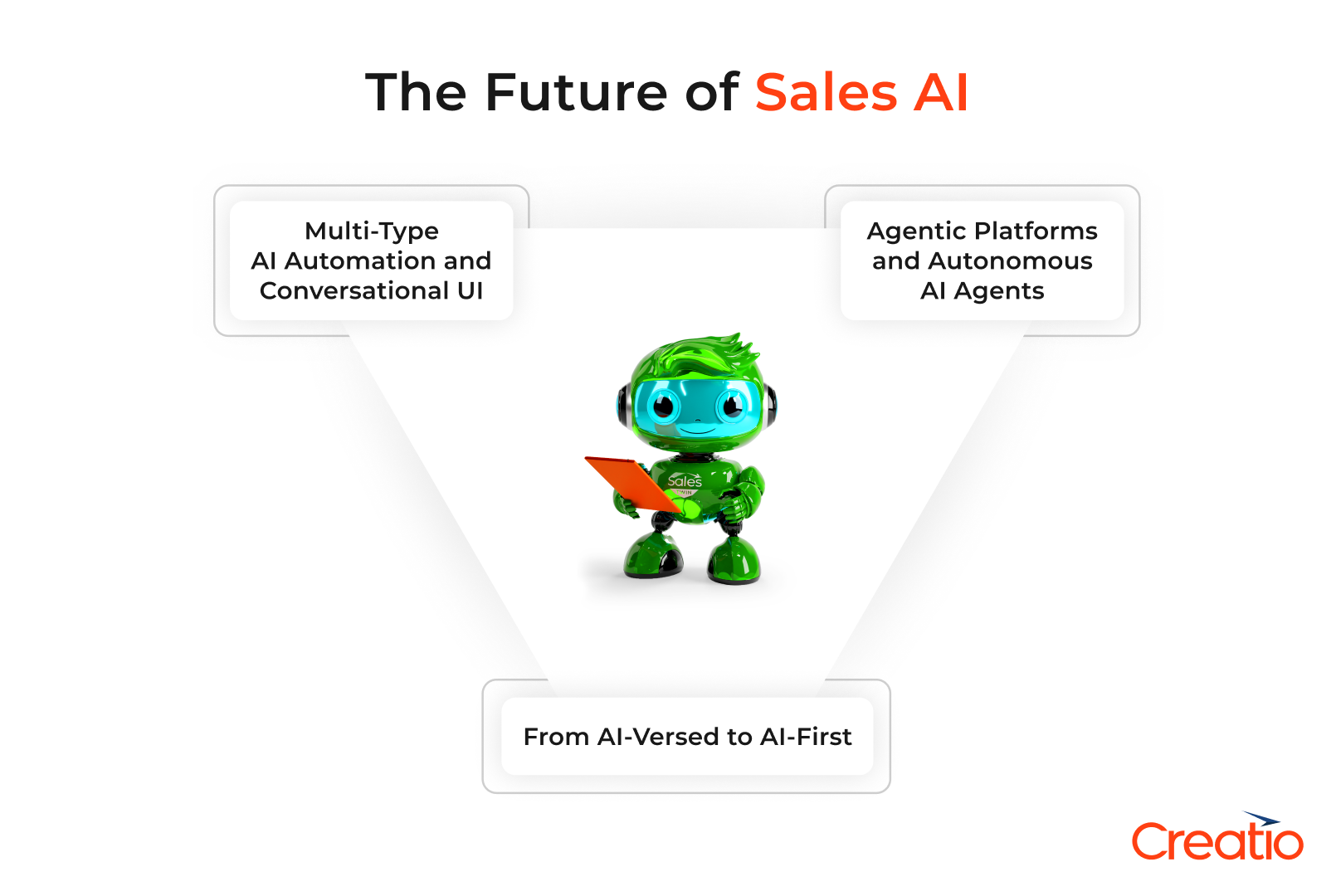
Multi-type AI automation and conversational UI
According to Gartner, by 2028, more than 40% of B2B sales organisations are expected to use a combination of AI technologies to automate sales processes, support better decision-making, and deliver more personalised experiences for both sales teams and buyers. Additionally, 60% of B2B sales tasks will be executed through conversational user interfaces (UIs) powered by generative AI, allowing people to interact with software, applications, and bots using natural language through text and voice.
Agentic platforms and autonomous AI agents
Another key trend highlighted by Gartner is the increasing use of AI in sales research. By 2027, 95% of seller research workflows are expected to begin with AI, compared with less than 20% in 2024. This shift reflects wider adoption of agentic platforms and autonomous AI agents, intelligent systems capable of independently conducting research, analysing data, and generating insights with minimal human involvement.
AI agents can support sales preparation and opportunity identification while also providing relevant recommendations and executing tasks autonomously. This can givesales professionals more time to concentrate on activtitie that require judgement, expertise and direct customer interaction. Access to real-time, AI-driven insights can also help sales teams identify opportunities and potential issues earlier, enabling them to respond more effectively to changing market and customer requirements.
From AI-aware to AI-first
At the same time, Creatio’s The State of AI Agents and no-code report indicates a broader shift towards AI-firts approach. Rather than limiting AI to individual experiments, organisations are beginning to incorporate it more widely into their operations. According to the report, 86% of C-level decision-makers expect AI agents to be important to strategic priorities over the next two to three years.
No-code technologies are supporting this shift by making it easier to design, deploy, and scale AI solutions with less reliance on specialist technical expertise.
Summary
AI sales tools can support the automation of routine tasks, provide useful insights, and imrpove customer interactions. Applied effectively, these capabilities can help organisations streamline sales processes, improve productivity, increase conversion rates, and support revenue growth. Creatio combines CRM capabilities with advanced AI-driven sales automation, providing an agentic platform designed to support a broader range of sales processes.
Integrating AI tools into a sales strategy can help organisations improve efficiency and strengthen sales performance. Platforms such as Creatio bring AI capabilities together with CRM and workflow automation, supporting a more coordinated approach to sales processes and growth.