AI is no longer a future consideration for CRM; it is already shaping how organisations operate and make decisions. According to McKinsey, nearly 90% of organisations use AI technology in at least one business function, while Creatio’s The State of AI agents & No-Code report identifies customer-facing teams as some of the leading adopters.
From lead management and personalised marketing to automated service, AI is becoming an integral part of day-to-day CRM operations. As expectations around speed, personalisation, and efficiency continue to grow, traditional CRM systems alone can no longer meet evolving business requirements.
As a result, CRM is evolving beyond data management to play a more active role in decision-making and execution. AI-powered CRM systems reflect this shift, helping organisations to turn customer data into real-time actions, automate complex processes, and deliver more relevant experiences at scale.
Key Takeaways:
AI CRM is a customer relationship management system that uses artificial intelligence and AI agents to automate workflows, support decision-making, and execute tasks across sales, marketing, and customer service.
Key benefits of AI-powered CRM include greater productivity, lower operational costs, improved conversion rates, higher customer satisfaction, and real-time personalisation at scale.
Common use cases include sales processes such as lead management, outreach, and forecasting; marketing tools such as campaign optimisation, segmentation, and personalisation; service workflows such as automated support, case routing, and proactive issue resolution; and cross-functional workflow automation.
Leading AI CRM solutions include platforms such as Creatio, Salesforce, Microsoft Dynamics 365, HubSpot, with each offering different levels of flexibility, complexity, and AI-driven automation.
The strongest AI CRM platforms combine AI agents, workflow automation, and composable architecture to deliver measurable business outcomes while adapting to evolving business requirements.
What is AI CRM?
AI CRM represents a new generation of customer relationship management software, with artificial intelligence integrated directly into business processes to support smarter decision-making, faster execution, and more meaningful customer engagement. Rather than focusing solely on repetitive task automation, AI CRM can interpret context, identify opportunities, and take action across sales, marketing, and customer service.
A key element of AI-powered CRM is the use of AI agents, intelligent, goal-oriented digital entities that can operate independently within workflows. Rather than simply assisting with individual tasks, these agents can initiate outreach, recommend and execute next-best actions, adjust personalised marketing campaigns in real time, and resolve customer enquiries with minimal human involvement.
Unlike traditional CRM systems, which often rely on manual processes, fixed workflows, and retrospective reporting, AI-powered CRM takes a more proactive and adaptive approach. Instead of serving as a system of record, it becomes an intelligent system of action, continuously learning, making decisions, and driving outcomes across the entire customer lifecycle.
Benefits of AI-powered CRM systems
AI-powered CRM helps organisations turn data into action, supporting measurable improvements across day-to-day operations. By reducing manual effort and supporting better conversion and customer retention, it can deliver value across a range of business operations.
Increased productivity
AI-powered CRM reduces the time spent on manual data entry, coordination, and decision-making. By taking on repetitive tasks and simplifying complex processes, it allows marketing, sales, and customer service teams to focus on higher-value activities, such as building relationships and resolving customer cases. AI agents can take this a sttep further by triggering actions, updating data, and moving processes forward with minimal human involvement, reducing the time required to complete processes that might otherwise take hours or even days.
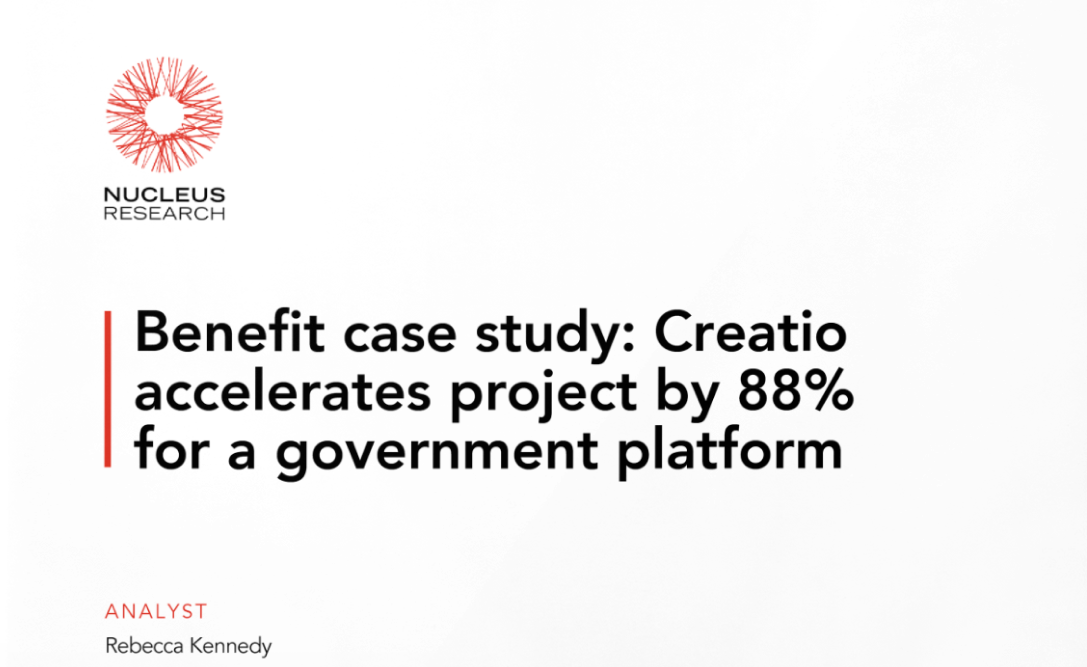
Nucleus Research Case Study
Creatio AI CRM accelerates public sector project delivery by 88%
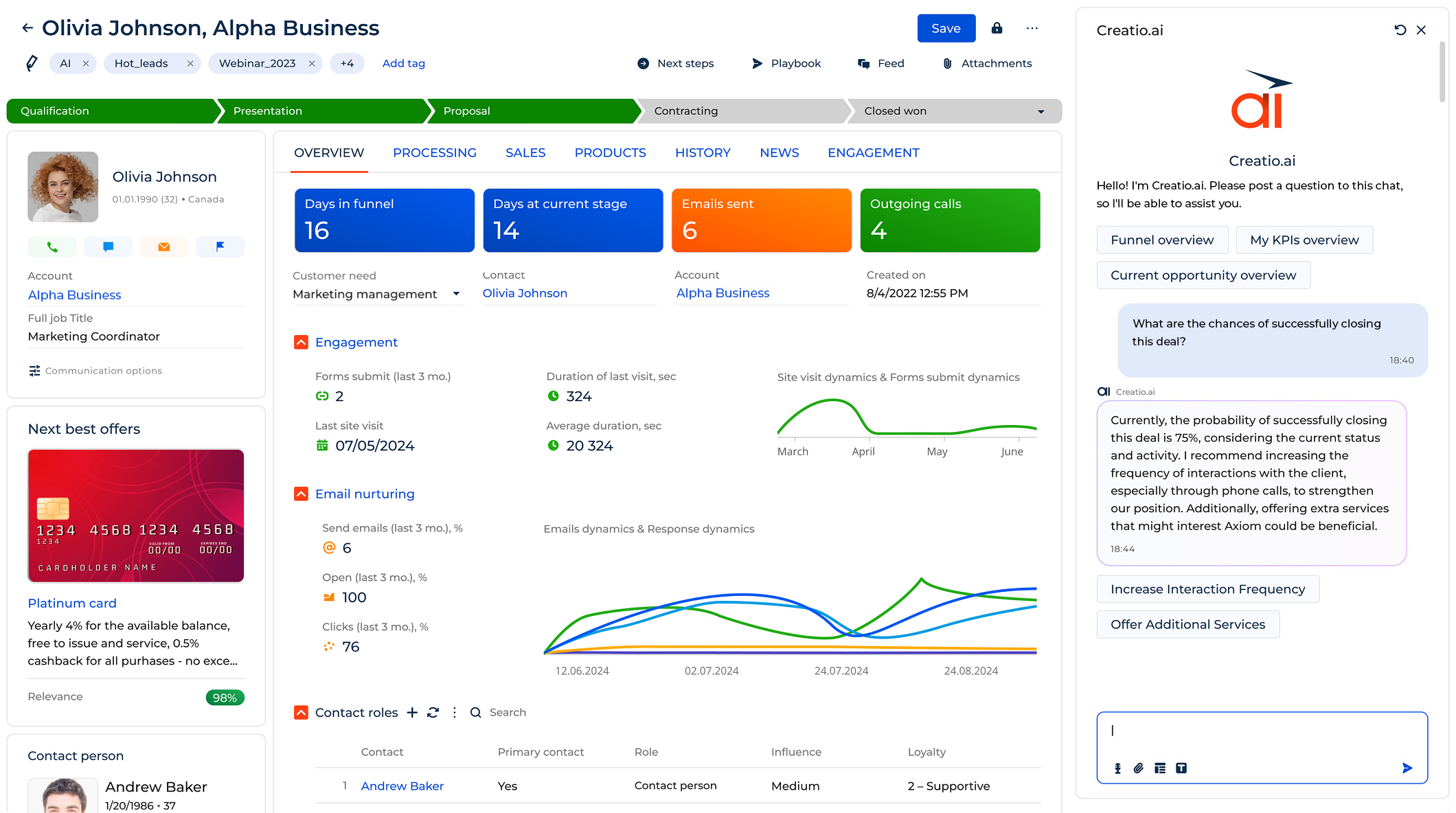
By analysing customer behavior, intent signals, and historical data, AI-powered CRM can identify the most promising prospects and recommend or execute the next-best action. AI agents can act on these insights in real time, initiating outreach or prioritising leads automatically, to help improve win rates and campaign performance without requiring additional headcount.
According to research by McKinsey, AI implementation in CRM could increase lead generation by more than 50%, reduce costs by up to 60%, and cut call time by up to 70%, supporing greater sales efficiency.
Reduced operational costs and better resource allocation
AI agents take over repetitive and time-consuming tasks, lowering the cost per interaction, reducing reliance on manual labour, and allowing teams to scale operations without proportional increases in staffing. According to Gartner, by 2029, tasking AI agents with resolving common customer service issues will result in a 30% reduction in operational costs.
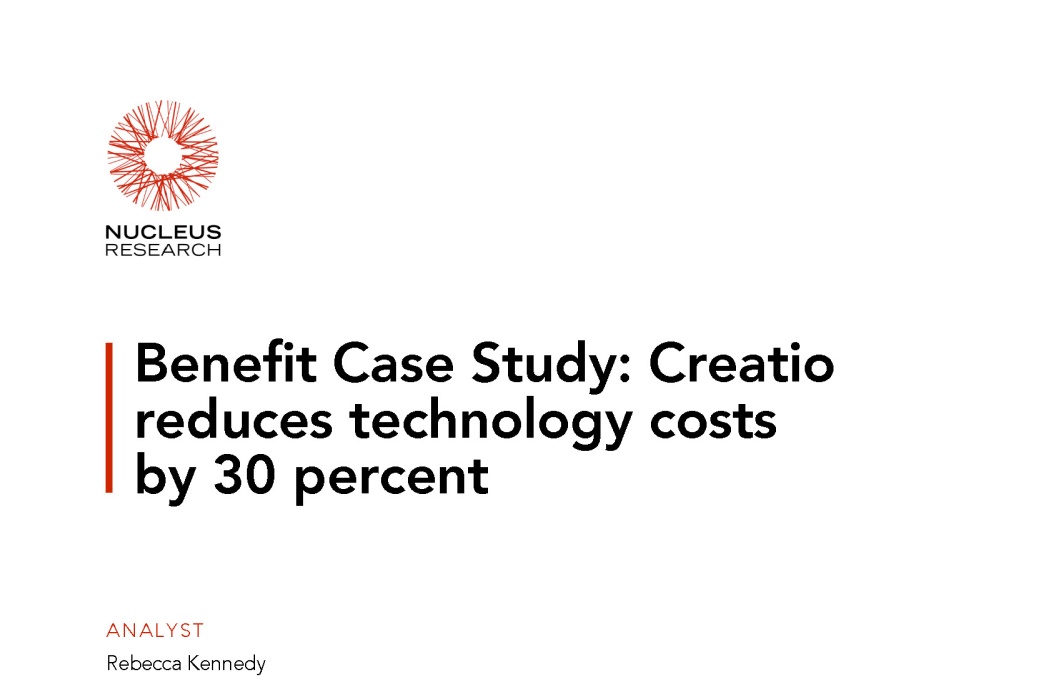
Nucleus Research Financial Case Study
Find out how financial institutions deploy workflows 70% faster and cut tech costs by 30% with Creatio AI CRM
Beyond automation, AI-powered CRM uses real-time data to allocate resources toward high-impact opportunities, improving ROI. It also can help identify inefficiencies and areas of unnecessary expenditure, enabling organisations to make better use of available resources.
Consistent customer engagement
For global organisations, providing customers with round-the-clock support can be challenging when operations span multiple time zones. AI CRM can reduce the need for employees to work outside standard hours or for organisations to maintain separate customer service and sales departments in every region. AI-powered chatbots equipped with natural-language-processing (NLP), businesses can promptly address customer enquiries in real time.
Gartner predicts that by 2029, AI agents will autonomously resolve 80% of common customer service issues, reducing the need for human intervention in many routine cases.
Increased customer satisfaction
Personalised experiences have become an important factor in customer retention. According to McKinsey, 71% of consumers expect personalised interactions, while 76% become frustrated when these expectations are not met.
AI CRM systems can help businesses consistently meet these customer expectations by analysing data such as previous interactions, purchase history, preferences, and real-time behaviour. These insights can be used to determine the most relevant message, timing and channel for each interaction, helping to create more timely and relevan customer experiences. More personalised communication can support higher levels of customer satisfaction, repeat business, and long-term loyalty.
Lower churn and extended customer retention
Predictive analytics can help organisations identify customer at risk of leaving and take action at an earlier stage. AI agents can detect potential churn signals, recommend the next-best action, and initiate personalised outreach, such as targeted offer, timely follow-up, or relevant content that addresses specific concerns.
This enables organisations to take a more proactive approach to customer retention rather than waiting for signs of dissatisfaction to emerge. Timely and relevant engagement can help reduce churn, strengthen customer loyalty, and support long-term relationships and sustainable revenue growth.
Data-led decision-making
AI CRM can automatically identify relevant insights, risks, and opportunities, helping teams make more informed decisions based on available data. From revenue forecasting to identifying churn risks, it can support more accurate planning and help reduce costly errors. According to Gartner, by 2028, AI agents are expected to make 15% of day-to-day workplace decisions autonomously.
By identifying emerging trends, predicting customer behavior, and supporting the optimization of operational processes, AI-powered CRM systems empower organisations to navigate the complexities of the modern business landscape with clarity and precision.
Continuous processes improvement
AI agents can learn from the outcomes of completed tasks and use these insights to support ongoing improvements. Over time, AI-powered CRM can help organisations refine workflows, improve targeting, and optimise performance, enabling processes to become more efficient without the need for frequent manual adjustments.
Key use cases for AI-powered CRM platforms
AI-powered CRM enables organisations to apply artificial intelligence directly to customer-facing processes, improving efficiency, supporting better decision-making, and delivering stronger outcomes throughout the entire customer lifecycle. From automating routine tasks to executing complex workflows, AI CRM can support a wide range of use cases across sales, marketing, and customer service.
Sales
AI-driven lead scoring. AI analyses customer data, behavioural signals, engagement history, and firmographic information to assess leads and identify high-value prospects. AI agents can score, qualify, and route leads automatically, helping sales teams focus on opportunities with a higher likelihood of conversion.
Next-best-action recommendations. AI tools assess the context of each opportunity and recommend an appropriate next step, such as scheduling a call, sharing relevant content, or offering a discount. In advanced scenarios, AI sales agents can execute these actions automatically.
Automated outreach and follow-ups. AI agents can generate and send personalised emails or messages based on customer context and timing, ensuring no opportunity is missed.
Territory management. AI optimises territory planning by analysing account potential, geographical data, and sales representatives performance. It can help balance workloads, identify areas with limited coverage and adjust territories as requirements change, supporting broader coverage and revenue growth.
Meeting preparation. AI agents within CRM software compile relevant customer information, including recent interactions, deal status, preferences, and potential risks, in concise pre-meeting summaries. This helps sales teams prepare more efficiently and approach conversations with a clearer understanding of the customer context.
Sales forecasting and pipeline insights. AI can support more accurate sales forecasting by analysing historical data, market trends, deal progression, and risk indicators. These insights can help sales leaders refine strategies and make better-informed decisions around revenue.
Campaign optimisation in real time. AI continuously monitors campaign performance and adjusts budget allocation, messaging, and channel selection in response to current results. Marketing AI agents can make these adjustments based on live performance indicators, reducing the need for ongoing human input.
Audience segmentation and targeting. AI CRM can create dynamic audience segments based on customer behaviour, intent, and engagement rather than relying solely on fixed criteria. This can support more precise targeting and help improve conversion rates.
Content and message personalisation. Generative AI can tailore messages, offers, and timing based on individual customer data and context. AI agents can automatically deliver relevant content across email, web, and other channels.
Automated lead nurturing. AI-driven workflows can guide prospects through the sales journey with relevant content and interactions, adapting in response to changes in engagement.
Automated case resolution. AI agents for customer service handle common enquiries by answering questions, resolving routine issues, and updating records, helping to reduce response times. More complex cases can be passed to the appropriate customer support agent with a summary of previous interactions.
Intelligent case classification and routing. AI analyses request context and routes cases to the most appropriate agent or department, supporting faster and more accurate resolution.
Proactive support and issue detection. AI agents can identify potential issues, such as signs of churn or product-related issues, and triggers proactive outreach before customers escalate.
Agent assistance and knowledge recommendations. AI can provide customer service teams with relevant suggestions, knowledge articles, and next-best-action recommendations during customer interactions, helping to improve efficiency and consistency.
Operations and cross-functional use cases
End-to-end workflow automation. CRMAI agents can coordinate processes across sales, marketing, and customer service, triggering actions, automating data entry, and progressing workflows with minimal manual intervention.
Data enrichment and management. AI embedded within CRM systems can automatically capture, update, and enrich customer data from multiple sources, helping to improve data quality and reduce the need for manual input.
Churn prediction and retention strategies. AI can use sentiment analysis and predictive analytics to identify customers at risk of leaving and recommend or execute relevant retention actions. This helps reduce churn and support higher customer lifetime value.
Revenue and performance optimisation. By analyzing data from across the customer lifecycle, AI-powered CRM can identify growth opportunities, operational inefficiencies, and areas for improvement, supporting better business performance.
Productivity tools agents. AI agents can integrate directly with productivity tools such as Microsoft Teams and Outlook, providing access to CRM data and workflows within familiar working environments. They can summarise conversations, draft emails, schedule follow-up activities without the need to switch between applications.
10 best AI CRM platforms to consider in 2026
Leading CRM platforms now use AI to support sales operations, automate marketing and customer service workflows, and provide data-driven insights to enhance the entire customer journey. The comparison below provides an overview of some of the most widely used AI CRM platforms in 2026.
Comprehensive AI-powered CRM for sales, marketing, service and workflows automation, with advanced no-code capabilities
4.7
HubSpot CRM
Sales, marketing, and customer service automation platform with AI-driven tools
4.4
Zoho CRM
Affordable CRM for workflow automation and AI-driven insights
4.0
Freshworks
Easy-to-use CRM with core AI capabilities to support sales efficiency and customer engagement
4.5
Zendesk
Sales and customer service CRM with acessible AI tools
4.3
Pipedrive
Sales CRM and pipeline management solution, supported by AI capabilities
4.2
Nutshell CRM
Pipeline and contact management CRM with built-in AI tools to support sales activities
4.3
ClickUp
All-in-one platform using AI to support workplace productivity and collaboration
4.7
Salesforce
Enterprise-grade AI-powered automation across the entire customer lifecycle
4.2
monday CRM
Intuitive sales CRM powered by AI tools to support day-to-day sales processes
4.6
1. Creatio
Creatio AI CRM is a leading platform designed for organisations that require flexibility, scalability, and faster implementation. It combines a powerful suite of productsfor sales, marketing, service, and workflow automation — all unified on a no-code platform and enhanced by powerful AI agents.
By combining generative, predictive, and agentic AI, Creatio supports automation across the entire customer journey and helps streamline CRM processes and improve team productivity. Its composable architecture and no-code tools enable users to create and adapt workflows at scale without the need for traditional coding.
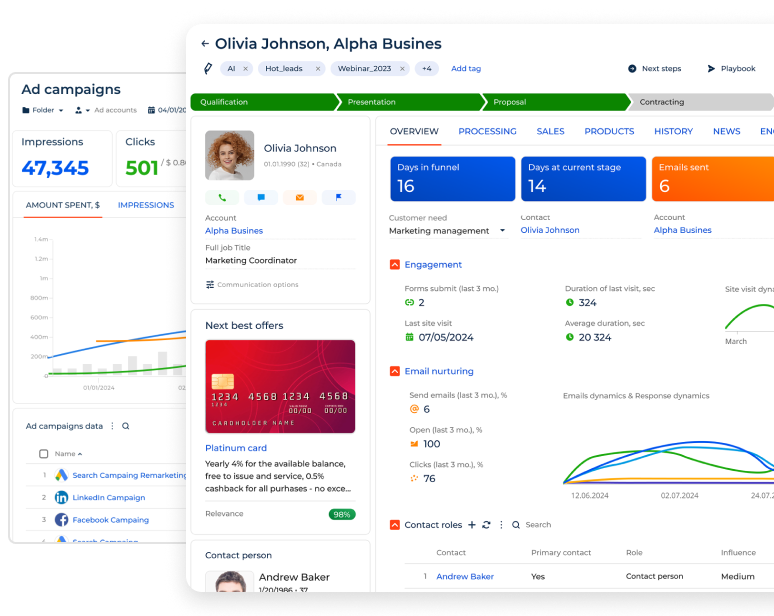
Built on top of an agentic no-code platform Creatio Studio, Creatio’s unified CRM suite includes the following products:
Creatio Marketing: an AI-native marketing automation platform designed to simplify lead management and support revenue growth. It enables organisations to segment audiences, track customer interactions, personalise campaigns, and optimise performance using AI-powered analytics.
Creatio Sales: an AI-powered sales automation platform that supports sales teams with opportunity scoring, sales forecasting, contract management, and intelligent data analysis.
Creatio Service: a unified service management platform that uses AI-powered case management, problem resolution, and sentiment analysis to support customer service teams and improve collaboration.
Creatio is an AI-powered CRM with AI agents integrated into its core architecture rather than added as a separate layer. Creatio AI works with data objects, relationships, workflows, and business processes across the system, allowing AI capabilities to be applied across sales, marketing, customer service and operations.
Creatio CRM also provides a range of pre-built AI agents for sales, marketing, and customer service, designed to automate routine tasks and support more complex processes at scale. Industry-specific autonomous agents are also available, including those designed for financial services, to support sector-specific processes and requirements and enable faster implementation.
The Agentic Banking Blueprint
Strategic framework for adopting AI agents in banking — responsibly, measurably, and at scale.
Beyond ready-made agents, the platform provides an AI-assisted no-code environment for creating, configuring, and deploying custom AI agents to support specific workflow, without requiring technical expertise. These agents can operate autonomously or alongside teams, helping to accelerate execution and deliver meausrable results.
Creatio offers industry-specific solutions tailored for more than 20 sectors, alongside over 700 applications, pre-built integrations and connectors. These options allow organisations to extend the platform’s functionality and connect existing systems within a unified environment. This supports consistent data flow across the entire business ecosystem and provides greater visibility into customer interactions, sales, marketing performance, and team productivity metrics.
Creatio AI is available across all Creatio subscription plans, making its AI capabilities accessible to organisations of different sizes and with varying requirements.
Distinguishing features:
Unified agentic platform. A single no-code CRM platform combining generative, predictive, and agentic AI capabilities through the Creatio AI architecture.
Pre-built AI capabilities. Ready-to-use AI functionality that supports core CRM workflows across sales, marketing, customer service, and operations
AI agents for sales. Automate tasks such as account research, quote generation, meeting preparation, and follow-up activities to support sales productivity.
AI agents for marketing. Support a range of marketing tasks and workflows, including content creation, email campaigns, and lead nurturing.
AI agents for customer service. Help streamline service workflows, power customer support, and improve knowledge base management through AI-powered assistance.
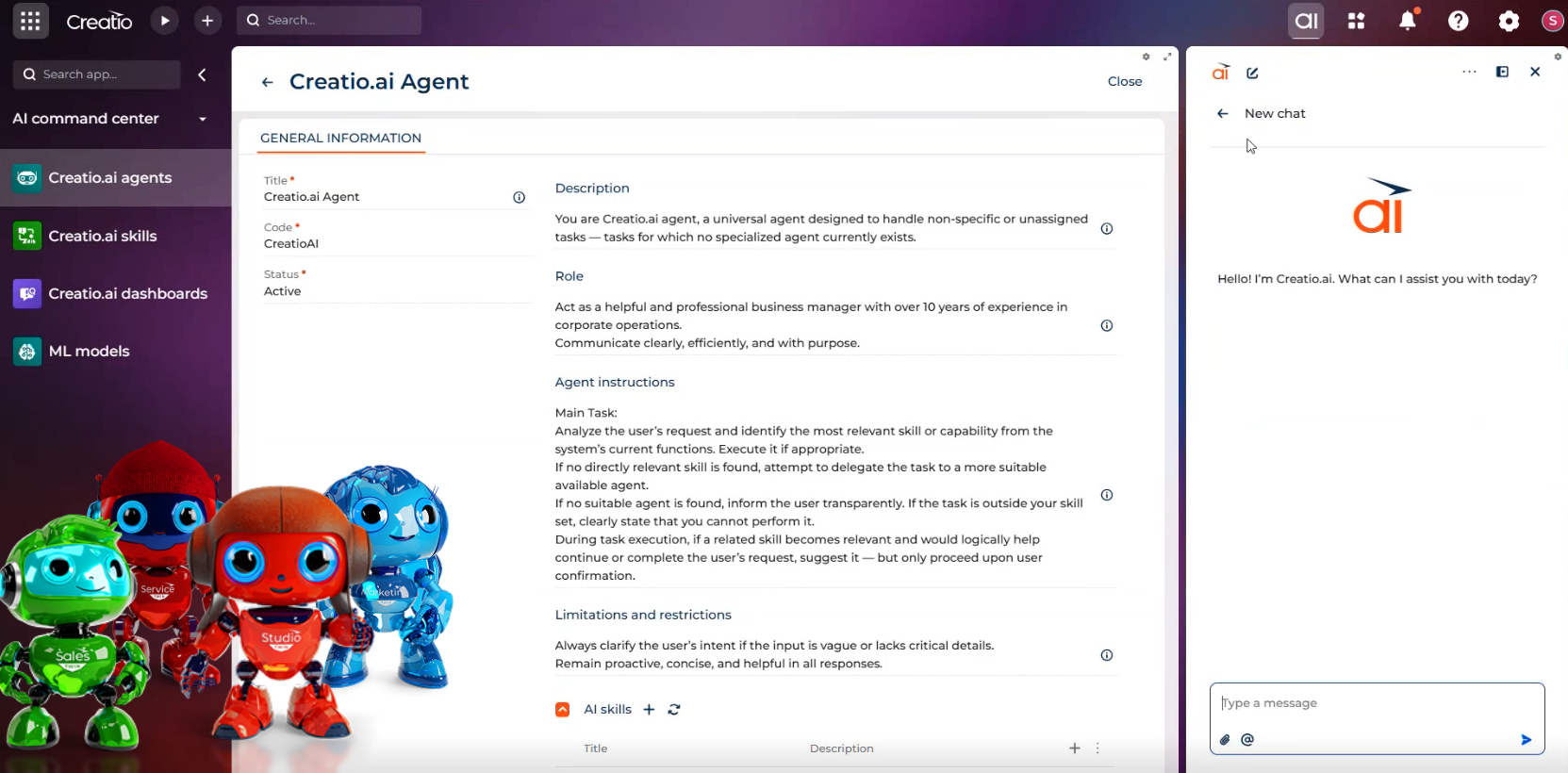
No-code agent builder. A visual design environment for creating custom AI agents by combining skills, workflows and knowledge, without the need for technical expertise.
Conversational AI workspace. An interface for managing multiple agent conversations at the same time, particularly suited to customer-facing environments with high interaction volumes.
AI Command Centre. A centralised dashboard for monitoring, managing, and updating AI agents and skills, providing greater visibility and control.
Transparent pricing. AI capabilities are inclouded withou additional or hidden charges.
Limitations:
The platform may involve learning curve for users with limited experience of no-code development
Customer rating:
G2: 4.7
Capterra: 4.7
Gartner: 4.9
Creatio offers a composable pricing model, allowing organisations to select and pay for the functionality they require. Predictive, Generative, and Agentic AI capabilities areincluded across all plans at no additional cost. Pricing for the core platform starts at £40, while CRM products – Sales, Marketing, and Service – are each priced at £15 per user per month.
A New Era AI CRM
Automate campaigns, pipelines, and service flows with Creatio's agentic CRM
HubSpot is esteemed for its customisable hubs, each dedicated to specific functions such as marketing, sales, services, operations, and content management. These hubs can be integrated into a cohesive suite, precisely tailored to meet distinct business requirements.
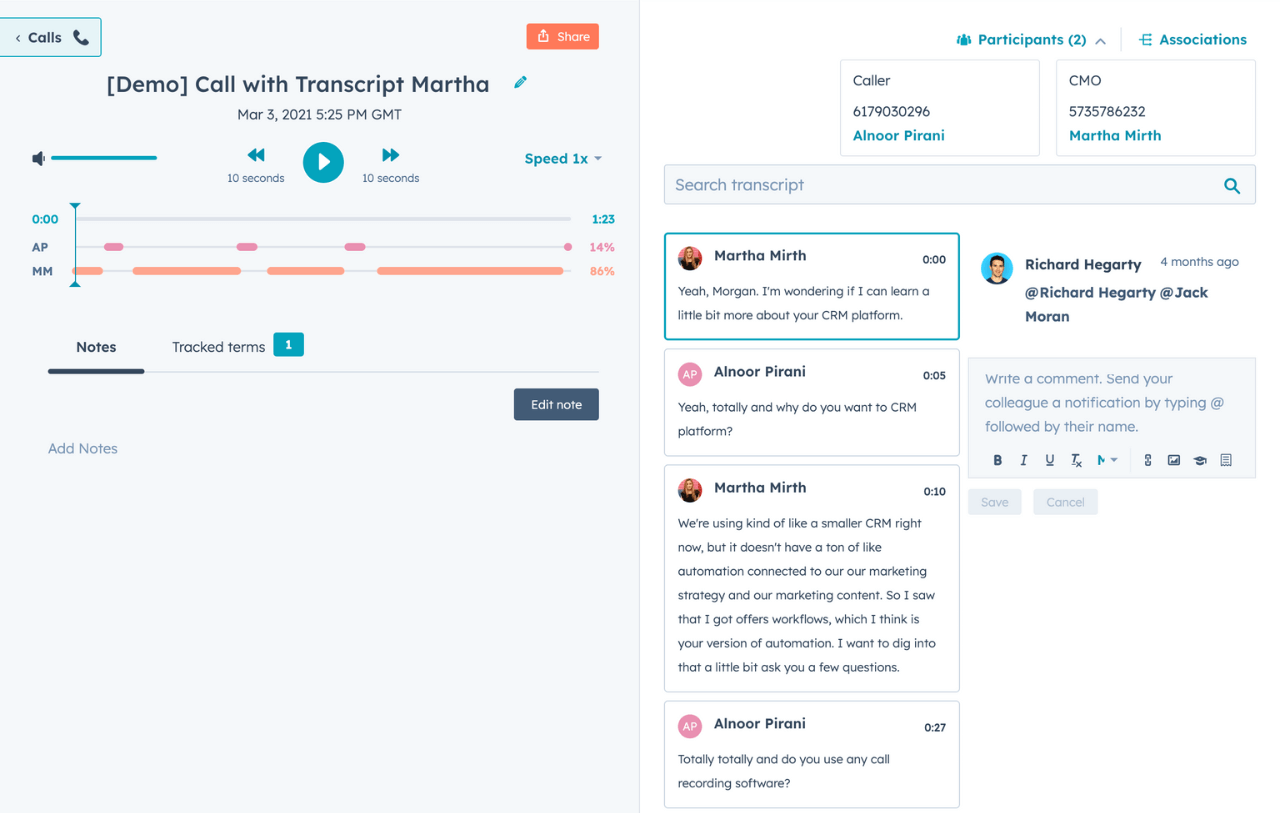
Beyond the conventional CRM functions of tracking customer interactions, managing contact information, and guiding prospects through each stage of the sales pipeline, HubSpot incorporates AI-driven tools that streamline repetitive tasks and enhance team productivity. These AI features empower team members to compose content, such as outreach emails and perform real-time customer data analysis with remarkable efficiency. For customer support, Hubspot offers an AI-enhanced chatbot that swiftly accesses support resources as needed.
HubSpot is particularly suited to smaller businesses or those with straightforward and straightforward CRM requirements, where simplicity and ease of use are paramount.
Distinguishing features:
Breeze Copilot – Hubspot's AI assistant, which provides data-driven insights on demand
Agentic AI for workflow automation
Generative AI for content generation
ChatSpot, HubSpot’s AI-powered chatbot, which delivers real-time customer insights
Limitations:
Pricing structure is predominantly tailored to Enterprise clientele
AI features incur an additional charge of £50 per month
Customer rating:
G2: 4.6
Capterra: 4.7
Gartner: 4.9
Pricing:
Hubspot offers a complimentary version of its platform with limited AI functionalities, while advanced features such as AI agents and AI-powered content generation are available exclusively in premium plans, which commence at a minimum £1,032 per month.
3. Zoho CRM
Zoho CRM, characterised as a fully integrated suite, encompasses an array of applications dedicated to sales, marketing, and customer service, further augmented by functionalities for project collaboration, business intelligence (BI), and comprehensive analytics.
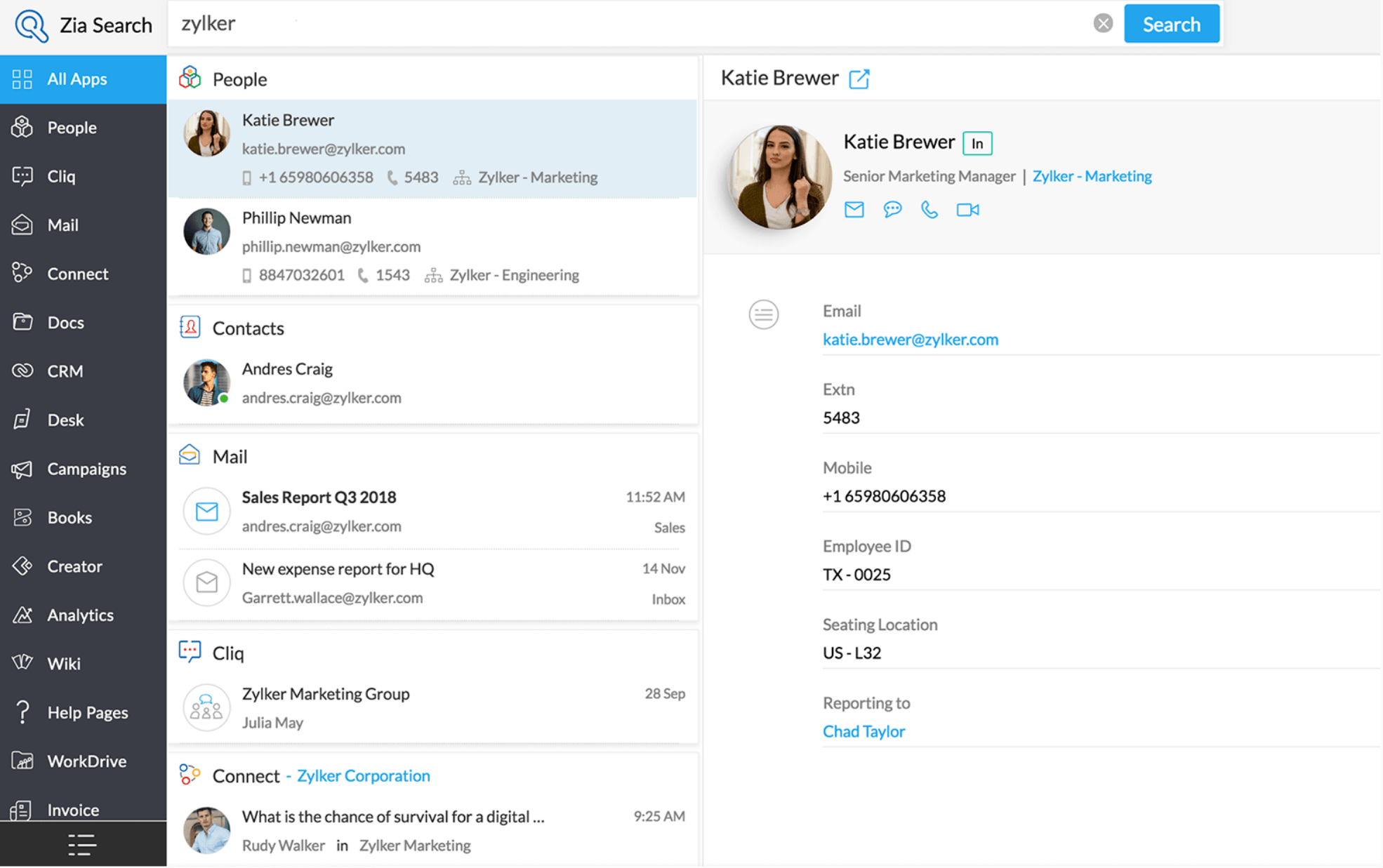
Integral to Zoho CRM is Zia, an AI-driven tool designed to elevate team productivity alongside conventional CRM functions, including management of contacts, deals, and leads. This virtual assistant streamlines workload management in the aggregation of customer data, the drafting of emails and documents, and the analysis of sales metrics.
With this AI CRM software, it is comparable to having a personal assistant allocated to each individual within the team. Its functionalities encompass the provision of real-time support, the offering of product recommendations based on customer behaviour, and the integration of chatbots on e-commerce websites to address customer queries.
Zoho CRM is particularly well-suited for small and midsize B2B and B2C organisations that possess moderate requirements for process management.
Distinguishing features:
Zia's AI-driven pattern recognition for automation suggestions
AI-powered research to deliver detailed customer information, including titles and contact particulars
AI-driven cross-selling and personalised product recommendations
Limitations:
Integrations are relatively limited compared to other vendors
AI features are restricted to higher-priced plans
Customer rating:
G2: 4.1
Capterra: 4.3
Gartner: 4.4
Pricing:
Zoho’s AI CRM software is available in four plans: Standard at £15, Professional at £27, Enterprise at £39, and Ultimate at £51per user per month. AI prediction and analytics are exclusively accessible within the Enterprise and Ultimate plans.
4. Freshworks
Freshworks' CRM suite, encompassess Freshmarketer, Freshsales, Freshdesk, and Freshchat, presents a cohesive and modern customer experience. Ths comprehensive suite integrates tools designed for IT, marketing, customer service, and sales, thereby delivering a holistic solution for businesses.
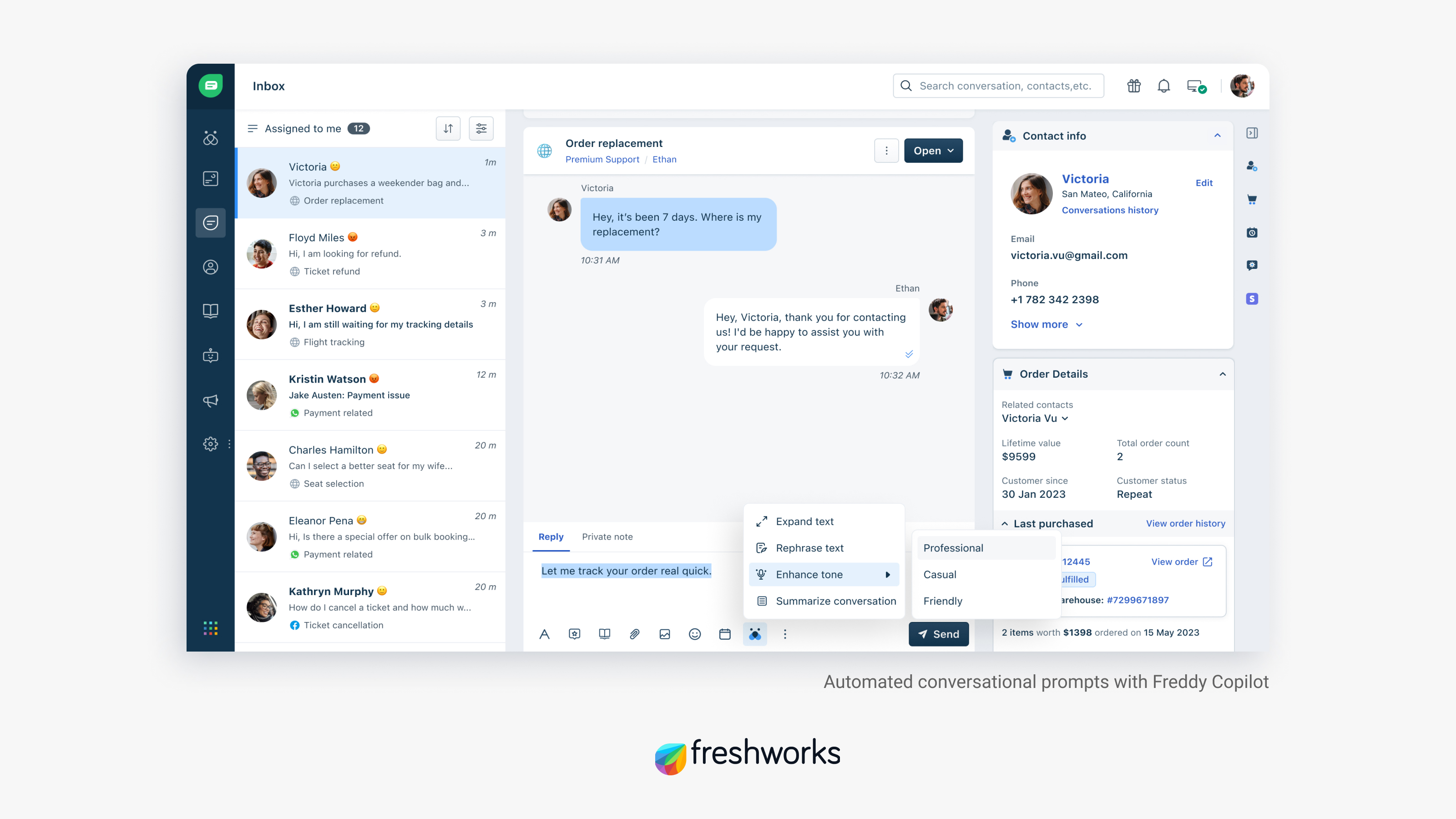
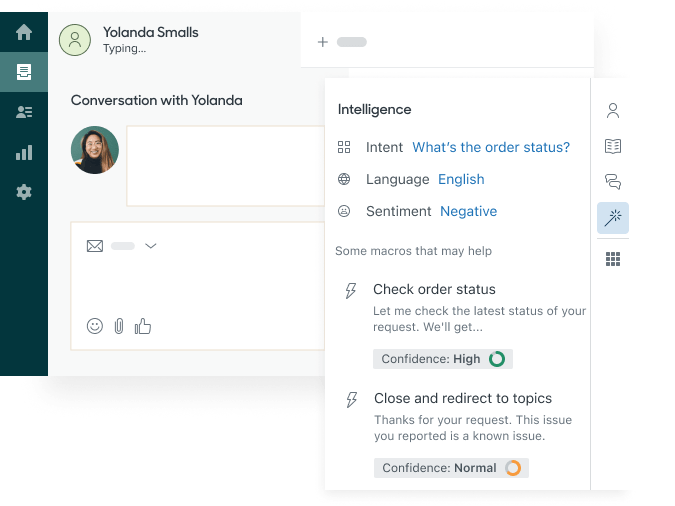
Among the features of this AI CRM software are rule-based process guidance and next-best action recommendations, both of which significantly enhance the user experience. Furthermore, Freddy, an AI-driven bot embedded within the CRM, adeptly facilitates customer engagement by providing support and directing leads from web pages to the sales team.
Nonetheless, the suite is constrained in its offerings, supporting merely a limited selection of pre-packaged AI scenarios and providing simple reporting and dashboard functionalities.
Consequently, Freshworks emerges as the optimal choice for teams possessing uncomplicated requirements who are in search of a solution that is both readily deployable and exceptionally user-friendly.
Distinguishing features:
Freddy AI Self-Service provides customer support solutions
Freddy AI Copilot utilises natural language processing to automate tasks, obviating the need for any coding expertise
Freddy AI Insights delivers real-time analysis and visualisation of customer data
Limitations:
Limited integrations compared to other vendors
AI features are charged on top of the subscription fee
Customer rating:
G2: 4.5
Capterra: 4.5
Gartner: 4.3
Pricing:
Freshworks CRM is offered in three tiers: Growth at £27 per user per month, Pro at £65 per user per month, and Enterprise at £104 per user per month. Freddy AI is available for an extra £79 per 1,000 sessions.
5. Zendesk
Zendesk is renowned for its CRM software tailored to the requirements of service-oriented enterprises and sales teams, demonstrating a profound understanding of complexities inherent in selling services. Their suite of tools facilitates seamless connections with customers, thereby enabling your team to engage more effectively with a broader clientele.
Powered by Zendesk AI, which leverages OpenAI’s GPT model, these tools serve to streamline workflows and automate mundane tasks, thereby allowing your representatives to concentrate on more substantive interactions. Furthermore, this AI-driven CRM software provides invaluable suggestions aimed at resolving customer issues during interactions.
You may further augment the functionality of AI CRM systems through integration with Zapier or ChatGPT.
Zendesk is particularly well-suited for mid-sized and larger companies characterised by significant volumes of interactions, especially those that place a premium on the automation of customer service processes.
Distinguishing features:
Advanced AI-powered bots for customer service, capable of resolving intricate queries and generating personalised responses
AI-driven performance insights designed to refine and optimise operations
Integration of ChatGPT via Zapier
Limitations:
The utilisation of separate systems for tickets and workflow management renders the user experience somewhat unwieldy
Restrictions on the number of steps in chatbots
Customer rating:
G2: 4.3
Capterra: 4.4
Gartner: 4.2
Pricing:
Zendesk CRM is available at a range from £19 to £118 per user per month. AI agents are included within the Suite Team plan, priced at £54 per user per month and higher tiers, with an additional advanced AI features add-on available for £39 per user per month.
6. Pipedrive
Pipedrive is a cloud-based CRM platform, meticulously designed to simplify sales processes, manage deals with efficiency, and automate routine tasks. Its visually-oriented sales pipeline and AI-enhanced features empower sales teams to concentrate on closing deals and realising targets by optimising workflows and delivering actionable insights.
Businesses may customise Pipedrive by incorporating custom fields, automating calculations, and adapting pipelines to align with unique sales processes, thereby ensuring the platform fits their requirements perfectly.
Distinguishing features:
AI Sales Assistant identifies patterns and recommends high-potential deals and next actions
AI email generator for sales emails
AI-driven insights and summarisation for deals, customers, and emails
Limitations:
Steep learning curve for new users
Limited AI functionalities for customer service relative to other vendors
Customer rating:
G2: 4.3
Capterra: 4.5
Gartner: 4.2
Pricing:
AI features are available in select plans, with pricing ranging from £54 to £102 per user per month.
7. Nutshell
Nutshell CRM provides a suite of AI-powered tools aimed at enhancing sales processes and delivering deeper insights into customer and lead relationships. Its AI features, currently available exclusively on the Nutshell Business plan, are designed to streamline workflows, boost team efficiency, and uncover actionable insights that drive sales success.
Distinguishing features:
AI Timeline Summarisation condenses customer interaction histories into actionable insights
AI Zoom Transcription Summarisation generates immediate summaries of Zoom meeting transcripts
AI Voice-to-Text Notetaker transcribes voice input for notes, emails, and activity logging
AI Contact analysis and summarisation with Nutshell Intelligence
Nutshell CRM is priced from £10 to £62 per user per month, with additional AI features available from £59.
8. ClickUp
ClickUp is a versatile, all-in-one productivity platform engineered to streamline CRM processes, automate tasks, and effortlessly monitor progress. Sales and marketing teams may visualise pipelines via over 15 customisable views, with real-time data readily available through interactive dashboards.
When complemented by ClickUp Brain – a role-specific AI tool tailored to team needs – ClickUp transforms into a powerful assistant, capable of generating content, nurturing customer relationships, and enhancing workflow efficiency.
Distinguishing features:
Role-specific AI assistance for sales, marketing, and service
Access to hundreds of prebuilt AI prompts for CRM automation
AI sales tools to build territory plans, craft prospecting emails, and create elevator pitches
AI Workflow tools for summarising customer interactions and identifying actionable items
Generative AI to assist service in composing or refining customer responses
Limitations:
Limited mobile functionality
Customer rating:
G2: 4.3
Capterra: 4.7
Gartner: 4.2
Pricing:
Plans commence at £8 per user per month, with an additional £5 charge for AI features.
9. Salesforce
Salesforce is a formidable, AI-enhanced CRM platform, meticulously engineered to automate sales processes and elevate productivity.
It seamlessly incorporates robust AI capabilities through its virtual assistant, Einstein, thereby providing sales teams with predictive insights, automating routine tasks, and streamlining workflows. From lead generation to sales forecasting, Salesforce Sales Cloud enables businesses to maximise efficiency and refine their sales funnel.
Distinguishing features:
Agentforce, a customisable AI agent dedicated to customer support
Generative AI for crafting personalised emails and transcribing sales calls
Conversation insights to identify customer objections and offer next-step suggestions
AI Research Assistant furnishes detailed information on prospects and qualified leads
AI predictions to prioritise deals and forecast sales outcomes
Limitations:
Steep learning curve
Additional charges for AI features
Customisation can me cumbersome
Customer rating:
G2: 4.4
Capterra: 4.4
Gartner: 4.5
Pricing:
Pricing commences at £19 per user per month, with supplementary fees for AI tools at £59 per user per month.
Monday is an AI-powered CRM system designed to simplify sales processes, automate workflows, and support team collaboration with minimal setup.
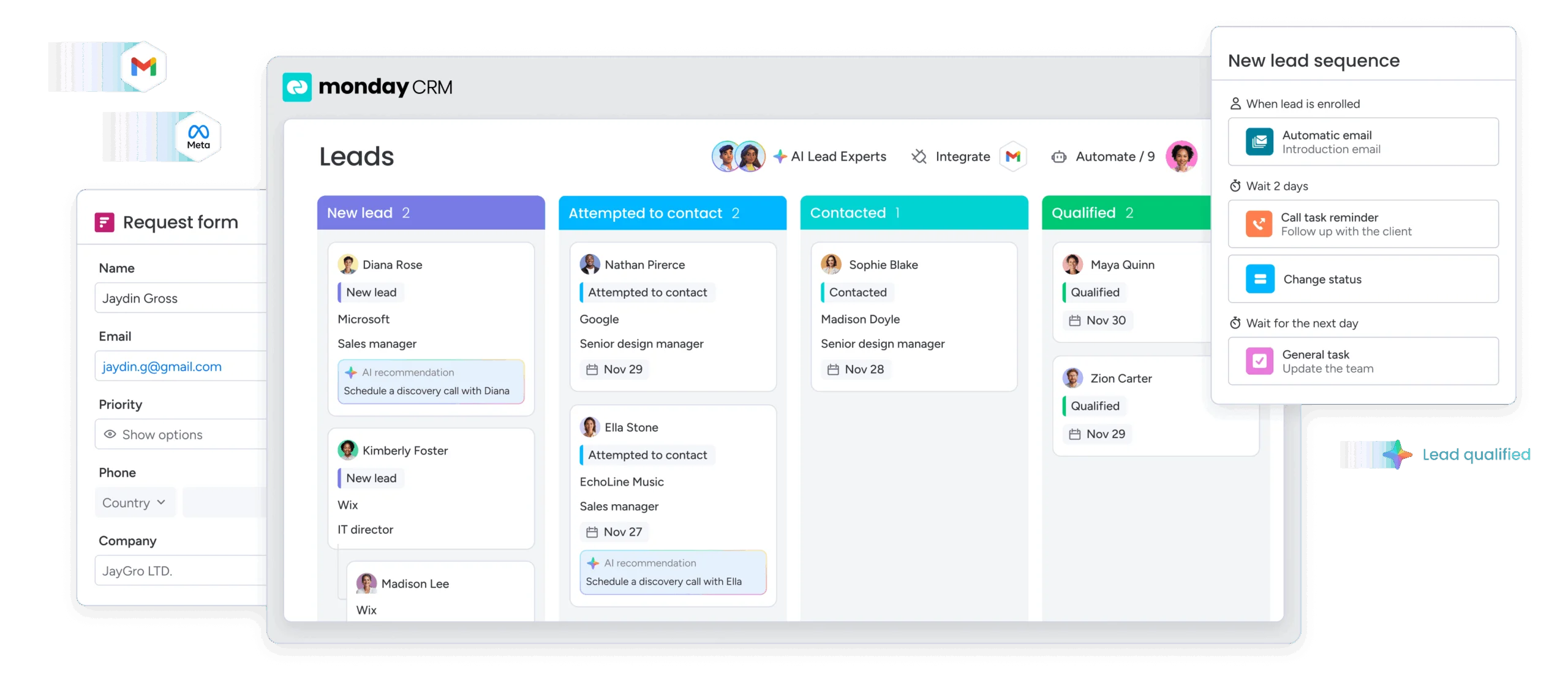
Monday CRM combines flexible customisation with an AI sales assistant to support day-to-day sales activities. Its AI tools can help with tasks such as drafting emails, updating sales data, and generating activity summaries. A straightforward, user-friendly interface also makes it easies for teams to manage sales pipelines and workflows.
Distinguishing features:
AI-powered email generation to support timely and relevant communication
AI-powered no-code automation and workflow management
Collaboration tools with real-time access to sales data
Limitations:
Less advanced analytics and forecasting capabilities than those available in some enterprise CRM platforms
May be less suitable for complex, multi-layered business processes or large-scale deployments
Customer rating:
G2: 4.6
Capterra: 4.7
Gartner: 4.1
Pricing:
Plans start at approximately £12 per user per month, with more advanced AI-powered capabilities available on higher-tier plans.
How to choose an AI-powered CRM
Selecting the right AI CRM involves more than comparing features. It is important to consider how AI is integrated into workflows, how easily the platform can be adapted to specific business require,emts, and whether it can deliver measurable value.
Look beyond AI capabilities to practical application
Many platforms offer AI capabilities, but their ability to on insights varies. It is worth considering solutions that go beyond recommendations and can execute tasks through AI agents or automated workflows, turning insights into practical action.
Evaluate how AI fits into existing processes
AI tools should be integrated into sales, marketing, and customer service workflows rather than added as a separate layer. The most effective A-poweredI CRM solutions should support existing ways of working without reqruiring teamd to adapt to rigid process.
Assess flexibility and customisation
CRM systems should be able to accommodate different business processes and requirements. Platforms that allow workflows, logic, and AI behavior to be configured withoug extensive development, including agentic no-code platforms, can provide greater flexibility as requirements change.
Consider time to value
AI CRM should begin delivering value without requiring a lengthy implementation. Consider how quickly key use cases, such as lead management, campaign automation, and customer service workflows, can be deployed, as well as how easily teams can adopt them.
Nucleus Research Report
Find out how Creatio AI CRM enables 70% faster implementation and 37% lower TCO compared to legacy platforms
The effectiveness of AI depends heavily on the quality of the underlying data. Before adopting an AI-powered CRM, organisations should ensure that data is accurate, complete, and approptietly structured. It is also important to consider whether the CRM can unify customer data from multiple sources and keep it up to date update, providing a reliable basis for AI-driven insights and decisions.
Prioritise transparency and control
Trust in AI depencs in part on understanding how decisions and recommendations are made. When assessing AI-powered CRM platforms, it is important to consider the level of visibility provided, the ability to adjust decision logic and the role of human oversight in determining when and how AI acts.
The platform should also provide appropriate AI governance, data security, and support for regulatory compliance. Key considerations include clear auditability of AI actions, role-based access controls, and safeguards to protect sensitive customer data, ensuring that AI is used responsibly and in accordance with relevant requirements.
Ensure scalability without added complexity
As an organisation grows, its CRM should be able to support additional users, processes, use cases and AI agents without becoming significantly more difficult to manage. Consider whether the platform can accommodate changing requirements without extensive reconfiguration or additional technical complexity.
Consider ecosystem compatibility and flexibility
Iintegration with tools such as email, collaboration tools, and data systems is an important consideration, but so is the ability to work beyond a single technology ecosystem. Composable platforms can provide greater long-term flexibility by supporting third-party integrations, marketplace applications, and changes to the wider technology stack without creating unnecessary vendor dependency.
AI CRM trends for 2026
AI technology continues to develop rapidly, changing how how organisations manage operations and customer engagement. Within CRM, AI is becoming increasingly integrated into workflows, decision-making, and customer interactions.
Several key trends are expected to shape AI-powered CRM in 2026:
AI agents are becoming a core part of CRM operations
One of the key trend is the emergence of agentic CRM, with AI playing a more central role in day-to-day operations. According to Creatio’s The State of AI Agents and no-code report, organisations are moving towards an AI-first approach, with 86% of C-level decision-makers expecting AI agents to play an important role in achieving strategic objectives over the next two to three years.
Agentic automation is not simply another technology trend. It is the foundation of how enterprises will innovate, compete, and grow in the AI Economy.
Burley Kawasaki
Global VP of Product Marketing and Strategy, Creatio
McKinsey reports that 88% of surveyed organisations regularly use AI in at least one business function. At the enterprise level, 23% are already scaling agentic AI in parts of the the business, while a further 62% are experimenting with the technology. Gartner predicts that, by 2028, more than 30% of enterprise applications, including CRM systems, will incorporate AI agents. Together, these developments point to a broader shift from AI primarily as an assistive tool towards a more active role in sales and customer service processes.
Human-led, AI-supported workflows are becoming the new standard
AI CRM is moving towards a model in which people define strategy while AI agents support execution. According to Forbes, AI agents are evolving from standalone tools into more collaborative systems, becoming increasingly integrated into day-to-day operations and supporting higher-level decision-making and innovation.
At Creatio, we believe the future of automation lies in humans and AI working side by side. Our approach ensures that every AI decision is guided by human oversight, backed by governance, and uncompromising data security
Joe Saselli
Head of Cyber Security and GRCC Division, Creatio
In this model, employees set objectives, establish rules, and oversee outcomes, while AI agents carry out tasks, manage workflows, and optimise processes. This division of responsibilities can help organisations operate more efficiently while maintaining appropriate human oversight and strategic direction. Gartner predicts that, by 2027, 95% of sellers' research workflows will begin with AI, compared with less than 20% in 2024. This points to an emerging way of working in whicj people remain responsible for direction and oversight, while AI supports execution at scale.
AI CRM investment is increasingly focused on customer-facing functions
McKinsey estimates that around 75% of the total annual value from generative AI use cases is concentrated across four areas: customer operations, marketing and sales, software engineering, and R&D. In the context of CRM, this suggests that investment in 2026 is likely to focus on sales productivity, marketing personalisation, service automation, and customer retention.
According to Creatio’s The State of AI agents & No-Code report, more than 40% of AI agents are currently deployed in frontline-growth functions, including sales (14 %), marketing (13 %), service (12 %), and customer success (7%). This indicates a move away from broad AI adoption towards more targeted use in processes that directly support revenue generation and customer experience.
AI-powered CRM is increasingly assessed on measurable productivity gains
In 2026, the adoption of AI CRM is becoming more closely linked to measurable improvements in efficiency. As AI moves beyond the experimental stage, organisations are increasingly assessing its value in terms of time saved, cost reductions, and improvements in productivity, rather than the introductions of new features alone.
Evidence of measurable impact is already emerging. According to Forbes, organisations using AI sales agents can automate up to 90% of prospecting tasks, reducing manual workload and supporting faster pipeline generation. In marketing, McKinsey reports that AI-driven personalisation can reduce customer acquisition costs by up to 50%, increase return on investment by 10–30% and suport revenue growth of 5–15%. Similar improvements have been reported in customer service, with research from Nielsen Norman Group finding that support service agents using AI tools can handle 13.8% more enquiries per hour, helping to improve efficiency and response times.
Multi-agent systems and industry-specific AI are expanding CRM capabilities
AI CRM is evolving from single-purpose AI assistants towards interconnected systems of specialised agents. According to MarketsandMarkets, the market for industry-specific AI agents is expected to grow by more than 35% over the next five years, reflecting increasing demand for solutions designed around the requirements of particular sectors.
At the same time, Forrester anticipates a move towardsmulti-agent systems, in which multiple AI agents collaborate to manage complex, cross-functional processes. Rather than operating independently, agents can exchange information, share context, and coordinate activities, allowing CRM systems to support multi-stage workflows, industry-specific processes, and more complex customer interactions.
This development will enable organisations to combine general-purpose CRM agents with specialised, industry-focused agents, such as Creatio banking agents, creating more intelligent, adaptive systems capable of solving complex business problems at scale.
Summary
AI-driven CRM software applies artificial Intelligence and machine learning to customer relationship management. These technologies can help automate tasks, improve customer interactions, and support greater productivity, more personalised engagement, and data-led decision-making.
While many CRM solutions offer AI capabilities, more advanced platforms combine AI agents with workflow automation, and flexibility. Creatio stands out by enabling organisations to design and manage intelligent processes at scale, making AI a true driver of business performance. Get a live demo to see how Creatio AI CRM can transform your business.