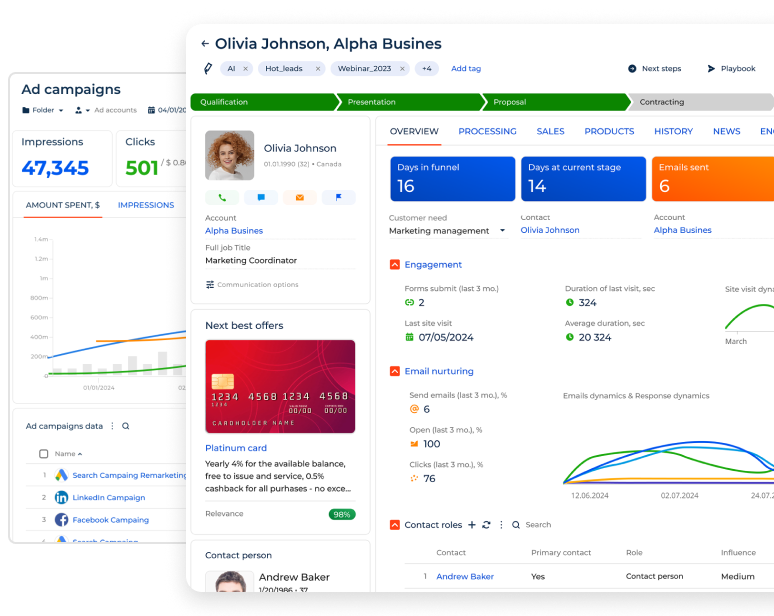
A robust and efficient Customer Relationship Management (CRM) system is essential for supporting business growth and fostering long-term customer relationships. CRM has become a core part of operations across almost every sector: financial institutions use it to manage client portfolios, estate agencies rely on it to track leads and properties, and insurance providers depend on it to streamline interactions with policyholders.
Given the wide range of CRM platforms available, selecting the right solution can be challenging, particularly for organisations considering an alternative to Salesforce. This article examines the leading Salesforce alternatives for 2026, outlining their core capabilities, key advantages, and how they compare with the market giant in supporting business performance and long-term growth.
Key points:
- Common reasons for considering alternatives to Salesforce include high cost, a steep learning curve, complexity in day-to-day use, challenges in customisation and integration, inconsistent customer support, and a user experience that can feel cumbersome due to an unintuitive interface.
- The leading Salesforce alternatives in 2026 include Creatio, Zoho, HubSpot, Freshworks, Microsoft Dynamics, Vtiger, Oracle, SAP, Pegasystems, Zendesk, Insightly, and Monday.com.
- According to Nucleus Research, organisations that transitioned from Salesforce to Creatio CRM reported a 37% reduction in technology costs, a 70% decrease in implementation timescales, and a 17% reduction in manual data entry for sales teams.
What is Salesforce?
Salesforce is a cloud-based platform that offers customer relationship management (CRM) software to support sales, marketing, customer service, and e-commerce operations. It is widely recognised for its broad range of products and features, which help organisations to strengthen customer relationships, improve operational efficiency, and support business growth. Core Salesforce CRM capabilities include sales and marketing automation, customer service and support tools, artificial intelligence (AI) and analytics, as well as extensive customisation options to meet specific organisations requirements.
Reasons for considering alternatives to Salesforce
There are several valid reasons for exploring alternatives to Salesforce. While Salesforce remains a well-established CRM platform, many organisations encounter challenges that affect cost, usability, and overall value. The most common factors behind the decision to consider alternative solutions include:
1. High overall cost
Salesforce is widely recognised for its costly licensing model, with expenditure often increasing significantly as additional features, users, or integrations are introduced. For many businesses, this can result in a total cost of ownership that substantially exceeds initial expectations, making more cost-effective alternatives an increasingly attractive option.
2. Steep learning curve and platform complexity
Salesforce’s extensive functionality can often come at the expense of ease of use. Teams without significant technical expertise may find the platform difficult to navigate, which can slow adoption and impact day-to-day productivity. Some Salesforce alternatives, such as Creatio or HubSpot, offer more intuitive user experiences that support faster implementation and quicker operational benefits.
3. Challenges with customisation and integration
Although Salesforce offers a high degree of flexibility, tailoring the platform to specific workflows or integrating it with non-Salesforce systems can often be complex, costly, and time-consuming. Many alternative CRM providers offer more straightforward customisation options, through no-code or low-code tools, along with smoother integrations.
4. Slow and inconsistent customer support
Many users report that Salesforce support can be difficult to access, slow to respond, or inconsistent in quality. For organisations that depend on the timely resolution of technical issues, this can create operational delays and frustration. Alternative platforms frequently place greater emphasis on responsive and reliable support services.
5. Unintuitive interface
Salesforce’s interface is criticised for being cluttered and difficult to navigate, which can make even routine tasks unnecessarily time-consuming for end users, and in turn, impact overall adoption. By contrast, many modern CRM systems offer cleaner, more streamlined interfaces that make navigation easier and support greater efficiency in day-to-day tasks.
What to consider when exploring alternatives to Salesforce
To ensure a new CRM platform offers both technical capability and measurable business value, the following criteria should be carefully assessed:
- Core functionality: a capable CRM should provide all essential features, including sales and marketing automation, pipeline management, contact and account management, analytics and reporting, and comprehensive customer service tools. Platforms with fragmented or limited functionality can often lead to higher costs, operational inefficiencies, and unnecessary complexity.
- AI tools and agents: while most CRM platforms often provide core AI functionality for data analysis, forecasting, and personalisation, more advanced Salesforce alternatives also provide role-specific AI agents designed to manage routine tasks and improve workflows. For instance, Creatio offers an Account Research Agent that enriches customer profiles with relevant insights, a Meeting Agent that prepares agendas and briefing notes, and a Quote Generation Agent that streamlines pricing and proposal creation. These capabilities help teams to work more efficiently and support more informed decision-making.
- Customisation and scalability: as business processes vary from one organisation to another, CRM software should be flexible enough to support existing ways of working and adapt as requirements change, without requiring significant IT involvement. It is also worth considering platforms with no-code or low-code functionality, as these enable business users to adjust workflows, dashboards, and reports more quickly and with less reliance on technical support. Equally important is the ability to scale over time, helping to avoid costly or disruptive system changes in the future.
- Ease of use: a CRM only delivers value if teams can use it confidently and consistently. A platform with a clear, intuitive interface will reduce training time, support daily use, and help staff work efficiently without unnecessary complexity.
- Integration capabilities: a CRM system forms only one part of the wider business system, so it should connect smoothly with the tools already in use, including marketing automation platforms, ERP software, accounting tools, and customer support applications. Priority should be given to vendors that offer ready-made connectors and flexible API integration options, helping to reduce the need for costly development work.
- Post-sales support: adopting a new CRM platforms is only the first stage; ongoing support and training are essential to long-term success. It is therefore important to select a provider that offers reliable customer support, comprehensive documentation, training resources and practical guidance, alongside regular updates that continue to improve the platform’s functionality.
- Pricing: cost assessments should extend beyond licence fees to include add-ons, integration work, training, and ongoing support. Any alternative to Salesforce should offer transparent, predictable pricing models that align with budget requirements and longer-term growth plans.
By assessing these factors, organisations can identify an alternative that not only matches Salesforce’s capabilities but also supports long-term strategic objectives, making the transition smoother and better supporting future growth.
12 leading Salesforce alternatives to consider in 2026
For organisations considering an alternative to Salesforce, there is no shortage of CRM options to assess. Each offers a different combination of features, pricing, and functionality suited to particular business needs. This comparison table outlines the leading options, helping organisations identify the solution that best supports specific requirements and longer-term plans.
Salesforce Alternative | Well suited to | Customer Ratings (out of 5) |
| Creatio | Medium-sized to larger organisations seeking a robust CRM platform to manage customer-facing and operational workflows, with no-code and AI embedded into its core. | |
| Zoho CRM | Small to medium-sized businesses looking for an affordable, all-in-one CRM with a wide range of integrations. | - Capterra: 4.3
- Gartner: 4.2
- G2: 4.1
|
| HubSpot | Growing organisations in search of an intuitive customer platform covering marketing, sales, service, and content management. | - Capterra: 4.5
- Gartner: 4.6
- G2: 4.4
|
| Freshworks | Small businesses requiring a straightforward, cost-effective CRM for sales and customer support. | - Capterra: 4.5/5
- Gartner: 4.4/5
- G2: 4.5
|
| Microsoft Dynamics 365 | Large organisations requiring integrated ERP and CRM functionality, with the scalability offered within Microsoft’s ecosystem. | - Capterra: 4.4
- Gartner: 4.3
- G2: 3.8
|
| Vtiger CRM | Small to medium-sized teams seeking an open-source CRM with strong customisation options and cost-effective sales and marketing automation. | - Capterra: 4.4
- Gartner: 4.2
- G2: 4.3
|
| Oracle CX | Large enterprises working within highly specialised sectors that require robust, secure CRM with advanced data management. | - Capterra: 4.4
- Gartner: 4.3
- G2: 3.9
|
| SAP CRM | Global organisations seeking industry-specific CRM solutions with advanced process automation and SAP ERP integration. | - Capterra: 4.3
- Gartner: 4.2
- G2: 4.1
|
| Pegasystems CRM (Pega) | Enterprises with complex workflows that require strong business process management (BPM) capabilities and AI-driven decision support. | - Capterra: 3.9
- Gartner: 4.8
- G2: 4.0
|
| Zendesk | Service-focused organisations that prioritise customer support as a part of sales strategy. | - Capterra: 4.4
- Gartner: 4.2
- G2: 4.2
|
| Insightly | Small to medium-sized business requiring simple, cost-effective CRM with built-in project management capabilities. | - Capterra: 4.1
- Gartner: 4.2
- G2: 4.2
|
| Monday CRM | Teams seeking a visually intuitive, flexible, and collaborative CRM platform. | - Capterra: 4.6
- Gartner: 4.5
- G2: 4.7
|
1. Creatio
Creatio is an alternative to Salesforce for organisations seeking a modern CRM platform that combines no-code tools and AI to support customer-facing and operational workflows.
It is widely used by medium-sized and large organisations that require a highly customisable, enterprise-grade platform for CRM and workflow automation within a single, AI-native environment.
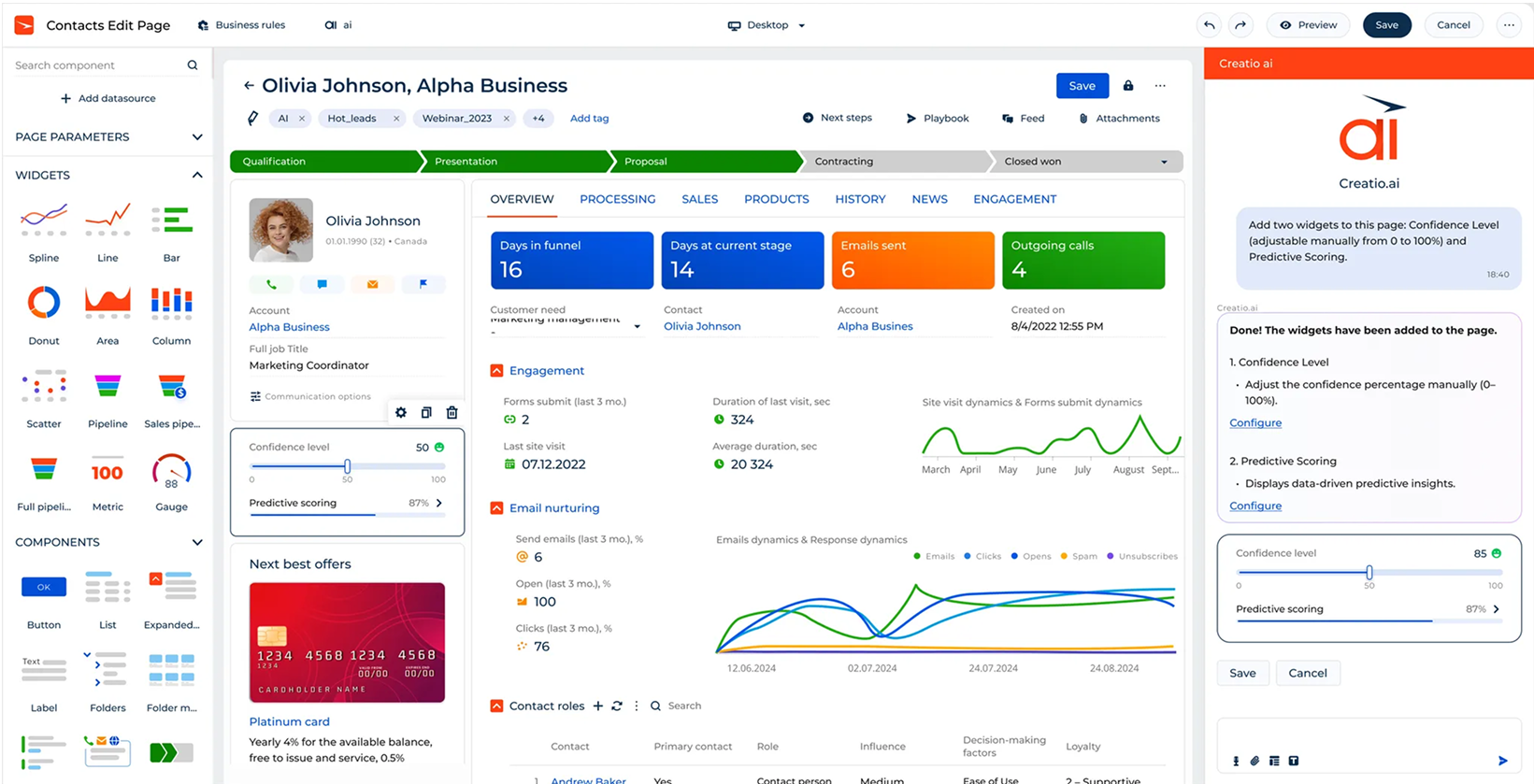
With Creatio’s CRM platform, sales teams can manage leads and opportunities, forecast revenue, and collaborate more effectively to improve visibility and control across the sales pipeline. Marketing teams can plan and deliver personalised multichannel campaigns, segment audiences, and monitor performance in real time. Customer service teams benefit from a centralised, AI-powered workspace that supports faster and more consistent case resolution across all communication channels.
A key differentiator for Creatio is its advanced no-code capabilities and composable architecture, which enable business users, alongside IT teams, to adapt workflows, build applications, and automate CRM processes across virtually any industry or use case. Unlike Salesforce, Creatio does not rely on specialised developer expertise, allowing organisations to reduce costs, accelerate innovation, and minimise risks associated with IT skills shortages.
Creatio’s portfolio includes Creatio Studio, a no-code agentic platform for building applications and AI agents using natural language and visual design tools, alongside three comprehensive CRM solutions:
- Creatio Sales: an end-to-end agentic platform designed to automate sales processes of any type and scale through no-code tools, AI, and a high level of flexibility.
- Creatio Marketing: a ready-to-use agentic platform that helps organisations accelerate the lead-to-revenue process and streamline a wide range of marketing workflows, with no code functionality and AI at its core.
- Creatio Service: an omnichannel service platform designed to enhance customer experiences and support service excellence through no-code flexibility and integrated AI capabilities.
In it Creatio 8.3 “Twin” release, the company introduced role-specific AI agents for sales, marketing, and service workflows. These CRM AI agents work alongside employees by automating repetitive tasks, supporting operational scale, and enabling teams to focus more on customer relationships and higher-value problem-solving.
Creatio’s capabilities have been recognised by both industry analysts and customers. Creatio platform was recently recognised as a Visionary in Gartner® Magic Quadrant™ for Sales Force Automation Platforms, reinforcing its position as an AI-native alternative to legacy CRM systems. Customers also highlight the platform’s measurable business impact. For example, Dan Rafferty, Chief Technology Officer at Purplebricks has recently shared his company’s experience with Creatio: “We’ve seen a 35% increase in leads, and we’re converting 50% more. And to get there so quickly? We couldn’t have done this with any other software solution I’ve come across.”
Overall, Creatio is particularly well suited to medium-sized and large enterprises seeking a CRM solution that combines flexibility, efficiency, and cost-effectiveness. Its strong analyst recognition, proven client results, and advanced AI capabilities make it a strong choice for organisations considering an alternative to Salesforce.
Core Creatio features:
- Agentic CRM and workflow automation solutions for service, sales, and marketing, designed to streamline both customer-facing and internal operations
- Prebuilt CRM AI Agents that help automate repetitive tasks, support efficient scaling, and accelerate implementation.
- No-Code AI Agent Builder that enables organisations to design and deploy AI agents that tailored to specific business processes and operational requirements.
- Advanced customisation and flexibility that allow the platform to be adapted to a wide range of use cases and unique business needs
- Flexible composable no-code architecture designed to support scalability and enable efficient process automation
- Transparent and straightforward pricing model, with no hidden costs
- Ready-to-use solutions tailored to the needs of more than 20 industries
- Access to over 400 applications and third-party add-ons through Creatio Marketplace
Creatio limitations:
- Users unfamiliar with no-code development may require time to become fully confident with the platform
Creatio pricing options:
Creatio offers a flexible composable pricing model, allowing organisations to select and pay only for the products required. The core platform is available under three plans: Growth at ~£25, Enterprise at ~£55, and Unlimited at ~£85 per user per month. Its CRM products, Sales, Marketing, and Service, are priced at ~£15 per user per month and can be purchased either as a combined CRM package or as standalone solutions, depending on the organisation’s specific requirements.
A product demo can be requested to understand the platform’s essential capabilities.
A New Era AI CRM
Automate campaigns, pipelines, and service flows with Creatio's agentic CRM
2. Zoho CRM
Zoho CRM offers a compelling alternative to Salesforce CRM with its unified, cloud-based platform for managing sales, marketing, and support functions.
Its broad range of capabilities, including sales force automation, advanced analytics, AI-driven insights, and intuitive customisation, makes it suitable for businesses of all sizes. Zoho CRM also offers flexible plans and add-on options, allowing the platform to scale in line with changing business requirements. Small and medium-sized enterprise, in particular, may benefit from its cost-effective pricing structure. Zoho also offers a free version for up to three users.
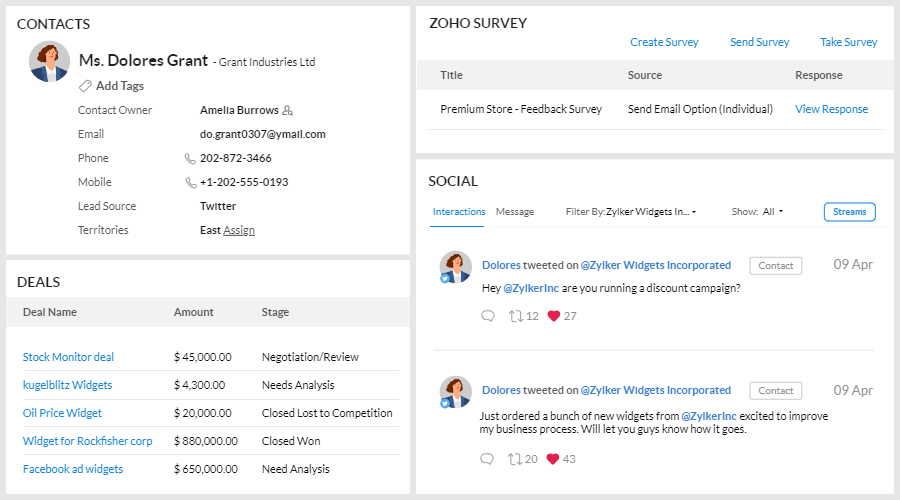
With its breadth of features and affordability, Zoho CRM is an ideal choice for those seeking a powerful, budget-friendly CRM solution.
Zoho CRM core features:
- 360-degree customer view, bringing sales, marketing, and support data
- Built-in AI tools, Zia AI, including lead scoring, forecasting, sentiment analysis, and workflow recommendations.
- A broad library of integrations and extensions, making it easier for businesses to expand functionality quickly.
- Low-code customisation options that allow users to tailor dashboards, reports, and workflows
Zoho CRM limitations:
- Reporting and predictive capabilities may not be advanced enough for more complex requirements
- Users may require additional training to make the most of the platform’s full functionality
Zoho CRM pricing options:
Zoho CRM offers four pricing plans: Standard at ~£15, Professional at ~£26, Enterprise at ~£37, and Ultimate at ~£49 per user per month. AI-powered forecasting and advanced analytics are only included in Enterprise and Ultimate plans. A free trial is also available.
3. HubSpot
HubSpot CRM is an attractive alternative to Salesforce CRM, especially for small to mid-sized businesses seeking an all-in-one CRM solution.
HubSpot offers a suite of cloud-based tools that facilitate lead capture, customer interaction management, process automation, and deal closure. Notably, the introduction of Operations Hub enhances the CRM platform by automating processes, unifying data, and streamlining customer interactions.
HubSpot’s strengths lie in digital sales capabilities, support for various channels, predictive lead scoring, ease of deployment, and a free CRM option with no contact or user limits.
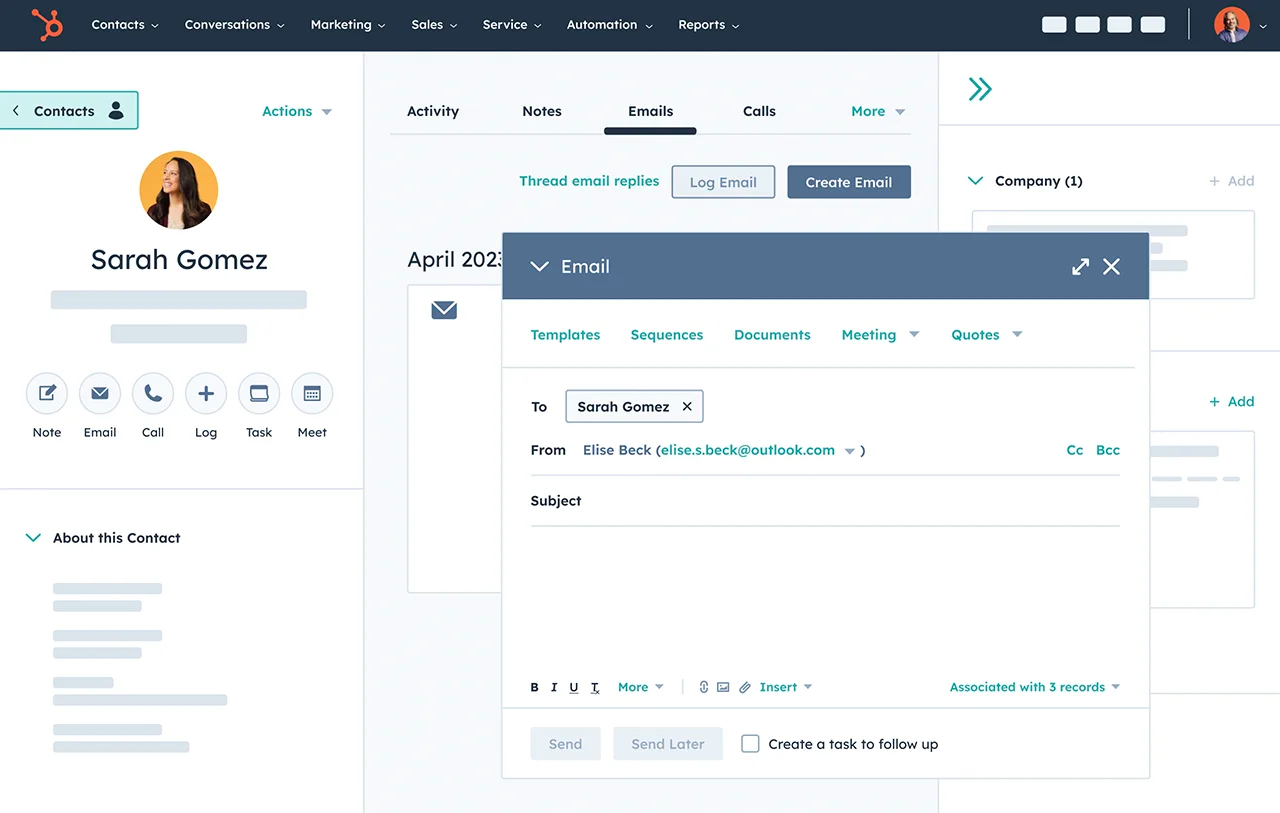
With prices starting at ~£22, HubSpot CRM is an ideal choice for smaller teams looking to streamline marketing and sales processes.
Hubspot core features:
- Unified CRM platform for marketing, sales, customer service, content management, and business operations.
- Intuitive interface with built-in collaboration tools to support more efficient teamwork.
- Content Hub and Operations Hub designed to enhance marketing campaigns and streamline workflow automation.
- Advanced analytics and reporting tools to monitor performance and better understand customer behaviour.
- Free plan is available, enabling organisations to explore core CRM features before upgrading.
Hubspot limitations:
- CRM workflow customisation options may be more limited than those offered by some other providers
- The platform offers fewer integrations than certain competing solutions
Hubspot pricing options:
Hubspot’s pricing model differs from other providers, as it nor based on the number of users. It offers two monthly plans: Professional at ~£880 and Enterprise for ~£2,910. A free version with limited functionality is also available for individual users.
4. Freshworks
Freshworks CRM presents an enticing alternative to Salesforce CRM, especially for fast-growing businesses with expanding sales and marketing automation needs.
Freshworks' cloud-based suite of business tools integrates Freshmarketer, Freshsales, Freshdesk, and Freshchat, making it easier for teams to manage customer data and work more effectively. Its strengths lie in digital sales and customer service capabilities, with strong support for modern messaging channels and automation that helps streamline actions, workflows, and engagement sequences.
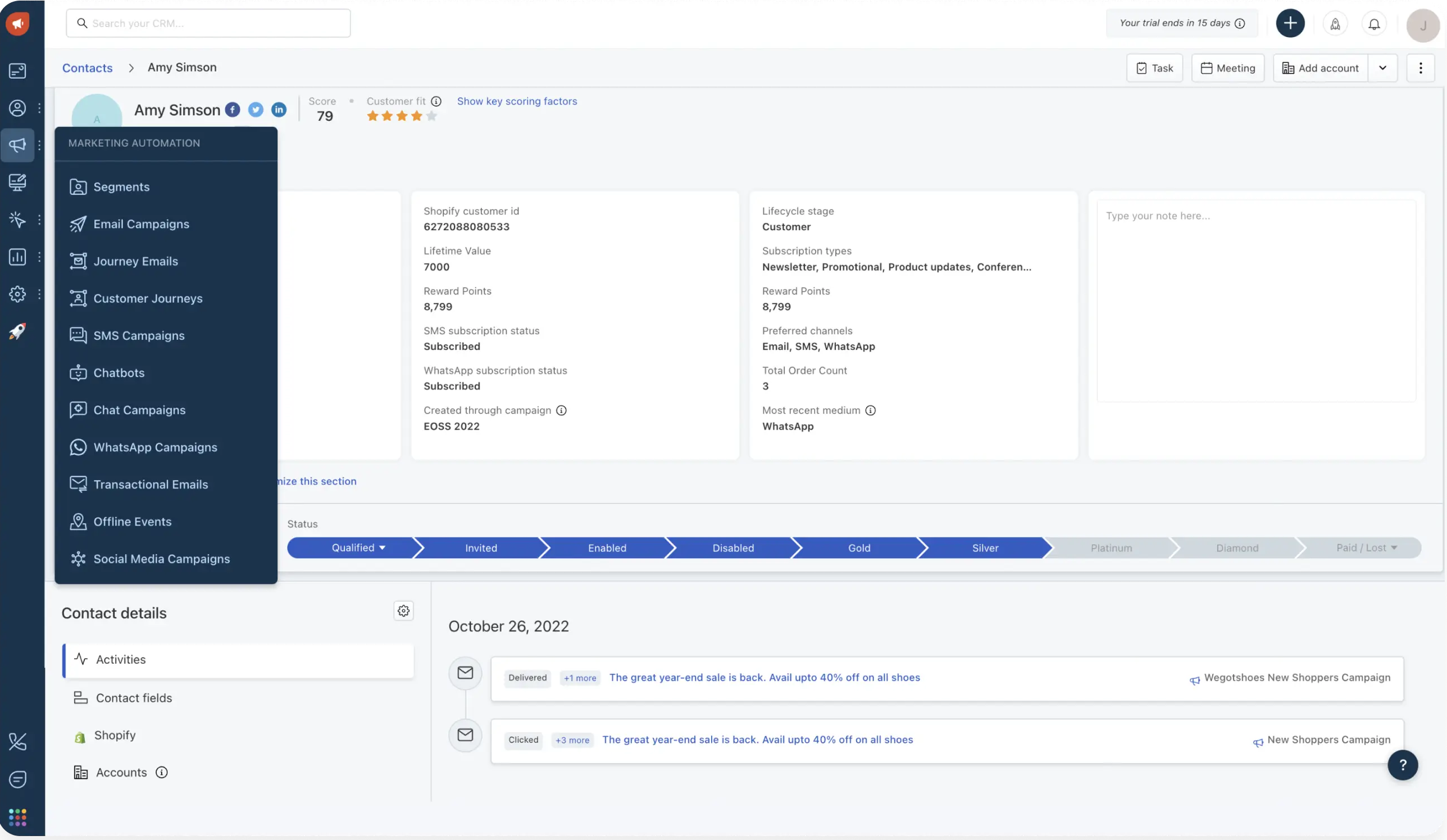
Freshworks is a strong option for smaller teams seeking an easy-to-deploy, user-friendly CRM solution that aligns with organisational requirements. Pricing starts at ~£11, and free versions are available across its product suite.
Freshworks core features:
- A unified interface for sales and marketing workflows.
- Clear pipeline visibility and dynamic revenue forecasting tools powered by Freddy AI.
- AI-powered sales support for leads evaluation, email drafting, and next-best-action recommendations.
- Multichannel engagement capabilities across email, SMS, WhatsApp, chat and built-in telephony, all within the CRM.
- A wide range of built-in automation tools to support sales processes.
- User-friendly interface
Freshworks limitations:
- Less suitable for large-scale enterprise environments or more complex customisation requirements
- Some products need to be purchased separately, which can make the overall setup lease convenient, for example, Freshservice is not included as standard.
Freshworks pricing options:
Freshworks CRM offers three plans: Growth at ~£7, Pro at ~£30, and Enterprise at ~£45 per user per month. These plans include marketing and sales automation features. Its customer service software is priced separately, with Growth at ~£22, Pro at ~£51, and Enterprise at ~£81. Free trial is also available
5. Microsoft Dynamics 365
Microsoft Dynamics 365 is a strong alternative to Salesforce CRM, providing a comparable platform with a broad range of capabilities. Its suite includes Dynamics 365 Marketing, Sales, Customer Service, Commerce, and Customer Insights, each supported by advanced AI, business intelligence, and low-code functionality.
Its key strengths include the breadth of its offering, seamless integration with Microsoft products, support for on-premises solutions, and a well-established ecosystem of marketplace applications. However, some users report challenges around licensing flexibility and product complexity.
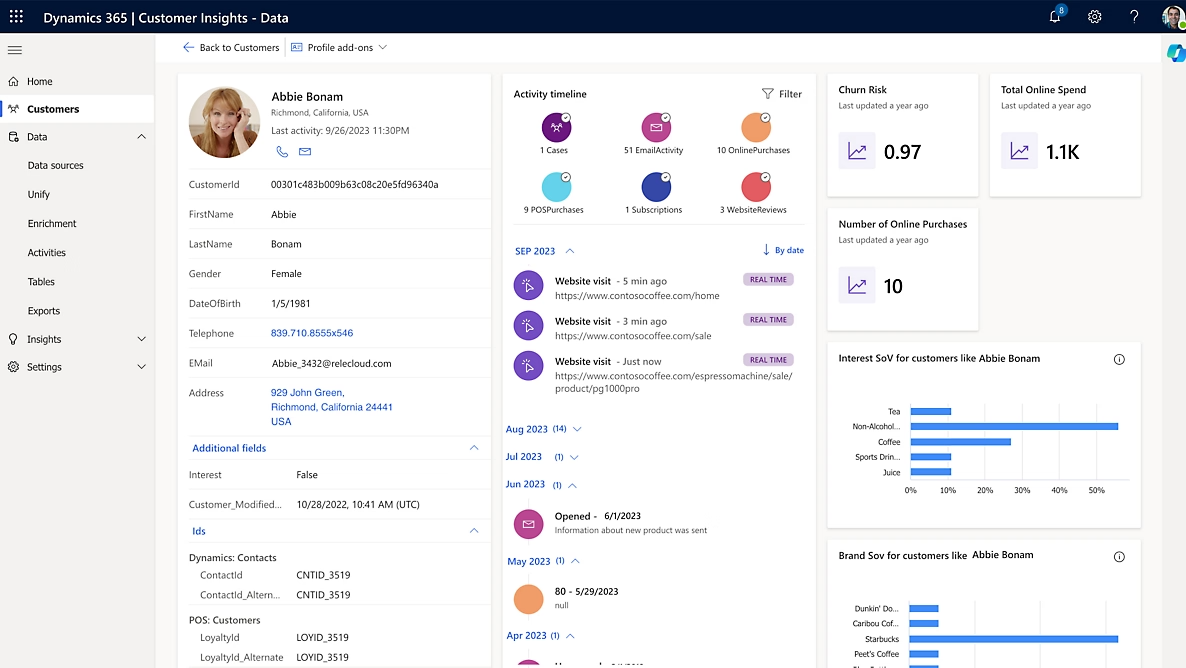
Although Microsoft's licensing costs are higher than those of some competitors, Dynamics 365 is still generally more cost-effective than Salesforce. It is particularly well suited to medium-sized and larger organisations, especially those already using Microsoft products or requiring a mature on-premises solution.
Microsoft Dynamics 365 key features:
- Full suite of products for marketing, sales, customer service, commerce, and customer insights
- Unified customer view with real-time data and insights
- Robust sales pipeline management and forecasting tools
- Low-code customisation capabilities
- AI Copilot integration to help improve automation and productivity
Microsoft Dynamics 365 limitations:
- Licensing can be inflexible, and the platform may feel complex for some users
- CRM tools are sold separately, leading to a higher total cost of ownership
- Integration with non-Microsoft products can be more limited
Microsoft Dynamics 365 pricing options:
Microsoft Dynamics 365 pricing varies by product, with plans typically ranging from ~£38 to ~£134 per user per month.
6. Vtiger CRM
Vtiger is a strong alternative to Salesforce for smaller businesses seeking an affordable and easy-to-use CRM platform. It supports both B2B and B2C teams across a range of industries, including construction, financial services insurance, pharmaceuticals, and real estate.
Vtiger offers a broad set of features, including Configure, Price, Quote (CPQ), opportunity revenue scheduling, and a sales learning management system. It also provides customisable automation through Insights Designer and Process Designer. It Calculus AI add-on brings in generative AI capabilities such as email subject generation, email drafting, and natural language querying.
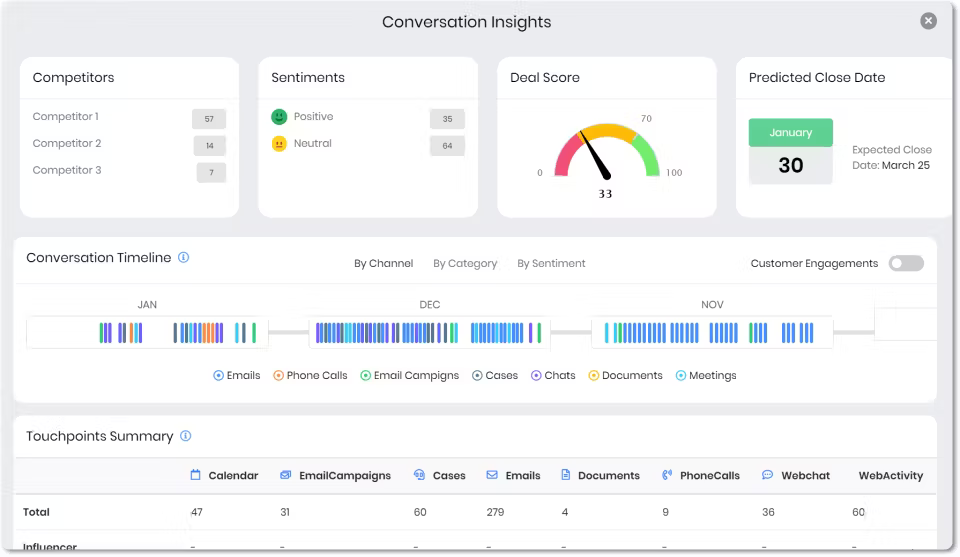
Vtiger offers a practical set of features for the SMB segment, including activity and opportunity management, making it a great option for businesses looking for an affordable yet capable CRM.
Core Vtiger CRM features:
- Strong sales, marketing, customer support, and productivity tools
- AI-driven insights, including predictive forecasting and deal guidance through Calculus AI
- An extensive API and marketplace ecosystem
- Low-code customisation for workflow automation and greater platform flexibility
- Transparent pricing tiers designed to suit different business size and requirements
Vtiger CRM limitations:
- Sales forecasting and predictive analytics may be less advanced
- Performance can be affected when handling large datasets or more complex operations
- More extensive customisation may require third-party developer support
Vtiger CRM pricing options:
Vtiger offers three plans: Growth at ~£10, Professional at ~£32, and Enterprise at ~£43 per user per month.
7. Oracle CX Cloud
Oracle CX is a strong alternative to Salesforce CRM, with a well-established and mature product offering.
Oracle CX, part of Oracle's extensive cloud product range, provides a comprehensive suite of customer experience solutions designed to support engagement across multiple touchpoints. Its key strengths include the depth of its functionality, advanced analytics capabilities, and enterprise-level scalability. However, some users find the platform overly complex, particularly whey it comes to customisation.
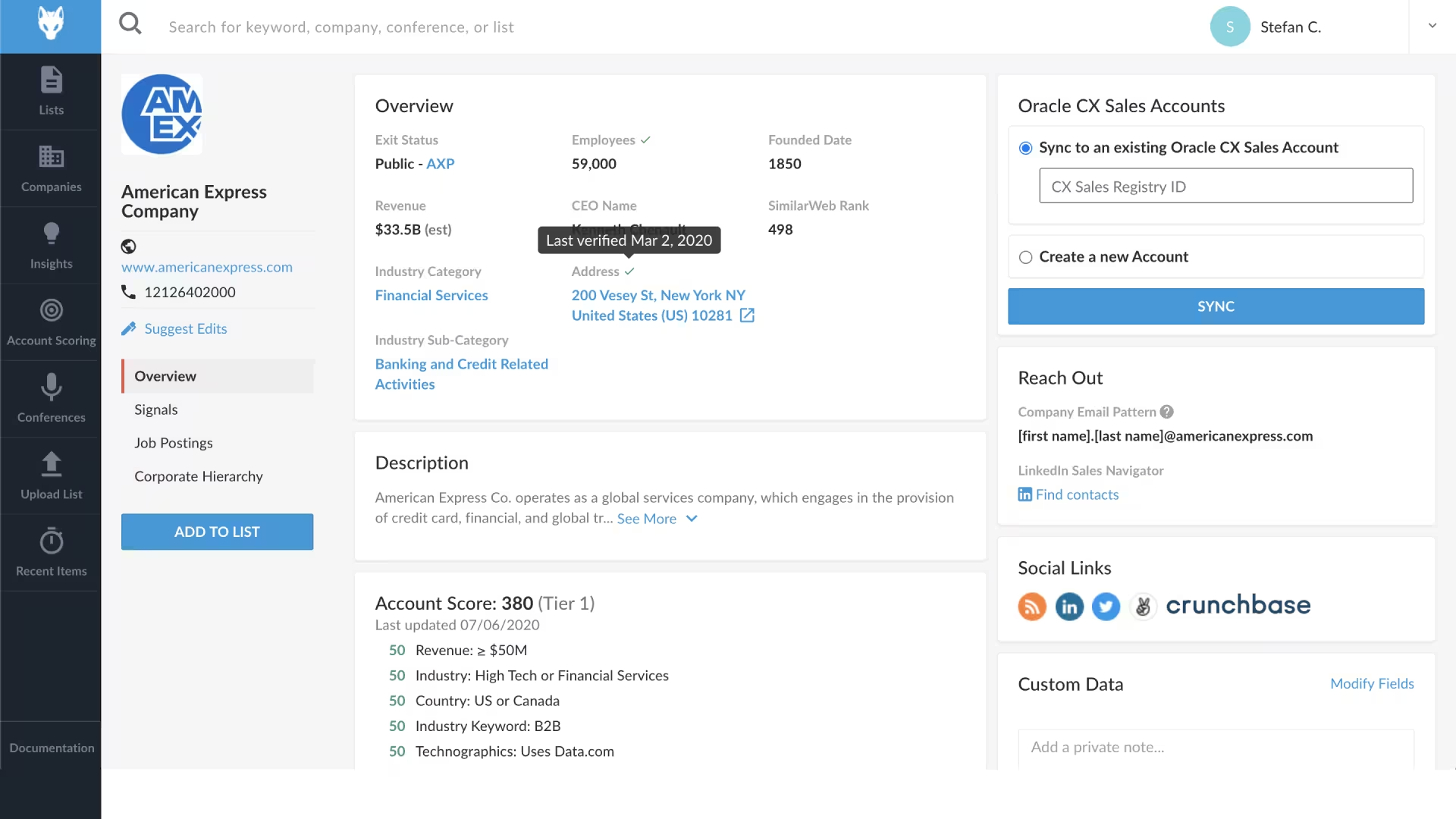
Although Oracle CX is priced above some competitors, it offers a comprehensive CRM solution suitable for organisations of different sizes. It is particularly well suited to mid-market and enterprise businesses seeking to strengthen multichannel sales, marketing efforts and customer service operations.
Core Oracle CX features:
- Modular, industry-specific deployments with deep ERP integration support
- Built-in configure-price-quote, analytics, automation, and CX modules across sectors
- Omnichannel support backed by AI and knowledge management capabilities
- Enterprise-grade scalability, secure integrations, and a data-led approach to customer experience
- AI-powered tools for predictive scoring, personalised recommendations, email and content generation
Oracle CX limitations:
- User interface may feel outdated
- Some users report slower loading times and delayed system responses
- There can be limitations around the number of records supported in custom objects
Oracle CX pricing options:
Oracle CX Cloud offers four plans: Professional at ~£48, Standard at ~£75, Enterprise at ~£150, and Premium for ~£223 per user per month.
8. SAP
SAP CRM's broad range of reliable, enterprise-grade applications makes it a strong alternative to Salesforce CRM.
One of its key advantages is built-in integration with SAP ERP (Enterprise Resource Planning), which helps provide a more comprehensive and centralised view of customer and financial data. With robust sales operations tools covering pipeline management, forecasting, quoting, and order capture, it is well suited to medium-sized and larger enterprises.
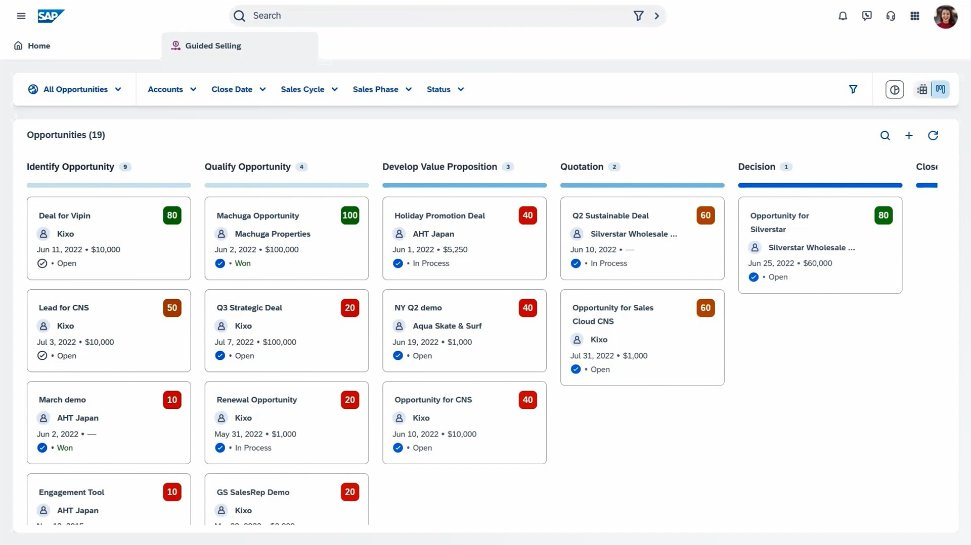
While it may be less advanced than some competitors in areas such as modern communication channels and AI capabilities, SAP CRM remains a solid option for businesses looking for an integrated and scalable CRM platform.
Core SAP CRM features:
- Native integration with SAP ERP
- A comprehensive set of CRM capabilities covering sales, marketing, service, analytics, and personalisation
- Interactive dashboards and on-demand reporting to support data-driven decision-making and more tailored customer engagement
- AI-assisted report building, customer sentiment analysis, and intelligent service workflows
SAP CRM limitations:
- High implementation and ongoing maintenance expenses
- Steep learning curve due to the platform’s breadth and complexity
SAP CRM pricing options:
Pricing starts from ~£43 pre user, with final costs depending on the number of users and selected solutions. Exact pricing is available from SAP on request.
9. Pegasystems
Pegasystems CRM is well suited to large enterprises that need to manage complex processes, making it a strong alternative to Salesforce.
Its key strength lies in its real-time decisioning engine, which supports a suite of process-led applications across marketing, sales, and customer service. The platform is well regarded for its configurability and advanced process automation capabilities, although it can involve a steep learning curve.
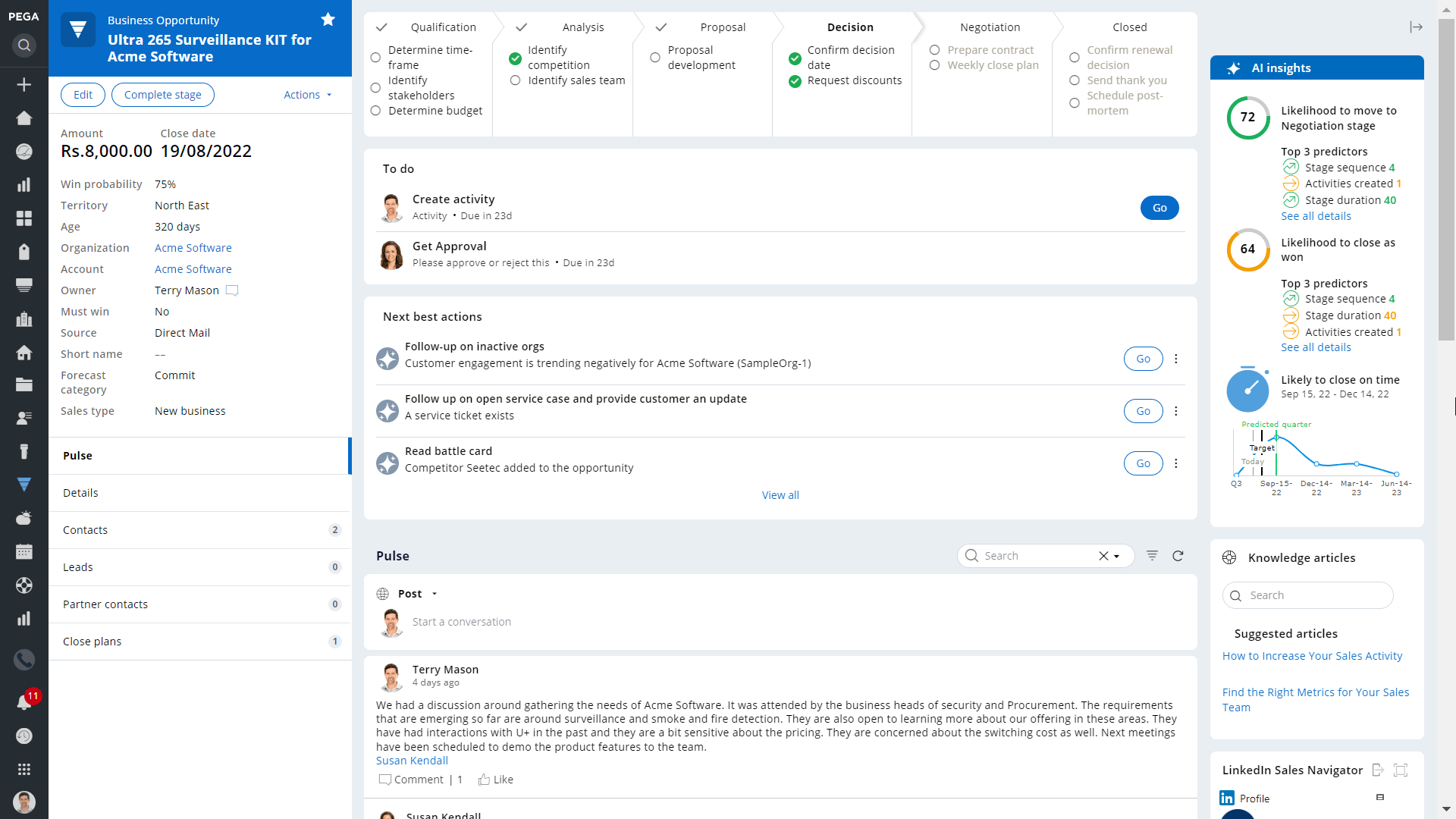
It is a worthy investment for companies that need a sophisticated and adaptable CRM platform, especially in dynamic industries such as healthcare, insurance, and financial services.
Core Pega CRM features:
- Integrates sales, marketing, and customer service with real-time automation and AI-driven decisioning
- Customer-centred architecture that supports next-best-action recommendations for more effective engagement
- End-to-end customer journeys orchestration through dynamic case management, predictive analytics, and workflow automation
- Industry-specific solutions tailored to selected sectors
Pega CRM limitations:
- Platform can involve a steep learning curve due to extensive and complex configurability
- Integration often requires in-depth knowledge of Pega’s proprietary rules and architecture
- Some users find the interface cluttered and less intuitive
Pega CRM pricing options:
Pega CRM offers four pricing editions, ranging from ~£72 to ~£194.
10. Zendesk Suite
Zendesk Sell CRM is a compelling alternative to Salesforce CRM, particularly for organisations looking for streamlined customer service and end-to-end sales process automation.
It performs well in digital engagement, with support for a wide range of channels, including modern messaging and rule-driven chatbots. This makes it especially useful for companies managing high volumes of leads and customer enquiries. Zendesk's CRM is known for its straightforward interface, making it accessible to a broad range of teams.
A key advantage is Zendesk’s customer service suite, which is fully integrated with Zendesk Sell CRM. While the platform performs strongly in several areas, some users report limitations in real-time insights and process management.
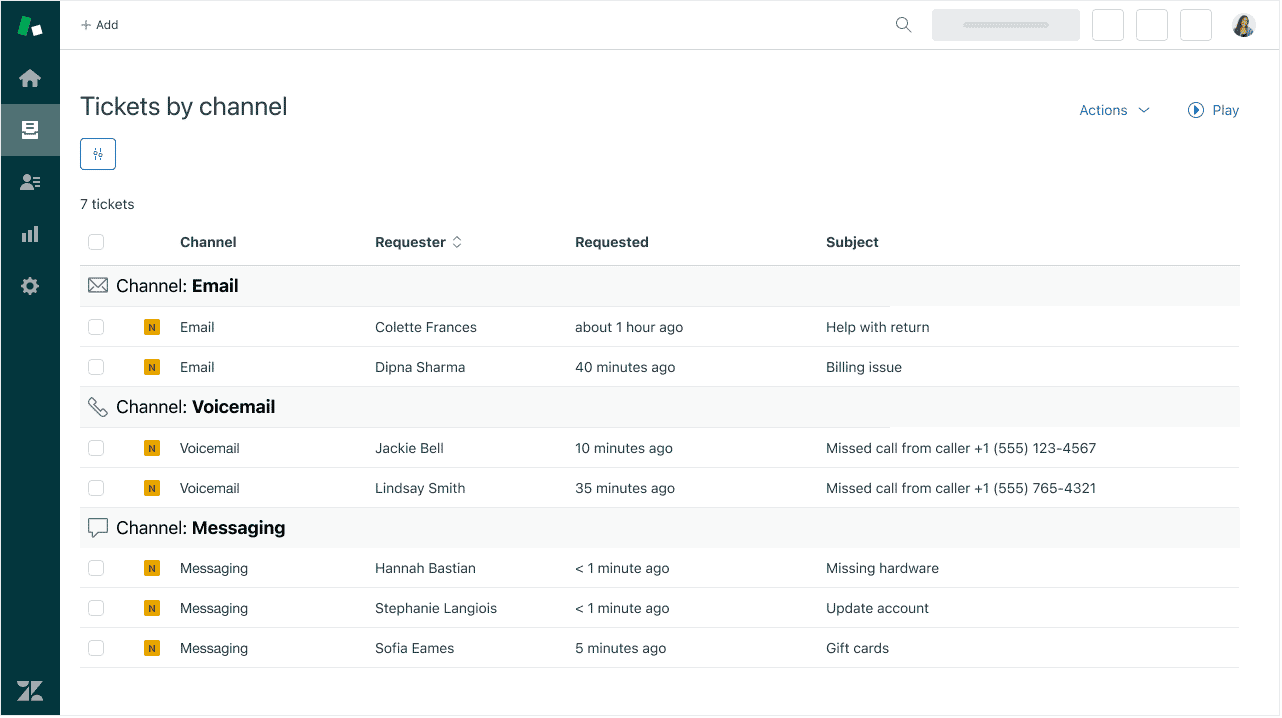
Overall, Zendesk is particularly well suited to medium-sized and larger organisations handling high volumes of customer interactions and operating across digital channels.
Core Zendesk Suite features:
- A unified omnichannel helpdesk that brings together customer interactions across email, chat, social media, and voice
- Centralised agent workspace designed to support faster ticket resolution and better customer context
- Built-in knowledge base and self-service capabilities
- AI-driven automation and AI agents for handling routine enquiries and workflows
- User-friendly interface
Zendesk Suite limitations:
- Real-time intelligence and process management capabilities are less advanced
- More specific or complex customisation may require developer support
- Customer support can be inconsistent, according to some users
Zendesk Suite pricing options:
Zendesk offers three pricing tiers, ranging from ~£51 to ~£111 per user per month.
11. Insightly
Insightly CRM is an attractive alternative to Salesforce CRM, particularly for small and medium-sized businesses seeking a cost-effective and capable sales CRM.
Its cloud-based platform combines contact and lead management, project management, and a broad set of automation features within a user-friendly system. It helps support sales and marketing activity, consolidates customer data, and streamlines day-to-day work management. Key strengths include ease of use, solid reporting and analytics, and a wide range of integrations.
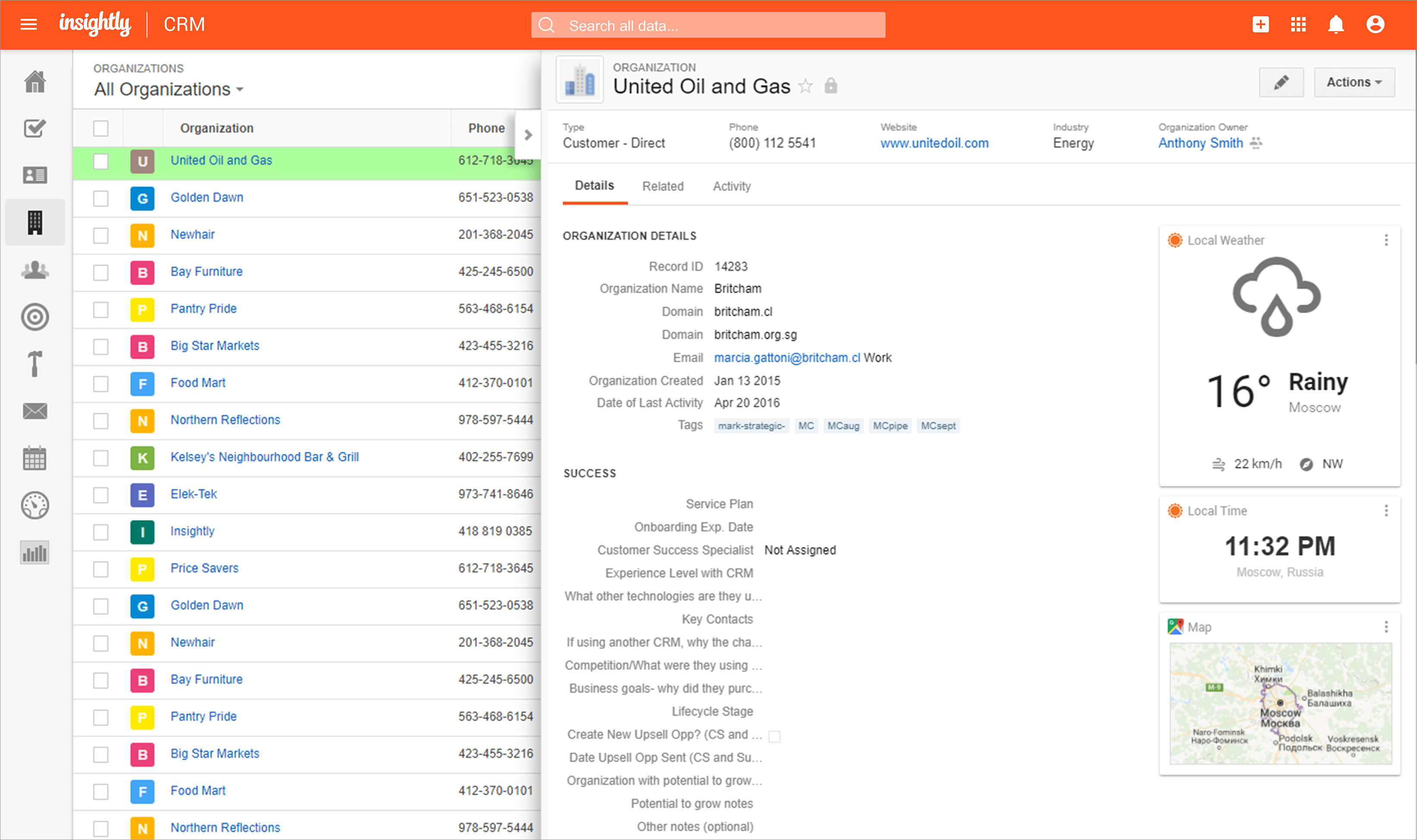
Insightly offers accessible pricing, making it a practical option for business looking to improve CRM processes without taking on unnecessary costs.
Core Insightly features:
- Detailed insights into customer segments, as well as individual leads and contacts.
- Advanced analytics and reporting features to track sales performance and outcomes.
- High level of customisation to support different business processes and requirements.
- Built-in task management tools, including notes and comments across records.
- Streamlined data import to support easier migration and more complete customer profiles.
- Strong contact management capabilities supported by granular segmentation.
Insightly limitations:
- Integrations are more limited, and setup can be less straightforward
- AI functionality is relatively basic, with support mainly focused on email summaries and response suggestions
Insightly pricing options:
Insightly CRM offers three plans: Plus at ~£22, Professional at ~£36, and Enterprise at ~£74 per user per month. A free trial is also available.
12. Monday.com
Monday.com offers a flexible alternative to Salesforce CRM. Although it is not a dedicated CRM platforms, its cloud-based work management software allows teams to tailor boards and workflows to customer-related processes.
Its main strength is flexibility, with support for a wide range of use cases, including CRM, project management, and software development. Monday.com also offers a dedicated ready-made sales platform.
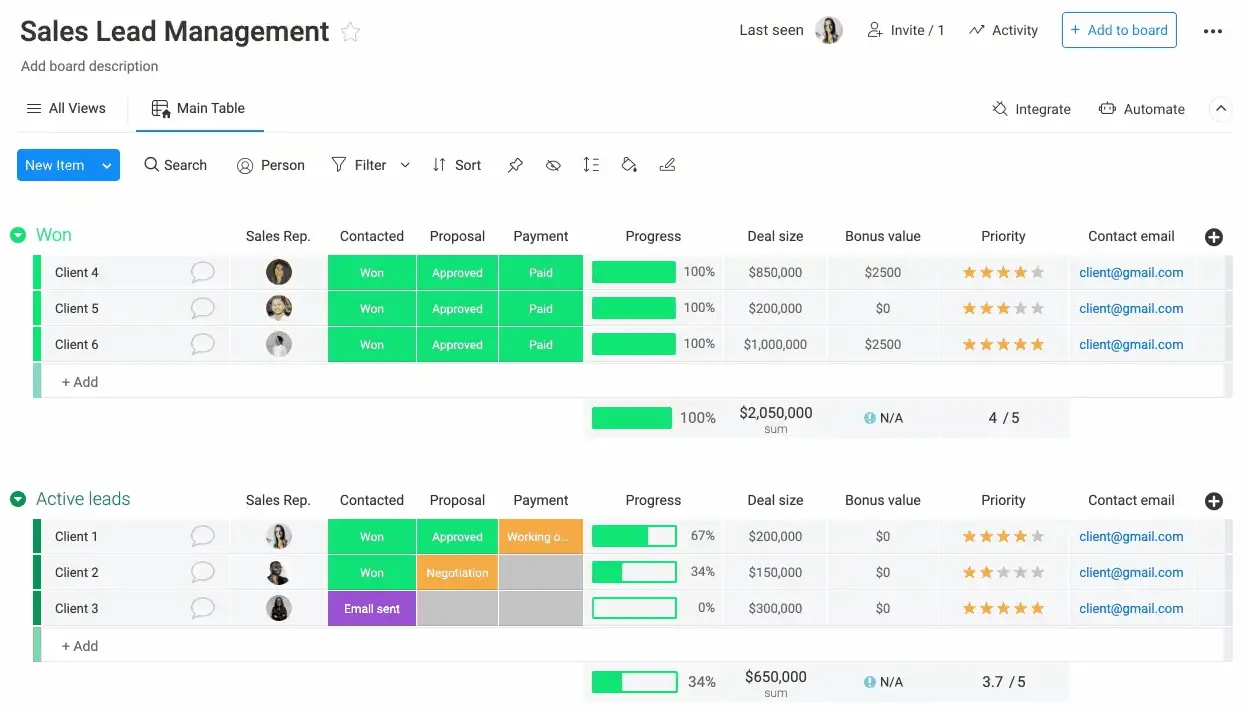
Monday Sales and CRM software is an ideal choice for small and medium-sized businesses, particularly those that prefer using Kanban boards to organise information. Its flexibility and competitive pricing make it a practical alternative to more traditional CRM solutions.
Core Monday.com features:
- A unified, visual CRM platform for managing leads, deals, post-sales workflows, and wider customer journeys.
- Ready-made templates for CRM setup, including leads, contacts, deals, and activities.
- Customisable deal pipelines with drag-and-drop boards, multiple views, and built-in automations.
- Integrations with widely used tools such as Gmail, Outlook, Slack, and Zapier.
- Flexible board and workflow customisation to suit different team needs.
Monday.com limitations:
- Core CRM functionality is more limited on lower-tier plans.
- Most email management features are not included in the Basic and Standard plans.
- Advanced sales tools are only available on the Enterprise plan.
- Sales automation capabilities are relatively limited.
Monday.com pricing options:
Monday CRM offers three plans: Basic at ~£12, Standard at ~£15, and Pro at ~£25 per user per month. A free version is also available.
Why businesses are switching to Creatio from Salesforce: Nucleus Research findings
Nucleus Research conducted an in-depth study of organisations that moved from Salesforce and Microsoft to Creatio. The findings show that these businesses saw notable improvements in efficiency, agility, and overall value. Customers consistently highlighted three main reasons for switching: lower total cost of ownership (TCO), faster time-to-value (TTV), and strong integration capabilities.
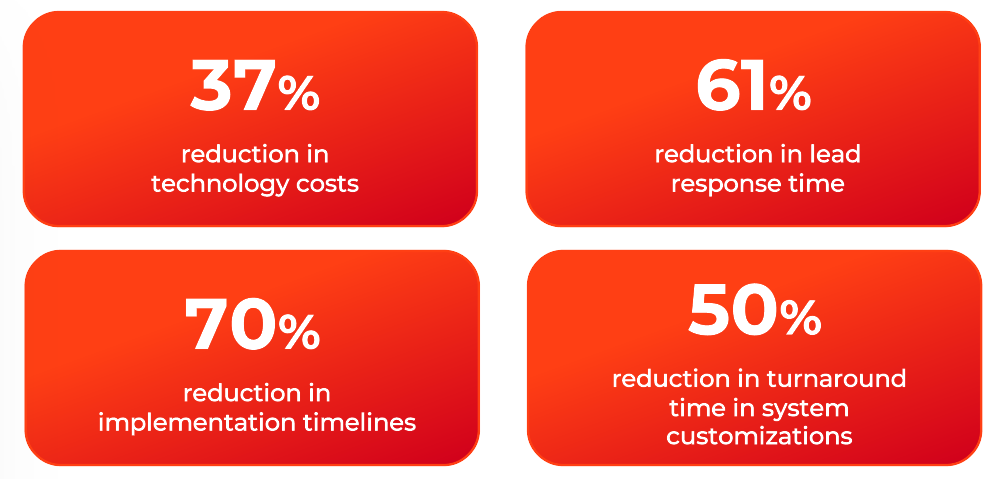
*Measured from customers switching from Salesforce to Creatio
Reduced total cost of ownership (TCO)
Creatio can help reduce overall CRM costs by reducing reliance on IT teams and accelerating implementation and customisation processes. Its no-code tools and composable architecture also support faster adaptation to evolving operational requirements. According to customer-reported results, organisations switching from solutions such as Salesforce and Microsoft reported total cost of ownership reduction of up to 37%. For example, one Creatio customer that switched from Salesforce has noted:
“Our Creatio implementation was drastically different from our experience with Salesforce. We customised the platform in a fraction of the time, and making adjustments as our needs evolve has been dramatically easier.”
Faster Time-to-Value (TTV)
With Creatio, organisations can build tailored CRM applications and workflows, with return on investment often achieved in under 12 months. Deployments can be completed within weeks — often up to 70% faster than with other CRM providers — helping teams adopt new workflows more easily and respond more effectively to changing market conditions.
Strong Integration Capabilities
Creatio CRM integrates easily with the wider stack through more than 700 applications and ready-to-use templates available on the Creatio Marketplace. By bringing sales, marketing, and service tools together into on a single platform, organisations gain a unified view of customer data without the need for costly custom development. This results in streamlined lead-to-revenue workflows, reduced manual data entry, and, according to customer-reported results, deliver an average 11% increase in conversions.
Summary
As organisations continue to face challenges around cost, complex customisation and usability, switching from Salesforce has become an increasingly common consideration. When evaluating alternatives, decision-makers should focus on core CRM capabilities, scalability, integration options and overall value. Leading Salesforce alternatives in 2026 include Creatio, Zoho, HubSpot, Freshworks, Microsoft Dynamics, and Zendesk.
Among these options, Creatio is a particularly strong Salesforce alternative, combining advanced CRM and workflow automation with agentic capabilities, a composable no-code architecture, and flexible pricing. According to Nucleus Research, organisations that switch to Creatio have reported technology cost reduction of up to 37%, implementation speeds up to 70% faster, along with significant gains in efficiency and agility. Backed by analyst recognition and customer case studies, Creatio can support organisations looking to align CRM requirements with wider business objectives while enabling a smoother transition and long-term business growth.