Manufacturing organisations are increasingly investing in technologies that improve competitiveness, resilience, and agility. According to Deloitte’s 2025 Smart Manufacturing Survey, four out of five manufacturers plan to invest more than 20% of their budgets in smart manufacturing initiatives.
One of the key technologies supporting this transformation is Manufacturing Operations Management (MOM), a framework that helps manufacturers improve operational visibility, streamline execution, and optimise performance across the manufacturing lifecycle.
As manufacturers continue to adopt Industry 4.0 technologies, automation and AI, demand for MOM software is growing. According to Grand View Research, the global manufacturing operations management software market is projected to reach $76.71 billion by 2033, with a compound annual growth rate (CAGR) of 19.1% between 2025 and 2033.
This articles explores what manufacturing operations management is, its core components and benefits, the operational challenges manufacturers commonly face, and best practices for improving manufacturing performance.
Key takeaways:
- Manufacturing Operations Management (MOM) enables manufacturers optimise production, quality, maintenance, inventory, and workforce operations.
- Core components of MOM systems include production planning and scheduling, production execution, quality management, maintenance management, inventory and material management, supply chain coordination, labour and resource management, and manufacturing analytics.
- Key benefits of MOM include reduced downtime, higher production throughput, improved product quality, and stronger operational performance.
- AI-native platforms such as Creatio help manufacturers modernise operations management by automating workflows with AI and agentic capabilities, and supporting continuous improvement across the production lifecycle.
What is manufacturing operations management (MOM)?
Manufacturing Operations Management (MOM) is a framework for managing, monitoring, and optimising manufacturing operations across the production lifecycle. It brings together production planning, manufacturing execution, quality management, maintenance, inventory management, labour management, and performance analytics to help manufacturers improve operational efficiency, maintain product quality, and optimise overall performance.
The main objective of manufacturing operations management is to transform raw materials into finished products as efficiently as possible while minimising waste, reducing downtime, controlling costs, and optimising resource utilisation. An effective MOM framework combines manufacturing processes with software capabilities to improve visibility, coordination, and control across production operations.
The increasing adoption of Industry 4.0, connected factories, and AI-driven manufacturing environments is driving demand for MOM software. By integrating data from supply chain networks, enterprise resource planning, and quality control software, a robust MOM system enables manufacturers to monitor production performance in real time, identify bottlenecks more quickly, and improve operations across plants, production lines, and global facilities.
Manufacturing operations management vs MES vs ERP
Manufacturing operations management is closely related to manufacturing execution systems (MES), but the two serve different purposes. While both support the management and monitoring of production processes, MES is typically considered a core component of a broader manufacturing operations management framework.
The main differences include:
- Manufacturing Execution Systems (MES) focus on executing, monitoring, and controlling production activities on the shop floor, providing real-time visibility and ensure production execution.
- Manufacturing Operations Management (MOM) has a broader operational scope, covering production, quality, maintenance, inventory, logistics, and workforce management. By bringing these functions together, MOM help improve operational performance, optimise end-to-end manufacturing processes, and support operational excellence.
Manufacturing operations management also differs from enterprise resource planning (ERP) systems. While ERP systems help determine what needs to be produced and when, MOM systems focus on how production is executed. It supports efficient resource utilisation, helps maintain product quality and provides greater visibility and control across manufacturing operations.
Key components of manufacturing operations management
Manufacturing operations management systems bring together core manufacturing data and workflows within a connected operational environment, helping manufacturers coordinate processes and improve operational performance. The core components of a MOM software include:
Production planning and scheduling
Production planning and scheduling help manufacturers align production capacity with customer demand. By coordinating labour, equipment, materials, and production schedules, manufacturers can reduce bottlenecks, improve resource utilisation, and maintain stable production performance. This includes:
- Demand planning and forecasting
- Capacity planning
- Production scheduling
- Resource allocation
Production management and execution
Production management supports the efficient execution of manufacturing activities in line with productions schedules. Real-time monitoring helps manufacturers maintain production flow, respond quickly to operational issues, and improve schedule adherence.
Quality management
Quality management systems help manufacturers consistently meet product, customer, and regulatory requirements consistently. Effective quality processes reduce defects and rework, improve traceability, and support both compliance and brand reputation. Key capabilities include:
- Quality inspections
- Non-conformance management
- Corrective actions
- Product traceability
Maintenance management
Maintenance management helps manufacturers monitor asset condition, schedule preventive maintenance, manage work orders, and reduce the risk of unexpected equipment failures. This helps minimise downtime and improve overall equipment effectiveness (OEE).
Inventory and material management
Inventory and material management helps ensure materials are available when required without tying up capital in excess stock. This enables manufacturers to reduce production disruptions, improve inventory accuracy, and make more efficient use of working capital.
Key capabilities include:
- Material availability
- Inventory optimisation
- Warehouse operations
- Material traceability
- Replenishment management
Supply chain management
Manufacturing performance relies on the timely availability of materials, components, and supplier support. Supply chain coordination aligns procurement, supplier management, logistics, and production activities to ensure materials are available when required while minimising disruptions.
Labour and resource management
Labour and resource management helps manufacturers align workforce availability, skills, and equipment with production requirements. This component supports the effective allocation of people and resources, helping improve productivity, reduce capacity constraints, and maintain consistent production performance.
Manufacturing intelligence and analytics
Manufacturing intelligence and analytics turn operational data into meaningful insights. By monitoring performance across production, quality, maintenance, and inventory operations, manufacturers can track key performance indicators (KPIs), identify trends and make better-informed operational decisions.
Benefits of manufacturing operations management
Manufacturing operations management helps manufacturers improve operational control, visibility, and execution across the production lifecycle.
Key benefits include:
- Reduced downtime and bottlenecks. Real-time monitoring of equipment, production processes, and maintenance activities helps identify potential issues early, reducing the risk of production interruptions. According to Strategic Market Research, manufacturers can reduce unplanned downtime by up to 27% through predictive maintenance, automation and real-time equipment monitoring.
- Improved production throughput. By coordinating production planning, resource allocation, and shop-floor execution, MOM helps manufacturers increase output while making more effective use of existing equipment, labour, and production capacity.
- Better product quality and reduced rework. Embedded quality controls and real-time monitoring help identify defects earlier, reducing scrap, rework, warranty claims, and customer complaints. Research indicates that quality-focused MOM systems can reduce defect-related rework by around 19%, improving first-pass yield and reducing scrap-related losses.
- Lower operating costs and waste. By identifying process inefficiencies, excess inventory, unnecessary movement, and process variation, MOM helps manufacturers reduce waste and make more efficient use of resources.
- Improved cross-functional execution. Connecting production, quality, maintenance, inventory, and supply chain processes helps reduce delays, minimise manual handovers, and improve operational consistency.
- Greater agility and operational resilience. Manufacturers can respond more effectively to changes in demand, supply chain disruptions, equipment failures, and production requirements while maintaining stable operations.
Common challenges in manufacturing operations management
Manufacturers often face operational challenges that affect throughput, product quality, and overall performance. Common challenges include:
- Integration: disconnected systems and data silos
Production, quality, maintenance, inventory, and ERP data are often spread across multiple systems, making it difficult to coordinate operations and maintain a consistent, reliable view of operational data. - Visibility: limited real-time operational insight
Without timely access to production and equipment data, manufacturers may struggle to identify bottlenecks, quality issues, or maintenance risks before they affect production and delivery performance. - Production: bottlenecks and capacity constraints
Equipment limitations, labour shortages, skill gaps, material availability issues, and inefficient scheduling can restrict throughput and make it more difficult to meet production targets. - Quality: inconsistent quality management
Variations in quality standards, inspection procedures, and data collection methods can increase defects, rework, scrap, and compliance risks. - Maintenance: unplanned downtime and asset reliability issues
Unexpected equipment failures can disrupt production schedules, reduce equipment availability, and increase maintenance costs. - Scale: managing operations across multiple facilities
As manufacturers expand, maintaining consistent processes, KPIs, reporting standards, and quality controls across multiple sites becomes increasingly challenging.
While these challenges are common, they can be addressed with the right systems and processes. Modern MOM software helps manufacturers connect operations, improve visibility, and standardise workflows across the production lifecycle.
The role of AI and industry 4.0 in manufacturing operations management
AI and Industry 4.0 are changing the way manufacturer manage production operations. Through real-time data, advanced analytics, and greater automation, these technologies help improve visibility, support better-informed decision-making, and improve production performance.
Industry 4.0 technologies, including Industrial Internet of Things (IIoT), big data and advanced analytics, digital twins, cloud computing, and connected manufacturing systems, bring together production, quality, maintenance, inventory, and supply chain data, providing real-time visibility across manufacturing operations.
Building on this foundation, AI and intelligent automation technologies support manufacturing operations through AI-powered analytics, predictive maintenance, intelligent scheduling and forecasting, workflow automation, and vertical AI agents. These solutions help organisations improve production planning, identify bottlenecks, anticipate equipment failures, and automate routine operational processes.
AI agents are an emerging capability within manufacturing operations. They can:
- Monitor production performance and operational risks in real time
- Identify equipment, quality, capacity, or scheduling issues before they escalate
- Assess the operational and financial impact of disruptions
- Recommend corrective actions or alternative production scenarios
- Initiate response workflows with human oversight
When combined within a unified platform, AI and Industry 4.0 technologies help manufacturers reduce downtime, improve operational resilience, and support more informed, increasingly automated manufacturing operations.
How to improve manufacturing operations management: best industry practices
Manufacturers that achieve consistent operational improvements typically take a proactive approach to manufacturing operations managament. The practices below help improve visibility, efficiency, product quality, and overall performance.
1. Connect data across core operations
Manufacturing inefficiencies often result from fragmented data and disconnected processes. Connecting information from production, quality, maintenance, inventory, and supply chain functions gives manufacturers a complete, real-time view into operations, supporting faster, data-driven decisions. For example, production teams can immediately assess how a machine failure affects inventory levels, production schedules, and customer orders.
2. Improve production planning
Effective production planning depends on timely, accurate operational data. Using real-time information on capacity, inventory, workforce availability, and equipment status helps manufacturers allocate resources more effectively, improve production efficiency, and respond more quickly to changing demand.
With access to this data, manufacturers can also forecast capacity constraints, shortages, and demand fluctuations, supporting more proactive planning and scheduling decisions.
3. Standardise processes across facilities
As manufacturing operations expand across multiple facilities and regions, maintaining consistency becomes more challenging. Manufacturers standardise production workflows, quality standards, maintenance procedures, and performance metrics to support consistent operations at scale.
Common KPIs and operating standards make it easier to compare performance across sites, identify opportunities for improvement, and maintain consistent ways of working throughout the organisation.
4. Strengthen quality monitoring and traceability
Quality management is most effective when controls are applied throughout the production process rather than relying solely on final inspections. Continuous monitoring and end-to-end traceability help identify deviations earlier, reduce defects, support compliance, and improve product consistency.
End-to-end traceability also makes it easier to investigate quality issues by tracing them back to specific materials, production batches, or equipment conditions before they lead to more extensive rework.
5. Leverage AI and automation
AI and automation help manufacturers improve the efficiency of day-to-day operations and support more proactive decision-making. AI can help forecast demand, identify production bottlenecks, predict equipment failures, and detect quality issues before they affect production.
Automation and manufacturing AI agents can also support routine activities such as production scheduling, inventory replenishment, maintenance coordination, and operational reporting. This reduces manual effort, enables faster responses to operational issues, and gives production team more time to focus on continues improvement.
How Creatio supports manufacturing operations management
Manufacturing Operations Management provides the foundation for connected, efficient production operations. However, many manufacturers still face challenges caused by fragmented systems, manual workflows, and data silos.
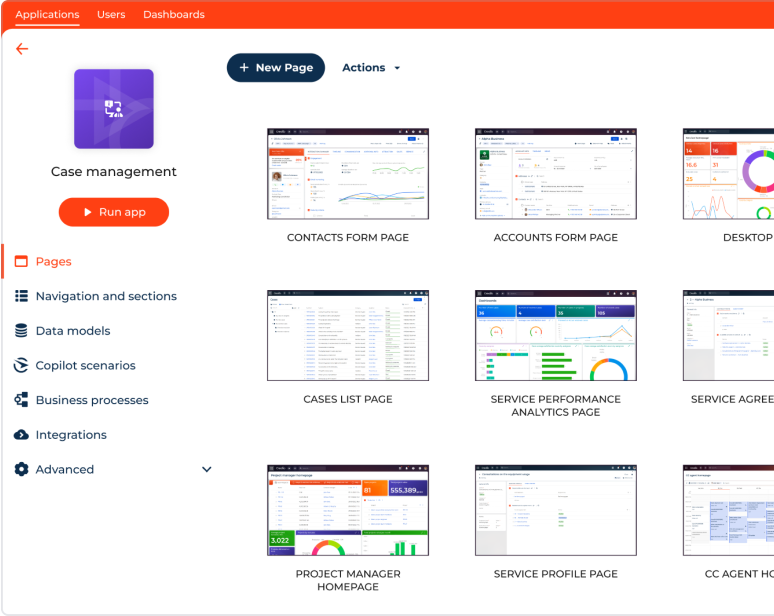
Creatio is an AI CRM and workflow platform that helps manufacturers connect operational processes, automate workflows, and manage manufacturing operations through a unified platform. Using no-code designers, AI coding agents, and built-in AI capabilities, manufacturers can build applications, automate processes and adapt workflows with minimal custom development.

At the core of the platform is Creatio Business and AI Studio, which enables manufacturers to design, automate and manage human-led and agentic workflows. Organisations can build custom AI agents and applications to support specific operations management requirements, including production monitoring, work order management, maintenance coordination, inventory planning, procurement workflows, exception management, and operational reporting.
Creatio's AI-native architecture enables AI capabilities to be embedded directly into operational processes. Teams can use AI agents to monitor operations, automate routine tasks, analyse performance data, coordinate activities across systems, and support decision-making. This helps reduce manual effort, enable faster responses to operational issues, and improve the consistency and efficiency of manufacturing operations.
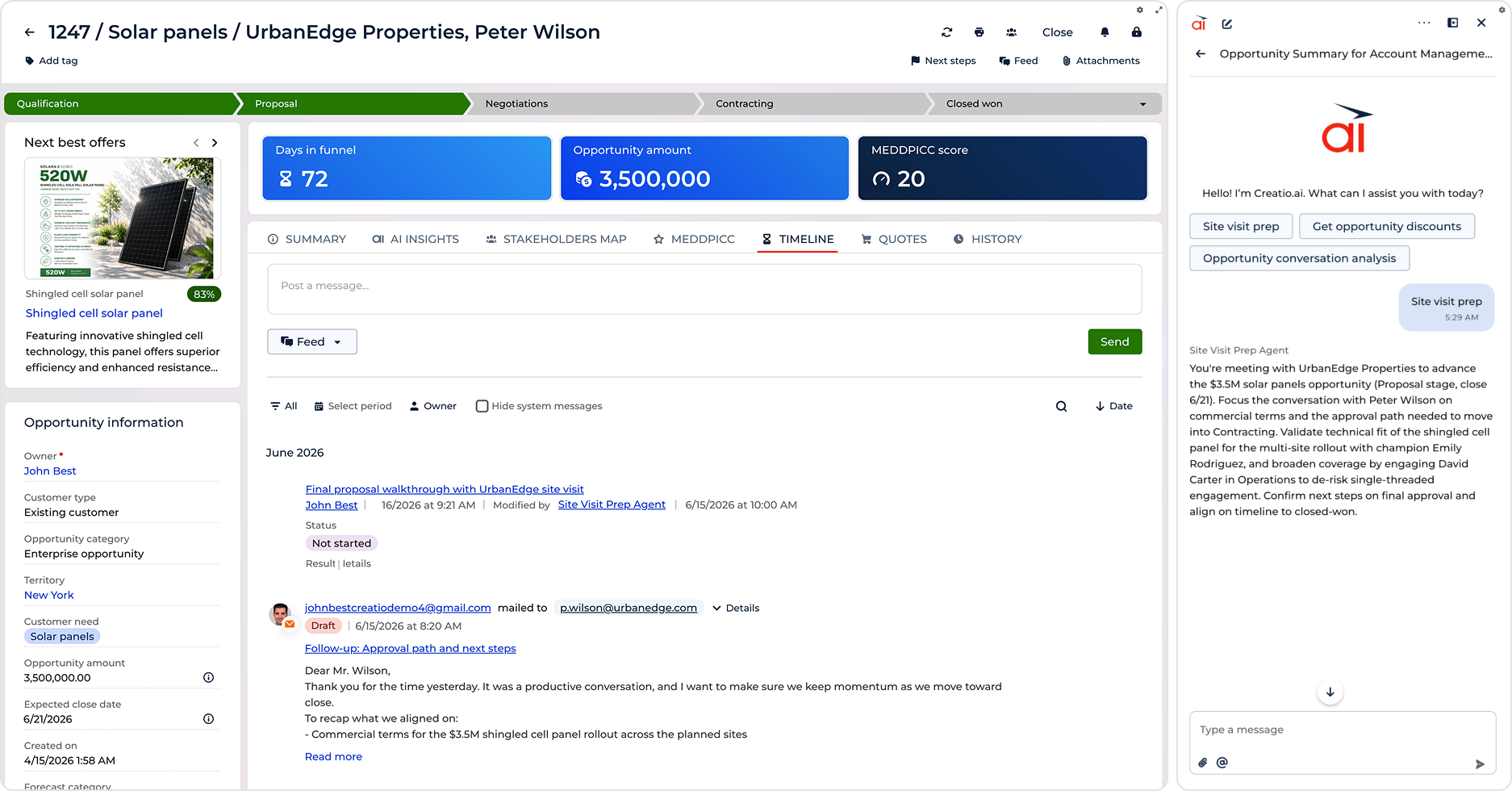
Creatio also provides integration capabilities through open APIs, enabling manufacturers to connect manufacturing systems, enterprise applications, data platforms, and third-party AI services. This enables manufacturers to modernise operations, automate processes across systems, and make better use of existing technology infrastructure.
Case Study: Lohmann expands global operations across 27 sites with Creatio
Lohmann, a global manufacturer of adhesive tapes and bonding solutions, replaced fragmented regional systems with Creatio's AI-native platform to standardise processes, improve visibility, and strengthen collaboration across 27 sites worldwide.
Within 18 months, the company completed a global rollout, creating a consistent, centralised view of customer, product, and application data while enabling processes to be adaptated quickly using no-code tools. This established a scalable foundation for AI-driven operations, improved decision-making, and continuous improvement across the organisation.
Creatio gives us a full picture—from customer needs to how our products behave in real applications. That’s crucial for both sales effectiveness and operational insight.

Michał Wielicki
Global Head of Sales Excellence at Lohmann
Core capabilities for manufacturing operations management include:
- Agentic workflow automation to coordinate processes across production, quality, maintenance, inventory, procurement, and supply chain operations.
- Building custom AI agents to automate routine manufacturing tasks, support exception management, analyse operational data, and assist with operational decision-making.
- Real-time analytics and operational dashboards that provide visibility into performance, bottlenecks, resource utilisation, and operational KPIs.
- No-code visual designers to build and adapt manufacturing workflows, applications, and operational processes as business requirements evolve.
- Open integration capabilities to connect systems, enterprise applications, data platforms, and AI services within a unified platform.
- Production, maintenance, and inventory management workflows to improve operational coordination across materials, assets, and production schedules.
- Native connectivity with Creatio CRM products: Creatio Sales, Creatio Marketing, and Creatio Service
- Access to Creatio Marketplace, with more than 400 applications to extend platform functionality
Creatio is well-suited to manufacturers seeking to improve operational visibility, automate cross-functional processes, and extend the use of AI across manufacturing operations. The company has been recognised by Gartner, Forrester, and Nucleus Research as a Leader and Visionary across multiple market evaluations.
Creatio Business Studio
Automate workflows and build apps of any complexity with Creatio’s AI-native platform.
Summary
Manufacturing operations management helps manufacturers improve operational visibility and performance by connecting production, maintenance, inventory, supply chain, and workforce operations. As AI and Industry 4.0 technologies become more widely adopted, manufacturers are using modern MOM systems to improve quality, optimise processes, reduce downtime, and make more proactive decisions.
Creatio helps manufacturers modernise and automate operations through its AI-native CRM and workflow platform, where people and AI agents work together to automate business processes, improve operational efficiency and support continuous improvement.
Discover how agentic AI can support manufacturing operations with a personalised demonstration from Creatio specialists.