Equipment downtime remains one of the most significant cost challenges in manufacturing. According to Forbes, the average manufacturer experiences around 800 hours of equipment failures each year. In some industries, the financial impact can be substantial. Automotive manufacturers, for example, can lose up to $22,000 per minute when production lines come to a standstill.
Reducing downtime starts with an effective maintenance strategy. Manufacturing work order software gives maintenance teams greater visibility and control over maintenance activities, helping to minimise disruptions and keep production running smoothly.
This guide explores the key features of manufacturing work order software, reviews the leading solutions available in 2026, and outlines the key considerations for selecting the right platform.
Key takeaways
- Manufacturing work order software enables the creation, assignment, tracking, and management of maintenance work orders for production equipment.
- The primary purpose of a work order management system is to reduce equipment downtime, improve asset reliability, and streamline maintenance operations.
- Core capabilities include work order creation and automation, technician scheduling, asset history tracking, AI-powered prioritisation, reporting, compliance management, and integration with other business-critical systems.
- When evaluating software, consider factors such as business requirements, AI capabilities, no-code customisation options, integration options, and implementation requirements.
- Creatio is a leading manufacturing work order software for enterprises that want to improve maintenance efficiency while gaining end-to-end visibility across operational processes.
What is manufacturing work order software?
Manufacturing work order management software is a digital solution designed to help manufacturers effectively plan and execute maintenance work orders for production equipment and machinery.
The software enables maintenance teams to coordinate scheduled and ongoing repairs, as well as preventative maintenance. Real-time visibility into equipment condition, technician availability, and maintenance schedules. By digitising maintenance workflows, manufacturers can reduce equipment downtime, extend machine lifespan, and keep production operations running efficiently with minimal disruptions.
Modern manufacturing work order management software increasingly incorporates AI capabilities across a wide range of maintenance processes. These include AI-powered machine monitoring tools that capture maintenance data, as well as AI agents that optimise schedules and automatically generate work orders.
Key features of manufacturing work order software
Modern manufacturing work order software goes beyond basic task tracking. It enables maintenance teams to manage equipment repairs, coordinate technicians, prioritise work, and maintain accurate service records.
The following features are commonly included in digital work order management solutions:
Work order creation and automation
Manufacturing work order software streamlines the creation and management of maintenance tasks. Work orders can be created manually using pre-built templates or generated automatically based on preventative maintenance analysis, scheduled repairs, sensor data, or inspection results. Automation reduces administrative effort, minimises human error, and helps ensure critical maintenance activities are completed without unnecessary delays.
Technician scheduling and coordination
Effective maintenance scheduling depends on assigning the right tasks to the right people at the right time. Work order management software streamlines technician scheduling and task allocation by providing clear visibility into workloads, skills, availability, and maintenance priorities. This enables faster responses to equipment issues and more efficient completion of maintenance work.
Asset and equipment history
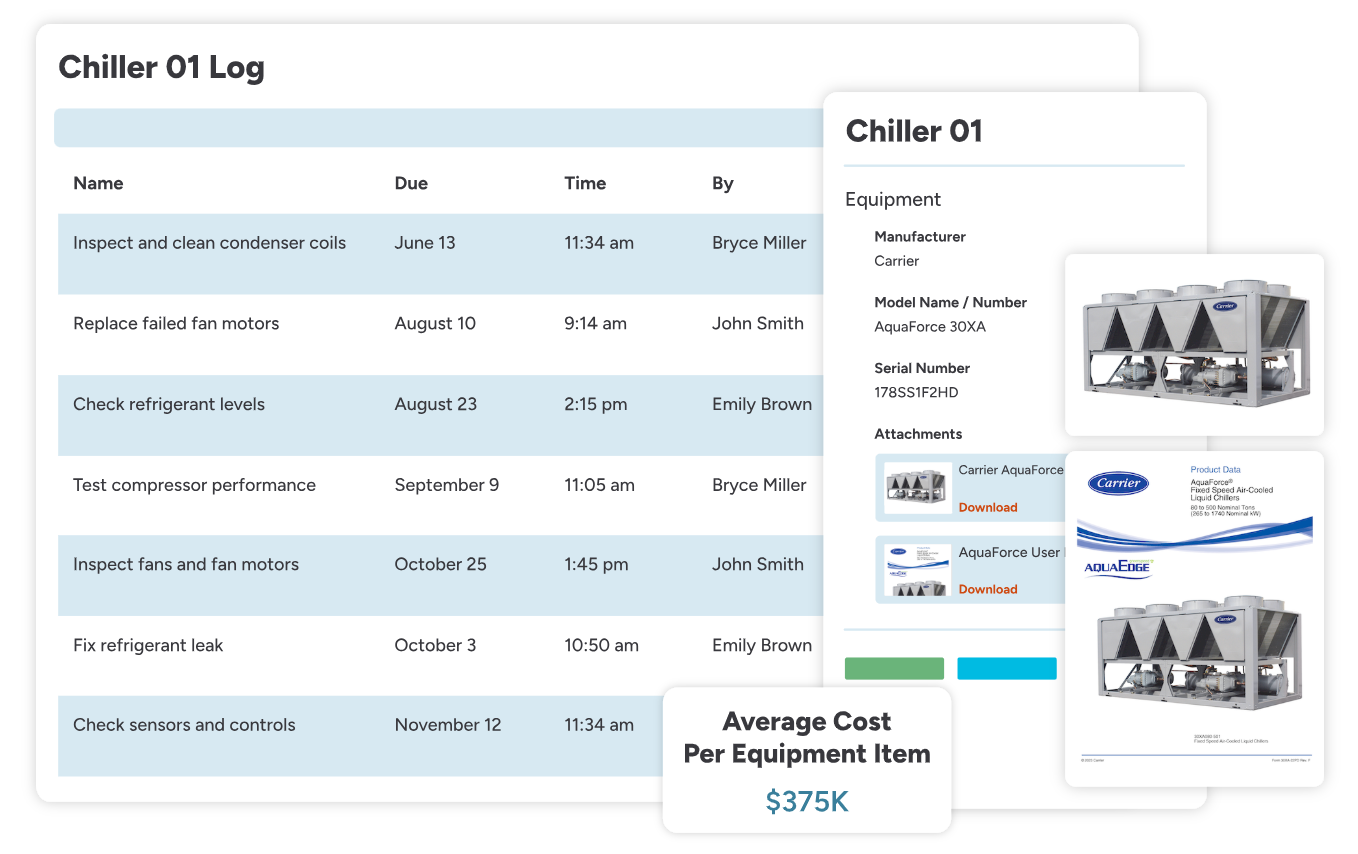
A comprehensive maintenance history provides valuable context before work begins. Work order software maintains detailed records of previous repairs, inspections, component replacements, and maintenance activities for each asset. Access to this information helps identify recurring problems and support more informed maintenance decisions.
AI-powered prioritisation
As maintenance teams manage increasing numbers of assets and work requests, identifying the highest-priority tasks become more complex. AI-powered capabilities analyse factors such as asset criticality, maintenance history, production impact, and risk of failure to help prioritise work orders across multiple assets and allocate resources more effectively.
Real-time dashboards and reporting
Real-time visibility enables maintenance leaders to monitor work order progress, equipment performance, technician productivity, and maintenance backlogs without relying on manual tracking. Dashboards and reporting tools help organisations identify trends, monitor key performance indicators, and make data-driven decisions that improve maintenance performance.
Compliance and documentation
Work order software helps organisations maintain accurate maintenance records, document completed work, track inspections, and product audit-ready documentation. This improves accountability while reducing the administrative effort associated with compliance reporting.
Integration with ERP, CRM, and production systems
Manufacturing maintenance does not operate in isolation. Equipment failures can affect production schedules, inventory availability, procurement needs, order management, and customer service commitments.
Integration with ERP, manufacturing CRM, procurement, and production systems provides a unified view of operational impact, enabling better coordination across maintenance and business functions, supporting faster, more informed decision-making.
Top five manufacturing work order software platforms in 2026
Manufacturing organisations use work order software solutions to streamline maintenance operations, reduce equipment downtime, and improve asset reliability. However, solutions differ significantly in their capabilities. Some focus primarily on maintenance management, while others integrate work orders with wider manufacturing processes, including production planning, procurement, customer service, and sales operations.
The following solutions represent some of the leading manufacturing work order software platforms available in 2026.
Platform | Best For | Key Features | G2 Rating |
| Creatio | Mid-sized and enterprise manufacturers seeking an AI-powered unified platform that connects maintenance work orders with production, procurement, service, and customer operations | Work order automation, AI-powered workflows, asset management, no-code customisation, ERP and CRM integrations, real-time reporting | 4.8/5 |
| MaintainX | Maintenance teams looking for an intuitive work order and preventive maintenance solution | Mobile work orders, preventative maintenance scheduling, asset management insights, digital inspections, AI-powered real-time assistance | 4.8/5 |
| IBM Maximo | Enterprises with complex asset management requirements already using the IBM ecosystem | Enterprise asset management, Inventory and spare parts management, inventory management, asset performance tracking, AI analytics | 4.4/5 |
| FMX | Organisations seeking a straightforward maintenance and facilities management | Work requests and task management, preventive maintenance scheduling, inventory and parts management, compliance management | 4.8/5 |
| UpKeep | Small and mid-sized manufacturers looking for a mobile-first maintenance solution | Mobile work order management, preventative maintenance, request portal, asset management, inventory tracking | 4.5/5 |
Creatio
Best for: Mid-sized and enterprise manufacturers seeking an AI-powered unified platform that connects maintenance work orders with production, procurement, service, and customer operations.
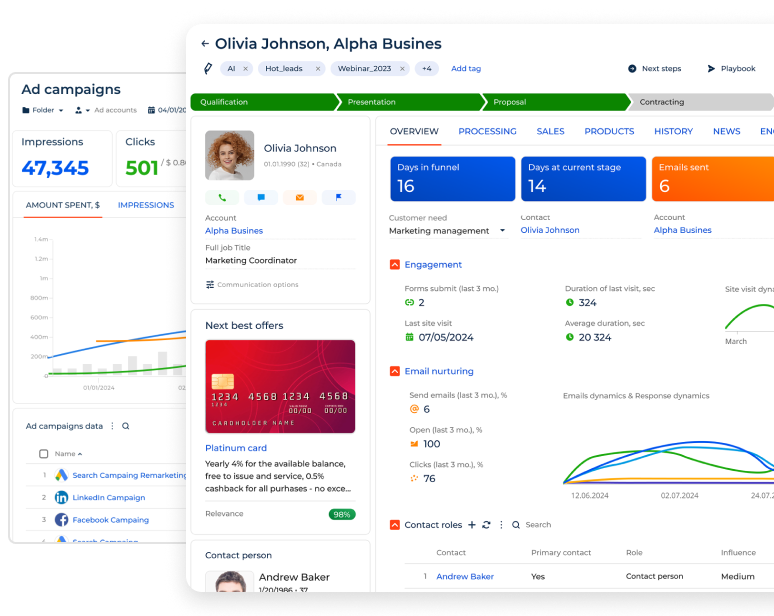
Creatio provides manufacturing work order software as a part of its AI CRM and workflows platform, where people and AI agents work together — with no limits on users, agents, or scale. The platform streamlines day-to-day maintenance operations by bringing work orders, schedules, maintenance records, asset information, and supporting documentation together in a single platform.
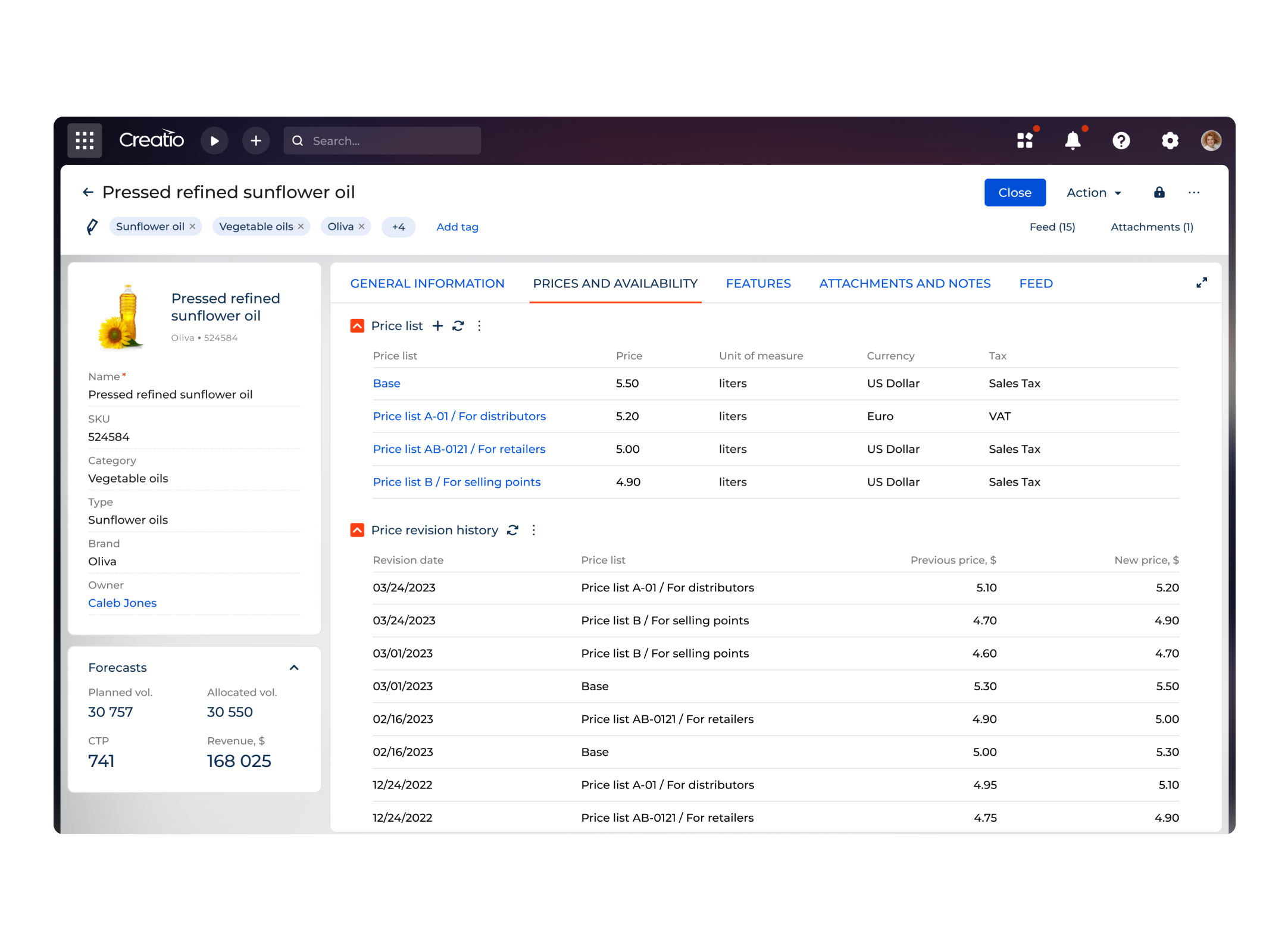
Work order creation, assignment, and approval workflows can be automated, while AI agents handle routine tasks and help accelerate issue resolution. AI-driven insights support the prioritisation of maintenance activities, identify potential bottlenecks, and enable more proactive decisions to reduce downtime and improve asset performance. Real-time visibility into work orders and maintenance operations help improve technician productivity, optimise resource utilisation, and increase overall operational efficiency.
Unlike traditional CMMS solutions, which focus primarily on maintenance execution, Creatio connects maintenance operations with production, procurement, service management, and CRM processes. The result is a unified operational environment in which work orders form part of the wider manufacturing workflow.
Creatio Manufacturing CRM
Find out how Howdens unified their operations and improved efficiency with Creatio in just 12 weeks
By combining workflow automation, AI capabilities, and extensive integration, Creatio helps improve equipment reliability while maintaining visibility across the entire business.
Key features:
- End-to-end manufacturing work order automation
- AI-powered task automation and insights
- Maintenance scheduling and workforce coordination
- Audit-ready document management
- AI-native engine and no-code designers for workflow development and customisation
- Procurement, supply chain, and production management
- Risk and compliance management
- Quotes, orders, and invoices management
- Marketing, sales, and customer support workflows
- Integration with ERP, CRM, procurement, and production systems
- AI-powered analytics, customisable dashboards, and reporting
Pros:
- Connects maintenance work orders with broader manufacturing operations
- Automates complex workflows with AI agents
- Highly customizable and scalable for enterprise manufacturing needs
- User-friendly and intuitive interface
- Extensive integration capabilities with ERP, CRM, and manufacturing systems
- Powerful AI-powered insights, analytics, and decision support
- User-friendly interface with no-code customisation options
- Unified view across maintenance activities, assets, and business operations
Cons:
- Initial learning curve due to extensive customisation options
Rating:
G2: 4.8/5
Pricing:
Creatio offers both traditional per-seat pricing and an Unlimited Enterprise model, which includes unlimited users, workflows, applications, AI agents, and custom objects. Standard user-based plans start from $40 (~ £30) per user per month, while the enterprise-wide licensing model is available on a custom pricing, designed for large-scale automation and AI deployment, with no licensing constraints.
A New Era AI CRM
Automate campaigns, pipelines, and service flows with Creatio's agentic CRM
MaintainX
Best for: Maintenance teams seeking an easy-to-use solution for work order and preventative maintenance.
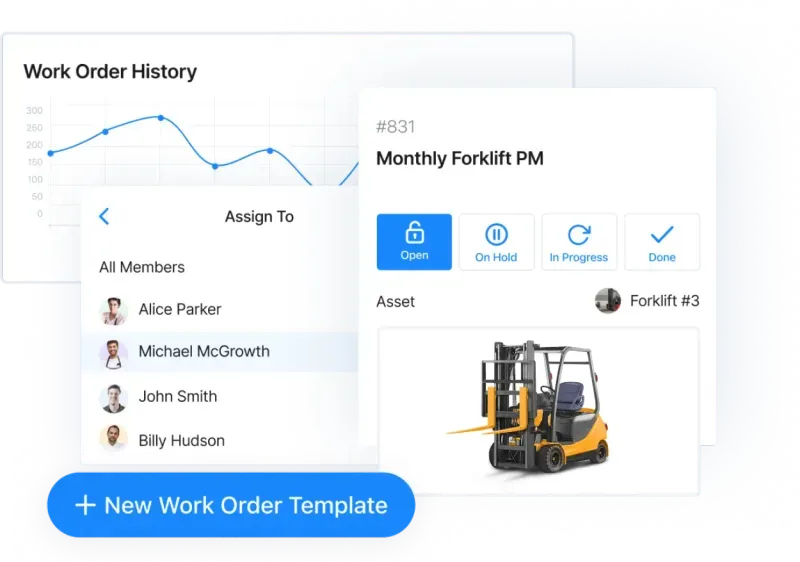
MaintainX is an AI-powered computerised maintenance management system (CMMS) and enterprise asset management platform designed to streamline work order management, preventive maintenance, inspections, and asset tracking. Its mobile-first approach enables technicians to access work orders, update task statuses, and communicate with team members directly from the shop floor. The platform helps improve equipment uptime, reduce operational costs, and increase frontline productivity.
Key features:
- Mobile work order management system
- Preventive maintenance scheduling
- Asset management insights
- Digital inspections and checklists
- Parts inventory monitoring
- AI-powered real-time assistance
- AI-assisted reporting and analytics
Pros:
- User-friendly interface and easy navigation
- Good experience on mobile devices
- Quick implementation
- Effective preventive maintenance tools
Cons:
- Limited support for wider manufacturing workflows
- Fewer customisation options than some competing platforms
- The mobile application offers less detail and visibility than the desktop version
- Many advanced features are only available with the enterprise-level tier
- High total costs of ownership
- Limited data capture and documentation capabilities
Rating:
G2: 4.8/5
Pricing:
AI-powered plans start at $65 (~ £49) per user per month.
IBM Maximo
Best for: Large enterprises with complex asset management requirements, particularly those already using the IBM ecosystem.
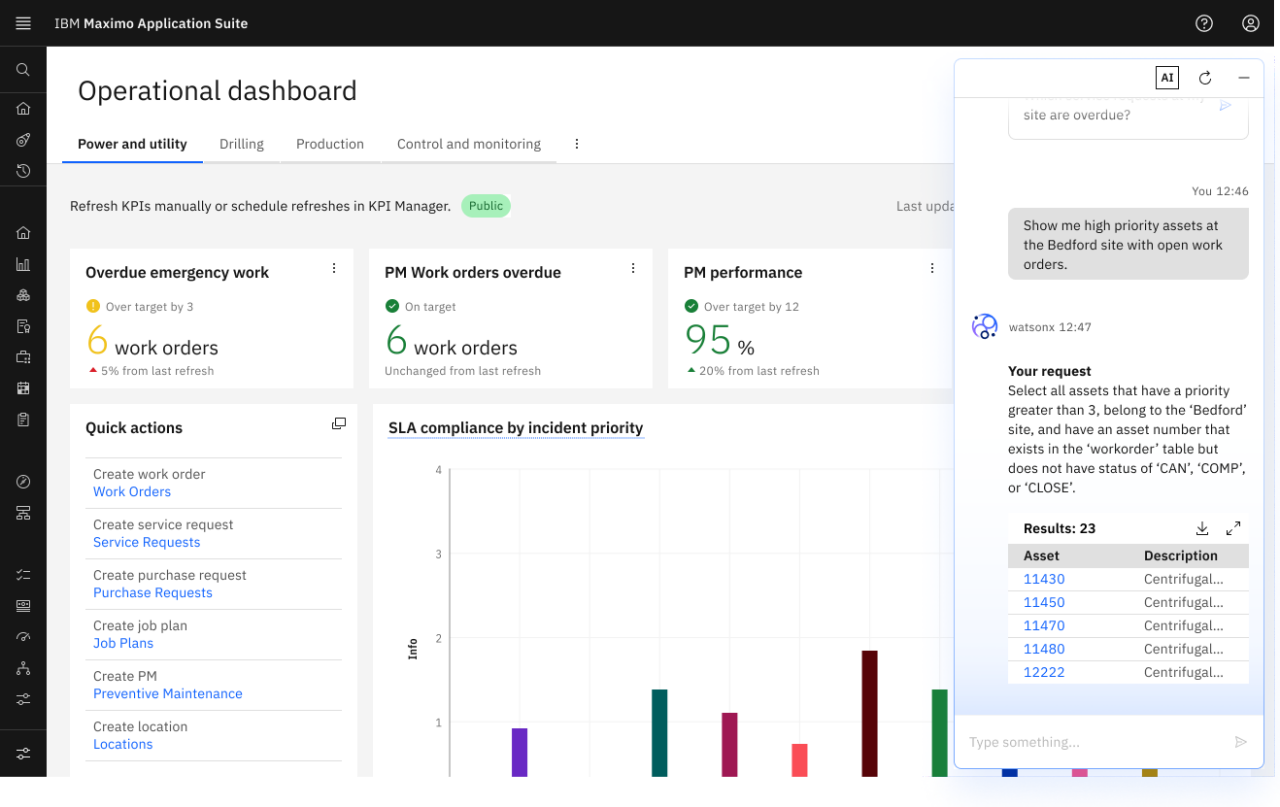
IBM Maximo is an enterprise asset management system (EAM) designed for organisations managing large, complex asset portfolios. It enables maintenance teams to create, prioritise, and track maintenance activities through automated workflows and real-time updates, while also supporting the scheduling and approval of planned and corrective maintenance. Maximo combines maintenance, inspections, and reliability within an AI-powered asset lifecycle management platform to help maximise asset uptime and long-term value. AI capabilities assist with work prioritisation, surface operational insights, and reduce the time required to navigate the system.
Key features:
- Enterprise asset management
- Asset performance management
- Asset investment planning
- Inventory and spare parts management
- AI analytics, reporting, and customisable dashboards
- Mobile access
Pros:
- Extensive asset management capabilities
- Highly customisable
- Scalable for large enterprises
- Strong analytics and detailed reporting
Cons:
- Complex implementation and administration
- Steep learning curve and unintuitive navigation
- High total cost of ownership
Rating:
G2: 4.4/5
Pricing:
Pricing for IBM Maximo’s AI-powered Maintenance Essential plan starts at around $3,300 (~ £2,483) per month, plus taxes, for up to 25 users. Additional capabilities, including inspections and inventory optimisation, are available at an extra cost.
FMX
Best for: Organisations seeking straightforward maintenance and facilities management capabilities.
FMX is a cloud-based computerised maintenance management system and facilities management platform that helps organizations manage service requests, maintenance schedules, assets, and preventive maintenance programs through a centralised system. The platform simplifies service request submission, automatically assigns work orders to the most appropriate technicians based on skill, location, or availability, and tracks labour hours and costs. FMX helps streamline processes, increase critical asset productivity, and simplify audit preparation.
Key features:
- Work requests and assignments
- Preventive maintenance scheduling
- Inventory and parts management
- Inventory and cost tracking
- Interactive mapping
- Compliance management
- Configurable reports and dashboards
Pros:
- Easy to use
- Simple deployment process
- Centralised maintenance tracking
- Suitable for organisations with straightforward maintenance needs
Cons:
- Limited advanced automation capabilities
- Unintuitive and inflexible reporting
- Lack of AI capabilities
- Less focused on manufacturing-specific workflows
- Fewer enterprise-level features than larger platforms
Rating:
G2: 4.8/5
Pricing:
Custom pricing available on request.
UpKeep
Best for: Small- and mid-sized manufacturers seeking a mobile-first maintenance management solution.
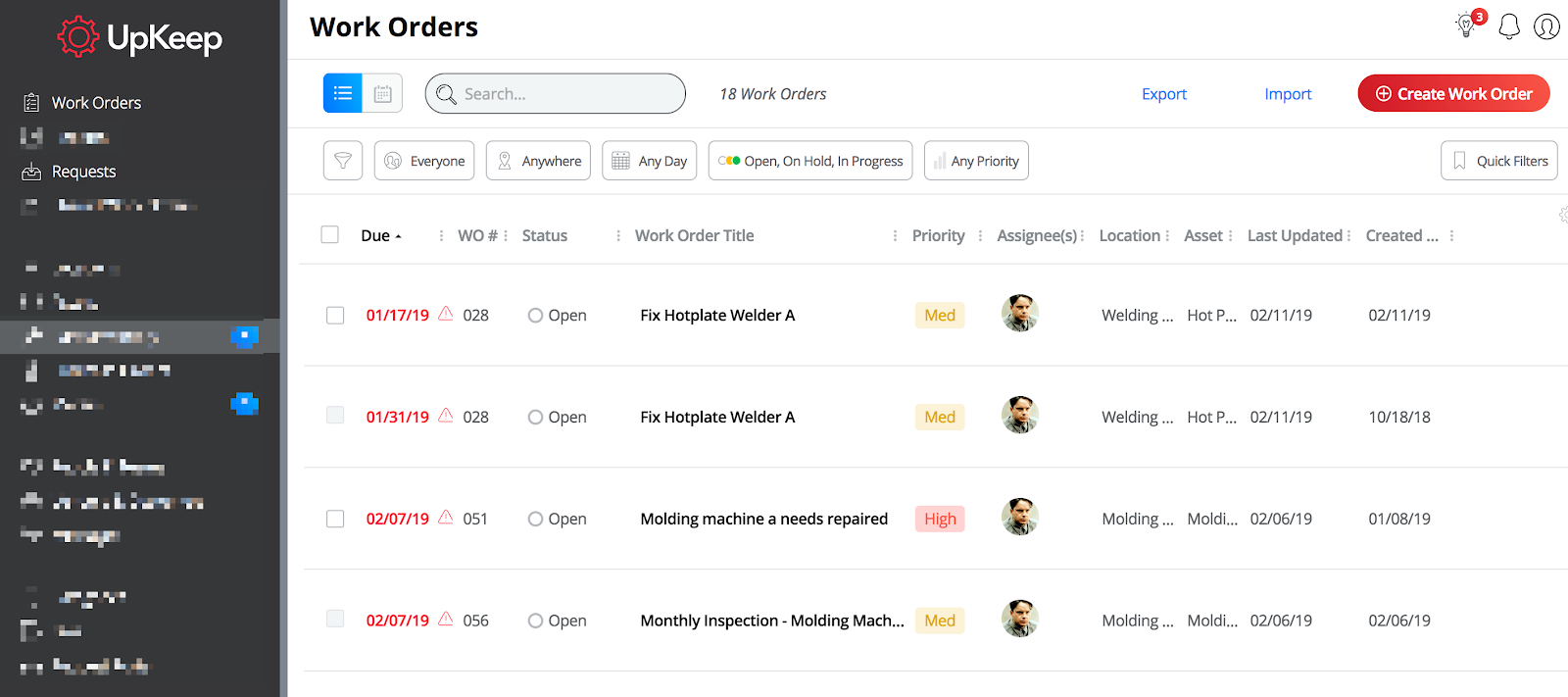
UpKeep is a mobile-first maintenance management platform that enables the creation, assignment, prioritisation, and real-time tracking of work orders. The platform automatically routes and prioritises work orders, supports service request management, and provides compliance-ready documentation. An AI-powered maintenance assistant helps automate routine tasks, surface operational insights, and improve technician productivity, while real-time notifications and status tracking provide greater visibility into maintenance activities.
Key features:
- Mobile work order management
- Work request portal
- Preventive maintenance scheduling
- Asset and inventory management
- Spare parts tracking
- Analytics and reporting
- AI-powered maintenance assistant
Pros:
- Strong mobile functionality
- Easy to adopt and use
- Good visibility into maintenance activities
- Supports preventive maintenance programs
Cons:
- Limited support for cross-functional manufacturing processes
- Lack of advanced customisation
- Limited AI capabilities
- More advanced features are only available in the higher-tier plans
- Lack of integrations with third-party applications
Rating:
G2: 4.5/5
Pricing:
Pricing for UpKeep’s Essential plan for small teams starts at $24 (~ £18) per user per month.
How to select manufacturing work order software
When evaluating manufacturing work order management software, consider the following factors:
- Scope of operations. Choose a solution that matches the scale and complexity of maintenance operations, whether supporting a single manufacturing site or multiple locations. Consider the number of assets, technicians, and work orders currently managed, as well as future growth and expansion.
- Enterprise capabilities. Look for software that supports large-scale operations, complex workflows, and regulatory compliance. The right platform should meet current operational requirements while providing the flexibility to scale as business needs evolve.
- AI and automation capabilities. Prioritise platforms that automate routine maintenance tasks, streamline work order management, and provide intelligent recommendations to support faster, more informed decision-making.
- No-code customisation. Select a solution that allows business teams to modify workflows, forms, and business processes without coding, reducing reliance on IT teams and improving organisational agility.
- Integration with existing systems. Ensure the platform integrates with your Enterprise Resource Planning (ERP), CRM, procurement, inventory, and production systems to maintain a seamless flow of information across the organisation, extending beyond maintenance workflows.
- Implementation timeline and support. Evaluate implementation timescales, training resources, and ongoing support to ensure a smooth rollout and long-term success.
Summary
Manufacturing work order software enables organisations to plan, assign, track, and manage maintenance activities for production equipment, reducing downtime, and improving asset reliability. As manufacturing operations become more complex, however, a standalone maintenance management system is not always sufficient. Integrating maintenance activities with production schedules, procurement processes, and service operations can provide greater visibility and improve more informed decision-making across the business.
While traditional work order management platforms focus primarily on maintenance execution, Creatio takes a broader approach. By combining manufacturing work order management with AI-powered workflow automation, CRM, and enterprise-wide process orchestration, Creatio helps manufacturers streamline maintenance operations while keeping them aligned with the rest of the organisation. This integrated approach enables organisations to move beyond reactive maintenance and establish more connected, agile, and resilient operations. For manufacturers seeking a single platform to manage and optimise operations at scale, Creatio offers a comprehensive solution.