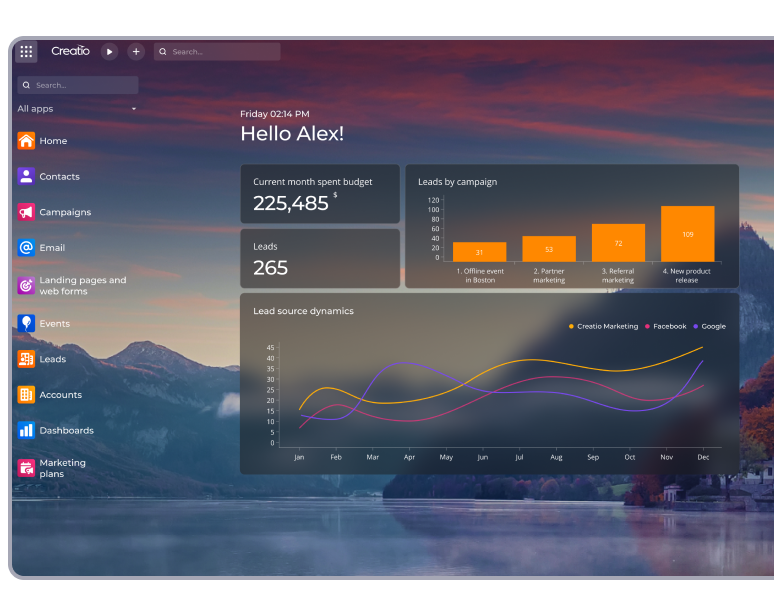
Effective marketing today is less about reaching a wide net and more about engaging the right audiences with timely, relevant experiences. Achieving this demands a coordinated marketing strategy grounded in accurate customer data, connected touchpoints, and ongoing optimisation.
Customer relationship management (CRM) software helps in enhancing marketing efforts by centralising customer data, campaigns, and interactions within a single platform. Modern CRM systems support marketing initiatives throughout the entire customer journey, from audience segmentation and automated email campaigns to landing page creation and performance tracking, enabling teams to nurture leads more effectively and shorten sales cycles.
This article explores the concept of CRM-driven marketing, highlights the key advantages of using CRM tools for marketing functions, and reviews some of the leading marketing CRM platforms supporting businesses growth and customer engagement in 2026.
Core findings:
- CRM marketing involves leveraging customer data and the wider capabilities of CRM system to plan, execute, and refine marketing activities throughout the entire customer lifecycle.
- Marketing CRM platforms are typically employed to segment audiences, run personalised multi-channel campaigns, nurture leads, monitor performance, and facilitate collaboration across departments, all from a unified system.
- Among the key benefits of utilising CRM in marketing are improved lead generation and nurturing, a more cohesive customer experience, enhanced data-driven decision-making, and stronger alignment between teams.
- Leading marketing CRM platforms for enterprises include Creatio Marketing, HubSpot, and Salesforce, each recognised for their scalability and advanced AI functionality. For organisations with more straightforward marketing requirements, solutions such as Pipedrive and ClickUp may prove a more suitable and cost-effective choice.
What is CRM Marketing?
CRM marketing describes the practice of using customer relationship management software to coordinate and enhance marketing efforts by leveraging centralised customer data and integrated marketing tools. It enables marketing teams to engage target audiences across multiple channels, deliver personalised campaigns, and monitor performance, all within a single platform.
By aligning marketing initiatives with real-time customer interactions and sales insights, CRM marketing enhances targeting precision, supports tailored engagement, and improvers return on marketing investment.
What is a CRM Marketing Strategy?
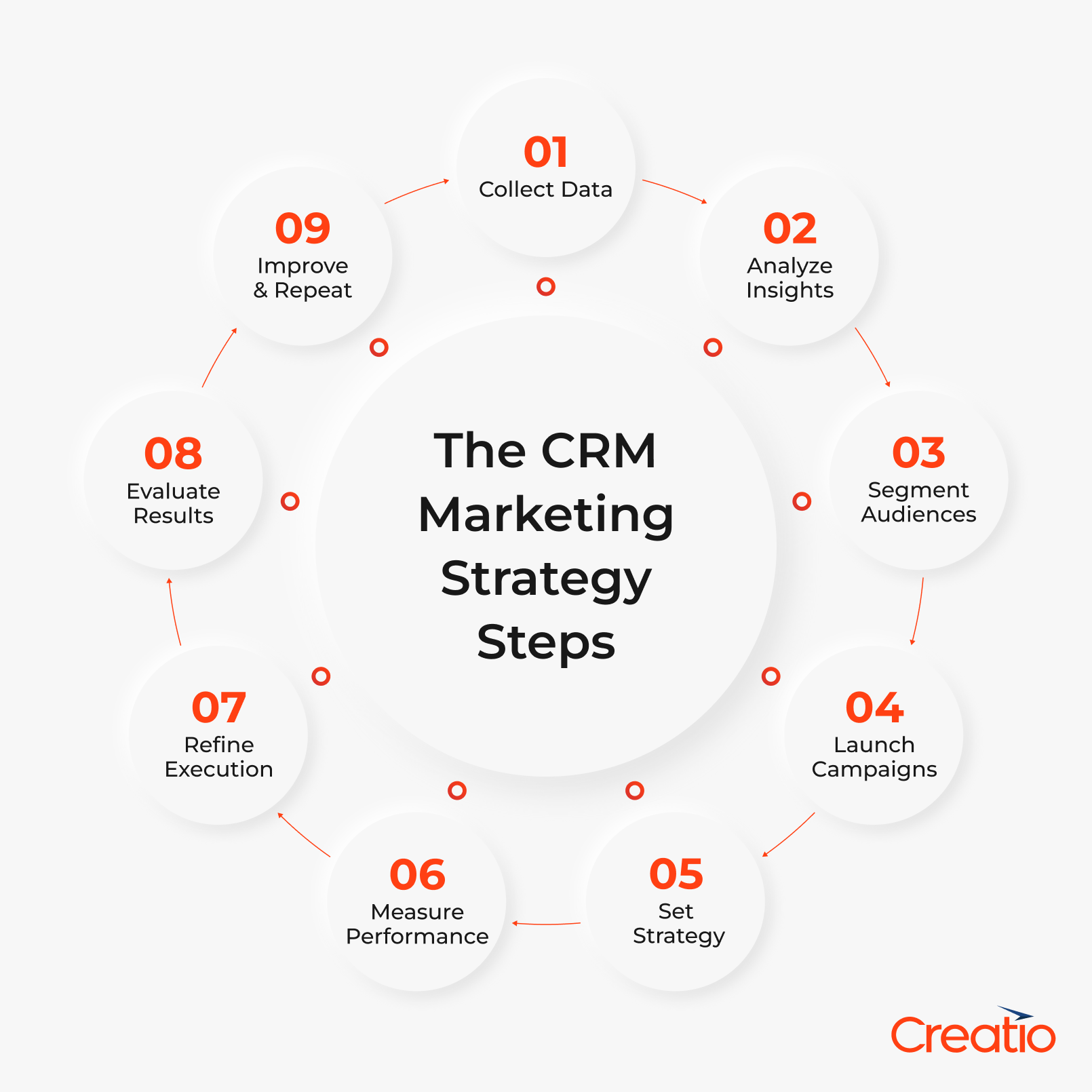
A CRM marketing strategy is a structured approach to managing and coordinating marketing efforts through CRM software, aimed at nurturing leads, increasing conversions, and fostering customer loyalty across the entire lifecycle. It defines how organisations can leverage customer insights, automation, and cross-functional collaboration to deliver consistent and relevant experiences at scale.
Instead of concentrating on isolated campaigns, a CRM marketing strategy sets out how customer data is leveraged to shape end-to-end journeys, prioritise high-value audience segments, and initiate timely, cross-channels interactions. This approach enables organisations to boost conversion rates, shorten sales cycles, and enhance customer lifetime value.
What can marketers achieve with CRM marketing software?
1. Attain a single, unified view of customers
CRM software consolidate customer data from a range of channels, including website activity, email engagement, and purchase history, into a single customer profile. With a 360-degree customer view, marketing teams might gain clearer insight into customer behaviour, preferences, and intent. This depth of understanding supports more precise targeting and allows for the delivery of timely, relevant campaigns.
2. Segment audiences and personalise engagement
With access to detailed customer data, marketing teams can segment audiences according to a variety of factors, including demographics, behaviour, engagement level, and stage within sales pipeline, to deliver more relevant and timely interactions. Modern CRM platforms also incorporate AI-driven capabilities, supporting the creation of personalised content, identifying optimal moments for outreach, recommending next-best actions, and continually refining campaign flows to improve engagement and lead generation.
3. Manage and nurture leads more effectively
CRM software enables marketers to monitor lead activity, assign scores based on levels of engagement, and automate nurturing workflows to guide prospects through the sales funnel. Many modern platforms feature embedded AI, which analyses behavioural signals and intent in real time, dynamically scoring leads and routing them to the appropriate team for timely follow-up. This ensures that revenue teams can concentrate on the most promising opportunities, helping to accelerate conversion and improve efficiency.
4. Plan, execute, and refine marketing campaigns
CRM platforms offer a unified environment for managing marketing campaigns from initial planning through to delivery and ongoing optimisation. Running campaigns directly within the CRM enables teams to coordinate messaging across multiple channels, monitor engagement and MQLs, and make informed adjustments based on real-time performance and data insights.
5. Automate routine marketing tasks
CRM systems can streamline everyday marketing activities by automating tasks such as email follow-up emails, data updates, campaign scheduling, and lead allocation. Agentic CRM platforms go a step further, enabling marketing professionals to deploy autonomous AI agents capable of generating tailored content, drafting emails, or even building entire campaigns. This level of automation minimises manual workload, maintains consistent communication, and allows teams to concentrate on strategic planning and creative work.
6. Improve customer engagement and retention
CRM marketing systems can provide real-time analytics on customer engagement across campaigns, channels, and touchpoints. These insights enable marketing teams to schedule timely follow-ups, develop tailored offers, and proactively reconnect with customers who may be at risk of churn. Consistent, personalised engagement supports stronger relationship management, improves retention rates, and contributes to greater long-term customer value.
7. Measure marketing performance and return on investment
With integrated analytics and reporting capabilities, CRM platforms enable marketing teams to monitor key metrics such as conversion rates, customer acquisition costs, ROI, and customer lifetime value. This level of visibility supports ongoing performance improvement and helps demonstrate marketing’s contribution to business growth in clear, measurable terms.
What is CRM marketing automation?
CRM marketing automation refers to the use of customer relationship management software to streamline and automate routine marketing activities and customer interactions based on pre-defined rules or behavioural triggers. This capability reduces manual workload while ensuring that marketing communications remain timely, relevant, and consistent across all channels.
For example, when a prospective client registers for an upcoming FinServ event, the CRM can automatically initiate the next step in the engagement journey, such as sending a tailored follow-up email. As leads continue to engage with content, the CRM dynamically updates lead scores and routes qualified leads to the sale team, facilitating timely outreach and a more seamless transition between departments.
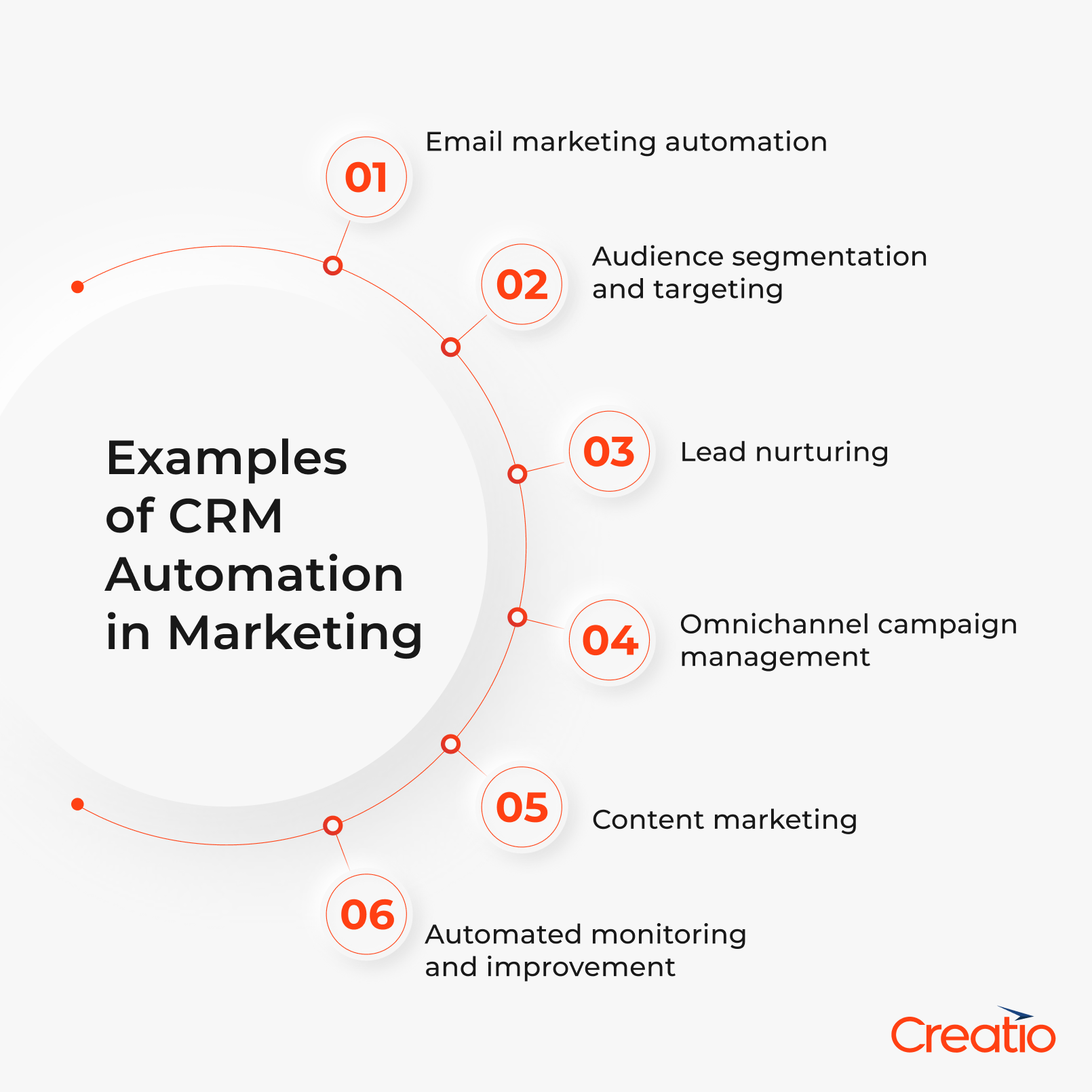
CRM automation:
- Email marketing automation
- Audience segmentation and targeting
- Lead nurturing
- Omnichannel campaign management
- Content marketing
- Automated monitoring and improvement
Today’s marketers increasingly rely on CRM systems to automate a wide range of processes. Some of the most commonly used include:
- Automated data collection and analysis: CRM platforms gather customer data from a variety of sources, such as form submissions, email interactions, website activity, and profile attributes. This information is then used to identify key behaviours or conditions that can trigger targeted marketing automation within the CRM.
- Dynamic segmentation and targeting: using real-time behaviour and customer data, leads and customers are automatically grouped into the relevant segments. This removes the need for manual list management or frequent campaign reconfiguration.
- Automated campaign execution: when predefined conditions are met, the CRM initiates the appropriate actions automatically, ensuring continuity of engagement across the customer journey. Typical examples include sending personalised emails, launching nurture sequences with offers, and activating multichannel campaigns.
- Continuous monitoring and optimisation: CRM tools monitor engagement and responses in real time and can suggest next-best actions to improve campaign performance. These insights allow marketing teams to adjust timing, messaging, and follow-up sequences accordingly, supporting ongoing refinement and stronger long-term outcomes.
Not all CRM platforms come equipped with marketing automation features. However, those that do offer organisations the ability to scale marketing efforts, enhance operational efficiency, and deliver personalised engagement more consistently throughout the customer lifecycle.
Main advantages of CRM for marketing teams
A CRM system has become an indispensable for marketing teams aiming to enhance the effectiveness and deliver meaningful results. Beyond simply managing campaigns, CRM marketing offers tangible benefits that support broader business objectives.
Some of the most significant advantages include:
- Higher revenue impact from marketing investments. CRM software enhances targeting, lead nurturing, and conversion management, enabling marketing teams to generate better-qualified leads and make a more meaningful contribution to pipeline performance.
- Reduces customer acquisition and operational expenses. Centralised CRM data, combined automation and analytics, helps minimise manual effort and address process inefficiencies across marketing and sales teams.
- Quicker realisation of value and enhanced agility. With real-time data and integrated workflows, organisations can launch, adapt, and refine campaigns swiftly in response to evolving customer behaviour or market conditions.
- Improved customer retention and greater lifetime value. Data-driven, personalised engagement enabled by CRM tools allows teams to nurture relationships well beyond the initial sale, increasing repeat business and deepening customer loyalty over time.
- Greater visibility and accountability across departments. A well-implemented CRM system ensures marketing efforts remain in step with other teams, while provides a clear understanding of the factors influencing engagement, conversions, and revenue, making it easier to demonstrate return on investment and inform strategic decisions.
- Scalable growth without expanding the team. Modern CRM platforms, equipped with built-in marketing automation and AI functionality, allow marketing departments to scale efforts, across campaigns, channels, and levels of personalisation, without increasing team size or operational burden. Agentic CRM marketing platforms take this a step further, enabling the deployment of autonomous agents to manage routine tasks, thereby affording teams greater focus on strategic direction, optimisation, and creative execution.
Five leading marketing CRM platforms for 2026
Selecting the right CRM system is essential for enhancing marketing performance and supporting sustainable business growth. Below is a round-up of five of the most effective marketing CRM solutions in 2026, along with a summary of what each offers in terms of functionality, values, and ideal use cases.
Marketing CRM Vendor | Tailored for | Rating (out of 5) |
| Creatio | Enterprise organisations and rapidly expanding teams requiring an all-in-one marketing CRM with no-code and agentic AI capabilities | |
| Salesforce | Large enterprises managing complex, multichannel marketing operations | |
| Pipedrive | Small and medium-sized businesses, as well as compact marketing teams, seeking a straightforward CRM with core marketing workflow support | |
| ClickUp | Marketing departments that require a unified platform combining essential CRM and marketing management functionality | |
| HubSpot | Small to medium-sized marketing teams in need of an easy-to-use CRM with essential automation features | |
1. Creatio Marketing
Creatio Marketing is a leading marketing CRM platform that combines comprehensive customer relationship functionality with marketing automation capabilities to support the entire customer lifecycle from initial enquiry to conversion. Built with no-code tools and embedded AI, it enables marketing teams to plan, execute, and optimise campaigns more effectively, achieving greater impact without expanding team size or straining existing resources, while maintaining complete visibility across every stage of engagement.
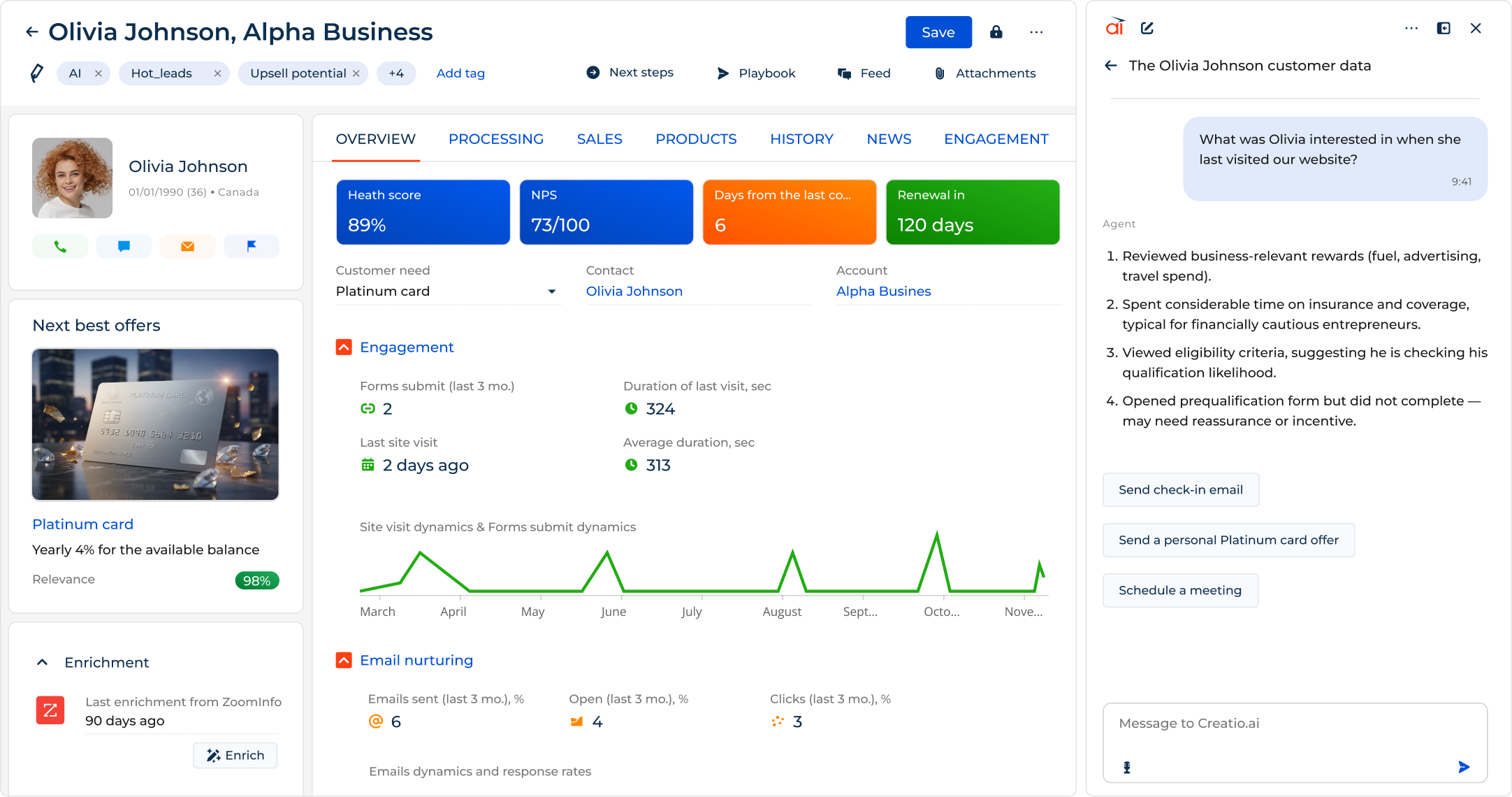
One of Creatio Marketing’s key strengths lies in its embedded GenAI, Predictive AI and Agentic AI capabilities. These tools enable marketing professionals to integrate artificial intelligence directly into routine workflows, such as generating personalised emails, building campaign flows, identifying the most effective next steps, and analysing performance. Additionally, Creatio enables users to develop custom AI agents for specific marketing functions, capable of managing tasks related to content creation, campaign execution, and reporting. This enables marketing teams to dedicate more time on strategy, creativity, and meaningful customer engagement.
Creatio Marketing integrates seamlessly with Creatio Sales and Creatio Service, creating a unified CRM platform brings together marketing, sales, and service teams around a single customer view.
Features
- Comprehensive CRM applications for marketing, including customer 360, campaign and event management, email marketing, digital advertising, analytics, reporting, and more
- AI-powered tools for lead scoring and audience segmentation
- Consistent engagement across all marketing channels
- Marketing automation capabilities to streamline campaign delivery and enhance overall performance
- Pre-configured AI marketing agents to assist with content generation, campaign refinement, performance analysis, and next-best-action recommendations
- No-code tools supported by AI, allowing teams to tailor workflows, campaigns, and CRM data models without the need for developer involvement
- Sector-specific solutions covering over 20 industries, designed to meet distinct operational needs and regulatory standards
- Over 400 integrations, connectors, and applications available through Creatio Marketplace
Advantages
- Embedded agentic AI capabilities designed to accelerate marketing operations and manage sophisticated workflows with minimal manual input.
- Seamless interoperability with other Creatio solutions, providing extended functionality across marketing, sales, and service within a unified platform.
- User-friendly interface offering intuitive navigation of dashboards, campaigns, and workflow management.
- Modular no-code architecture allows teams to adapt and tailor the platform extensively to specific requirements, all without relying on advanced technical expertise.
- A highly scalable platform, particularly well-suited to rapidly growing organisations with complex marketing and operational demands.
Disadvantages
- May require an initial adjustment period, as the breadth of features and customisation options can take time to fully explore and apply.
Pricing
Creatio offers composable pricing, allowing users to select only the features they truly require – avoiding necessary expenses. Pricing for Creatio Marketing begins at £40 per user per month and can be tailored to suit specific business requirements.
Creatio Marketing
Optimise marketing campaigns and drive leads with one AI-native platform
2. Salesforce
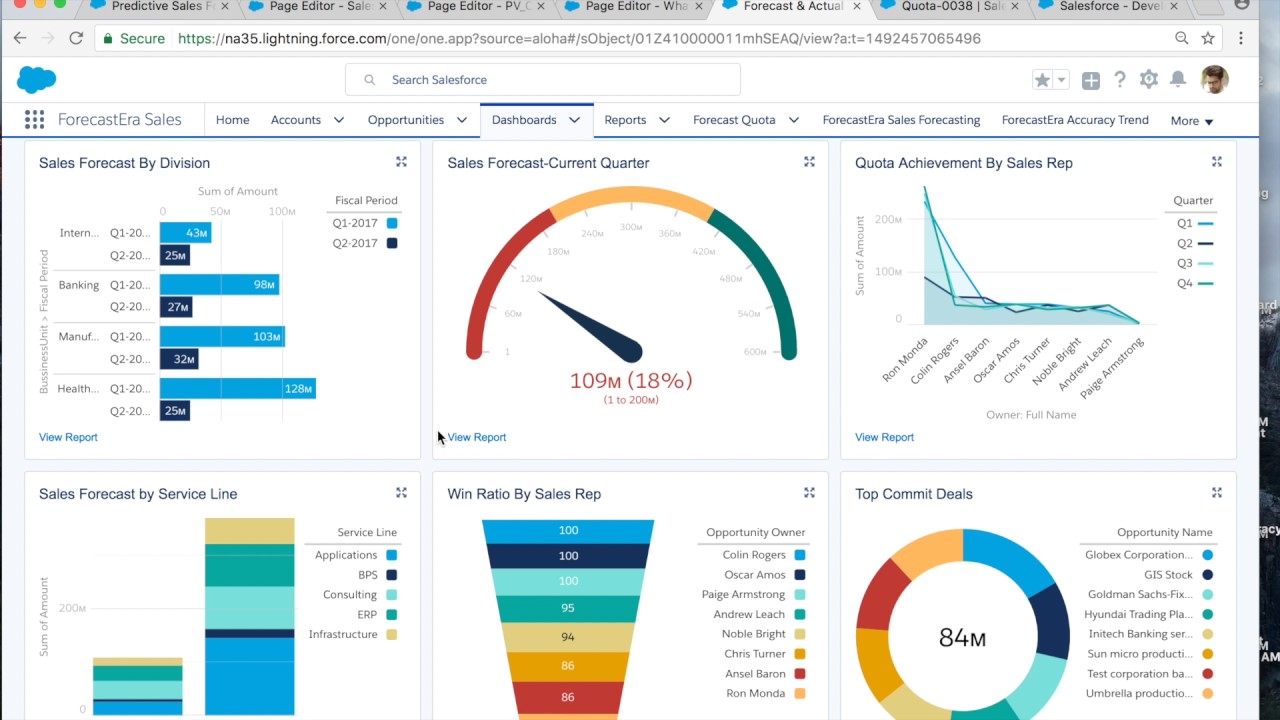
Salesforce is a CRM platform that offers a variety of marketing automation solutions to assist businesses in enhancing marketing efforts and boosting revenue growth.
Salesforce enables marketers to create personalised customer experience, automate tedious tasks, and measure the impact of their marketing efforts.
Features
- Client data platform
- Marketing AI
- Lead scoring
- Referral marketing
- Campaign management
- Loyalty management
Advantages
- Advanced AI functionality for lead scoring and qualification, account-based engagement, and AI-driven insights into marketing effectiveness
- Multichannel targeting options, including mobile app notifications, SMS, webinars, and more
- Ready-made reporting tools to monitor essential metrics such as pipelines and campaign-influenced revenue
- A scalable solution well-suited to businesses of all sizes
Disadvantages
- Pricing can be complicated and tends to vary depending on the selected features and any optional extras.
- Integration with third-party CRM and SFA platforms is partially limited.
- The platform may not be suitable for non-technical users, as it typically requires a certain degree of technical expertise for configuration and customisation
Pricing
Salesforce pricing may pose a barrier for some businesses, ranging from £1,250 per month to even as much as £108,000 per month.
3. Pipedrive
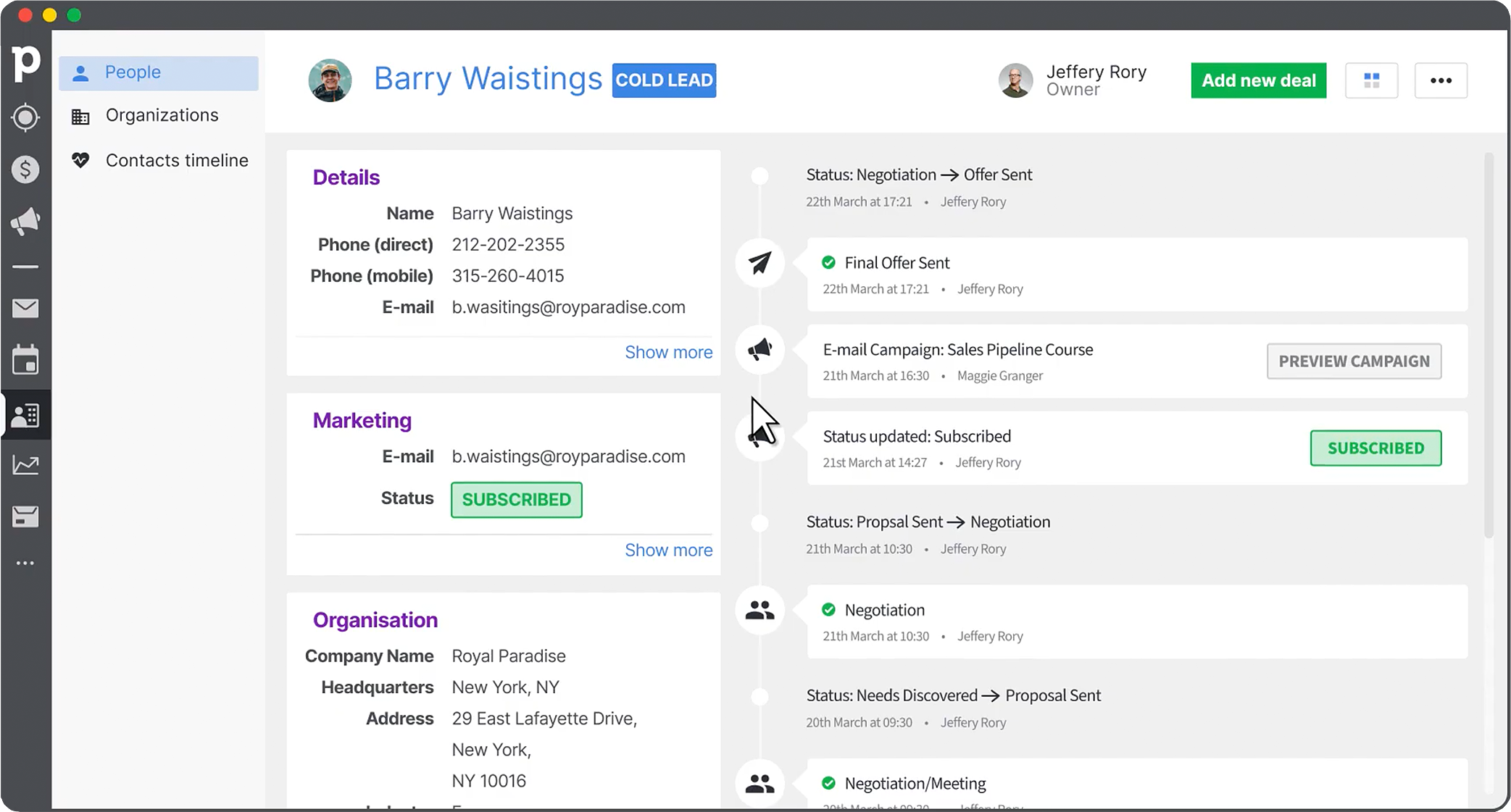
Pipedrive is a user-friendly tool that combines CRM and email marketing software - Campaigns to help businesses manage email campaigns that deliver unbeatable results.
With Pipedrive, businesses can easily create personalised emails, and reach the right customers with the right message
Features
- Email marketing automation
- Email builder
- Audience segmentation
- Analytics and reporting
- Campaign management
- Marketing workflow automation
Advantages
- User-friendly email marketing tools designed for sending personalised campaigns and monitoring engagement.
- A library of ready-made email templates and an intuitive drag-and-drop editor
- Effortless integration with widely used marketing and productivity platforms.
Disadvantages
- Limited advanced marketing automation features compared to other platforms.
- Reporting tools may not fully meet the demands of more complex analytical requirements.
Pricing
Pipedrive provides a range of pricing options, beginning at £14 per user per month for the Essential plan, with the top-tired Enterprise plan priced at £99.
4. ClickUp
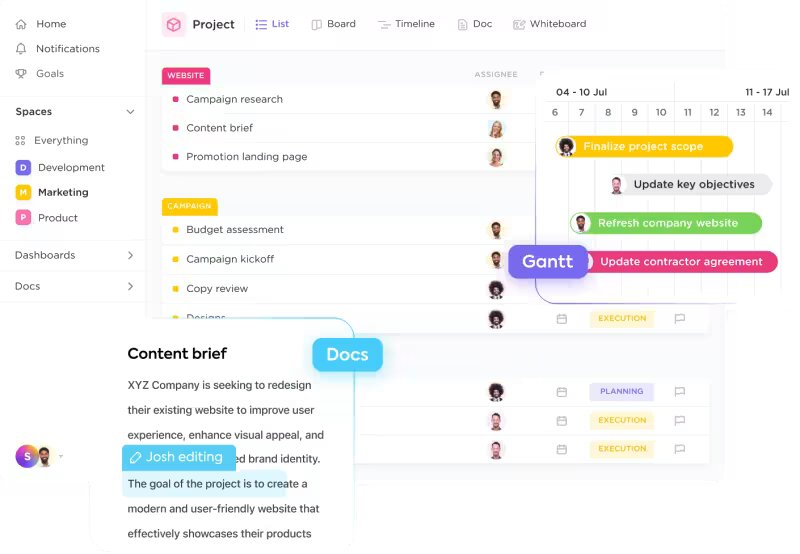
ClickUp is a versatile project management platform that also offers CRM and marketing automation features. It assists businesses in streamlining their marketing processes and enhancing collaboration within the organisation.
ClickUp's customisable workflows, task automation, and integrated communication tools enable marketing teams to plan, execute, and track their campaigns more efficiently.
Features
- Task management and automation
- Customisable task lists, boards, and calendars
- Collaboration tools
- Content marketing management
- Event marketing management
- Campaign planning and tracking
Advantages
- An all-in-one productivity platform combining project management, CRM, and marketing automation capabilities.
- Comprehensive automation tools, including over 100 pre-configured workflows, designed to simplify sales and marketing operations.
- Integration with more than 1,000 third-party applications
Disadvantages
- Marketing automation features may not be as advanced as those found in dedicated CRM platforms.
- The interface and navigation may require some adaptation for new users.
- Configuring more complex workflows might require assistance, especially for those without technical background.
Pricing
ClickUp provides a range of pricing plans, beginning with a free option that includes core features. For those requiring more advanced features, the Unlimited plan is available from £7 per user per month.
5. HubSpot Marketing Hub
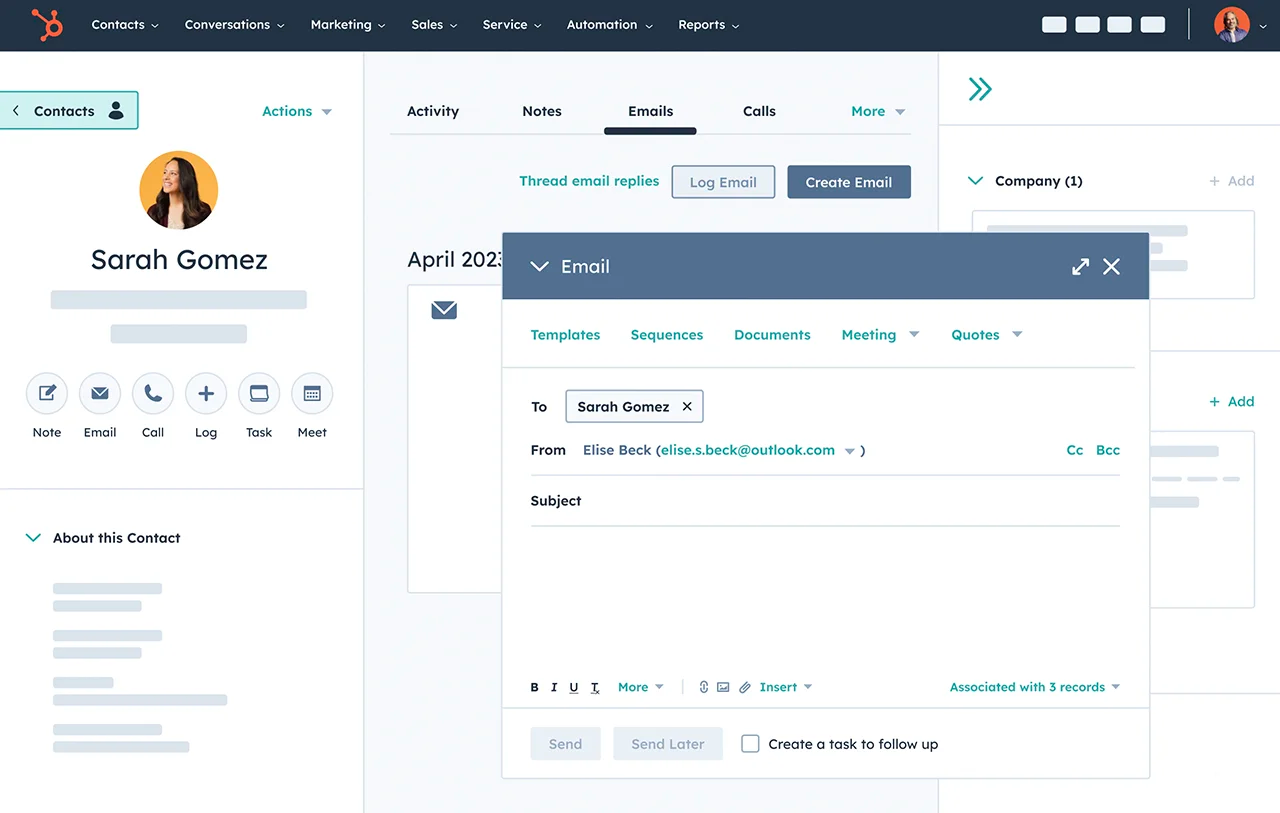
HubSpot is a marketing platform that provides a comprehensive suite of CRM and marketing automation tools to assist businesses in attracting and engaging customers.
HubSpot’s Marketing Hub offers a user-friendly interface, automation features, and extensive integrations, empowering marketing teams to create personalised experiences and drive revenue growth.
Features
- Lead generation
- Multi-touch revenue attribution
- Email marketing automation
- Advertising management tools
- Campaign management
- Marketing analytics and reporting
Advantages
- Fully integrated with HubSpot's suite of sales, customer service, and marketing tools, enabling comprehensive, end-to-end customer management
- Advanced marketing automation capabilities, including lead nurturing and workflow automation
- A wide-ranging library of resources, complemented by expert training and responsive customer support
Disadvantages
- Pricing may be at the higher end for smaller businesses, particularly when accessing more advanced functionality.
- The extensive functionality can feel a bit complex at first for those unfamiliar with such platforms
- Limited flexibility in template customisation can make aligning with brand guidelines more difficult.
Pricing
HubSpot offers a range of pricing plans, beginning at £20 per month for the Starter plan and extending to £3,600 per month for the Enterprise tier. For smaller businesses, a free plan is also available, offering essential functionality to get started.
Selecting the most suitable CRM solution is essential for enhancing marketing performance and supporting business growth. Whether the priority is sophisticated automation, smooth integration with existing tools, or an intuitive interface, the five CRM platforms outlined above provide a broad spectrum of features designed to meet a variety of marketing requirements.
How to select the right marketing CRM software
With an ever-growing number of marketing CRM platforms on the market, identifying the one that will best suits your organisation’s requirements can be a genuine challenge. The following seven considerations outline the most essential factors for evaluating systems suited to varied marketing need and long-term strategic aims.
- Revenue and growth alignment: select a CRM that supports the entire customer journey, offering advanced automation and ensuring close coordination between customer-facing and operational teams to maximize GTM impact.
- Unified data view: ensure the platform consolidates customer information across departments, offering a single, reliable source of truth that can scale with the organisation.
- Scalability and enterprise-grade performance: opt for a platform that can seamlessly support complex workflows, multiple regions or brands, and expanding volumes of data, all without the need to migrate to a new system.
- CRM marketing automation and AI capabilities: prioritize platforms offering robust automation and embedded AI, including agentic AI tools, to increase efficiency and scale output without increasing team size.
- Enterprise integrations: seamless integration with the broader enterprise technology ecosystem, including analytics, productivity tools, and data platforms, to ensure systems remain cohesive and avoid operational silos.
- Security and compliance: prioritise built-in enterprise-level security, data governance, and adherence to regulatory standards from the outset to safeguard sensitive information and ensure full compliance.
- Total cost of ownership: consider the full scope of ownership costs, including implementation, customisation, ongoing management, and the vendor’s long-term development plans.
Summary
The right marketing CRM offers more than just managing leads and campaigns — it supports long-term growth by bringing together data, teams, and execution across the customer journey. By accelerating workflows and improving marketing performance, it becomes a key contributor to sustained revenue growth.
Creatio delivers a comprehensive marketing CRM tailored for fast-growing enterprises, combining built-in AI with no-code flexibility. Its intuitive interface, intelligent automation, and adaptable design allows marketing teams to streamline campaign execution, refine processes with ease, and translate customer data into meaningful commercial outcomes, all without unnecessary complexity.
Request a demo with Creatio’s experts to see how you can elevate marketing performance from day one.