With Gartner forecasting that more than 40% of enterprise applications will include role-specific AI agents by 2026, agentic platforms are fast becoming the next generation of enterprise software. These solutions enable organisations to scale operations more efficiently, reduce costs, enhance decision-making, and accelerate digital transformation.
This guide explores everything business leaders should understand about agentic platforms — what they are, the distinctive features that set them apart, and the leading solutions worth considering in 2026 and beyond.
Core findings:
- Unlike traditional automation, agentic platforms empower AI agents to plan, act, and adapt in real time across a wide range of workflows.
- Agentic platforms are designed to be industry-agnostic, offering both business users and IT teams the flexibility to develop AI agents that align with the specific processes and objectives of any organisation.
- No-code and low-code agentic solutions are growing in popularity, as they enable users across the business to design and deploy tailored AI agents without the need for advanced technical expertise.
- Leading platforms such as Creatio, UiPath, and Moveworks illustrate how agentic AI is driving efficiency, scalability, and sustainable growth across multiple sectors.
What is an agentic platform?
An agentic platform is a type of software that enables organisations to design and manage AI-powered agents capable of supporting human teams or independently carrying out tasks without the need for constant supervision. These role-specific agents are aligned with business objectives and, unlike traditional automation tools, process the ability to reason, collaborate, and adapt continuously to shifting demands.
In essence, agentic platforms allow companies to coordinate complex workflows across departments by deploying intelligent, task-oriented AI agents. For example, a sales agent might qualify leads and generate tailored proposals; a service agent could handle customer enquiries and manage support cases; while a finance agent may forecast revenue or automate routine reporting. Each agent can operate independently or in coordination with others, forming a network of AI-driven collaborators that streamline operations, minimise inefficiencies, and support accelerated business growth.
Where are agentic platforms used?
While agentic platforms are generally industry-agnostic, they deliver the greatest value when adapted to the specific workflows and challenges of a given organisation. Custom agents are built to undertake specialised tasks, working alongside human teams to automate routine processes, enhance decision-making, and scale operations more efficiently. Below are several use cases of how various industries are embracing agentic AI solutions:
- Banking – Compliance agents to monitor transactions for anti-money laundering and fraud risks, lending agents that assess creditworthiness, and service agents that handle routine customer enquiries.
- Credit unions – Member service agents, loan-processing agents to streamline approvals, and compliance agents that stay abreast of evolving regulatory requirements.
- Insurance – Claim management agents to handle case processing, underwriting agents to assist in evaluating risk, and policy service agents to respond to customer queries promptly and accurately.
- Mortgage – Document management agents that verify income and property documentation, and loan-origination agents to flag potential risks and ensure alignment with lending regulations.
- Manufacturing – Production agents that balance demand with capacity, and supply chain agents that anticipate demand shifts and highlight potential bottlenecks.
- Pharma – Client account agents that manage patient data, regulatory agents that support the preparation of submission documentation, and supply chain agents that ensure traceability and availability of inventory such as vaccines.
- Transportation – Fleet-management agents to schedule repairs or reroute vehicles, alongside logistics agents that adjust delivery routes in real time based on traffic conditions, weather disruptions, or unexpected shifts in demand.
- Business services – Client-onboarding agents that streamline intake processes, workflow agents that coordinate cross-departmental projects, and knowledge-management agents that keep internal systems up with relevant case studies and subject-matter expertise.
- Telecom – Customer support agents that assist the resolution of service-related queries, and billing agents capable of managing intricate pricing models.
- Media and advertising – Campaign analytics agents that monitor ROI across channels and recommend strategy improvements, content agents that generate tailored advertisement copy and landing pages, and email generation agents that create personalised emails to maximise engagement and leads conversion.
Across all sectors, the true strength of agentic platforms lies in their capacity to support the creation of bespoke AI agents tailored to specific business objectives. By aligning agents with industry-specific workflows, organisations can elevate automation into intelligent collaboration between human expertise and digital capability.
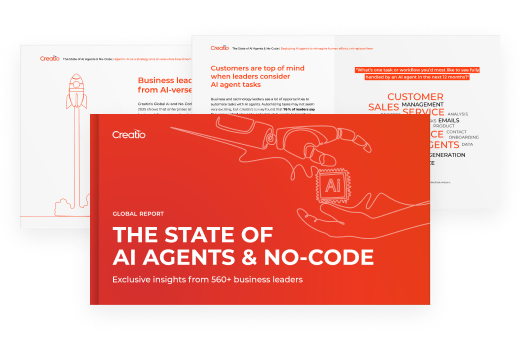
The State of AI Agents & No-Code
Learn how 560+ leaders across the world use AI and no-code to drive innovation today
Core features to seek in agentic AI solutions
While many AI platforms provide useful tools for business, agentic platforms distinguish themselves through capabilities that extend well beyond standard automation. Drawing on analysis of the leading platforms, the following features are essential to ensure agentic AI delivers meaningful impact across industries:
Natural interaction and accessibility
Agentic platforms are designed to make AI agent technology accessible for everyone, not solely developers. Business users can effortlessly build and manage multi-agent ecosystems using natural language, no-code tools, and intuitive interfaces. This user-friendly approach accelerates adoption and enables the creation of fully autonomous workflows tailored to real business requirements.
Enterprise-grade security and governance
Given that AI agents process substantial large volumes of sensitive business and customer data, robust, enterprise-grade security is non-negotiable. Leading agentic platforms should offer encryption, role-based access controls, comprehensive audit trails, and gull compliance with regulations such as UK GDPR, ensuring secure, transparent, and scalable operations.
Autonomous planning and adaptive execution
Unlike traditional automation systems, agentic platforms empower AI agents to perceive, plan, and act independently, adapting to changing inputs in real time without the need for human intervention. This level of autonomy enables organisations to accelerate workflows, scale operations more effectively, and deliver consistent results.
Role-specific agent design
The true strength of agentic platforms lies in their ability to support the creation of agents with clearly defined roles and responsibilities — for example, sales agents that qualify leads or finance agents that monitor compliance. By aligning each agent with specific business objectives and operational nuances, organisations can achieve more precise, impactful automation that drives measurable results.
Continuous learning and optimisation
Agentic agents are not static; they continually evolve. By analysing outcomes, feedback, and fresh data, these AI agent systems refine their reasoning and improve workflows over time. This continuous learning ensures that agents become smarter, faster, and more efficient in the long-term run.
Seamless ecosystem orchestration
To deliver meaningful value, agentic platforms must work effortlessly across the entire business ecosystem, including CRM, ERP, communication tools, and beyond. It is therefore essential that the software enables seamless coordination between AI agents and core systems, eliminating silos and driving greater operational efficiency.
Scalable multi-agent environment
Enterprise-grade platforms are purpose-built to scale, capable of supporting a vast number of workflows and processes without compromising on performance or oversight. Leading agentic platforms can run dozens or even hundreds of agents simultaneously, coordinating tasks efficiently and ensuring the solution evolves in line with the growth of the business.
What are the different types of agentic platforms?
Agentic AI platforms are typically grouped according to the level of technical expertise required and the specific needs of the organisation:
- No-code agentic platforms: designed with the accessibility in mind, these platforms empower both business users and IT teams to create AI agents through intuitive drag-and-drop interfaces and natural language prompts. They are best suited for rapid deployment, user-friendly experiences, and integration-rich workflows.
- Low-code agent platforms: offering a greater flexibility while maintaining a user-friendly interface, though they typically require a higher level of technical competence. They are ideal for organisations that require deeper customisation and wish to scale more sophisticated internal processes.
- Traditional development frameworks: designed specifically for developers and engineers who require complete control over the design and orchestration of AI agents. Such systems offer the highest level of customisation and flexibility, but typically demand considerable technical expertise and resources to implement and maintain.
In contrast, many organisations are shifting their focus towards no-code and low-code agentic platforms. These approaches empower business users and subject-matter experts to create bespoke AI agents without the need for extensive programming knowledge, enabling faster deployment and a more rapid return in investment than traditional development frameworks.
Leading agentic AI platforms in 2026: Overview
Agentic Platform | Best Use Case | G2 Rating |
| Creatio | Creating and deploying applications and AI agents using natural language and visual no-code designers | 4.8/5 |
| UiPath | Enterprises with existing RPA investments seeking to enhance automation by integrating AI agent capabilities | 4.6/5 |
| Beam AI | Optimising workflows through agentic process automation | 4.8/5 |
| CrewAI | Businesses with highly specific workflows and robust IT teams capable of developing bespoke AI agents | 4.2/5 |
| Microsoft 365 Copilot | Businesses heavily reliant on Microsoft 365, looking to boost in-app productivity through AI-driven automation | 4.4/5 |
| Zendesk AI | Companies aiming to elevate customer service through intelligent, AI-powered support solutions | 4.3/5 |
| Aisera | Automating service desk operations by leveraging ready-to-use AI agent templates | 4.4/5 |
| Kore.ai | Developing AI agents with the flexibility to select preferred models, communication channels, and cloud environments | 4.7/5 |
| Moveworks | Rolling out AI agents across various departments and systems without facing integration challenges | 4.6/5 |
| Langchain | Technologically mature enterprises with the internal capacity to design and manage custom AI agent ecosystems | 4.7/5 |
Leading agentic platforms for 2026 and beyond
As artificial intelligence becomes increasingly embedded in business operations, selecting the right platform is essential for driving productivity, scalability, and efficiency. This section highlights ten of the most impactful agentic AI solutions reshaping how organisations operate across diverse industries.
The following platforms are worth consideration:
1. Creatio
Well suited to: empowering teams across departments with intelligent AI agents designed to adapt to specific roles and enhance human capabilities.
Creatio is a leading agentic platform that automates CRM and business workflows through a combination of no-code development and AI embedded at its core. Its agentic AI capabilities, supported by both generative and predictive AI, enable business users and IT teams to automate routine tasks, scale operations effectively, and accelerate organisational growth.

What sets Creatio apart is the way its AI agents are natively embedded throughout the entire platform. These agents have full contextual awareness of all data objects, relationships, workflows, and business processes, enabling them to operate autonomously: interpreting, acting, and learning within the organisational environment. This level of integration enhances workflow continuity, reduces inefficiencies, and drives higher productivity.
Unlike many providers, Creatio includes AI agents as a core feature, with no hidden costs or additional licence requirements. This approach makes it simpler for organisations to realise the benefits of seamless collaboration between people and technology. With built-in integration to tools such as Microsoft Teams and Outlook, Creatio’s agentic platform allows businesses to accelerate time-to-value while unlocking the combined potential of digital and human capabilities.
Distinguishing features:
- Sales Agents assist sales teams by automating preparation tasks, personalising outreach, generating tailored proposals, and highlighting key account insights. For example, a Meeting Preparation Agent might suggest agendas, talking points, and supporting materials ahead of a client meeting, while a Quote Agent can help craft bespoke quotes using AI-recommended products and pricing strategies.
- Marketing Agents enable marketing professionals to enhance campaign performance and generate qualified leads to feed the sales pipeline. As an example, an Email Generation Agent can produce personalised email content aligned with specific audience segments and campaign objectives, while a Marketing Content Agent may assist in creating blog posts, social media updates, and advertising copy.
- Customer Service Agents support service teams by accelerating case resolution through contextual responses and recommended knowledge resources. For instance, a Customer Support Agent can summarise ongoing cases, drawing on relevant history and interactions to speed up case response times, while a Knowledge Base Agent identifies valuable resolved cases and drafts new knowledge articles accordingly.
- Vertical Agents are designed with specific industries in mind, including finance, healthcare, and manufacturing. These AI agents harness advanced agentic AI capabilities, built-in AI-native automation, and pre-configured workflows to improve operational effectiveness. For example, a Credit Scoring Agent can evaluate potential risk and assist financial professionals in making more informed credit decisions with greater accuracy.
- No-Code Dashboard Agent enables users to generate and refine reports using natural language prompts, making is easy to establish AI-driven analytics without requiring technical expertise.
- No-code Agent Builder empowers business users to design, configure, and deploy bespoke AI agents by visually combining skills, workflows, and knowledge using intuitive, AI-enhanced no-code tools.
- Human-in-the-loop approach ensures that AI decisions remain guided by human judgement, reinforcing transparency, data integrity, and accountability throughout operations.
- Enterprise-grade security underpins the platform, offering robust privacy controls and compliance measures aligned with the highest industry standards.
Creatio's AI agents can be tailored to suit individual roles, workstyles, and workflows, with permissions configured to match specific responsibilities. These intelligent agents are capable of handling multistep tasks and assisting with strategic decisions, ultimately boosting productivity, productivity, operational precision, and team effectiveness.
Rating:
G2: 4.8/5
Software Advice: 4.7/5
Creatio AI Agents
Enhance productivity and business outcomes with Creatio’s AI agents
2. UiPath
Well suited to: enterprises seeking an RPA platform to develop AI agents and design intelligent business processes.
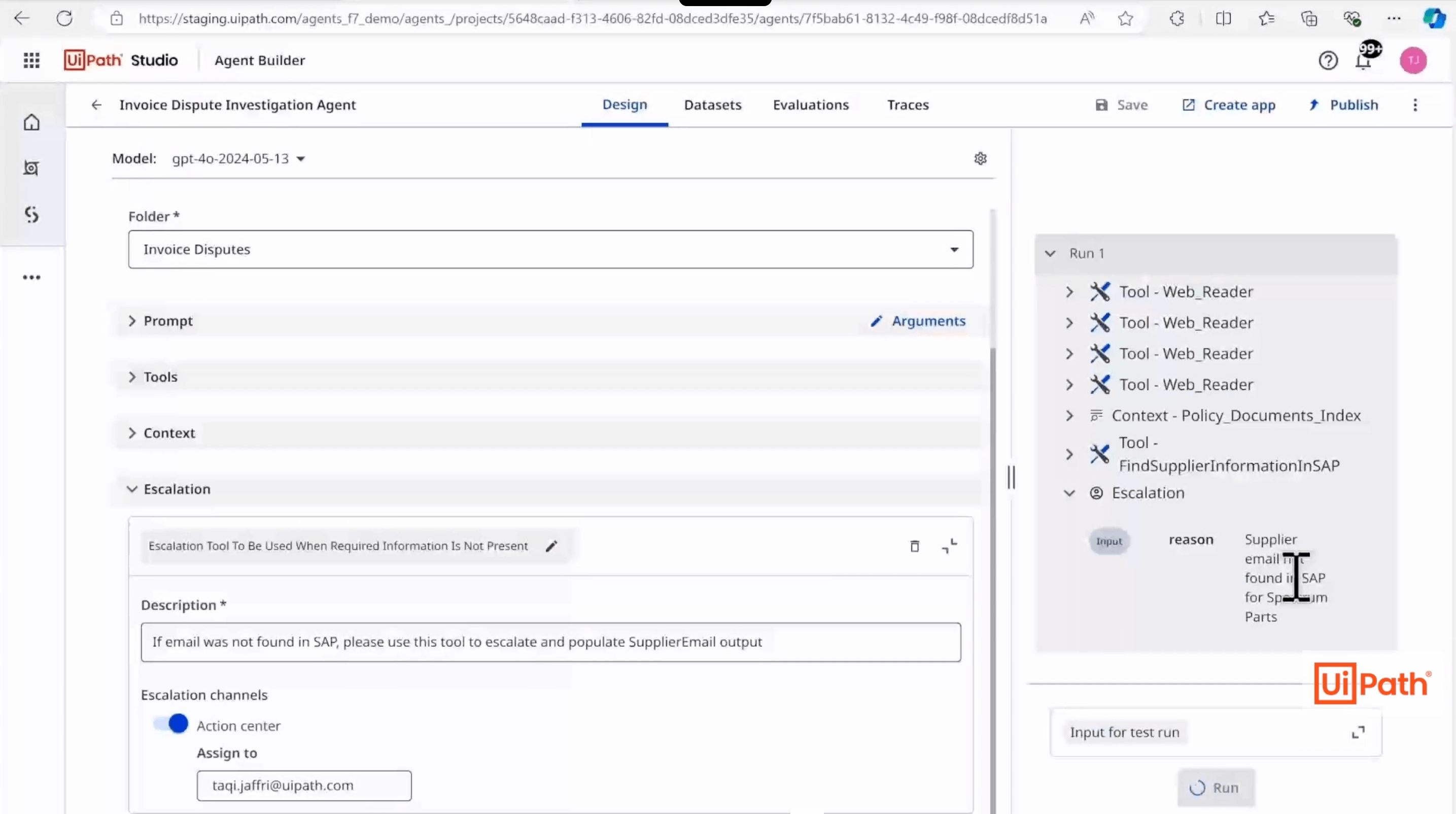
UiPath is a leading robotic process automation (RPA) platform that enables organisations to streamline repetitive tasks such as data entry, lead management, customer follow-ups, and document handling. Moving beyond traditional rule-based automation, UiPath integrates agentic AI capabilities to support intelligent decision-making and predictive analysis. The platform allows businesses to construct sophisticated workflows that combine agentic adaptability with robotic precision and human expertise. Its goal-oriented AI agents can autonomously manage and optimise complex processes, helping to reduce operational overheads and allowing staff to concentrate on higher-value, strategic initiatives.
Distinguishing features:
- UiPath Agent Builder: enables organisations to create, customise, and deploy AI agents designed to automate intricate business processes with precision.
- UiPath Maestro: unifies agentic AI, automation, business process management (BPM), and process intelligence to design, execute, and optimise end-to-end business operations.
- UiPath Healing Agent: proactively identifies and resolves user interface issues, ensuring automation runs smoothly and offering recommendation to reduce time spent on troubleshooting or debugging.
- UiPath Autopilot: utilises AI to enhance workflows productivity and operational efficiency.
- Low-code and pro-code environments: offer flexibility for technical teams, allowing them to develop sophisticated agentic automations, AI agents, and robots.
- Security measures: include robust policy management, role-based access controls, and comprehensive auditing across the platform to safeguard sensitive data.
Rating:
G2: 4.6/5
Software Advice: 4.6/5
3. Beam AI
Well suited to: Businesses aiming to enhance their workflows through the help of intelligent AI agents.
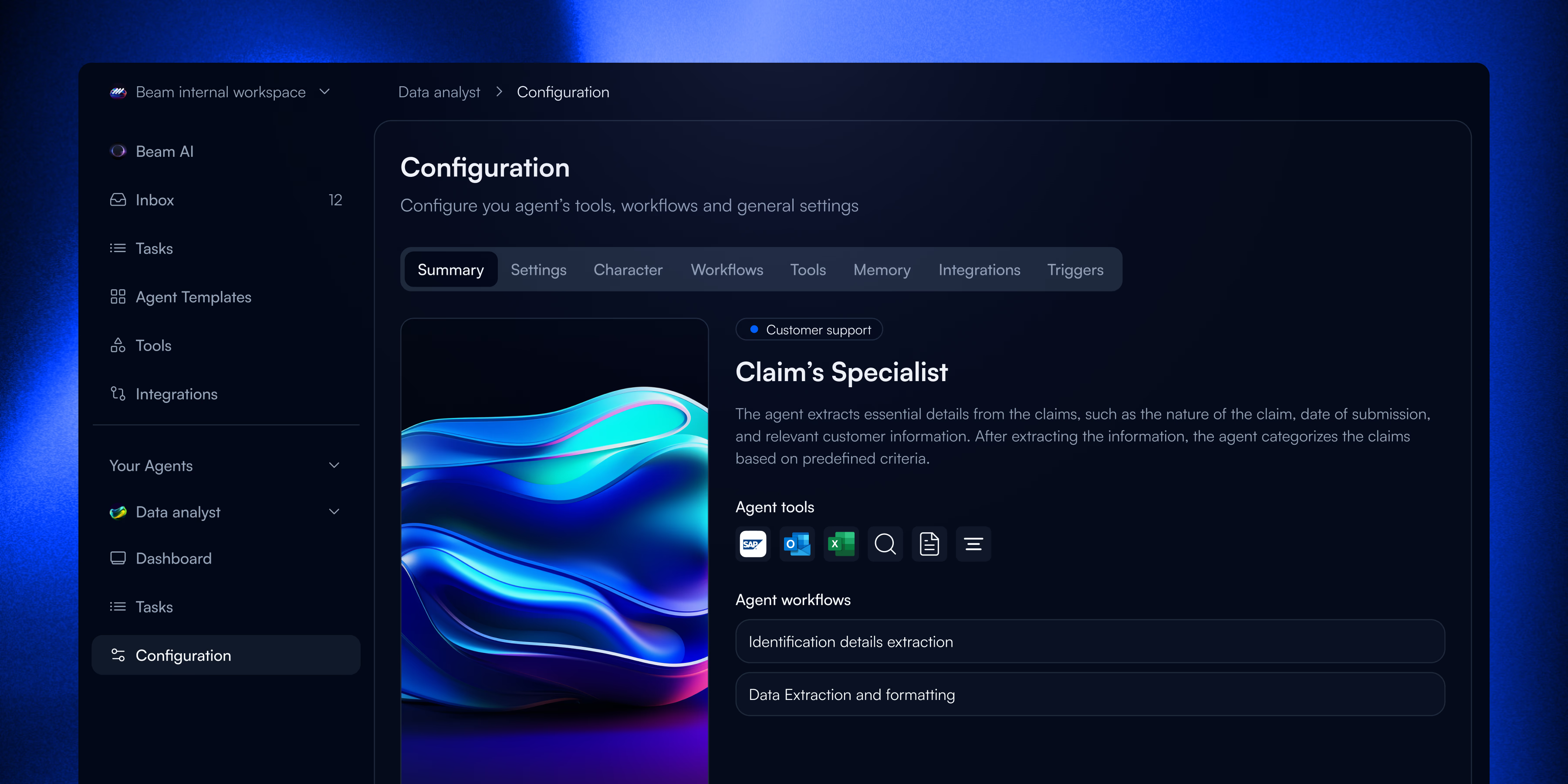
Beam AI is an agentic AI platform designed to streamline operations by deploying a coordinated team of AI agents. The platform enables businesses to develop and integrate multiple learning agents that autonomously identify opportunities for automation, helping to remove inefficiencies and improve overall productivity. These AI agents continuously learn and adapt, optimising workflows, addressing bottlenecks, and enhancing output. Beam also offers industry-specific agents tailored to address sector-specific challenges, delivering measurable improvements in performance across a wide range of fields.
Distinguishing features:
- AI agent hub: a command centre that allows users to oversee a diverse range of AI agents, monitor current assignments, and schedule upcoming tasks with ease.
- Agentic automation: allows seamless integration of AI agents into existing business workflows to streamline and enhance operational efficiency.
- Integration with existing tools: Beam AI seamlessly integrates with widely used tools such as Airtable, Aircall, ServiceNow, Copper, Asana, Sage, and ClickUp.
- Pre-built agentic AI tools: a comprehensive toolkit of ready-made, customisable AI solutions designed to build and execute workflows.
- Agent templates: pre-trained agents tailored to support various business functions, including marketing, sales, customer service, HR, and finance, suitable for a broad range of sectors such as insurance, healthcare, and retail.
- Data protection: Beam AI incorporates robust security protocols to safeguard sensitive data and ensure full compliance with GDPR standards and other relevant privacy regulations.
Rating:
G2: 4.8/5
Software Advice: 4.8/5
4. CrewAI
Well suited to: Businesses with bespoke processes and extensive IT capabilities seeking to build tailored AI agents.
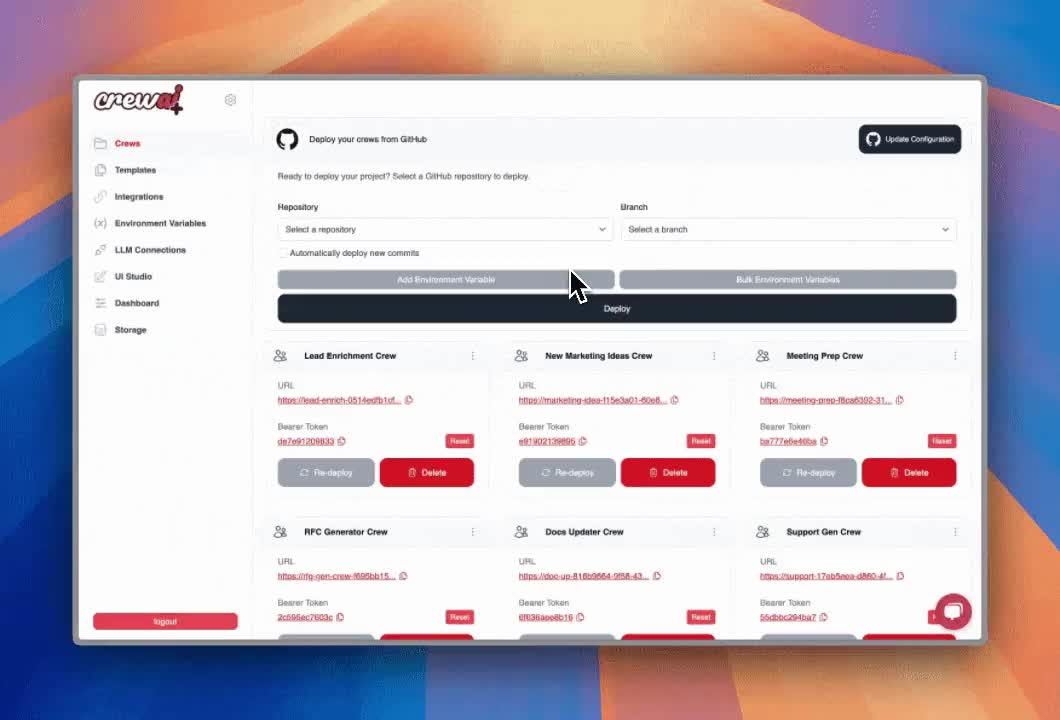
CrewAI is a multi-agent platform designed to streamline workflows across a range of industries. It enables users to build and deploy automated processes using LLM and a cloud-based infrastructure. The platform provides a variety of pre-configured AI agents, including scoring for sales teams, content generation for marketing professionals, stock analysis for financial analysts, and code agents for developers. By harnessing AI-driven development, CrewAI helps businesses automate complex operations and enhance workflows efficiency, ultimately boosting team productivity and operational agility.
Distinguishing features:
- Multi-agent automation: Crew AI provides a user-friendly Studio interface, enabling organisations to build multi-agent automation using no-code tools and templates or traditional coding methods.
- CrewAI templates: a comprehensive library of pre-configured AI agent solutions that are fully customisable and quick to implement.
- Open-source platform: built to support flexibility and scalability, the open-source platform makes it easier for developers to build, refine, and expand AI agents capabilities.
- Integration with third-party tools: connects with over 1,000 widely used business tools and applications, streamlining operations and enhancing system interoperability.
- Regulatory compliance: designed with industry standards in mind, the multi-agent platform supports compliance with key frameworks, including, HIPAA and SOC2, ensuring data protection and governance.
Rating:
G2: 4.2/5
Software Advice: 4.6/5
5. Microsoft 365 Copilot
Well suited to: Organisations relying on Microsoft 365 technology stack that wish to enhance in-app productivity.
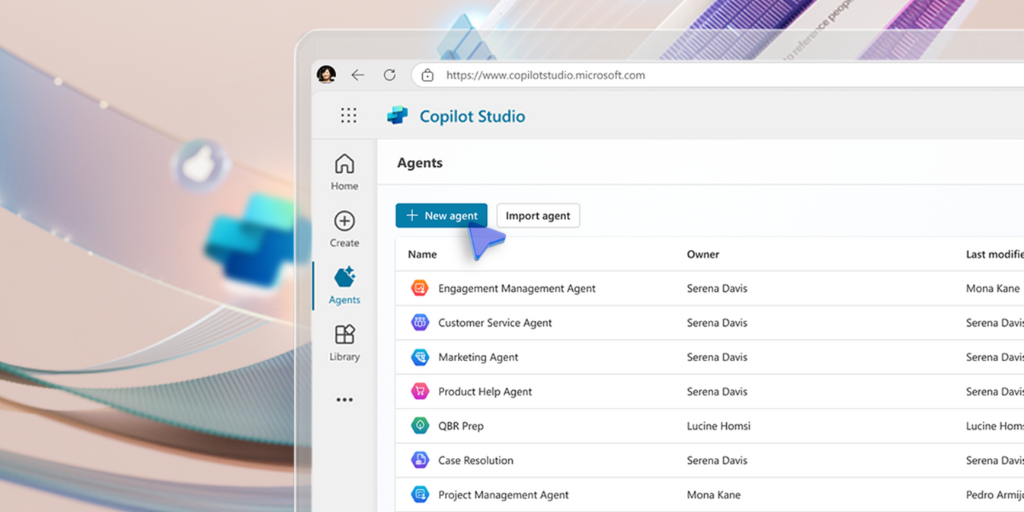
Microsoft Copilot is an agentic AI software designed to boost efficiency across the Microsoft 365 environment by automating routine tasks such as drafting documents, analysing data, and managing emails. Harnessing the power of agentic AI, it responds to queries, offers contextual assistance, generate ideas, and recommends next steps, all within familiar Microsoft applications. Seamlessly integrated into tools such as Word, Excel, and Outlook, Copilot AI enables teams to spend less time on repetitive tasks and more time on focusing on strategic, high-impact work.
Distinguishing features:
- Copilot Chat: allows users to build AI-driven agents that integrate with an organisation's data sources and automate business processes. Agents can be created simply by outlining their intended purpose in a chat and providing relevant knowledge bases.
- Copilot in Word: seamlessly brings business data into Word documents, allowing users to draft, refine, and edit content, significantly reducing the time required to produce articles, reports, and other documentation.
- Copilot in Outlook: assists users in managing the inbox by analysing email content, prioritising the most critical messages, and offering concise summarises along with the suggested next steps.
- Copilot in Excel: enables users to work in Excel spreadsheets by describing the task to the Copilot rather than using formulas.
- Copilot in PowerPoint: speeds up the creation of on-brand presentations by generating slides based on brief descriptions provided in natural language.
Rating:
G2: 4.4/5
Software Advice: 4.6/5
6. Zendesk AI
Well suited to: Businesses focused on optimising customer service operations.
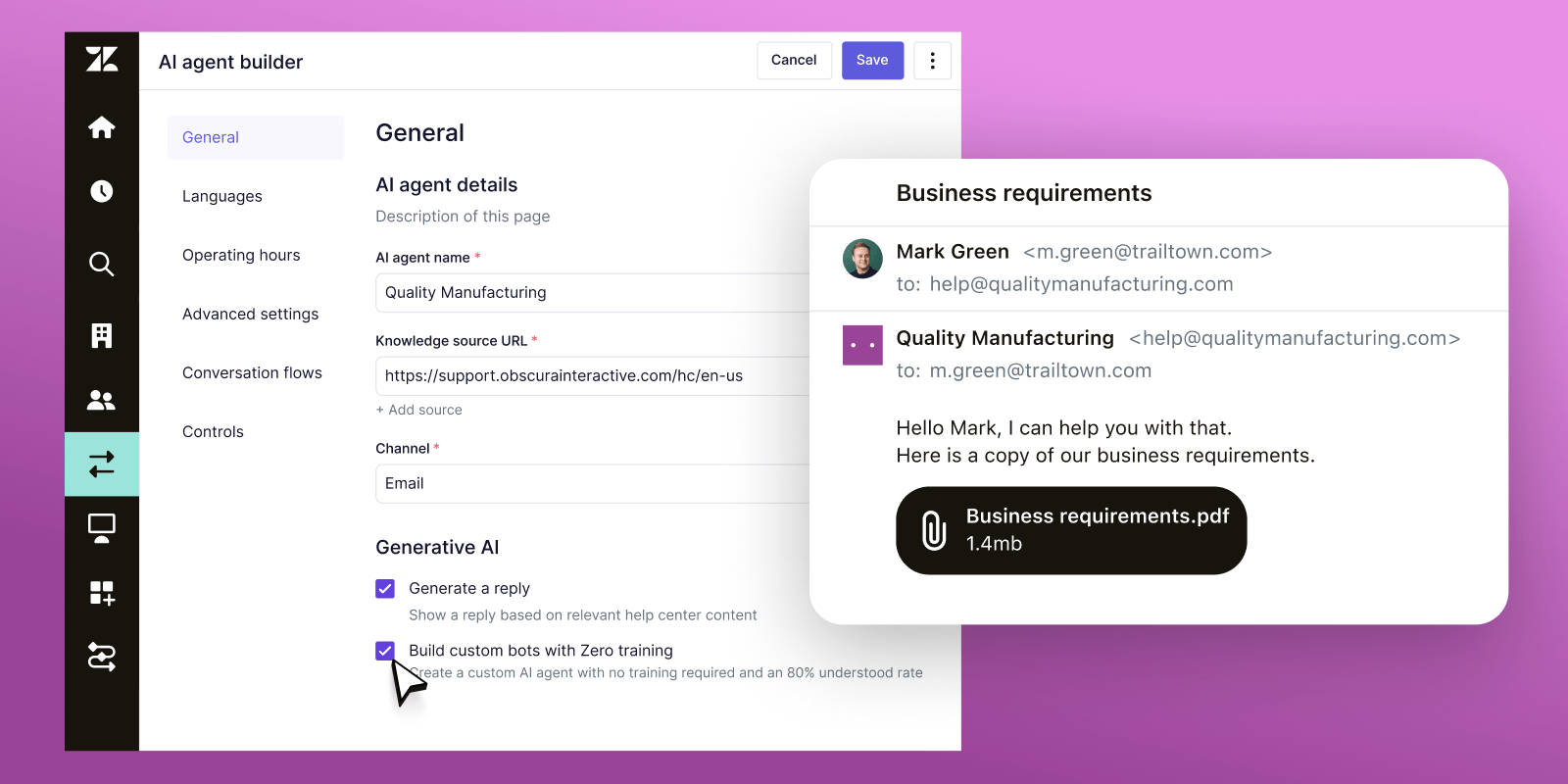
Zendesk is a customer service platform enhanced by AI capabilities designed to automate ticket management, improve agent efficiency, and deliver round-the-clock support through intelligent chatbots and self-service tools. Its agentic AI capabilities improves customer interactions by intelligently routing tickets based on urgency and sentiment, automating replies to frequently asked questions, and delivering personalised service. The result is quicker resolution times, higher levels of customer satisfaction, and a reduced burden on support teams. With built-in safeguards and full transparency, customer service representatives retain oversight of AI-driven interactions, ensuring each case is handled to the highest standard.
Distinguishing features:
- Instant responses: swiftly generate on-brand responses to frequently asked questions by drawing on internal knowledge bases.
- Custom conversation flows: enable businesses to design smarter resolution pathways, capable of handling more complex enquiries autonomously.
- Integration with backend systems: AI agents connected to the backend system can manage interactions from start to finish, authenticating users and delivering contextual responses.
- Agent Copilot: assists service representatives with live recommendations, suggested replies, next best actions, and relevant knowledge base articles.
- AI insights: provide actionable insight to enhance AI agents' performance, identify emerging issues, and guide ongoing optimisation efforts.
Rating:
G2: 4.3/5
Software Advice: 4.4/5
7. Aisera
Well suited to: enhancing service desk operations and building AI agents using pre-configured templates.
Aisera is a unified AI agent platform designed for large-scale enterprises, offering support for service desk operations across departments such as HR, IT, legal, finance, and customer service. Its AI agents autonomously execute actions and automate tasks, helping to boost employee productivity. By harnessing the powers of conversational AI and generative AI technologies, Aisera facilitates faster decision-making, reduces reliance on manual effort, and improves overall operational efficiency. The platform also integrates seamlessly with a wide range of third-party enterprise applications, enabling consistent and intelligent service automation across all business functions.
Distinguishing features:
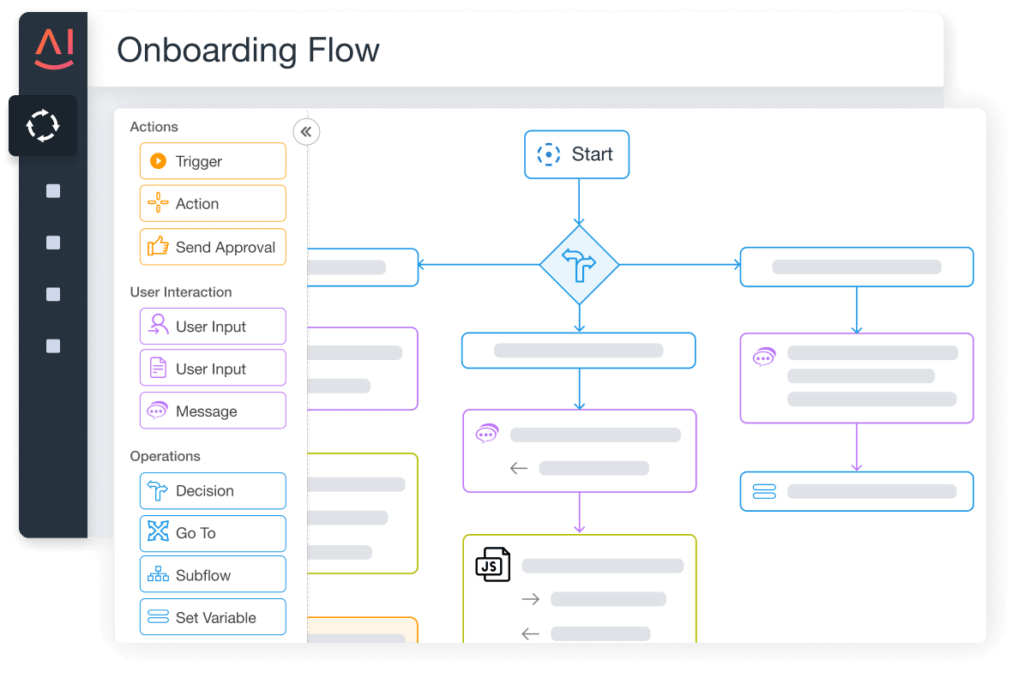
- Agent Studio: enables users to create AI agents using a combination of low-code, no-code, and pro-code tools, alongside a selection of ready-made agent templates designed to accelerate deployment
- Hyperflow studio: allows the creation and management of sophisticated workflows featuring multistep automation and complex dependencies.
- AI workflow builder: provides a library of over 1,000 pre-configured actions, enabling users to build workflows effortlessly via an intuitive low-code/no-code interface.
- AI Agent System: provides purpose-built agents capable of coordinating decisions, orchestrating business processes, and executing tasks.
- Multimodality: Aisera's AI agents are designed to interpret a variety of input types, including text, voice, images, and documents, for a more seamless and human-like user experience.
- AI-powered summarisation: automatically summarises reports, documents, customer service cases, helping to increase employee productivity.
- Enterprise-class security and governance: provides data protection tools to ensure compliance with industry regulations, including UK GDPR, HIPAA, and others.
Rating:
G2: 4.4/5
Software Advice: 4.5/5
8. Kore.ai
Best suited to: organisations seeking the flexibility to build AI agents across multiple models, communication channels, and cloud environments.
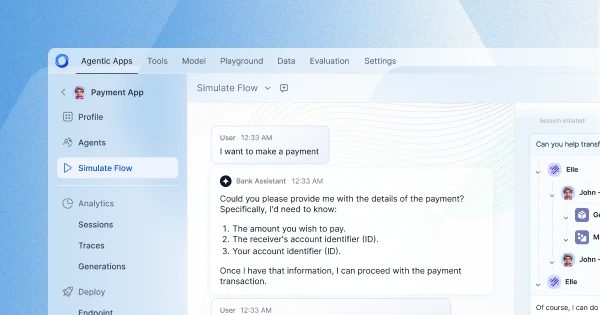
Kore.ai is an agentic AI platform that enables enterprises to design, deploy, and manage AI agents at scale, across a variety of ecosystems. It provides robust governance and observability tools as standard, supporting user adoption while ensuring businesses retain full oversight and control of their agentic AI tools. Kore.ai AI agents are designed to elevate employee experiences, automate business processes, and enhance customer service through intelligent automation.
Distinguishing features:
- Pre-built industry solutions: Kore.ai provides over 250 configurable templates for agents and tools tailored to a wide range of industries, including banking, retail, healthcare, recruiting, HR, and IT.
- Enterprise RAG search: extracts insights from both structured and unstructured data, supporting informed, data-led decision-making.
- Pre-built AI agents: a comprehensive library of ready-to-deploy AI agents designed to integrate effortlessly into enterprise environments, automating essential IT and HR functions.
- No-code workflow builder: provides ready-to-use prompts, process templates, and no-code forms to visually build and deploy AI agent-powered workflows.
- Seamless integration: Kore.ai agent platform integrates smoothly with enterprise applications, a variety of AI models, data sources, communication channels, and cloud providers.
- Security and compliance: built with enterprise-grade governance and role-based access control to protect confidential data and meet regulatory standards.
Rating:
G2: 4.7/5
Software Advice: 4.4/5
9. Moveworks
Best suited for: Deploying AI agents across various departments and systems without integration complexities.
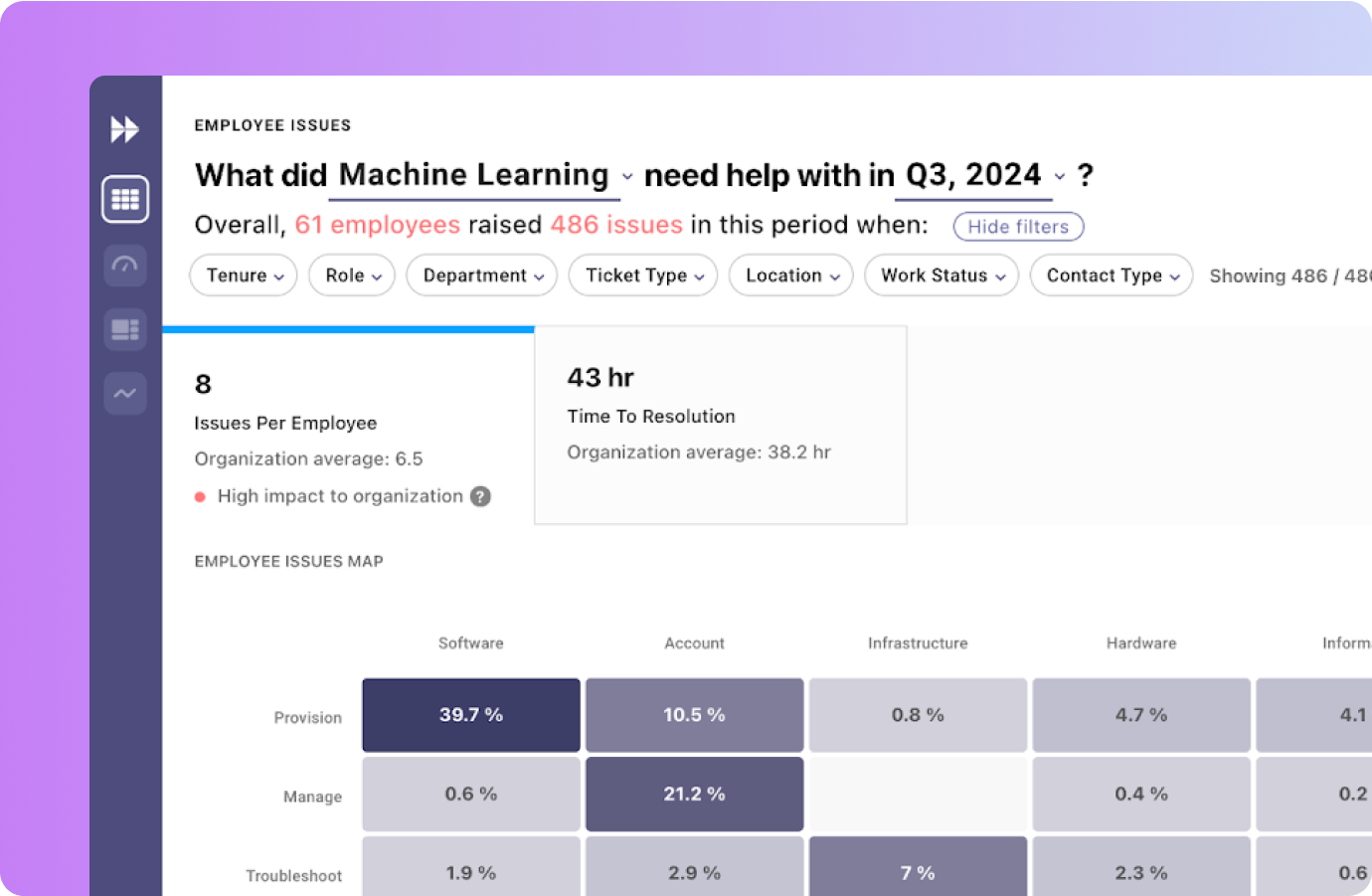
Moveworks provides an agentic AI assistant built to locate information and automate tasks across a wide range of enterprise systems and applications. By combining generative AI with search functionality, it enables autonomous actions and streamlined business processes throughout the organisation’s technology ecosystem. Moveworks’ agentic AI capabilities increase team productivity across IT, HR, sales, marketing, service, and engineering departments, allowing employees to concentrate on strategic priorities while routine activities are managed automatically.
Distinguishing features:
- Agentic AI Assistant: delivers personalised, round-the-clock support to employees across multiple channels and languages.
- Agentic Reasoning Engine: interprets user intent, applies reasoning, plan actions, and executes complex processes to meet defined objectives.
- Autonomous execution: performs tasks within integrated systems.
- AI Agent Builder: enables businesses to create enterprise-ready AI agents for various departments, seamlessly integrating with existing systems such as CRMs, ERPs, HRIS, and more.
- AI Agent Marketplace: a library of pre-configured AI agent solution packs, ready for deployment across diverse systems.
- Agent Studio: features a guided low-code editor experience that allows developers to rapidly design and tailor AI agents to align with business policies and specific organisational requirements.
Rating:
G2: 4.6/5
10. Langchain
Best suited for: tech-savvy enterprises with substantial IT resources seeking a platform to build and deploy AI agents from scratch.
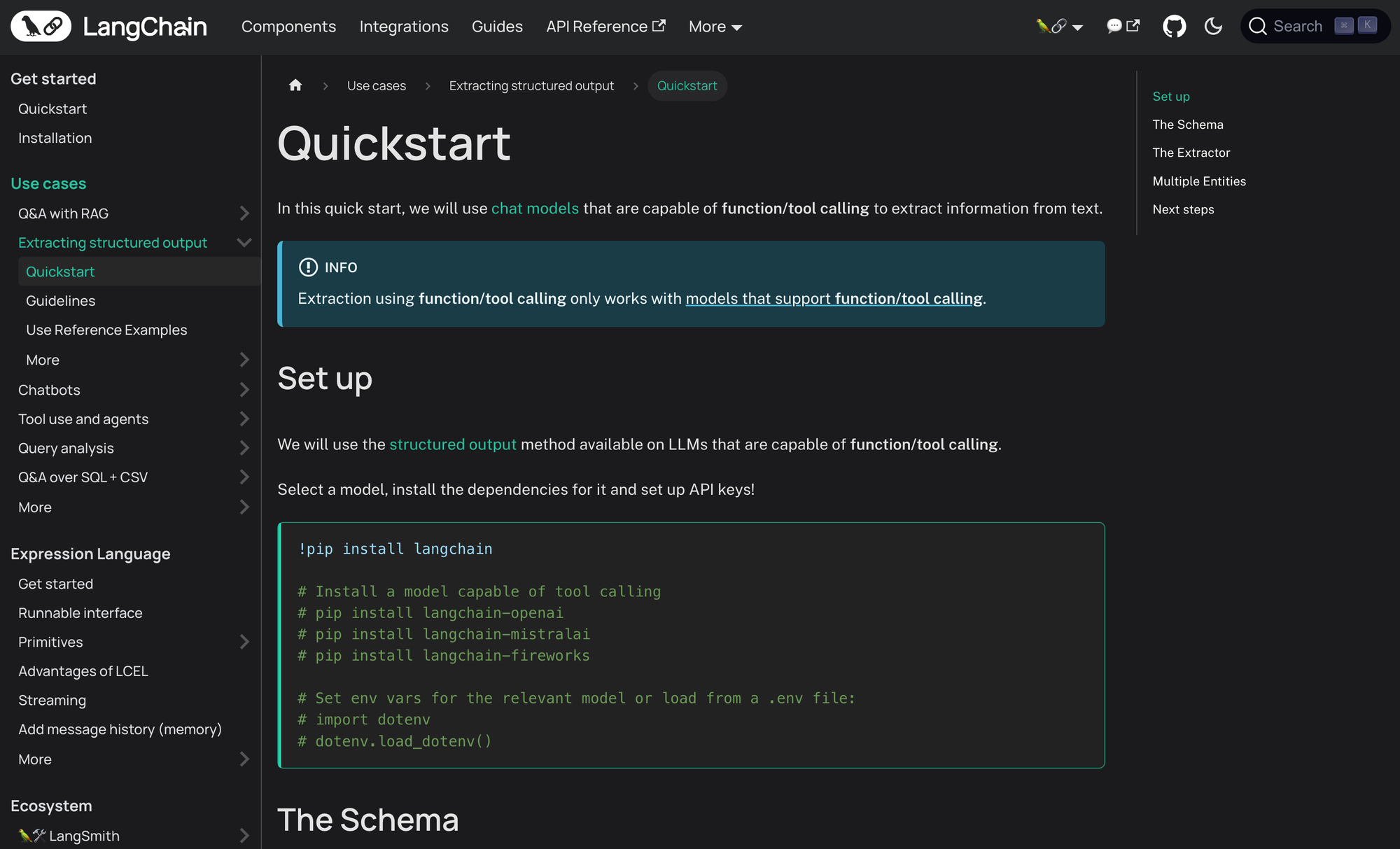
Langchain provides a platform for developing agentic AI solutions, supporting users throughout the entire agent lifecycle. It enables businesses to create AI agents using pre-configured templates and a visual agent IDE, helping accelerate development by reusing and combining existing components. Langchain AI agents are engineered to manage complex tasks while maintaining human oversight for greater reliability. Users can monitor performance in real time, quickly address issues, and continually enhance agent capabilities. Langchain agents can operate independently to automate routine tasks or coordinate more sophisticated workflows within multi-agent systems.
Distinguishing features:
- LangGraph: enables developers to design fully bespoke agent workflows, whether single-agent, multi-agent, or structured in a hierarchical format.
- LangChain: provides an open, composable framework for building LLM applications using a variety of models, tools, and databases.
- Library of integrations: includes over 600 integrations, supporting connections with a wide range of model providers, tools, and vector databases to streamline access to live data sources.
- LangSmith: platform for testing, debugging, and monitoring the performance of AI applications. It provides a step-by-step view, allowing developers to identify and resolve issues efficiently.
- LangGraph platform: supports the full lifecycle of AI agent development, deployment, and scaling within a unified environment. It also enables centralised agent management, making it easy for teams to discover, share, and repurpose agents developed across the organisation.
Rating:
G2: 4.7/5
Selecting the most suitable agentic platform for modern businesses
The most effective agentic AI system is the one that delivers measurable results to the organisation. To ensure the chosen solution aligns with the business objectives, the following five key steps should be considered:
Define strategic objectives
Before exploring the available options, it is worth considering the following:
- The core business need driving the adoption of an agentic AI platform
- The specific tasks or workflows intended for automation through AI agents
- The strategic objectives the agentic platform is expected to support
A clear understanding of these factors will help identify the most suitable platform features and determine the areas of organisations where AI agents can deliver the greatest value.
Prioritise essential capabilities
Agentic platforms vary significantly — from those that build simple reflex agents for repetitive tasks to sophisticated multiagent systems capable of managing complex business processes end to end. Some solutions are industry-agnostic, offering broad applicability, while others are role-based and tailored to meet the specific needs of a particular niche. When evaluating an agentic AI solution, it is important to assess both its core functionality and its constraints. This ensures that expectations remain realistic, the chosen system aligns with operational needs, and unnecessary expenditure is avoided.
Explore more about AI agents from the expert guide and select the solution aligned with strategic priorities.
Assess integration and ease of adoption
An effective agentic platform should integrate seamlessly with essential business systems, including CRM, ERP, communication tools, and the broader technology stack. Prioritise solutions offering pre-built integrations and APIs. For example, Creatio embeds AI functionality directly into productivity tools, reducing reliance on complex integration workarounds.
Equally important is user adoption. According to Creatio AI Survey, nearly 40% of financial services leaders identified low adoption as the primary obstacle to realising value from AI. Selecting a platform with a user-friendly, natural-language interface can make a considerable difference. When teams are able to configure, monitor, and scale automation with ease, adoption improves, and so does the return on investment. A straightforward user experience not only supports faster uptake, but also shortens the time needed to achieve meaningful results.
Evaluate security and compliance
Given that agentic platforms often handle sensitive organisational and customer data across various systems, robust security and compliance are non-negotiable. It is advisable to seek providers that adhere to recognised regulatory standards such as GDPR and CCPA, and to understand how data retention, audit logging, and access control are managed within AI agents.
Opt for solutions that offer enterprise-grade protections, including multi-layer encryption, role-based permissions, and multifactor authentication. These measures not only defend against potential breaches but also support regulatory compliance, protect organisational reputation, and reinforce trust in AI-powered operations.
Balance cost with long-term value
Agentic AI platforms can vary considerably in terms of cost, but a lower initial costs do not necessarily equate to better value. It is important to focus on ROI — considering how much time, efficiency, and scalability the platform can deliver over the long term. Take into account the full cost of ownership, including subscription fees, maintenance, training, and potential support requirements.
Caution should be exercised with platforms reliant on legacy infrastructure or requiring multiple adds-on, as these often incur escalating costs for advanced functionality or integration. A well-chosen platform should offer sustainable results without unexpected expenses.
Summary
Agentic platforms have rapidly evolved from being a ‘nice-to-have’ to an essential technology for forward-thinking businesses. Far beyond basic automation, these systems empower teams to build tailored AI agents that can plan, execute, and adapt workflows across departments. With agentic AI capabilities at their core, they help streamline operations, enhance decision-making, and elevate the overall customer experience.
Selecting the appropriate AI agent platform is not just an IT consideration – it is a strategic business decision, critical for ensuring long-term efficiency, scalability, and competitiveness in today’s fast-moving market.