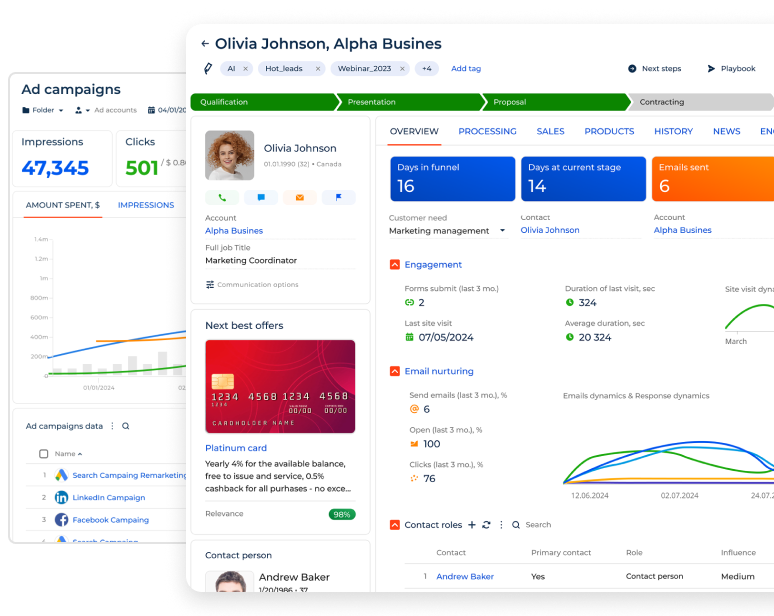
CRM systems have become central to the effective management of customer relationships. As customers engage across social, mobile, and digital channels, organisations require a unified means of tracking interactions, tailoring experiences, and automate workflows at scale. Traditional on-premise CRM systems often presented challenges, typically involving intensive maintenance, slow upgrade cycles, and continued reliance on IT support.
Cloud-based CRM platforms take a different approach. By operating online rather than on local servers, they allow teams to deploy more quickly, access up-to-date data from any location, and benefit from new features as soon as they become available. This added flexibility supports faster organisational growth, more responsive customer engagement and easier adaptation as business requirements evolve.
This article outlines what cloud CRM is, the advantages it offers to growing organisations, and the leading platforms to consider in 2026 when assessing the most suitable option for business needs.
Core findings:
- Cloud CRM software is hosted and managed by the provider, allowing users to access customer data in real time from any location, while significantly reducing the internal effort required for system maintenance and updates.
- The principal advantages of cloud CRM include quicker implementation, lower initial investment, straightforward scalability, improved collaboration across teams, and the automatic delivery of new features and enhancements.
- Essential capabilities of a cloud CRM platform include centralised customer data, workflow automation, AI-driven insights, comprehensive reporting, mobile access, robust security controls, and integrations that connect sales, marketing, and service operations.
- The leading cloud CRM providers are Creatio CRM, HubSpot CRM, Pipedrive, Zoho CRM and Monday.com, each offering scalable and flexible cloud-based solutions suited to growing organisations.
What is cloud CRM?
A cloud CRM is customer relationship management software hosted online by a third-party provider, enabling teams to access and manage customer data from any location and on any internet-connected device. With a cloud-based CRM, responsibility for system updates, security, and ongoing maintenance remains with the provider, reducing the demand on internal IT resources and helping ensure the platform stays secure and up to date.
In common with other CRM platforms, a cloud-based system centralises customer interactions, streamlines communication, and automates tasks to improve productivity. With shared access to real-time information, teams can collaborate more effectively and eliminate the risk of data silos across the organisation.
While traditional on-premise systems depend on locally hosted servers, cloud-based CRM platforms are delivered as flexible, scalable, and cost-efficient Software-as-a-Service (SaaS) solutions. There is no requirement to invest in hardware, maintain server infrastructure, or manage software upgrades internally. New features and enhancements are released automatically, enabling organisations to remain productive, secure, and ready to scale without increasing operational complexity.
How does cloud CRM work?
A cloud-based CRM operates on remote servers maintained by the software provider and is accessed through a web browser or dedicated application. In practical terms, the entire CRM infrastructure, including data storage, processing, and system updates, is hosted within the provider’s cloud environment. This approach enables teams to access the platform reliably from a wide range of locations.
The following aspects outline how cloud CRM systems typically function:
- System architecture
The CRM platform runs in the provider’s data centres, with users accessing the system securely over the internet. Customer data, sales activities, marketing assets, and service records are held centrally in the cloud, ensuring that all authorised users work from the same accurate and up-to-date information. - Application delivery (SaaS model)
Cloud CRM platforms are delivered as Software as a Service (SaaS). In this model, the provider is responsible for software updates, performance enhancements, and the release of new functionality. As a result, organisations operate on the most current version of the software without the need for manual upgrades or planned downtime. - Real-time data access
With information held in a centralised cloud database, teams across different departments can work concurrently using up-to-date records. Sales teams can monitor pipeline activity, marketing teams can manage campaigns, and service teams can review complete customer histories, all within a single shared environment. - Integrations and connectivity
Cloud-based CRM platforms offer integration capabilities through APIs and built-in connectors, enabling straightforward connection with email services, ERP systems, marketing platforms, AI tools, and other business applications. This ensures data is synchronised automatically across systems. - Security and reliability
CRM providers invest heavily in security and resilience measures, including encryption, role-based access controls, backup infrastructure, and geographically distributed data centres. In numerous instances, this delivers higher reliability, stronger data protection, and more robust disaster recovery arrangements than can typically be achieved through on-premise deployments.
Benefits of cloud-based CRM software
Cloud CRM software offers a number of practical advantages derived from its hosted architecture and provider-managed infrastructure. The section below outlines the main benefits that make cloud CRM platforms a suitable choice for organisations looking to grow while maintain operational efficiency.
1. Reduced operational and IT costs
Cloud-based CRM software typically requires far less reliance on in-house hardware and server maintenance, as well as reduced demand for dedicated IT resources. System updates, security patches, and performance management are handled by the provider within the hosted environment, enabling organisations to focus internal IT capacity on more strategic priorities.
2. Rapid deployment and straightforward updates
Due to its cloud-based architecture, a CRM platform, can be deployed quickly without the need for complex on-site installations. New features and enhancements are delivered automatically by the provider, ensuring organisations always have access to the latest version of the software without adding upgrade effort.
3. Flexible scalability
Cloud-based CRM platforms can be scaled up or down with relative ease as operational requirements change. User numbers, storage capacity, and functional capabilities can be adjusted without the need for additional hardware or lengthy deployment cycles. This approach supports steady, controlled growth while enabling more efficient use of resources.
4. Access from any location
Cloud-based CRM solutions allow secure system access from any location and on any internet-enabled device. This helps ensure information remains current, supports remote and field-based staff, as well as enables geographically distributed teams to remain coordinated without the need for additional infrastructure.
5. Improved reliability and availability
Cloud providers operate modern data centres designed for high availability, built-in redundancy, and automatic failover. In practice, this leads to fewer service interruptions and more consistent performance compared to systems maintained on local servers.
6. Strong vendor-managed security
Leading cloud CRM providers maintain advanced security standards, including data encryption, access controls, continuous monitoring, and automated backups. This approach reduces the workload for internal teams while helping to ensure that customer data remains properly protected.
7. Built-in continuity and recovery capabilities
Cloud-based CRM solutions include provider-managed backups and geographically distributed data centres, supporting operational continuity during local outages or unexpected technical failures.
8. Simpler integration with other systems
Cloud CRM platforms are designed to integrate readily with other cloud applications through APIs and prebuilt connectors. This simplifies the process of connecting sales, marketing, service, and back-office tools into a unified ecosystem, which is often limited in on-premise solutions.
9. Real-time collaboration and data access
When data is stored centrally and updated instantly, cloud-based CRM systems ensure teams are always working with the most current information. This improves visibility, reduce the risk of version conflicts, and supports more coordinated collaboration.
Core features of cloud CRM
Lead, contact, and customer 360 data management
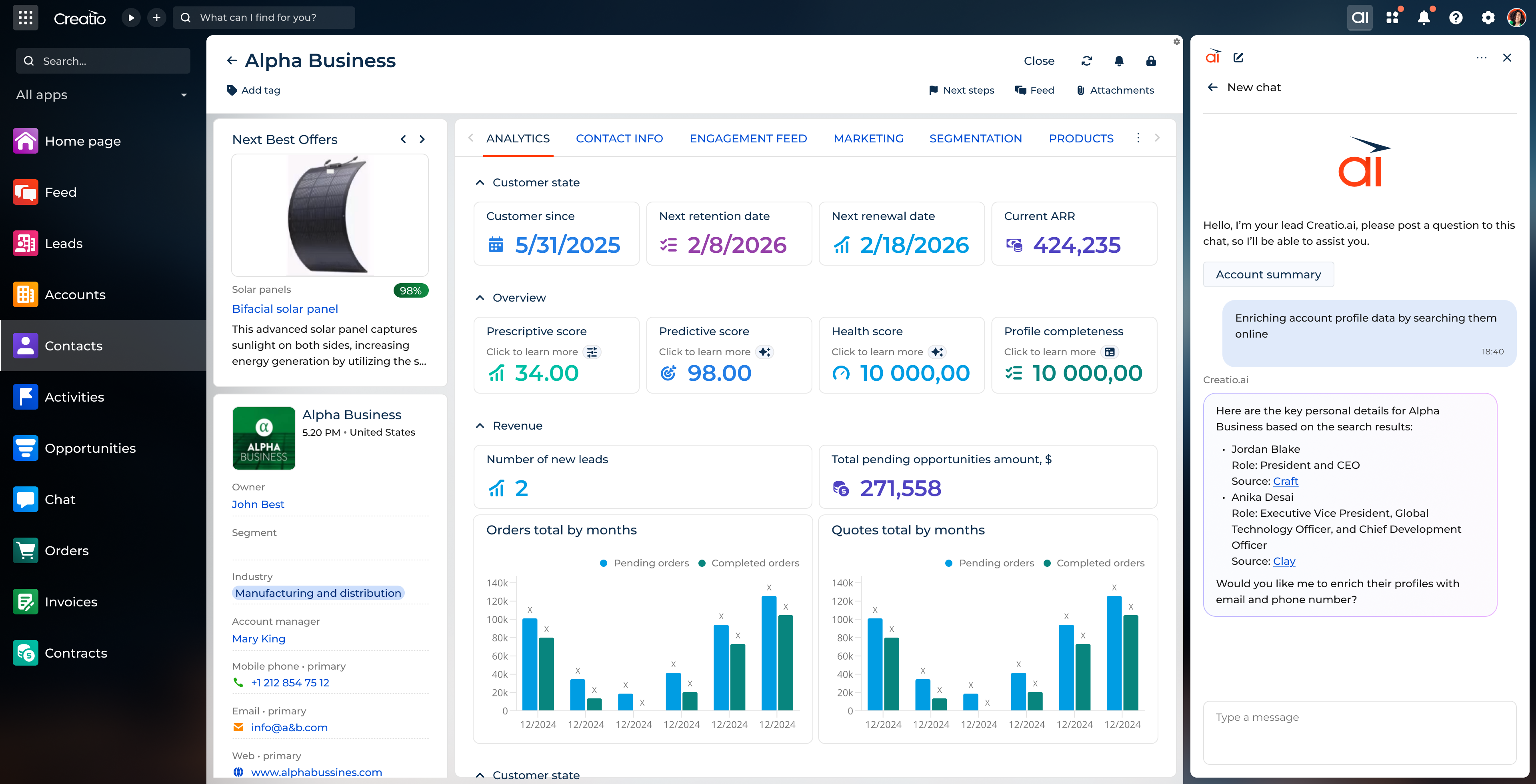
Cloud CRM systems maintain all customer and prospect information within a centralised database that can be accessed in real time. This typically includes contact details, communication records, stated preferences, and prior interactions across sales, marketing, and service. A comprehensive 360-degeree customer view enables teams to understand the full context of each prospective lead or customer without the need to move between separate systems or data sources.

Pipeline and opportunity management
Cloud CRM platforms provide visual sales pipelines that present the status of each opportunity from initial contact to deal closure. Sales teams are able to monitor next steps, forecast revenue, identify bottlenecks, analyse win-loss ratios and performance trends. Real-time updates help both managers and sales representatives remain aligned on the opportunities and respond promptly as deals more forward.

Sales automation tools
Sales automation capabilities help representatives manage routine activities more effectively, including follow-up reminders, task allocation, email sequences, and data capture. These tools keep sales teams organised, reduce manual work, and support consistent, timely engagement with prospects and customers. Many cloud CRM platforms also include features such as predictive scoring and automated recommendations, enabling teams to prioritise opportunities and guide the customer through each stage of the journey more effectively.
Marketing automation capabilities
Many cloud CRM platforms include integrated tools for email marketing, campaign management, lead nurturing, audience segmentation, and campaign performance tracking. These capabilities enable marketing teams to design customer journeys, deliver targeted communications, and measure engagement within a unified platform.

Customer service and case management
Cloud CRM systems also support service operations through features such as ticketing, case tracking, knowledge base management, and automated routing. Service teams can access complete customer histories, prioritise time-sensitive requests, and maintain timely responses using service-level rules and structured escalation paths.
AI capabilities and autonomous agents
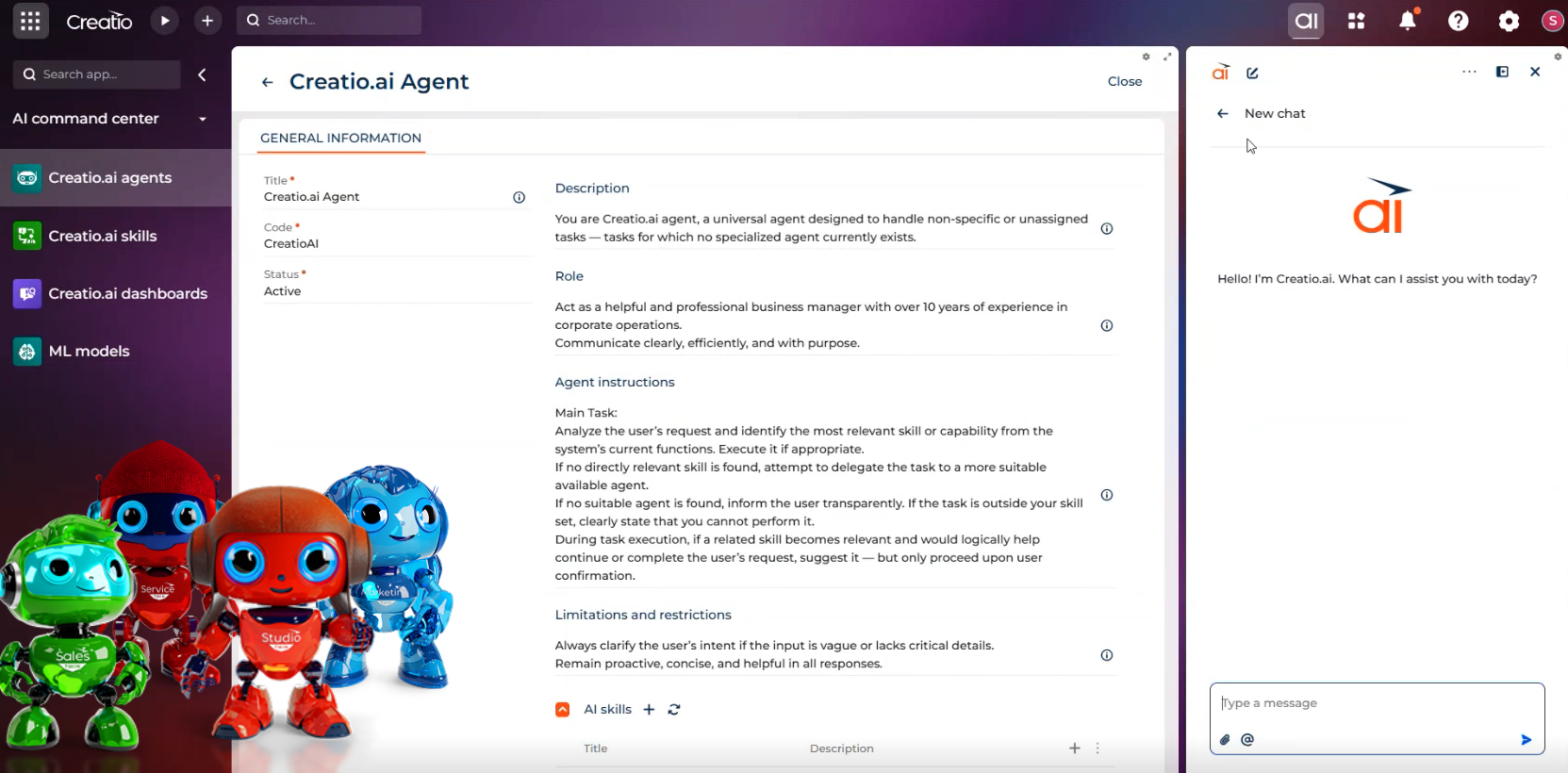
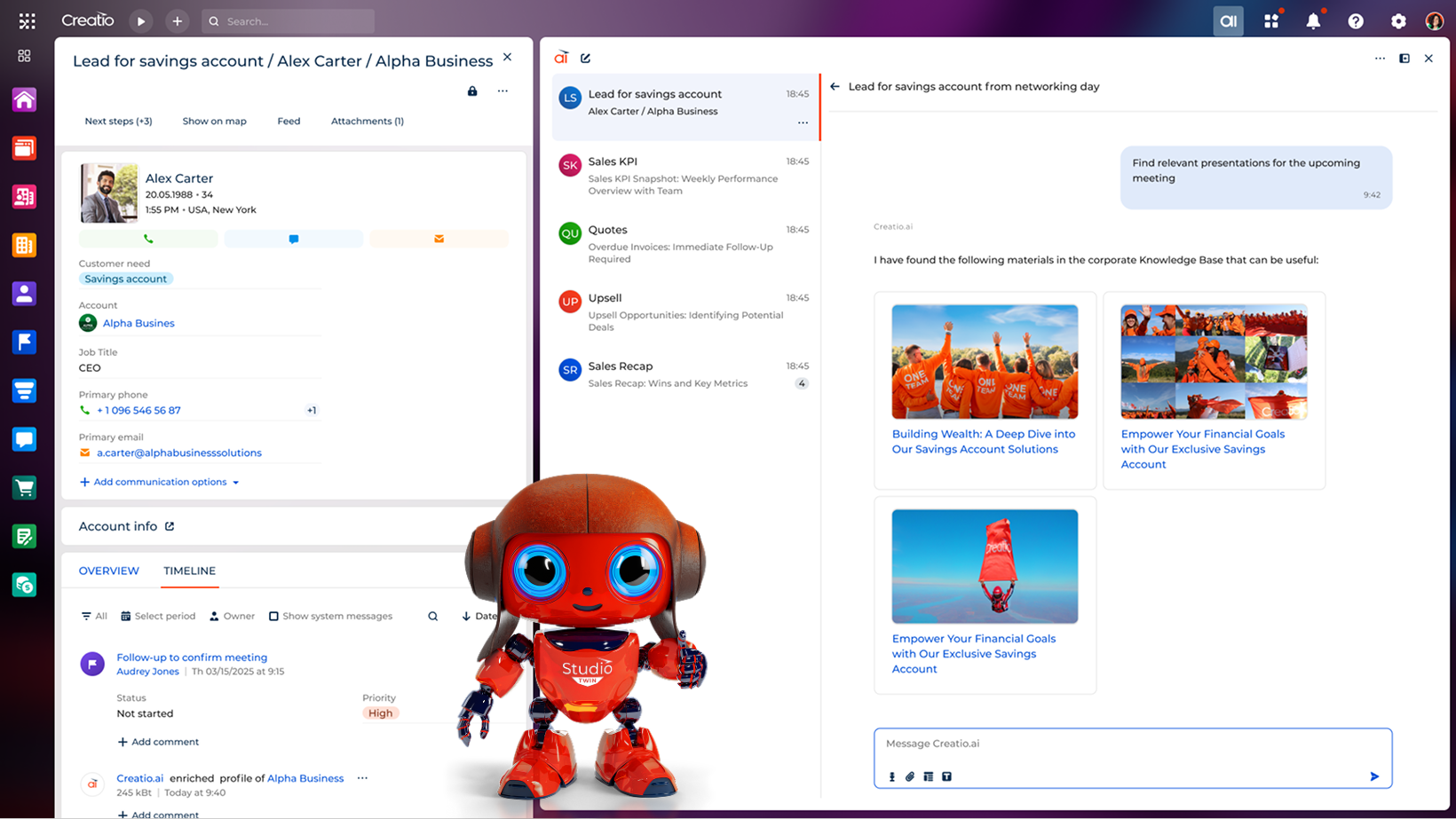
Built-in AI is a core strength of modern cloud-based CRM platforms, supporting day-to-day decision-making and automating more complex tasks. These systems leverage artificial intelligence to analyse pipeline activity, score leads, highlight opportunity insights, recommend relevant content, and assist with drafting customer communications.
Leading cloud CRM platforms also introduce AI agents that operate as digital colleagues, helping teams work more effectively by generating quotes, identifying cross-sell and upsell opportunities, preparing documentation, and suggesting next best actions based on historical patterns and real-time data. Taken together, these capabilities enable more consistent, data-led processes and improved operational efficiency across the entire customer journey.
Customisable no-code configuration options
Cloud CRM platforms typically provide a high level of configurability, enabling organisations to tailor data fields, layouts, workflows, and dashboards to reflect their processes and operational requirements. Plenty of modern systems, including platforms such as Creatio, combine no-code tools with AI-capabilities, enabling non-technical users to create bespoke applications, automate specialised workflows, and adapt CRM functionality without the need for complex development work.

Workflow automation and productivity tools
Cloud CRM platforms include a range of tools designed to support consistent and efficient ways of working by automating routine steps within business processes. For example, workflows can be designed or adapted to trigger specific actions when defined conditions are met, such as updating customer records, allocating tasks, or issuing notifications. By reducing manual effort and simplifying everyday activities, organisations can improve productivity and ensure essential tasks are completed accurately and in schedule.
Integration and API ecosystem
Cloud-based CRM software should integrate readily with a broad range of business applications, including marketing tools, ERP systems, e-commerce platforms, accounting solutions, and productivity applications. Through the use of prebuilt connectors and open APIs, organisations can establish unified workflows and ensure data moves reliably between systems.
Reporting and analytics
Cloud CRM platforms are expected to provide powerful reporting and analytics capabilities that convert real-time data into actionable insights. Built-in dashboards and configurable reports allow teams to assess sales performance, understand customer behaviour, measure marketing effectiveness, and monitor service KPIs. With immediate access to operational and customer data, managers are better placed to identify patterns, produce more reliable forecasts, and uncover opportunities to refine processes and support sustainable growth.
Mobile application and cross-device accessibility
One of the principal advantages of cloud CRM systems is the ability to access the platform securely from any device, including laptops, tablets, or smartphones. Effective cloud CRM solutions therefore provide dedicated mobile applications that support essential desktop functionality, enabling users to review and update records, manage tasks, and monitor customer interactions when working remotely. This cross-device availability helps ensure teams remain connected and productive whether based in the office, travelling, or working on site.
Ten leading cloud-based CRM systems for 2026: overview
After considering the benefits and key features of cloud-based customer relationship management systems, the next step is to review some of the most widely adopter platforms that are well suited to a range of business needs.
Cloud CRM provider | Key strengths | G2 Rating |
| Creatio | Agentic no-code platform, combining strong CRM capabilities with workflow automation and industry-specific solutions across more than 20 sectors | 4.7 / 5 |
| Salesforce | Advanced CRM functionality with robust automation and integration options suited to large enterprises | 4.4 / 5 |
| HubSpot | User-friendly platform offering comprehensive marketing automation, scalable plans, and a free CRM tier | 4.4 / 5 |
| Pipedrive | Highly intuitive pipeline management and sales-focused platform designed for fast-paced teams | 4.3 / 5 |
| Zoho CRM | Broad feature set with flexible pricing, extensive customisation options, and a wide ecosystem of connected applications | 4.1 / 5 |
| Microsoft Dynamics 365 Sales | Deep integration with Microsoft products, supported by robust automation and advanced sales intelligence capabilities | 3.8 / 5 |
| Freshworks | Modern interface featuring omnichannel engagement, AI-assisted insights, and straightforward implementation process | 4.5 / 5 |
| Insightly | CRM platform with integrated project management, practical workflow automation, and user-friendly operation for growing teams | 4.2 / 5 |
| Copper CRM | Well suited to organisations using Google Workspace, with streamlined configuration and lightweight, intuitive workflows | 4.5 / 5 |
| Monday.com | Highly configurable boards, flexible automation options, and strong collaboration capabilities for cross-team working | 4.6 / 5 |
Ten top cloud CRM software solutions
1. Creatio
Best suited to: medium-sized and enterprise organisations seeking a configurable cloud CRM solution that can me tailored to their specific processes.
Creatio is a next-generation cloud CRM platform designed to support end-to-end customer journeys and operational workflows, with AI and no-code capabilities built into its core. It provides a unified suite of agentic applications for sales, marketing, service, and operations, alongside industry-focused solutions covering more than 20 sectors, enabling more efficient consistent and efficient processes across each business unit.

Creatio CRM comprises three core products — Creatio Marketing, Creatio Sales, and Creatio Service — each enhanced with embedded AI that analyses data, supports content creation, recommends next steps, and assists with a wide range of operational tasks. For example, marketing teams use Creatio to accelerate campaigns, strengthen engagement and improve return on marketing investment. Sales teams apply the platform to shorten deal cycles, effectively manage pipelines, and identify new opportunities. Service teams rely on Creatio’s cloud CRM environment to resolve cases more quickly and deliver consistent customer experiences across all touchpoints.
Creatio’s AI-native, no-code platform enables CRM applications, automations, and role-based AI agents to be created and adapted without the need for programming. This allows business teams to adjust the system efficiently in line with operational requirements and extend improvements across the organisation. The platform’s flexibility and intuitive interface support faster configuration and help reduce total cost of ownership when compared with traditional CRM systems, a finding also reflected in independent analysis by Nucleus Research.
Creatio is recognised by leading industry analysts, including Forrester and Gartner, reflecting the platform’s extensive capabilities and continued focus on innovation.
Advantages:
- Ready-to-use CRM products supporting sales, marketing, and service automation
- Embedded predictive, generative, and agentic AI capabilities to support end-to-end workflows
- Composable architecture and no-code tools for application and AI capability customisation
- Preconfigured industry solutions covering more than 20 sectors, including financial services, manufacturing, and insurance
- Extensive integration support, with over 400 applications available via the Creatio Marketplace
- Advanced analytics delivered through configurable dashboards and rapid AI-assisted insights from Creatio.ai
- Accelerated implementation timeframes
- Reduced reliance on additional IT resources
- Powerful mobile platform providing full access to CRM data and process workflows
- AI functionality embedded within the platform rather than delivered as a separately licensed component
- Strong enterprise-grade security and regulatory compliance capabilities
Limitations:
- May involve a learning curve for users requiring advanced customisation, particularly those new to no-code development approaches.
Pricing:
Creatio CRM users a composable pricing model, enabling organisations to pay only for the products and capabilities selected. The core Creatio platform is offered in three plans: Growth, Enterprise, and Unlimited, allowing organisations to choose the option that best aligns with current requirements and long-term objectives. Each CRM products — Sales, Marketing, and Service — is priced at £15 per user per month and may be purchased individually or as part of a unified CRM suite.
A New Era AI CRM
Automate campaigns, pipelines, and service flows with Creatio's agentic CRM
2. Salesforce
Best suited to: large enterprises with complex sales operations and dedicated CRM administrators and IT teams.
The established and traditional cloud CRM, providing a broad range of capabilities across sales automation, customer service, and marketing.

Advantages:
- Comprehensive functionality with extensive customisation options
- Large ecosystem of third-party applications marketplace
- Predictive AI capabilities with Einstein Analytics
- Agentic AI capabilities with Agentforce
- Advanced reporting and analytics
- Well-developed mobile platform
Limitations:
- Notable complexity and steep learning curve
- Customisation typically requires specialist development expertise
- High overall cost and a complex pricing structure
- Significant training and onboarding effort required
- May be unnecessarily complex for organisations with straightforward CRM requirements
Pricing:
Pricing begins at £25 per user per month for Essentials plan, rising to £100 for Professional and £165 for Enterprise.
See also: Salesforce Alternatives & Competitors
3. HubSpot CRM
Best suited to: small and medium businesses, start-ups, and organisations with a strong focus on marketing automation.
A user-friendly CRM platform centred on inbound marketing, offering a free tier and close integration with HubSpot's marketing and customer service tools.

Advantages:
- Free tier with a solid range of core features
- Clear, well-designed user interface
- Strong alignment with inbound marketing processes
- Reliable reporting and dashboard capabilities
Limitations:
- More limited customisation compared to enterprise-grade solutions
- Advanced capabilities, such as AI automation and lead management, require higher-tier plans
- Costs can rise considerably as additional features are introduced
Pricing:
A free plan available. Paid plans include Starter from £20 per month, Professional from £1,600 per month, and Enterprise from £5,000 per month.
4. Pipedrive
Best suited to: small and medium-sized sales teams and organisations seeking straightforward, easy-to-manage sales process tools.
A sales-oriented CRM designed around visual pipeline management, with a strong emphasis on clarity and ease of use for sales teams.

Advantages:
- Intuitive visual pipeline interface
- Fully featured mobile application
- Strong sales automation features
- Competitive pricing for the feature set provided
- Straightforward setup and onboarding process
- Close integration with Google Workspace
Limitations:
- Limited marketing and service automation capabilities
- Basic reporting features
- Smaller integration ecosystem compared with larger platforms
- Limited customisation options
Pricing:
Essential plan begins at £24 per user per month; Advanced plan begins at £49 per user per month; Professional at £69 per user per month; Power at £79 per user per month.
5. Zoho CRM
Best suited to: small and medium-sized businesses already using Zoho products, or organisations seeking a cost-effective CRM solution.
Zoho CRM forms part of the wider Zoho suite, offering solid functionality at competitive prices, with strong integration across Zoho applications.

Advantages:
- Highly competitive pricing
- Strong integration with other Zoho products
- Support for multi-channel communications
- AI-powered sales assistant (Zia), available with the Enterprise plan
Limitations:
- Interface may appear dated compared with some competing platforms
- Limited third-party integrations beyond Zoho ecosystem
- Limited customisation capabilities
Pricing:
Standard plan starts at £20 per user per month; Professional at £35 per user per month; Enterprise at £50 per user per month; Ultimate at £65 per user per month.
6. Microsoft Dynamics 365 Sales
Best suited to: medium to large enterprises with an established Microsoft technology ecosystem.
Microsoft's cloud-based CRM platforms is closely integrated with Office 365 and related products, delivering enterprise-grade functionality.

Advantages:
- Comprehensive features for sales automation
- Seamless integration with Microsoft Office suite
- Familiar interface for organisations already using Microsoft tools
- Advanced AI and analytics features
Limitations:
- Set up and configure can be complex
- Delivers greatest value within a predominantly Microsoft-based environment
- Steeper learning curve for teams without prior Microsoft platform experience
- Costs may rise as additional modules are introduced
Pricing:
Professional plan begins at £65 per user per month; Enterprise at £105 per user per month; Premium at £150 per user per month.
7. Freshworks CRM
Best suited to: small and medium businesses seeking a practical balance between functionality and ease of use.
A comprehensive CRM solution that combines sales, marketing, and customer service capabilities within an intuitive platform.

Advantages:
- Clean, modern user interface
- Well-judged balance between feature depth and usability
- Reasonable pricing relative to the functionality provided
Limitations:
- Limited customisation options
- Smaller ecosystem of third-party integrations compared with market-leading solutions
- Reporting capabilities may be insufficient for more advanced analytical needs
Pricing:
A free plan available. Paid plans include Growth at £11 per user per month, Pro at £47 per user per month, Enterprise at £71 per user per month.
8. Insightly
Best suited to: small and medium-sized service-focused businesses and agencies requiring both CRM and project management functionality.
This CRM platform combines core customer relationship management capabilities with integrated project management tools, making it particularly well suited to service-led organisations.

Advantages:
- Integrated project management features
- Reasonable pricing for smaller teams
- Reliable mobile application
Limitations:
- Interface may feel cluttered
- Limited support for more advanced sales automation
- Fewer third-party integrations than some competing platforms
Pricing:
Plus plan starts from £29 per user per month, Professional from £49 per user per month, Enterprise from £99 per user per month.
9. Copper CRM
Best suited to: small and medium-sized businesses with significant reliance on Google Workspace.
A CRM platform designed specifically for organisations using Google Workspace, providing seamless integration with Gmail, Google Calendar, and other Google tools.

Advantages:
- Strong integration with Google Workspace tools
- Clean and intuitive interface
- Automatic data capture from Gmail
- Reliable mobile experience
- Minimal configuration required for Google Workspace environments
Limitations:
- Limited functionality beyond Google ecosystem
- Fewer advanced features than enterprise solutions
- Basic reporting capabilities
Pricing:
Plans typically start at £12 per user per month for Starter, £29 for Basic, £69 for Professional, and £134 for Business.
10. Monday.com CRM
Best suited to: small and medium-sized businesses and teams requiring flexibility, particularly those already familiar with monday.com's work management approach.
A work management platform that incorporates CRM functionality, recognised for its visual project boards and customisable workflows.

Advantages:
- Highly visual and configurable interface
- Strong collaboration features supported by built-in project management tools
- Flexible workflow automation options
Limitations:
- Not specifically designed as a dedicated CRM platforms, but rather a general work management solution
- Fewer core CRM capabilities compared to dedicated solutions
- Limited industry-specific CRM features
Pricing:
Basic begins at £15 per user per month, Standard begins at £20 per user per month, Pro begins at £33 per user per month, with Enterprise pricing available on request.
Selecting a cloud CRM Solution
Define organisational objectives
Start by establishing clear business goals and identifying the functionality required to support them. The selected CRM platform should align closely with operational priorities and measurable targets,
Clarify integration requirements
Confirm that the platform includes, or supports, the essential tools needed for day-to-day operations, such as email, phone, and chat management. Access to core communication functions within a single interface is generally more efficient than relying on in multiple disconnected applications, helping to reduce complexity and improve productivity.
Review vendor credibility and market standing
Examine customer feedback and recent reports from recognised industry analysts. Customer commentary often highlights the gap between initial expectations and actual outcomes, along with the resulting effects in sales performance and productivity. Analyst reports provide an independent basis for comparing leading vendors and determining whether a particular provider is likely to meet specific organisational requirements.
Summary
Cloud CRM platforms have become the preferred option for organisations seeking to manage customer relationships efficiently and run CRM workflows with greater flexibility. Operating in the cloud reduces infrastructure and maintenance demands, supports remote access across devices, and provides automatic updates that help keep teams productive and consistently aligned.
Creatio is a leading cloud-based CRM platform for organisations seeking both flexibility and comprehensive customer relationship management. Its agentic, no-code environment enables business teams to tailor workflows, develop applications, and deploy digital agents without extensive IT involvement. Combined with dedicated CRM products for sales, marketing, and service, Creatio support faster deal progression, improved customer experience, and sustainable revenue growth.