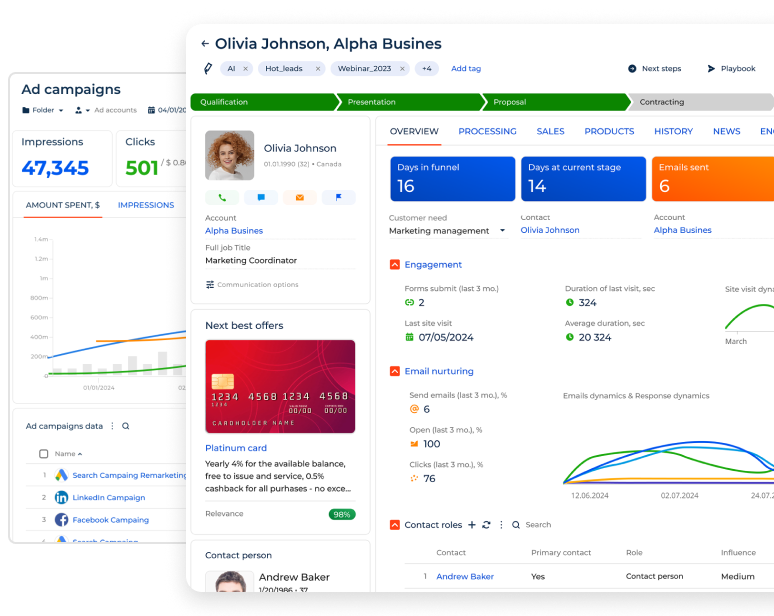
Retail businesses increasingly require systems that bring customer information, purchase history, and interactions together in one secure and accessible environment. A retail CRM platform provides this capability, creating a centralised view of each customer that can be accessed across teams. This visibility helps retailers recognise patterns in purchasing behaviour, respond with more relevant and personalised service, and build strong long-term relationships with customers.
For retail organisations that have outgrown basic tools such as Google spreadsheets, a dedicated retail CRM offers a more structured way to manage customer relationships, streamline retail operations, and support sustainable growth.
What is CRM?
Customer Relationship Management (CRM) is a software designed to help organisations manage interactions with potential and existing customers. It supports the process of engaging prospects, converting them into customers, and maintaining long-term client relationships.
A CRM system stores and organises information such as customer details, records of interaction with the company, documentations, sales quotations, and other relevant data gathered from multiple touchpoints. This information is held within a central platform and made available to customer-facing departments, streamlining business processes and improving collaboration across sales, marketing, and service teams.
With clear visibility of customer information, organisations are better equipped to refine marketing activity, support sales efforts, and deliver more responsive customer service through informed and personalised engagement.
What is a Retail CRM?
A retail CRM is a software platform designed to address the specific demands and opportunities of the retail sector. It supports high-frequency, purchasing patterns typical of business-to-consumer (B2C) environments by bringing together customer data, interactions, and transactions from multiple channels into a single system.
Retail CRM software empowers businesses to manage sales activity more effectively and enhance marketing efforts by providing clearer insights into customer preferences. With access to this information, retail can deliver more personalised experiences, present targeted promotions, and maintain exceptional high standards of customer service. For example, a retail CRM can identify the most appropriate moment to contact a customer with a relevant offer based on their purchasing history and behaviour across online and in-store channels.
Alongside streamlining sales processes, strengthening marketing activity, and improving customer service, retail CRM systems also automate a range of routine tasks, helping organisations save both time and resources. According to research by McKinsey, as much as 40% of activities within the retail sector have the potential to be automated through the effective use of CRM systems.
By automating tasks such as data entry and email communications using predefined templates and triggers, retail CRM systems enable retailers to devote greater attention to high-value activities, including developing and maintaining customer relationships. This approach not only increases productivity but also ensures consistency and accuracy across customer interactions, ultimately contributing to stronger customer satisfaction and loyalty. From sending personalised follow-up emails to updating inventory records, automation plays an important role in supporting efficient day-to-day retail operations.
Why do retailers need a CRM platform?
This section outlines the advantages that CRM systems offer to retail organisations, with particular attention to how they help strengthen customer relationships, improve operational efficiency, and support sustainable growth. By providing deeper customer insights and enabling more effective marketing campaigns, CRM platforms help retailers remain competitive in a demanding market environment.
The following are some of the key benefits CRM solutions bring to the retail sector:
- Enhanced customer insights. Retail CRM systems enable organisations to collect and consolidate detailed information about their customers, including purchase history, preferences, and behavioural patterns. By analysing this information, retailers can identify trends and gain a clearer understanding of customer needs, allowing marketing activity and product offerings to be aligned more closely with customer expectations.
- Improved customer engagement. CRM platforms also support stronger relationships with customers by enabling more personalized interactions. Through audience segmentation based on factors such as demographics or purchasing behaviour, retailers can deliver targeted marketing communications, promotions, and offers that are more relevant to individual customers, helping to strengthen sales and encourage long-term customer loyalty.
- Efficient inventory management. CRM systems can support retailers in improving inventory management processes. By analysing sales data in real time and forecasting future demand, retailers are better positioned to maintain appropriate stock levels, reducing the likelihood of both stock shortages and excess inventory. CRM platforms can also automate reordering processes and provide insights into product performance, helping teams identify items that are performing strongly as well as those that may require promotional activity and discontinuation.
- Personalised marketing campaigns. CRM platforms enable retailers to plan and deliver more personalised marketing campaigns. By leveraging customer data and behavioural insights, retailers can develop targeted marketing campaigns that better reflect the interest and preferences of their audiences.CRM systems also provide reporting tools that allow teams to measure campaign performance and return on investment, supporting continuous improvement in marketing effectiveness over time.
- Streamlined customer service. Retail CRM systems help simplify service operations, enabling retailers to respond to customer enquiries more quickly and deliver more personalised support. By centralising customer information within a single platform, retailers can readily access purchase history, preferences, and previous interactions, improving communication and allowing enquiries and issues to be resolved more efficiently.
- Increased sales and revenue. The primary objective of retail CRM systems is to support sustainable revenue growth. By using the insights and capabilities provided by CRM solutions, sales teams gain a clearer understanding of customer behaviour, strengthen engagement and satisfaction, and improve operational efficiency, all of which contribute to stronger sales performance.
Key features of CRM for retail sector
This section outlines the core capabilities typically found in retail CRM solutions, with examples drawn from the Creatio platform. As a widely used CRM system, Creatio provides a range of tools designed to support retail organisations in managing customer relationships, improving operational efficiency, and responding effectively to a competitive market.
The following are some of the principal CRM features relevant to retail businesses:
1. Customer data management
Customer data management forms a central component of retail CRM systems, enabling businesses to store and manage customer information in a structured and accessible way. Contact details, purchase history, preferences, and records of interactions across different channels are consolidated within a single, centralised database. This approach provides retailers with a comprehensive view of each customer, supporting deeper insight into purchasing habits, preferences, and behavioural patterns. Such information allows organisations to refine marketing activity, present more relevant product recommendations, and deliver promotions that are better aligned with customer interests.
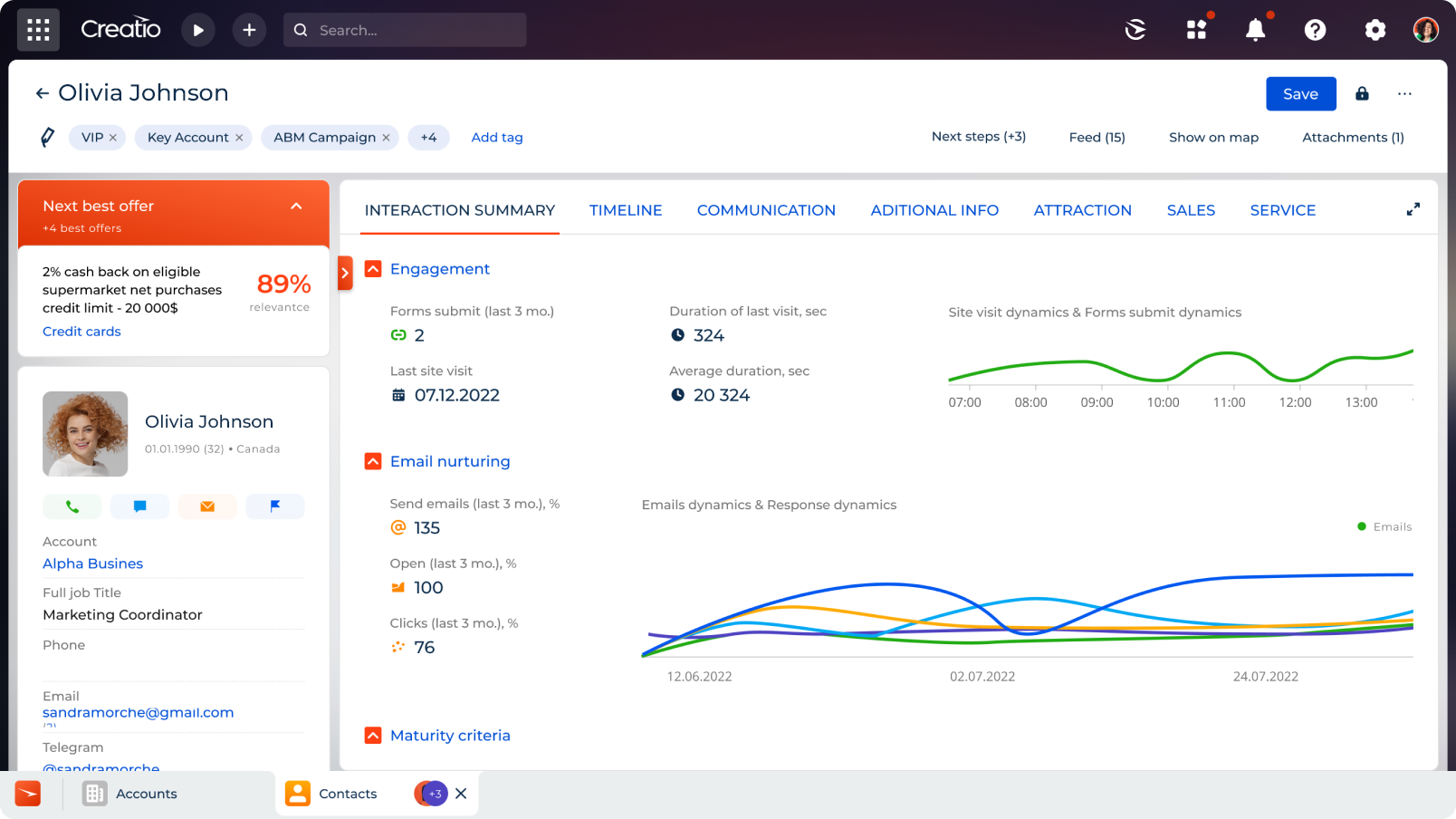
Creatio’s customer 360
Retail CRM platforms often include advanced segmentation capabilities, allowing organisations to categorise customers based on demographics, purchasing history, and other relevant criteria, thus enhancing the effectiveness of marketing efforts. By analysing customer data in this way, retail CRM systems help businesses strengthen engagement, support more relevant communication, and contribute to increased sales and long-term customer loyalty.
2. Merchandise management
Merchandise management is one of the key capability of retail CRM systems, helping businesses plan and optimise product offerings across multiple channels, regions, and stores. Retail CRM platforms provide tools to support pricing decisions across different products, customer segments, and distribution channels, based on comprehensive data analysis. This allows retailers to remain competitive while maintaining profitability. CRM solutions also support automated workflows for product launches, helping retailers introduce new products more efficiently across different markets.
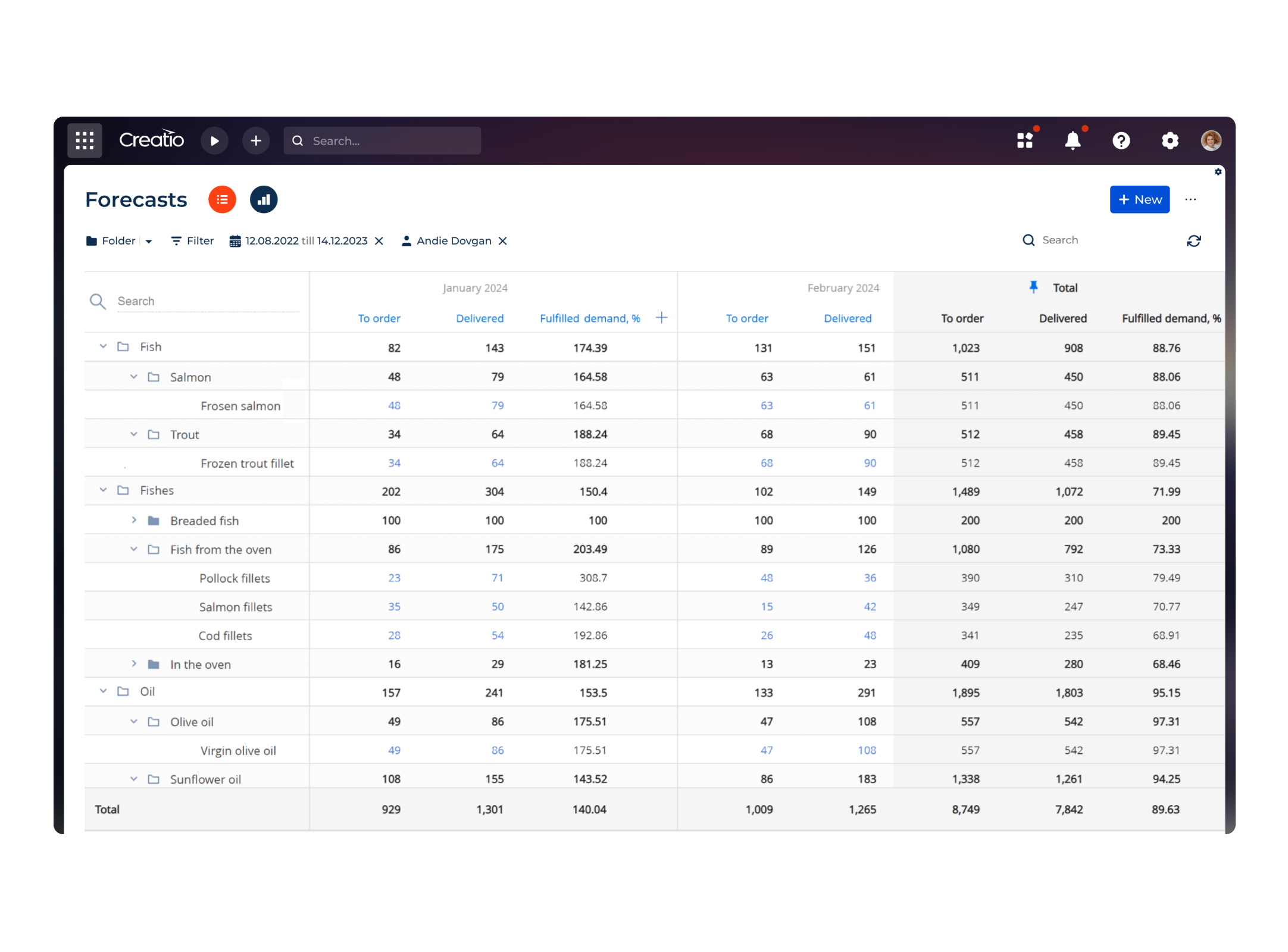
Creatio’s merchandise management
Furthermore, retail CRM systems equip retailers with valuable insights through comprehensive reporting and analytics capabilities. These platforms enable businesses to monitor key metrics such as order volumes, customer demographics, and top-performing products. By analysing this information, organisations can forecast demand, identify emerging trends, uncover new opportunities, and make well-informed decisions when refining product ranges, pricing approaches, and marketing initiatives.
3. Procurement and logistics
Beyond merchandise management, retail CRM software also support procurement and logistics functions, helping retailers improve coordination and efficiency across the supply chain. Retail CRM platforms allow organisations to manage supplier relationships more effectively and automate key procurement processes, including purchase requisitions, supplier onboarding, and contract approvals. By bringing vendor information together in a centralised system and streamlining procurement processes, retailers can make more informed purchasing decisions, control costs more effectively, and maintain grater visibility across supply chain operations.
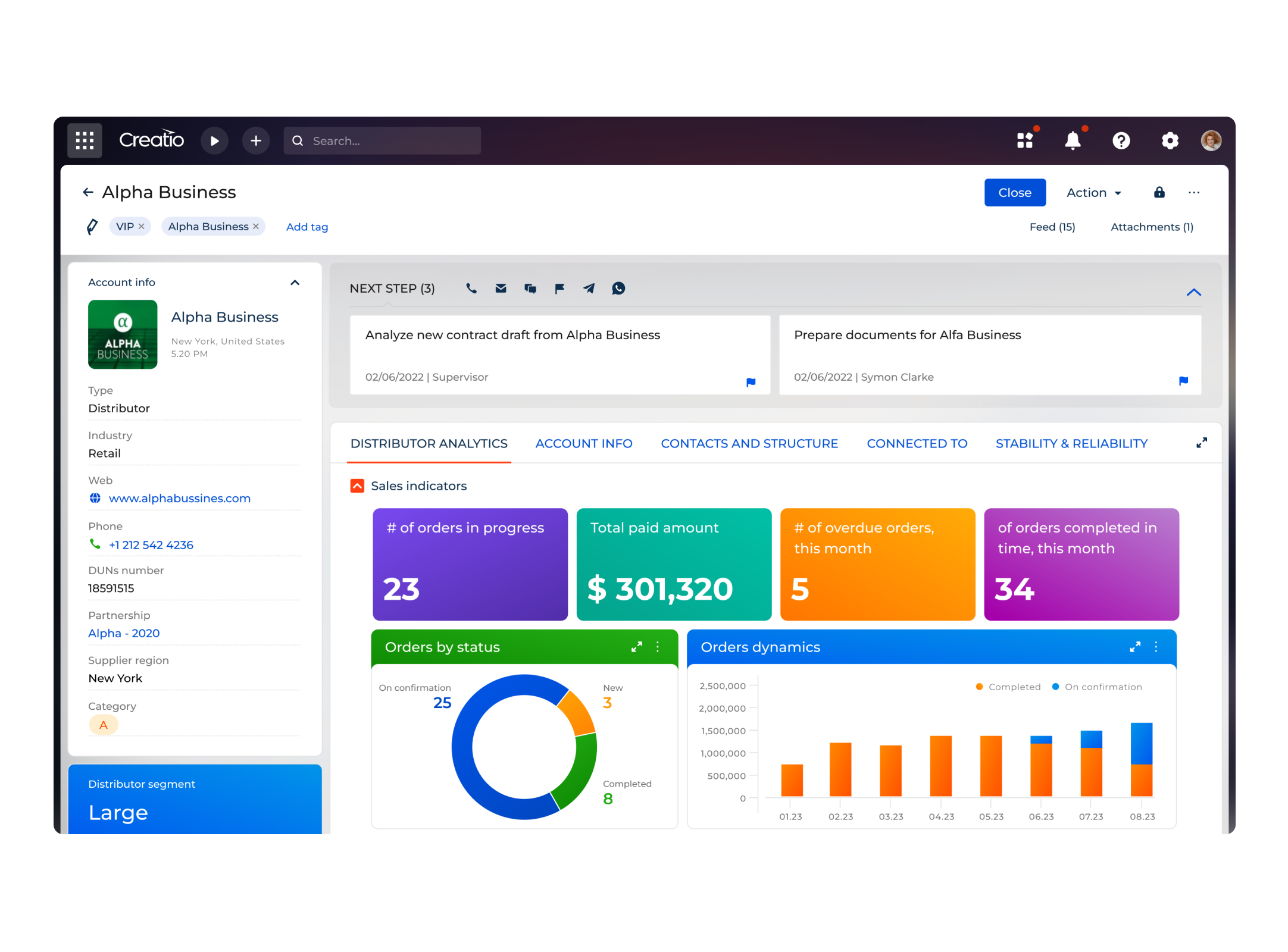
Creatio’s procurement and logistics
Retail CRM systems also provide robust capabilities for managing networks of sales associate, helping retailers maintain clear communication and effective collaboration with vendors, suppliers, manufacturers, and distributors. With a centralised database containing up-to-date information, retailers can manage partner relationships more effectively and support smooth coordination across the supply chain.
In addition, CRM platforms typically include advanced document management functionality, allowing contracts, agreements, and other important documents to be stored securely. By automating document-related workflows, retailers can simplify administrative processes, while ensuring that regulatory and compliance requirements are met.
4. Store operations
CRM systems support retail organisations in improving operational efficiency across franchise networks. These platforms provide retailers with tools to simplify franchise management by establishing effective communication channels between individual stores and teams. As a result, businesses can implement consistent processes, maintain operational standards, and ensure greater coordination across the entire franchise network.
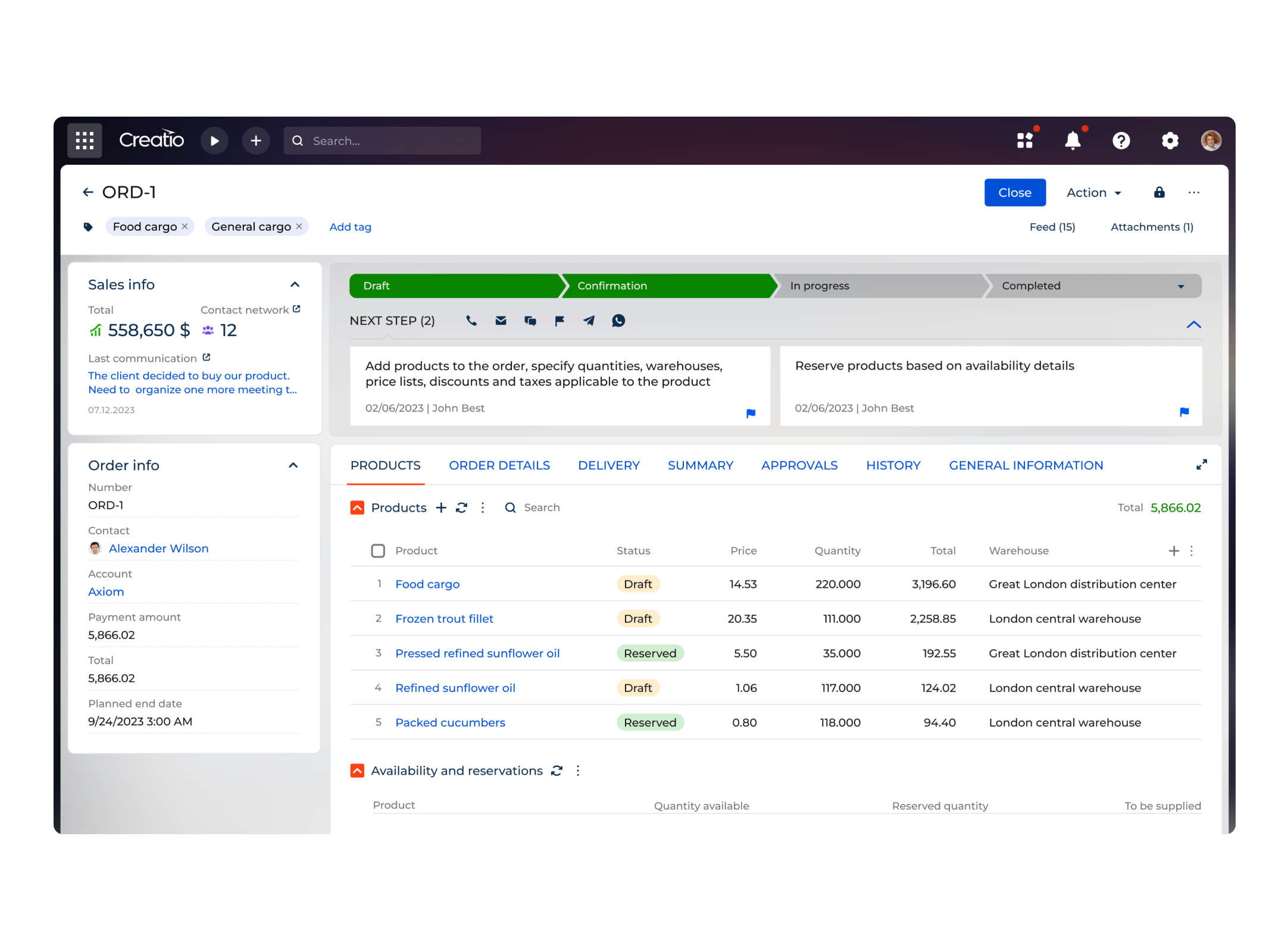
Creatio’s store operations
With a retail CRM system in place, all shops within a franchise can monitor inventory levels in real time. This helps prevent delivery delays, ensures orders are fulfilled on schedule, and reduces the risk of both understocking and excess stock. Access to up-to-date inventory allows franchisees operators to make informed decisions and maintain stock levels that reflect actual customer demand. In addition, daily sales performance can be analysed alongside staff scheduling, helping managers maintain appropriate staffing levels and support efficient store operations.
5. Customer service and support
Customer service and support form essential components of retail CRM solutions, enabling businesses to deliver a consistently high standard of service to the customers. By bringing together support interactions, managing service requests, and monitoring resolution times, CRM platforms help streamline service operations and ensure enquiries are handled promptly and issues resolved efficiently.
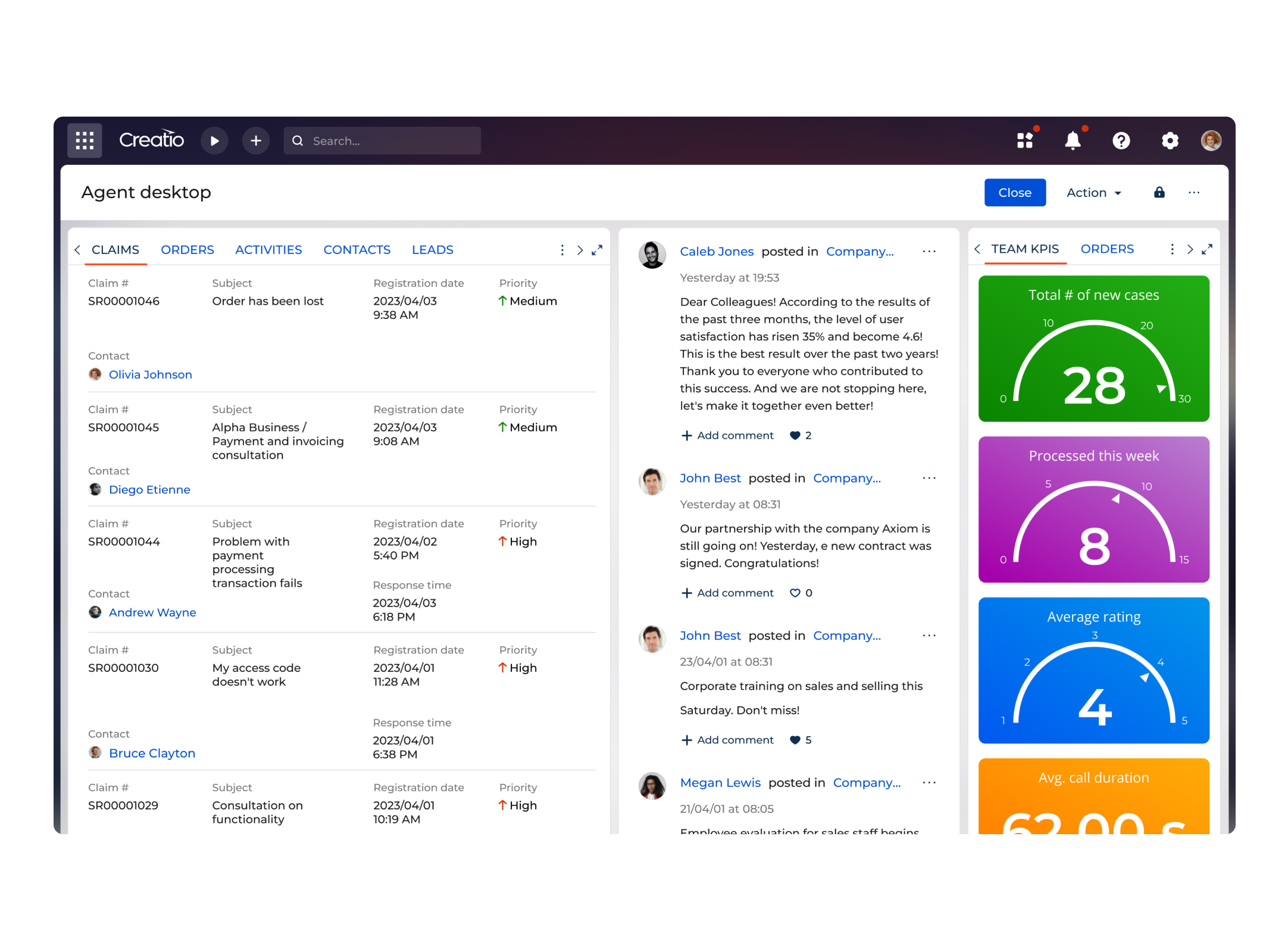
Creatio’s customer service
Retail CRM also enables organisations to make use of comprehensive customer data and insights to anticipate and respond more effectively to customer needs, allowing for more personalised support. This approach helps improve overall customer satisfaction while reinforcing brand loyalty and encouraging long-term engagement.
6. Marketing campaign management
With retail CRM platforms, organisations can plan, deliver, and monitor marketing campaigns efficiently, supporting stronger customer engagement and loyalty. By bringing customer information together in one place and enabling detailed segmentation, these systems allow marketing teams to create targeted, omnichannel campaigns aligned with individual customer preferences. Using customer data and insights, retailers can provide more personalised offers and messaging, improving the overall effectiveness of the marketing activity.
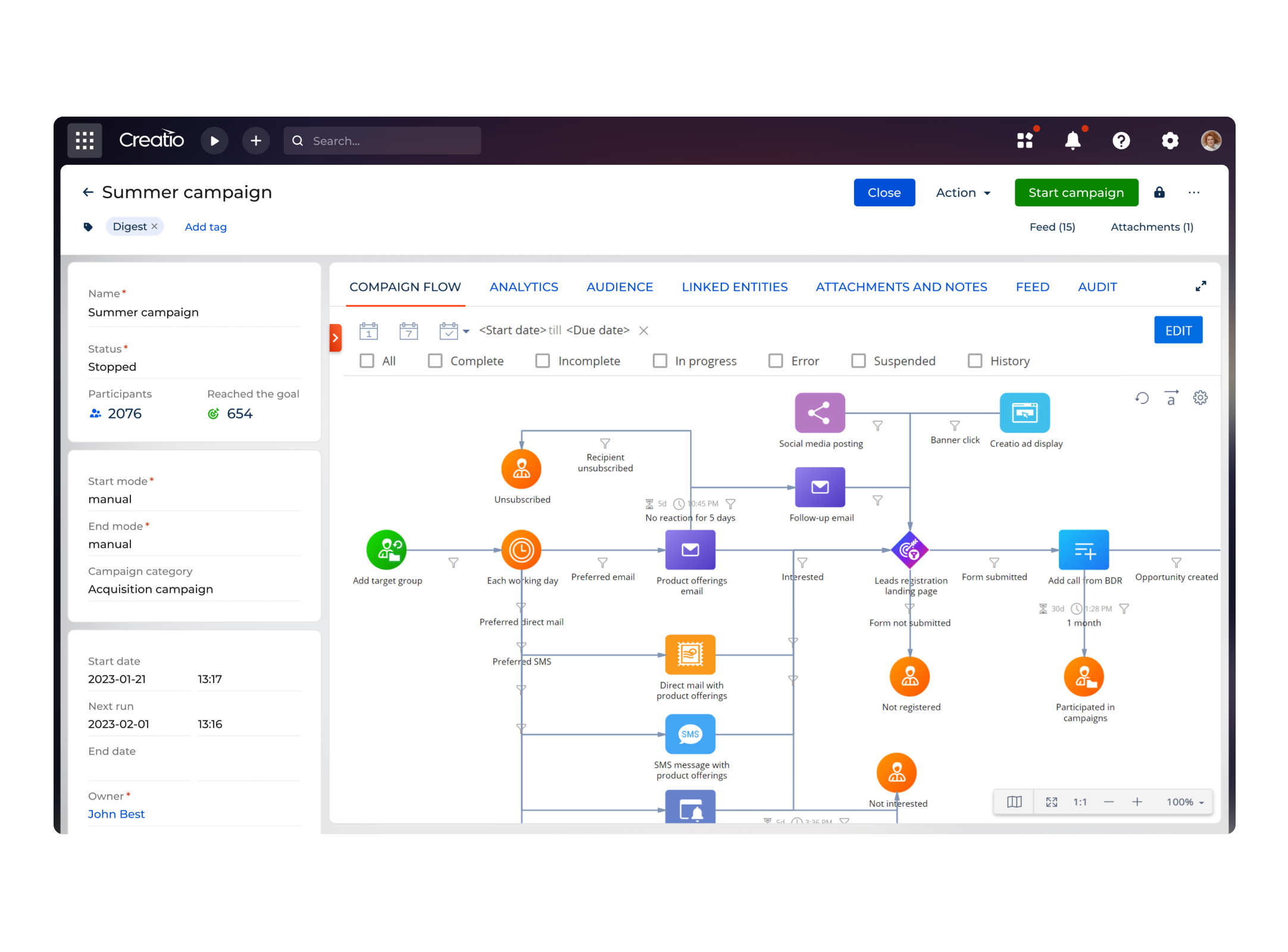
Creatio’s marketing management
Marketing automation tools integrated within retail CRM systems allow businesses to manage campaigns execution and maintain consistency across all customer touchpoints. Automated workflows enable marketing teams to schedule and deliver targeted communications, monitor campaign performance in real time, and refine strategies based on actionable insights. This approach helps reduce administrative effort while improving the overall effectiveness of marketing initiatives.
Loyalty programmes are an important element of effective customer engagement and long-term retention. Retail CRM systems often include dedicated tools for managing loyalty initiatives, enabling organisations to design and administer a range of programme types. These programmes allow customers to earn and redeem rewards across multiple channels, contributing to a more consistent and convenient customer experience. By analysing loyalty programmes performance, businesses can identify areas for improvement and refine rewards to better reflect customer preferences.
7. Order and delivery
The retail CRM system offers omnichannel order management capabilities, enabling retailers to manage orders across multiple sales channels, including online, in-store, and mobile platforms. Automated workflows and order processing tools help streamline CRM systems streamline the order fulfilment activities, reducing manual effort and improving operational efficiency. With real-time visibility of inventory levels, retailers can automatically accept orders and direct them to the appropriate warehouse for processing. This ensures more effective inventory management and support timely order fulfilment.
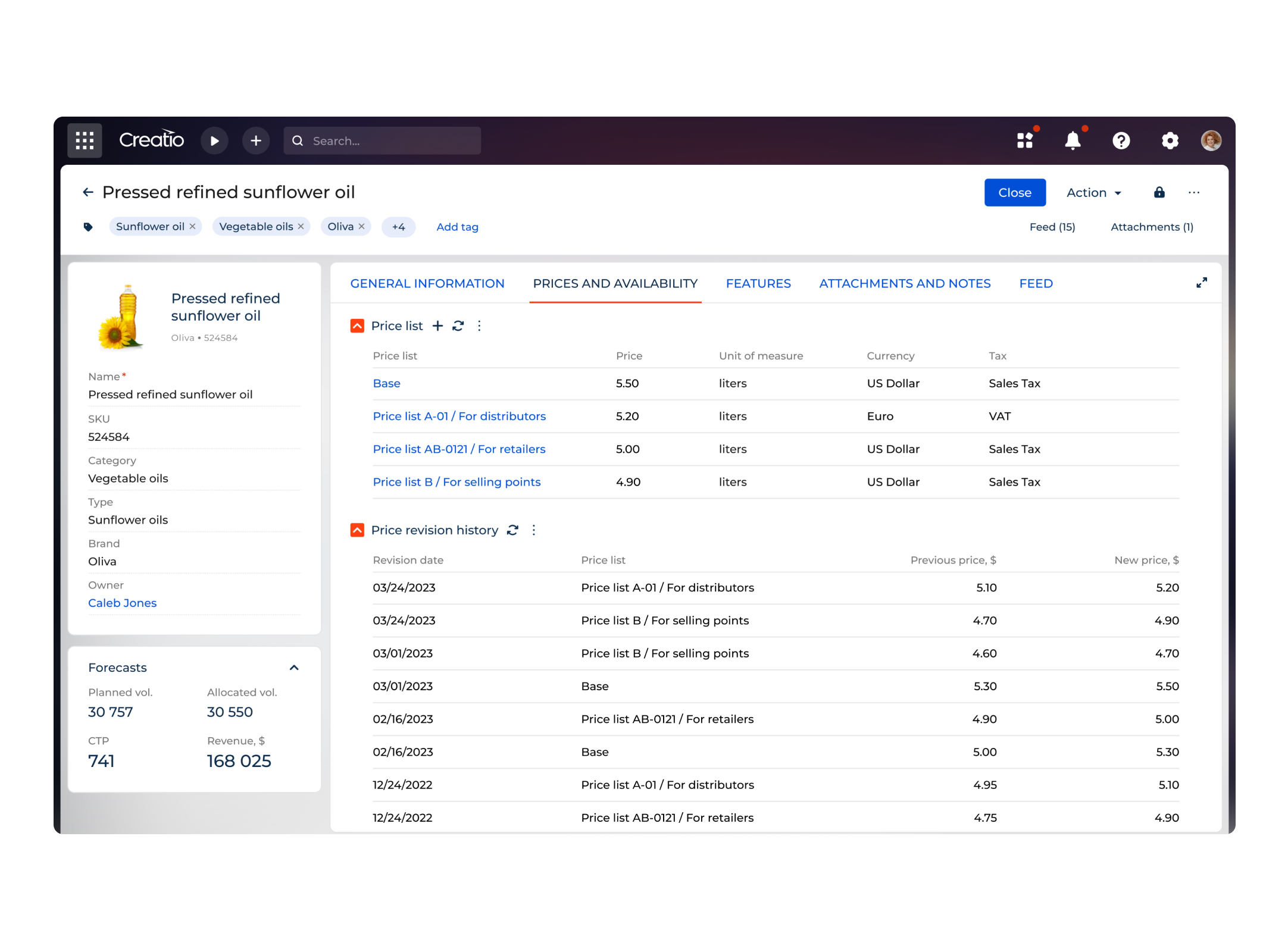
Creatio’s order and delivery
In addition, a robust CRM solution designed for the retail sector enables organisations to manage delivery processes with greater efficiency and control. By automating key stages, from calculating shipping costs based on location to coordinating with delivery providers, CRM systems help streamline logistics operations and improve route planning. Automated customer updates, delivered by email at each stage of the delivery journey, increase transparency and strengthen trust. This approach reduces the volume of order-status enquiries while supporting a smoother and more reliable customer experience.
Furthermore, retail CRM systems are essential for managing returns and exchanges, providing a clear and efficient process for customers to initiate returns and for retailers to handle refunds or replacements. By centralising return management within the CRM platform, retailers can monitor return requests, manage accurate inventory levels, and process refunds or exchanges more efficiently, ultimately contributing to improved customer satisfaction.
8. Risk and compliance
Retail CRM systems help retailers manage customer privacy and regulatory compliance by providing tools to safeguard customer data and meet relevant industry regulations. With built-in capabilities such as data encryption, access control, and compliance monitoring, CRM platforms enable retailers to maintain high standards of data protection and privacy.
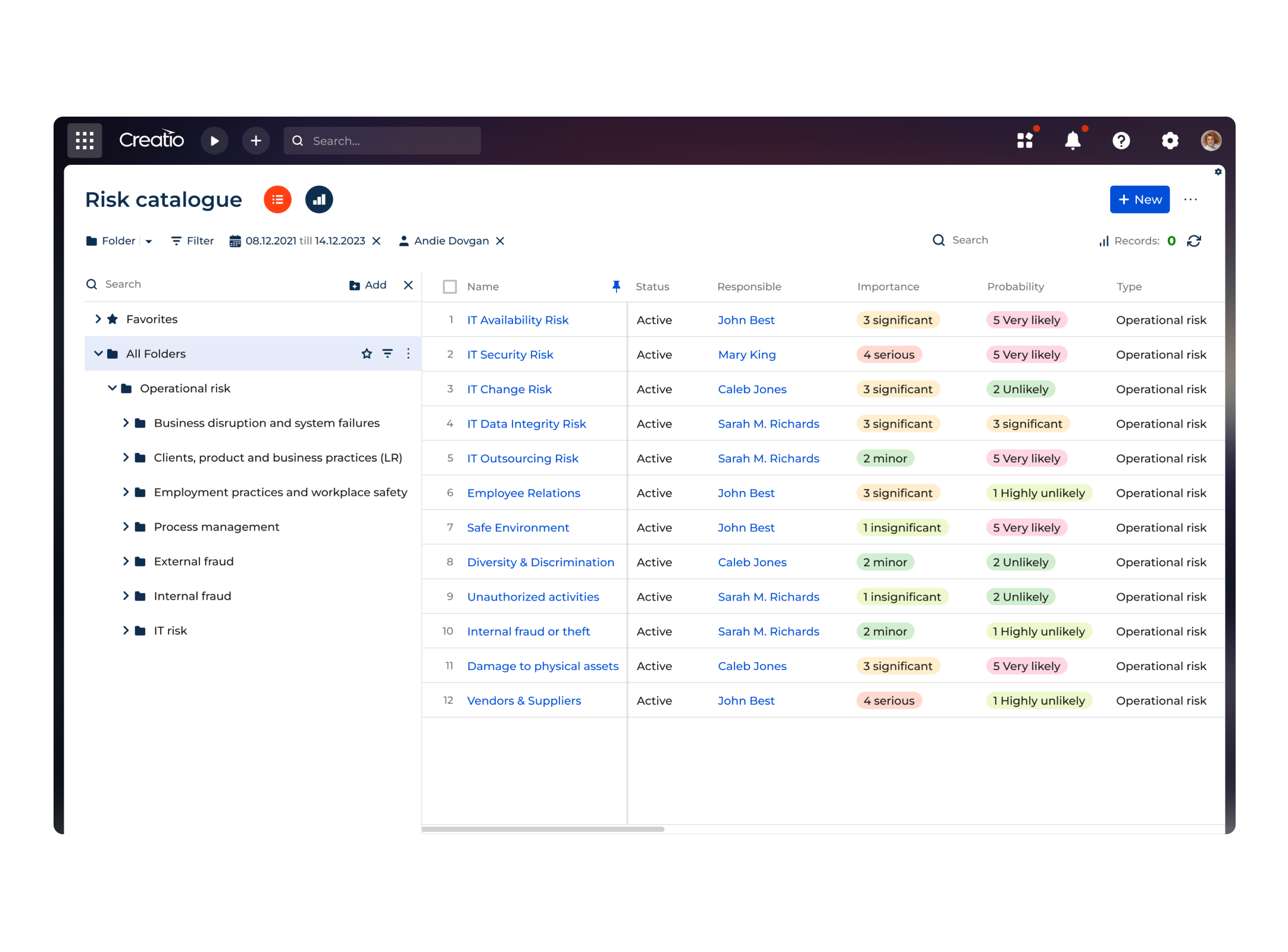
Creatio’s risk and compliance
CRM platforms often include functionality for managing consent preferences, enabling retailers to obtain and record customer consent for data usage and communication in line with regulations such as UK General Data Protection Regulation (GDPR). By centralising customer data and applying robust privacy controls, retail CRM systems help mitigate risks associated with data breaches while ensuring sensitive customer data is properly protected.
9. Employee experience
Retail CRM systems can also support the entire employee lifecycle, from recruitment and onboarding through to retention and employee exit, while improving the overall employee experience through a user-friendly platform that automates routine requests and processes. These systems typically include tools for onboarding new employees, managing performance reviews, and supporting training and professional development. In addition, CRM platforms offer functionality for tracking working hours and attendance, managing schedules, processing payrolls, and simplifying day-to-day administrative tasks.
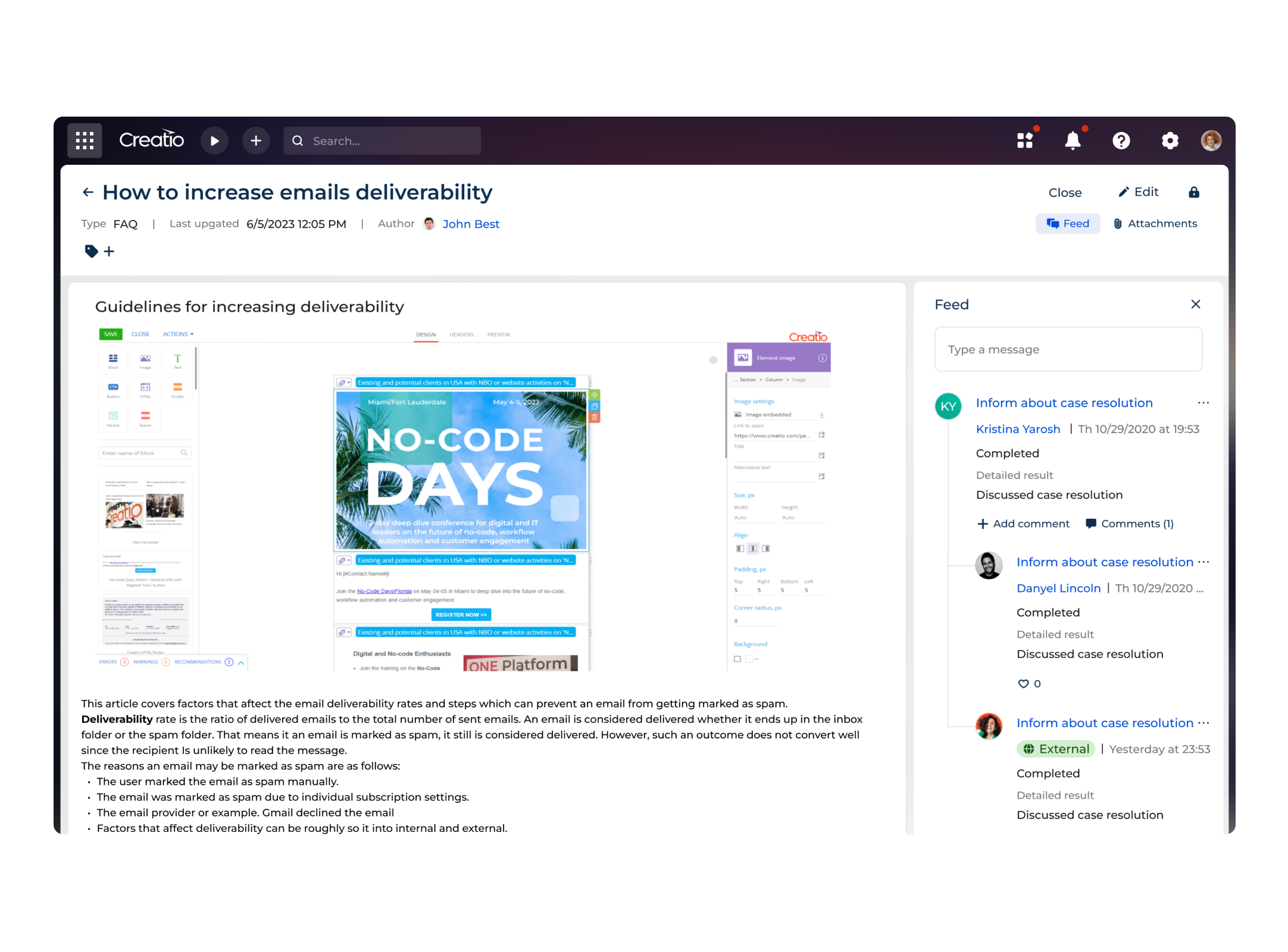
Creatio’s employee experience
Moreover, CRM systems encourage a stronger collaboration by bringing communication, shared knowledge, and teamwork into a single platform. With features such as internal messaging and document sharing, CRM platforms support real-time interaction between employees, making it easier for teams to coordinate their work and operate more efficiently.
How AI enhances retail CRM capabilities
With the support of generative, predictive, and agentic AI, retail CRM platforms can deliver personalisation at scale, streamline store operations, and improve the overall customer experience.
Personalised product recommendations
AI enables CRM systems to analyse large volumes of customer data quickly and accurately. As a result, retailers can identify products that are likely to be most relevant to each customer. These recommendations support both upselling and cross-selling by drawing on information such as previous purchases, browsing behaviour and indicators of potential customer needs.

Recommendations are updated in real time as the CRM gathers new data and can be displayed directly on a website, similar to Amazon’s “You may also like” section, or delivered to customers via email.
Automatically generated product descriptions
AI-powered retail CRM platforms can assist retailers in producing clear and engaging product descriptions. By analysing existing content on a retailer’s website, AI can automatically generate new descriptions based on product specification and visual attributes. These drafts can be reviewed and refined by staff to ensure accuracy before publication, or automatically published on the website.
AI systems can also generate descriptions tailored to specific platforms. For example, content prepared for services such as Google Shopping can be produced in shorter, keyword-optimised formats that comply with platform requirements and help improve click-through performance.
Dynamic content creation
Retail CRM platforms equipped with AI capabilities enable marketing teams to personalise emails, digital advertisements, and website content according to customer segments or individual profiles. By using these insights, retailers can produce relevant and engaging content at scale, helping to strengthen customer engagement and improve conversion rates.

Demand forecasting
Artificial intelligence supports accurate demand forecasting. Retailers no longer need to rely on guesswork what anticipating which products are likely to be in demand in the coming seasons. Instead, AI-powered insights enable more informed, data-led decisions that reflect changing customer preferences.

AI analyses large volumes of data, including past sales data, seasonal patterns, and wider market trends, to support forecasting. With this information, retailers can manage inventory more effectively, reduce the risk of stock shortages, and ensure that the products available in store match customer demand.
Marketing campaign optimisation
AI capabilities within retail CRM platforms can help marketing teams refine campaigns and improve conversion rates. From running A/B tests on email campaigns to adjusting advertising placements and creative elements in real time, AI enables marketing activity to be continuously refined to improve engagement and performance.
For example, AI can test different versions of email subject lines and calls to action tailored to specific customer segments. It then identifies the most effective variations and automatically applies them to future campaigns. In digital advertising, AI tools can also optimise advertising spend by analysing real-time performance across platforms such as Google Ads, social media, and display networks. Budgets and bids can then be adjusted automatically towards the most effective channels and creatives, helping to maximising ROI.
Intelligent inventory replenishment
AI can monitor inventory levels in real time and automatically trigger replenishment when inventory falls below defined thresholds, helping to prevent stock shortages that may result in lost sales and customer dissatisfaction. It can also apply demand forecasting to anticipate future requirements and ensure adequate stock availability.
Dynamic pricing adjustments
AI can continuously analyse demand patterns, competitor pricing, and market fluctuations to adjust product prices across multiple channels in real time. For example, if a competitor reduces prices on particular items, the system can recommend or apple corresponding adjustments to maintain competitive positioning.
Personalised customer service
Modern retail CRM platforms increasingly incorporate AI capabilities that support intelligent chatbots and improve customer service. Chatbots equipped with natural language processing (NLP) can deliver more natural, context-aware interactions, providing customers with instant support around the clock. They can respond to common enquiries, suggest suitable products, and assist with straightforward tasks such as checking delivery status or explaining return policies.

AI can also assist customer service teams when dealing with more complex enquiries. For example, it can summarise a customer’s order history, surface relevant product information, and suggest appropriate ways to resolve a case, helping teams provide efficient and consistent support.
Five leading CRM solutions for retail businesses
Selecting the appropriate CRM is an important step for retailers seeking to improve operations and strengthen customer engagement. While many CRM platforms provide general functionality, some stand out for their ability to support the specific operational needs of retail businesses.
The following five CRM platforms are widely considered by retailers:
1. Creatio CRM
Creatio is an agentic platform to automate CRM processes and business workflows through no-code tools. It offers dedicated capabilities for the retail sector, providing functionality tailored to the operational requirements of retail organisations. Through its specialised CRM offering, Creatio supports common retail processes and help businesses manage customer relationships, sales activity, and operational workflows more effectively.
From comprehensive customer data management to procurement and logistics, Creatio's retail CRM helps retailers streamline operations, improve customer engagement, and support sustainable business growth. With customisable workflows and an intuitive interface, the platform enables retailers to refine internal processes while maintaining smooth integration with existing systems.

Creatio offers advanced AI capabilities through Creatio.ai, which combines several AI patterns, including generative, predictive, and agentic AI within a cohesive architecture designed to enhance employee productivity. Generative AI can automatically produce personalised marketing emails and product descriptions based on customer data and preferences. Predictive AI helps retailers analyse customer behaviour, enabling more accurate demand forecasting, improved product recommendations, and better-informed inventory planning. Furthermore, AI agents can carry out a range of operational tasks, such as adjusting product pricing in response to market conditions, supporting complex marketing campaign workflows, or managing stock replenishment to reduce the rich of shortages.
Core features:
- 360-degree view of customer data
- Creatio.ai
- merchandise management
- procurement and logistics
- store operations
- order and delivery
- risk and compliance
- employee experience
- comprehensive workflows for sales, marketing, and customer service
Advantages:
- Highly customisable. Creatio’s composable architecture allows organisations to tailor the platform using no-code tools, drag-and-drop functionality, and pre-built components, enabling both technical and non-technical users to adapt the system to the unique requirements,
- User-friendly interface. The platform provides a clear and intuitive interface, making it straightforward for business users to navigate and manage everyday tasks.
- Flexible and scalable. Suitable for both large retailer organisations and smaller boutiques, Creatio can be configured to meet specific operational requirements and expanded as the business grows.
- AI at the core of the platform. Creatio.ai forms an integral part of the platform, rather than an additional layer added to legacy systems. It supports intuitive automation across objects and workflows using natural language.
- Actionable AI capabilities. AI enhances the tools retail employees already use, surfacing relevant insights and helping teams work more effectively.
- Robust security features. Creatio safeguards sensitive customer information through end-to-end encryption, multi-factor authentication, and role-based access control.
- Advanced data analytics and reporting. Interactive dashboards and real-time data-driven insights help organisations monitor performance and support informed decision-making.
- Seamless integration with third-party applications. Built-in integration capabilities and open APIs enable retailers to connect with more than 700 applications, including payment gateways, ERP systems, shipping providers, and e-commerce platforms.
- Transparent pricing model. Pricing is clearly structured, with no hidden charges for additional features, additional modules, or advanced capabilities such as Creatio.ai.
Limitations:
- Initial learning curve. Owing to its extensive functionality and high level of customisation, Creatio may require some time for new users to become fully familiar with the platform.
Rating:
- G2: 4.6/5
- Software Advice: 4.7/5
Pricing:
Creatio uses a composable pricing model, allowing organisations to pay only for the capabilities required. Pricing for Creatio CRM varies depending on the selected platform tier and products:
No-code platform:
- Growth: £19 per user per month, designed for small and medium-sized organisations
- Enterprise: £40 per user per month, suitable for larger organisations and enterprise environments
- Unlimited: £63 per user pre month, intended for advanced enterprise use cases
Products:
- Sales, Marketing, or Service: £11 per product per user per month
- Creatio.ai: available across the entire platform at no additional cost
Agentic Creatio CRM
Unify sales, service, marketing, and operations with a single agentic CRM
2. Salesforce
Salesforce provides a comprehensive suite of cloud-based CRM applications designed to support personalisation across e-commerce, physical retail, marketing, and customer service. For retail organisations, the platform offers a consolidated view of customers, inventory, and orders, alongside tools that help automate sales processes and customer support though AI-driven functionality.

Core features:
- Marketing Cloud
- Sales Cloud
- Service Cloud
- shopping forecasting
- loyalty and referral management
- omnichannel commerce
- AI-powered assistant Einstein
- POS tools
Advantages:
- Highly scalable and customisable. Salesforce can be configured to meet a wide range of organisational requirements through extensive customisation options.
- Comprehensive functionality. The platform provides a broad set of tools covering sales, marketing, customer service, and analytics.
- Seamless integration. It connects with numerous third-party applications through the AppExchange marketplace.
- AI-driven insights. Einstein AI supports predictive analytics and tailored recommendations.
- Unified customer view. The platform combines online and offline customer data to provide a complete picture of each customer, supporting effective omnichannel strategies.
Limitations:
- High cost. Salesforce can be expensive, particularly for smaller businesses or retailers that require significant customisation and additional modules.
- Fragmented functionality. The platform offers a wide range of capabilities, but many are delivered through separate products, requiring organisations to purchase multiple solutions to access the full set of features.
- Complexity and learning curve. Users often report a steep learning curve, with considerable time and resources required for implementation and ongoing management.
- Complex customisation. Due to the platform’s complexity, organisations frequently rely on Salesforce-certified consultants to carry out customisation work, which adds further cost.
- Feature overload. Many businesses find that they are paying for features that are rarely used, which can increase overall expenditure without delivering proportional value.
- Hidden costs. Advanced functionality, including AI capabilities and products such as Marketing Cloud and Service Cloud, is typically available only at an additional cost.
- Performance issues. Organisations managing considerable datasets may experience slower system performance.
Rating:
- G2: 4.5/5
- Software Advice: 4.4/5
Pricing:
Pricing for Salesforce varies significantly across its different products, with many additional modules and advanced capabilities available at additional costs. The main pricing tiers for Sales Cloud platform are outlined below:
- Starter Suite: £19 per user per month
- Professional: £60-74 per user per month
- Enterprise: £122 per user per month
- Unlimited: £245 per user per month
- Agentforce 1 Sales, including AI features: £408 per user per month
3. HubSpot CRM
HubSpot offers an AI-powered CRM platform that unifies customer data, teams, and business systems within a single environment. The platform includes integrated CRM, Marketing, Sales, and Service Hubs, allowing organisations to centralise data and automate customer interactions. In the retail sector, HubSpot enables teams to deliver more personalised customer experiences at scale.

Core features:
- contact management
- contact scoring
- workflow automation
- custom integrations
- reporting dashboards
- Marketing Hub
- Sales Hub
- Service Hub
- Breeze Copilot AI
Advantages:
- User-friendly interface. Users note that HubSpot features an intuitive layout designed for easy navigation.
- Free CRM. A free tier is available, offering core CRM functionality suitable for small businesses and startups.
- All-in-one platform. Combines marketing, sales, and service tools.
- Content management tools. HubSpot provides comprehensive tools for managing blogs, landing pages, email campaigns, and social media.
- E-commerce integrations. Integrates with platforms such as Shopify and WooCommerce.
- AI-powered capabilities. HubSpot includes the AI assistant Breeze, designed to support workflow automation, assist with routine tasks, and enhanced data quality.
Limitations:
- Complex pricing structure. Initial HubSpot costs can rise quickly as organisations add more contacts, advanced features, or additional Hubs.
- High onboarding fees. Higher-tier plans often include mandatory one-time onboarding charges.
- Limited functionality for retail-specific workflows. HubSpot does not provide advanced retail features and may require a greater reliance on third-party integrations compared with enterprise-grade CRM platforms.
- Higher cost for AI capabilities. Copilot Breeze features are only available in the higher-priced tires, making them less accessible for small and medium-sized businesses.
Rating:
- G2: 4.4/5
- Software Advice: 4.4/5
Pricing:
- Free CRM: limited features and contact capacity, suitable for up to two users
- Starter (Sales, Marketing, and Service Hubs): £15-£37 per hub per user per month
- Professional: £60-£74 per hub per user per month (Sales and Service), and £660 per month for three users (Marketing)
- Enterprise: £111 per user, per month (Sales and Service), and £2,673 per month for five users (Marketing)
4. Zoho CRM
Zoho CRM is an integrated platform designed to support sales, marketing, and customer service teams, particularly within small and medium-sized businesses. It offers a range of capabilities tailored to retail shops, helping organisations manage both retail and supply chain operations more effectively.

Cor features:
- inventory management
- marketing campaign management
- omnichannel sales
- online product and service catalogue
- social media trend capturing
- reporting and analytics
- territory management
- sales forecasting
- AI assistant Zia
Advantages:
- Free plan. A free plan is available for startups and small businesses with up to three users.
- User-friendly and adaptable. Straightforward to use and easily configured to support specific retail workflows.
- Strong Zoho ecosystem. Integrates easily with other Zoho applications, including Zoho Books and Zoho Campaigns.
Limitations:
- Less suitable for large enterprises. The platform may be less robust and scalable for large organisations or complex retail operations.
- Customer support constraints. Some users report that standard support is limited, while enhanced support packages typically involve additional costs.
- Feature limitations. Zoho provides fewer retail-specific capabilities compared with some competitors, and certain advanced features, including AI functionality, are only available within higher-tier plans.
- AI performance issues. Some users have reported inconsistent or unclear responses from AI-powered chatbots.
- Reporting limitations. Reporting tools within Zoho CRM are relatively static, and users may encounter difficulties when attempting to automate reporting processes.
Rating:
- G2: 4.1/5
- Software advice: 4.3/5
Pricing:
- Standard: £10 per user per month
- Professional: £17 per user per month
- Enterprise: £30 per user per month
- Ultimate: £39 per user per month
5. Microsoft Dynamics 365 for retail
Microsoft Dynamics 365 for retail is an end-to-end retail platforms designed to connect back-office, in-store, and e-commerce operations. It provides a broad set of tools for managing omnichannel retail activities, customer engagement, product information, and supply chain processes. As a result, it is particularly well suited to larger retail organisations and enterprises already operating within the Microsoft ecosystem.

Core features:
- merchandising
- inventory management
- channel management
- analytics and data-driven insights
- generative AI capabilities
Advantages:
- Ease of use. Users report that Microsoft is intuitive and straightforward to navigate.
- Seamless Microsoft integration. It integrates with other Microsoft products, including Azure, Power BI, Office 365, and additional Dynamics 365 modules such as Sales, Service, and Finance.
- Scalability for large organisations. Designed to support complex operational requirements of large retail businesses.
- Extensive functionality. The platform offers a wide range of industry-specific capabilities, allowing retailers to tailor Microsoft CRM to specific operational requirements.
Limitations:
- High cost and implementation complexity. Some users report that Microsoft Dynamic 365 can be expensive and complex to deploy and customise, often requiring significant IT resources or specialised partners.
- Additional costs. Advanced capabilities are typically available only within higher-priced plans or as additional modules, which may require further investment.
- Customisation challenges. Extensive customisation may involve additional development work or reliance on external support, increasing overall implementation costs.
- Frequent disruptions. Regular platform updates, which beneficial, can occasionally disrupt established workflows or require adjustments to the user interface.
- Customer support concerns. Some users report difficulties obtaining timely or adequate support from Microsoft’s customer service teams.
Rating:
- G2: 4.6/5
- Software Advice: 4.6/5
Pricing:
- Dynamics 365 Commerce: £155 per user per month for core capabilities
- E-Commerce module: £2,970 per user per month
Retail CRM: enhancing retail operations and customer engagement
Retail CRM are designed to address the specific operational and customer management requirement of retail organisations. Beyond the core capabilities of traditional CRM systems, they provide retailers with tools to improve inventory and merchandise management, streamline order and delivery processes, and execute targeted marketing activity. By centralising customer information and purchase history in a single system, retail CRM allows businesses to tailor offers, better understand purchasing behaviours, and improve the overall customer experience. In a sector where customer loyalty and satisfaction are paramount, a well-implemented retail CRM can support stronger relationships with customers while contributing to sustained revenue growth.
Creatio CRM is widely recognised as a strong CRM solution for the retail sector. Its comprehensive functionality, intuitive interface, and a wide range of integration options allow retailers to manage operations more effectively and support customer engagement across multiple channels. With capabilities such as workflow, predictive analytics, and tools for personalised marketing campaigns, Creatio helps retailers optimise processes, improve sales performance, and deliver a consistent customer experience.