





























































Citizen Request Management: How Cities Handle Public Service Requests Efficiently

Creatio: Agentic CRM to Enhance Gov Services

Every day, government agencies process thousands of service requests — from pothole repairs and sanitation issues to permit inquiries and public safety concerns. For example, in 2025 alone, the City of Boston reported over 267,000 service requests, highlighting the scale and complexity of managing citizen interactions in modern cities.
As cities become more digital and data-driven, citizen request management software is becoming essential to government transformation. It replaces manual, fragmented processes with connected, transparent service delivery, which allows local governments to centralize citizen requests, automate workflows, and improve responsiveness at scale.
In this guide, we cover what citizen request management software is, its key features and benefits, real-world use cases, and how to choose the right platform that covers your needs.
Key Takeaways:
- Citizen request management software is a digital platform used by government agencies to capture, manage, and resolve non-emergency service requests from residents.
- This software is designed for local, municipal, and state governments that need to handle high volumes of requests while improving service delivery and coordination.
- The main benefits of citizen request management software include increased efficiency, faster response times, better resource allocation, improved transparency, and stronger public trust.
- Core features of request management systems are multi-channel request intake, automated workflows, centralized case management, mobile tools for field teams, real-time tracking, and analytics.
- Leading solutions for governments are Creatio CRM, CivicPlus, Accela, ServiceNow Public Sector, and GovQA by Granicus.
What is Citizen Request Management?
Citizen request management is the process government agencies use to handle non-emergency service requests from residents — from submission to resolution. This process connects citizen requests with internal departments, enabling agencies to coordinate responses, manage workloads, and deliver city services efficiently.
What is Citizen Request Management Software?
Citizen request management (CRM) software is a digital platform that helps government agencies capture, organize, and resolve service requests submitted by residents. It centralizes reported issues such as pothole repairs, sanitation issues, broken streetlights, noise complaints, or permit inquiries into a single system, allowing municipalities to manage public services more efficiently and transparently.
Unlike 311 systems that are primarily responsible for intake and initial reporting, citizen request management systems focus on managing the full lifecycle of service requests inside government agencies, just like a CRM-like system. They act as a central hub connecting resident inquiries with internal departments, enabling agencies to track requests, coordinate responses, and monitor resolution progress. Additionally, they support automated routing, real-time status updates, and data-driven insights to help institutions prioritize requests, allocate resources more effectively, and ensure timely resolution of public issues.Top of Form
How Citizen Request Management Systems Work?
A citizen request management system guides service requests through a defined workflow, from submission to resolution. Imagine a resident submits a request — for example, reporting a pothole with a location and photo. Here’s how the process typically works:
- The system receives a service request submitted through a web portal, mobile app, email, call center, or 311 software. The request usually includes a description of the problem, location details, photos, and contact information.
- The request is recorded as a case within the system, where it can be tracked and prioritized. Agencies may prioritize requests based on urgency, location, predefined service rules, or service-level agreements.
- The system categorizes and routes the request to the appropriate department — such as public works, sanitation, transportation, or permitting. Many platforms also use AI to analyze the request details and recommend the correct category or department.
- Field crews or service staff receive the task and resolve the issue (i.e., repairing infrastructure or addressing sanitation issues). Crews can update the case status directly from the field using mobile applications.
- Residents receive status updates throughout the process — from confirmation to completion — providing transparency and reducing the need for follow-up inquiries.
- Managers analyze service demand and performance through dashboards and reports. AI-powered analytics can highlight recurring issues or service hotspots to help allocate resources more effectively.
By digitizing and coordinating the entire request lifecycle, citizen request management systems help agencies respond faster, improve cross-department coordination, and deliver public services more efficiently.
Key Features for Citizen Request Management Platforms
The right citizen request management system should be easy for residents to use, yet help agencies to effectively manage high volumes of service requests. This is especially important for large cities — for example, New York City government handled over 31 million service inquiries in 2025.
Below are the most important features to look for in citizen request management systems.
Resident-Facing Features
From a citizen's perspective, request management software should provide a user-friendly interface that allows residents to quickly submit service requests and track its progress in real time. The essential features are:
- Multi-channel request submission – Enables residents to submit requests through web portals, mobile apps, email, call centers, or 311 systems.
- Mobile app support – To quickly report issues like potholes or broken streetlights directly from smartphones.
- Status tracking and notifications – Monitor request progress and receive status updates through email, SMS, or app notifications.
- Location tracking and photo attachments – Pin locations on a map and attach photos or videos to help staff accurately identify issues.
Essential Features for Local Governments
Government agencies require tools that support efficient case handling, coordination, and execution of citizen services. These include:
- Centralized case management – Collect and manage all service requests as trackable cases in a single system.
- Automated workflows – Streamline request classification, routing, prioritization, approvals, escalations, and task assignments.
- Service prioritization and SLA management – Help teams ensure timely resolution based on urgency, location, and defined service standards.
- Mobile accessibility – Enables field crews to receive tasks, update case status, and upload photos directly from the location.
- Internal collaboration tools – Help departments effectively coordinate tasks, share information, and track service activities across teams.
- Performance dashboards and reporting – To provide clear visibility and data-driven insights into service demand, response times, and overall performance.
Built-in Platform Capabilities
The following platform-level capabilities enable agencies to scale operations, gain insights, and integrate citizen services with broader government systems:
- GIS and location-based mapping – Map service requests to identify issue clusters and prioritize work by location.
- Analytics and performance dashboards – Track service demand, response times, and operational performance.
- AI-powered capabilities – Automate request classification, detect patterns, and surface insights for better decision-making.
- System integrations – Connect with the core government systems such as asset management, permitting, document management, and GIS platforms.
- Security and access controls – Role-based permissions, audit logs, and compliance capabilities ensure secure handling of public data.
Benefits of Citizen Request Management Systems
Citizen request management (CRM) software benefits government agencies by modernizing workflows, increasing operational efficiency, and improving service transparency.
The most important benefits for governments are:
- Improved efficiency – Automates request intake, routing, and resolution, helping agencies standardize service delivery and respond faster across departments.
- Cost savings & ROI – Streamlines workflows and improves resource allocation, reducing operational costs and enabling more proactive service management.
- Data-driven decision-making – Provides valuable insights into service demand, response times, and performance trends to support better budgeting and planning.
- Increased transparency and accountability – Allows both residents and staff to track request status and outcomes, ensuring clear visibility into service delivery.
- Stronger public trust – Builds confidence in local government through timely, visible, and consistent online services for citizens.
- Better citizen engagement and communication – Enables real-time updates, notifications, and feedback loops, improving resident experience and reducing follow-up inquiries.
Top 5 Citizen Request Management Software Solutions
To help you select the right solution, we’ve reviewed the top platforms and the key capabilities they offer to support citizen request management in government agencies:
Creatio CRM
Best for: Government agencies looking to modernize citizen service operations, improve cross-department coordination, and extend capabilities without heavy IT dependency.
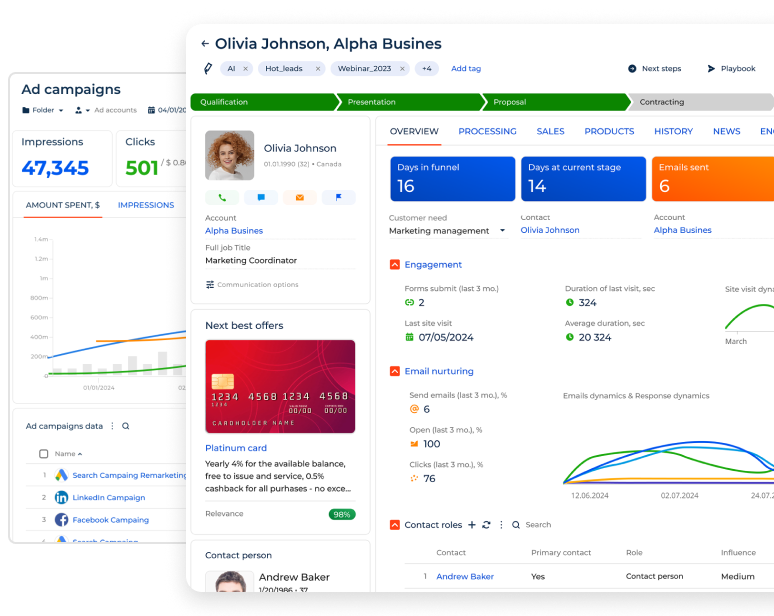
Creatio CRM is a leading agentic platform that enables governments to automate CRM and public sector workflows with no-code and AI at its core. It is used by local, municipal, and state agencies — including the City of Boston and the City of Pittsburgh — to improve service management and citizen engagement.
Creatio is designed to adapt to evolving government needs, allowing agencies to quickly launch new services and refine workflows without long development cycles. Its composable architecture and no-code capabilities enable teams to design and deploy new processes in days instead of months. Additionally, Creatio’s built-in centralized governance ensures secure, compliant, and consistent delivery of workflows across departments.
With Creatio, government institutions achieve 73% faster application delivery and 41% higher productivity through no-code tools, AI-powered insights, and automated governance workflows, according to Nucleus Research. This allows agencies to modernize faster while delivering more efficient and reliable public services.
Key Features:
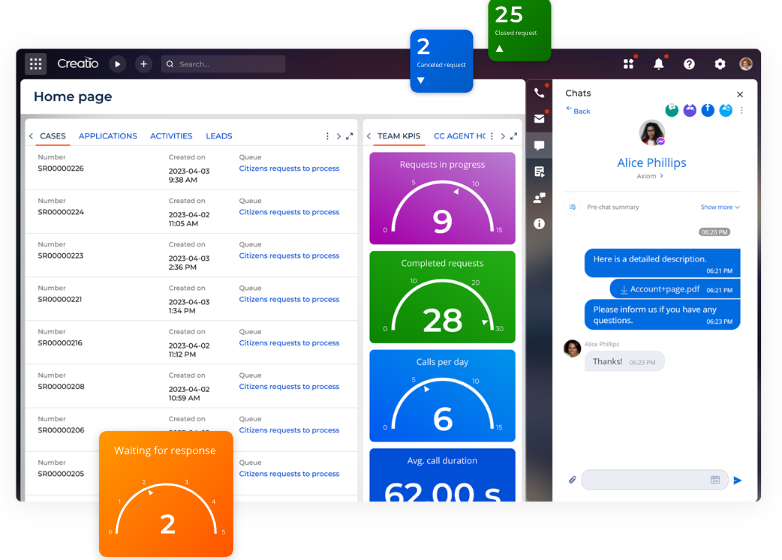
- One unified platform for multiple departments and services.
- Creatio Mobile, a remote workplace that offers instant access to field data, calendar, scheduled tasks, etc.
- AI-powered CRM agents to accelerate routine tasks such as case categorization, routing, documentation updates, and follow-ups.
- End-to-end request and case management to centralize citizen requests, interaction history, and service workflows in one system.
- Document and records management to securely store, organize, and manage files.
- AI-enhanced no-code development, which enables building and adapting workflows and applications based on specific agency needs without coding.
- Seamless integration and extensibility that allows agencies to connect Creatio CRM with existing systems and extend functionality through the Creatio Marketplace.
CivicPlus
Best for: Local governments focused on improving resident engagement and digital-first public services.
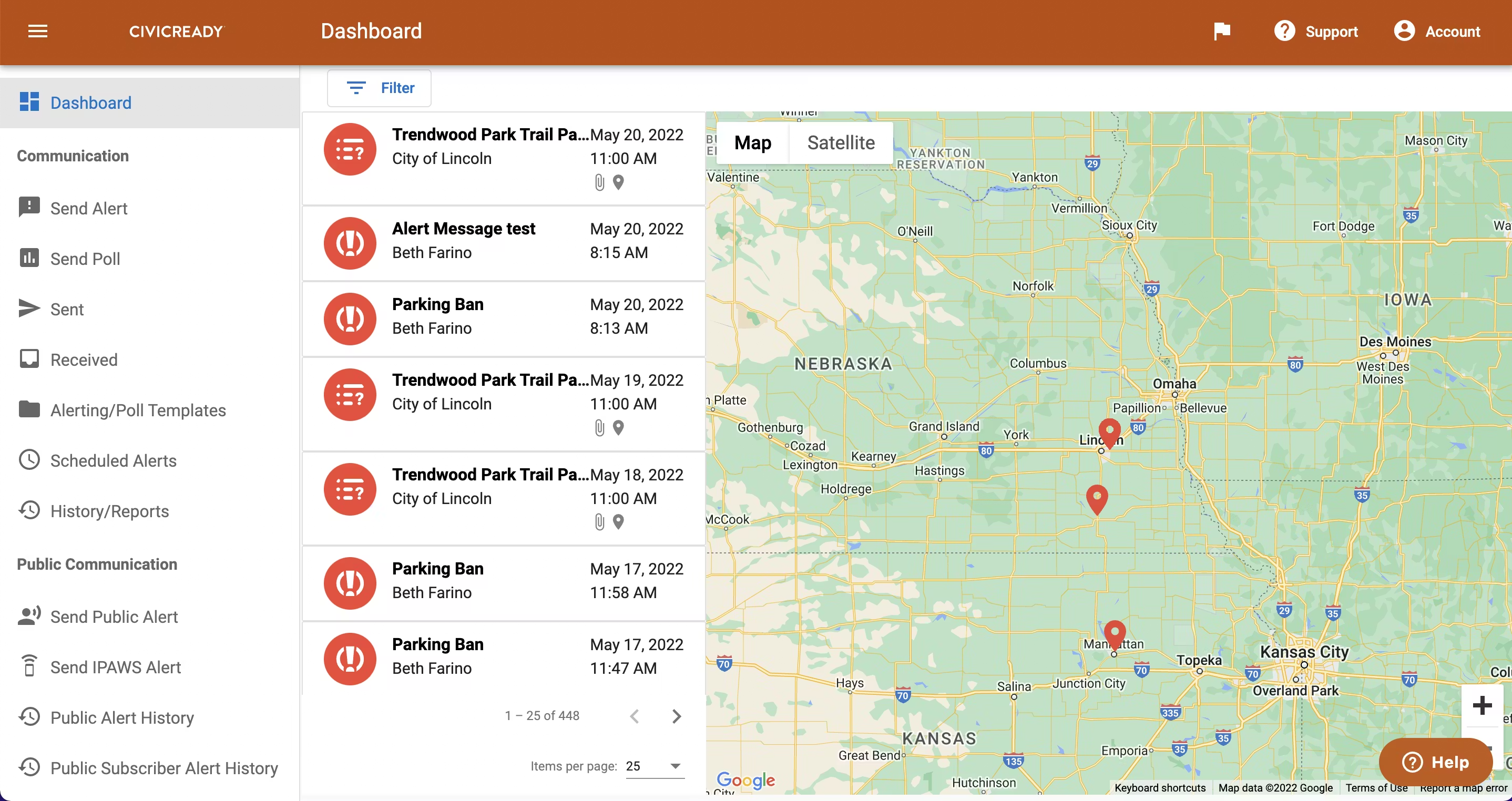
CivicPlus is a popular platform that allows agencies to communicate with residents and deliver services through digital channels. It is widely used by municipalities to manage 311 services, reduce in-person visits, and improve accessibility to public services through web and mobile experiences. The platform also includes AI-driven chatbot capabilities to help residents quickly find information and resolve common inquiries without contacting support staff.
Key Features:
- Branded municipal websites for citizen communication and service access.
- 311 CRM system for non-emergency service requests and resident inquiries.
- Mobile app for service requests.
- Mass notification system.
- AI-driven chatbot for automated responses to common questions.
- Top of Form
- Bottom of Form
Accela
Best for: Government agencies looking for ready-to-deploy civic applications that support permitting, licensing, and service request management
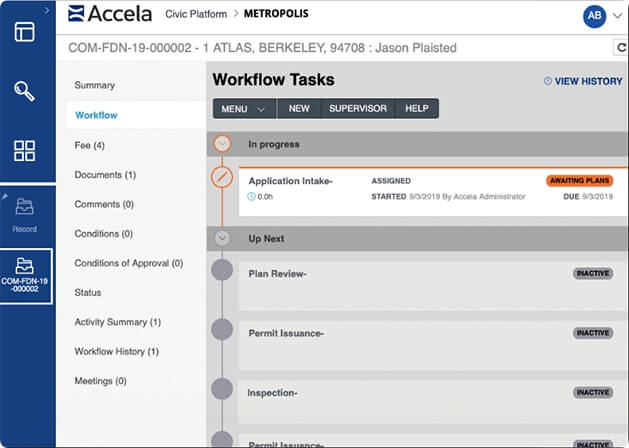
Accela is a cloud-based platform that provides a suite of prebuilt civic applications designed to help government agencies digitize public services and streamline operations. Its Service Request Management capabilities enable agencies to improve resident engagement, reduce operational costs, and increase transparency. By connecting systems and eliminating data silos, Accela helps agencies manage service requests more efficiently across departments.
Key Features:
- Branded mobile and web-based applications for CRM
- Service request management tools to submit requests and track status in real time
- Seamless integration with existing civic applications to unify data and processes across departments
- Workflow automation to ensure requests are properly categorized, assigned, and resolved
Public Sector Digital Services by ServiceNow
Best for: Government agencies seeking an enterprise-grade platform to standardize and automate service delivery across departments.
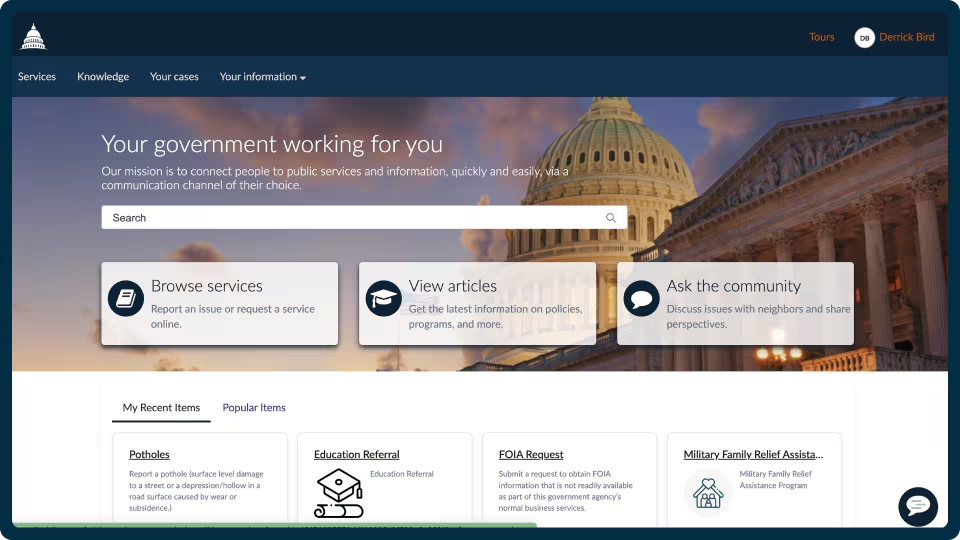
ServiceNow Public Sector Digital Services is a modern CRM platform that connects people, data, and processes to improve the efficiency of government operations. It provides configurable workflows and AI capabilities to streamline service management, support decision-making, and help agencies coordinate work through a shared, real-time view of operations.
Key Features:
- Unified citizen portal to submit requests, track status, and engage via web, chat, or mobile.
- Automated case routing that assigns requests to the teams based on predefined rules and workflows.
- Generative AI for case summaries, resolution notes, and knowledge assistance for service teams.
- Document management tools to store and manage case-related documents and records.
- Visual dashboards and analytics to provide insights into service delivery, performance, and resource use.
GovQA by Granicus
Best for: Government agencies managing high volumes of records requests and public information access.
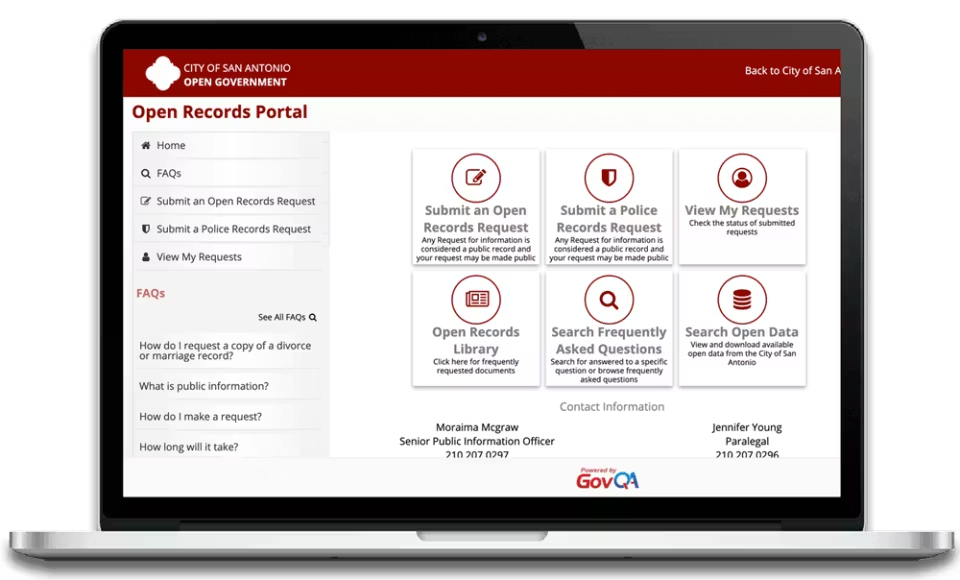
GovQA by Granicus is a records request management platform designed for state and local governments, public safety organizations, schools, and special districts. It helps agencies manage public records requests efficiently, reduce repetitive work, and ensure compliance with legal requirements. By centralizing citizen requests and automating workflows, this software can improve transparency and optimize operational costs.
Key Features:
- End-to-end management of records and information requests.
- Predictive intake deflection, which matches new requests with previously released records, FAQs, and similar requests to reduce workload.
- Secure self-service portal to submit citizen requests, track status, and access or download records online.
- Automated workflows that support request routing, deadlines tracking, and escalations to ensure compliance.
- Integrations with existing government systems to streamline data access and processing.
Supporting Citizen Service Operations with Creatio CRM for Government
Real-world examples show how citizen request management platforms can transform service delivery in local governments. By replacing fragmented or legacy systems, cities can streamline operations, improve accessibility, and respond to residents more efficiently. Below are examples of how Boston and Pittsburgh modernized their services using Creatio’s agentic no-code platform.
City of Boston: Modernizing its 311 Services
The City of Boston has transformed its non-emergency 311 services, which support over 675,000 residents, by replacing a 15-year-old legacy system with Creatio’s centralized platform with no-code and AI at its core.
Results:
- Faster service delivery – Enabled 24/7/365 operations, with ~50% of 311 phone calls routed through the new system within months after the launch.
- Simplified operations – Consolidated 180+ service types into streamlined workflows, improving citizen request handling and routing.
- Greater platform agility – Reduced update cycles from weeks to days or hours, allowing internal teams to deploy changes independently.
- Improved cross-team coordination – Unified multiple departments on one platform, enhancing response times and data consistency.
City of Pittsburgh: Enhancing Human Relations Services
The City of Pittsburgh integrated Creatio’s platform to modernize service delivery for its Commission on Human Relations, improving accessibility and operational efficiency for over 300,000 residents.
Results:
- Increased citizen engagement – Increased online inquiries by 300% through a secure self-service portal.
- Greater service transparency – Enabled residents to submit, track, and communicate about cases in real time.
- Faster policy updates – Non-technical staff can update workflows instantly, including same-day regulatory changes.
- Improved service efficiency – Role-based workflows streamline case handling and reduce manual work, allowing teams to scale without additional headcount.
How to Choose the Right Citizen Request Management Software
Choosing the right platform for managing citizen requests requires focusing not only on functionality, but also on how well it adapts to government operations and delivers long-term value.
Here are the key best practices to guide your decision:
- Define your goals and service scope: Identify the types of requests and services you need to manage (e.g., 311, public works, permits) and the outcomes you want to achieve, such as faster response times, or cost reduction.
- Ensure integration with existing systems: Public sector institutions that manage citizen requests need integration with GIS, ERP, asset management, permitting systems, and legacy databases to enable end-to-end visibility and avoid data silos.
- Prioritize adaptability without heavy IT involvement: Choose a platform that allows teams to configure workflows, online forms, and processes without coding. This enables departments to quickly adapt software to changing policies and service needs.
- Confirm scalability and long-term fit: The citizen request management software should support multiple departments, growing request volumes, and new service types as your agency evolves.
- Evaluate citizen-facing experience: Ensure the CRM software offers intuitive web portals and mobile apps for citizens, helping them access government services with ease.
- Verify security and compliance: Check for role-based access, audit trails, and compliance with relevant regulations to ensure secure handling of public data.
Finally, make sure the selected citizen request software supports core capabilities that improve citizen engagement and modernize government operations. This includes a mobile app for field teams, workflow automation, reporting and analytics, and AI-powered features. Together, these criteria have a direct impact on service delivery, making it faster and more efficient.
Summary
Citizen request management software helps government agencies enhance request handling by connecting departments and workflows in a unified system. It enables agencies to configure, automate, and optimize service processes — reducing manual work, improving coordination, and enhancing relationship with residents.
Creatio offers a new era agentic platform that allows government agencies to build highly configurable, AI-enhanced workflows without heavy IT involvement. According to Nucleus Research, organizations using Creatio can achieve up to 88% faster application development and deployment, accelerating digital transformation across public services.
