CRM tools are used to streamline customer-facing processes, from lead generation and sales automation to effective customer service management. Internally, they support the organisation of customer data, automate routine tasks, and improve operational efficiency. Externally, they contribute to higher levels of customer satisfaction and retention.
This article outlines the key considerations when selecting CRM software, covering commonly used tools, essential features, and a selection of leading solutions identified through industry analysis and user feedback.
Key points:
- CRM (customer relationship management) software enables organisations to manage customer relationships effectively, streamline business processes, and support data-driven decision-making.
- When selecting a CRM platform, consideration should be given to functionality, scalability, AI capabilities, integration options, and alignment with the organisation’s customer journey.
- Leading all-in-one CRM platforms include Creatio, Salesforce, HubSpot, Zoho, and Microsoft Dynamics 365, reflecting their broad capabilities and advanced features.
- Leading sales CRM platforms include Creatio Sales, Pipedrive, and Close CRM.
- Leading marketing CRM solutions include Creatio Marketing, Mailchimp CRM, and Keap.
- Leading customer service CRM solutions include Creatio Service, Zendesk, and Freshdesk.
What are CRM tools?
CRM (Customer Relationship Management) tools are software applications designed to help organisations manage interactions with customers and prospects, organise customer data, and automate routine customer engagement activities, such as lead nurturing communications. In addition to streamlining customer-related processes, CRM tools also provide analytical capabilities to support more informed decision-making.
Customer relationship management software typically includes a range of features aimed at strengthening customer relationships, improving operational efficiency, supporting revenue growth, and enhancing overall customer satisfaction. CRM tools are generally grouped into three main categories based on their primary use: sales tools, marketing automation tools, and customer service automation tools. These can be purchased individually or as a part of an integrated CRM platform covering the entire customer lifecycle.
Leading CRM tools
1. Creatio
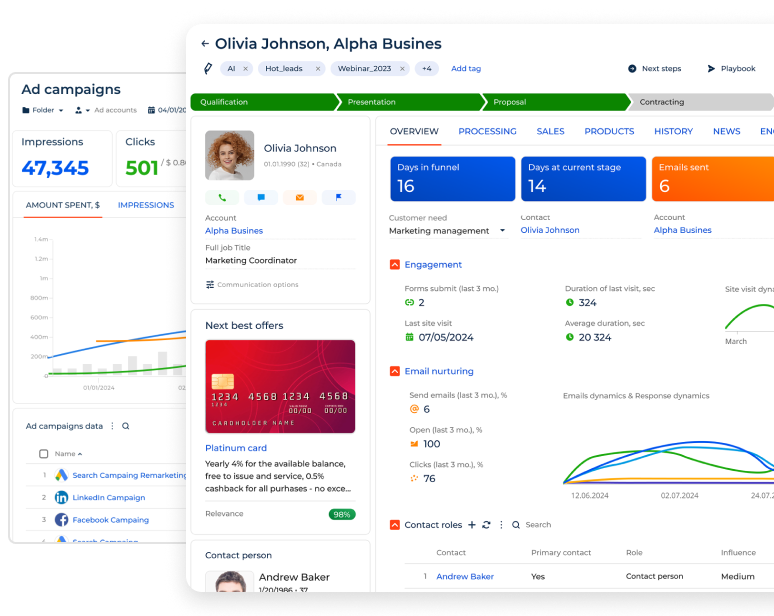
Creatio CRM is a modern CRM platform designed to manage customer-facing and operational workflows, with no-code and AI embedded at its core. It unifies sales, marketing, and customer service capabilities within a single environment, enabling organisations to manage the entire customer journey. Creatio provides a comprehensive view of each customer by consolidating interactions, communications, and historical data into a single platform, supporting more informed decision-making and more tailored engagement.
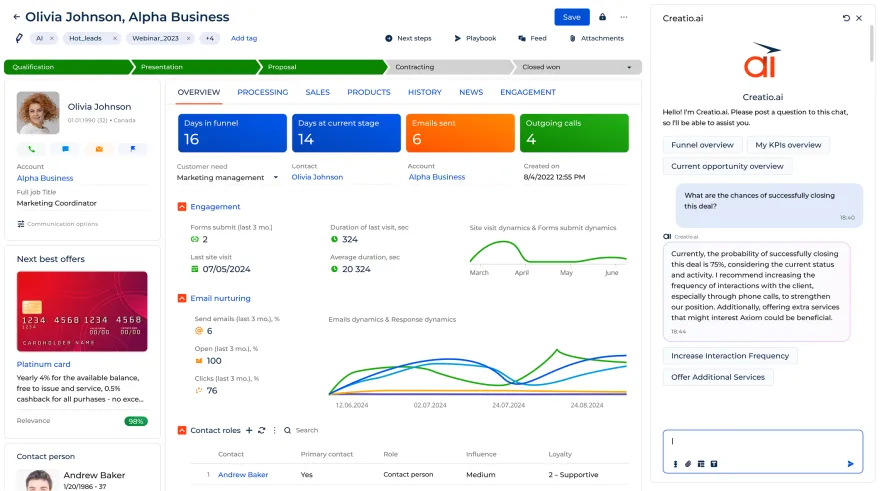
Creatio is an AI-native CRM software that allows users to interact with AI agents through natural language, supporting both navigation and task automation. While employees focus on customer relationships, creative work, and strategic initiatives, AI agents handle routine tasks, generate actionable insights and recommendations to support data-led decisions. This approach helps improve productivity, enables more personalised customer engagement and supports sustainable revenue growth.
Built on a no-code platform with a composable architecture, Creatio enables organisations to design, automate, and refine complex workflows without the need for specialist technical expertise. Creatio CRM solution integrates with a wide range of external systems and can scale in line with operational requirements, making it well suited to organisations seeking a long-term CRM platform capable of adapting to changing business needs.
Key features:
- Agentic CRM with AI capabilities embedded at its core
- Creatio Sales streamlines sales processes and supports teams with AI-driven automation
- Creatio Marketing provides enables personalized, AI-supported campaigns to improve engagement and conversion
- Creatio Service offers intelligent service tools to support efficient case resolutions and enhance customer satisfaction
- Role-based AI agents designed to support service, sales, and marketing teams in daily tasks
- Customisable CRM supported by a library of composable applications
- Extensive no-code tools for UI/UX development and workflow automation
- Industry-specific workflows covering more than 20 sectors
- Real-time analytics and business intelligence tools
- Enterprise-grade security and AI governance
- Access to Creatio Marketplace, offering over 700 third-party applications
Pricing:
Creatio offers a composable pricing model, allowing organisations to purchase either a complete CRM suite or individual products. Platform pricing starts from £25 per month for five users, while Sales, Marketing, and Service products are available from £15 per user per month. All pricing plans include core CRM functionality and AI capabilities at no additional cost.
A New Era AI CRM
Automate campaigns, pipelines, and service flows with Creatio's agentic CRM
2. Salesforce
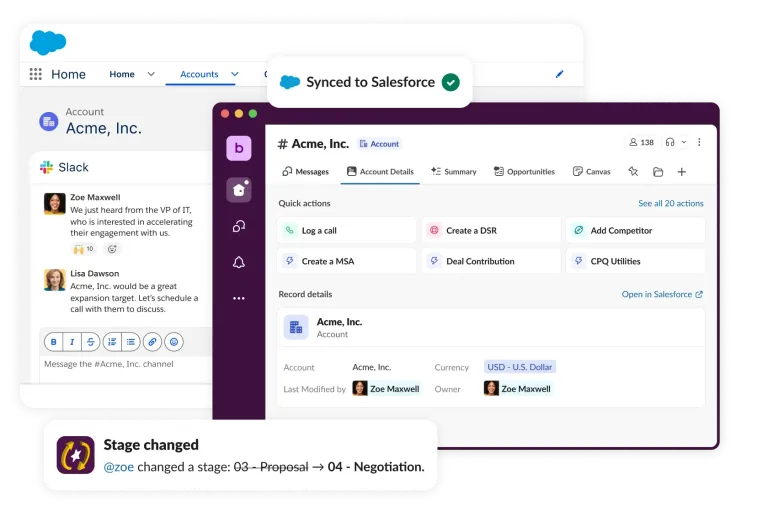
Salesforce is a legacy provider of a customer relationship management and business automation software designed to support a wide range of business functions, including sales, marketing, customer service, analytics, and operations. Its CRM platform includes AI-driven capabilities that support tasks such as lead follow-up planning, campaign development, and case management, helping teams to work more efficiently. By centralising customer data, automating business processes, and integrating with third-party applications, organisations can improve collaboration and maintain a consistent, unified view of customers. However, Salesforce is often associated with a high total cost of ownership and considerable complexity, which can make implementation, customisation, and ongoing management challenging without dedicated technical expertise.
Key features:
- Sales Cloud supports sales teams with integrated AI capabilities, covering the full sales process from lead management to forecasting
- Service Cloud streamlines customer service operations and enhances customer experiences
- Marketing Cloud enables marketing professionals to engage customers more effectively and support revenue growth through AI-driven tools
- Customisable dashboards and analytics
- Omnichannel communication, including email, chat, phone, and social media
- AppExchange marketplace with integrations and add-ons
- AI-powered capabilities (Einstein) providing predictive insights, recommendations, automation, and data analysis
Pricing:
Pricing for Salesforce CRM solutions varies depending on the selected platform and additional capabilities. Plans for Service and Sales Clouds that include AI functionality range from ~£130 to £410 per user per month. For Marketing Cloud with AI capabilities, pricing starts from ~£1,120 per month. More advanced features are available at an additional cost.
3. HubSpot CRM
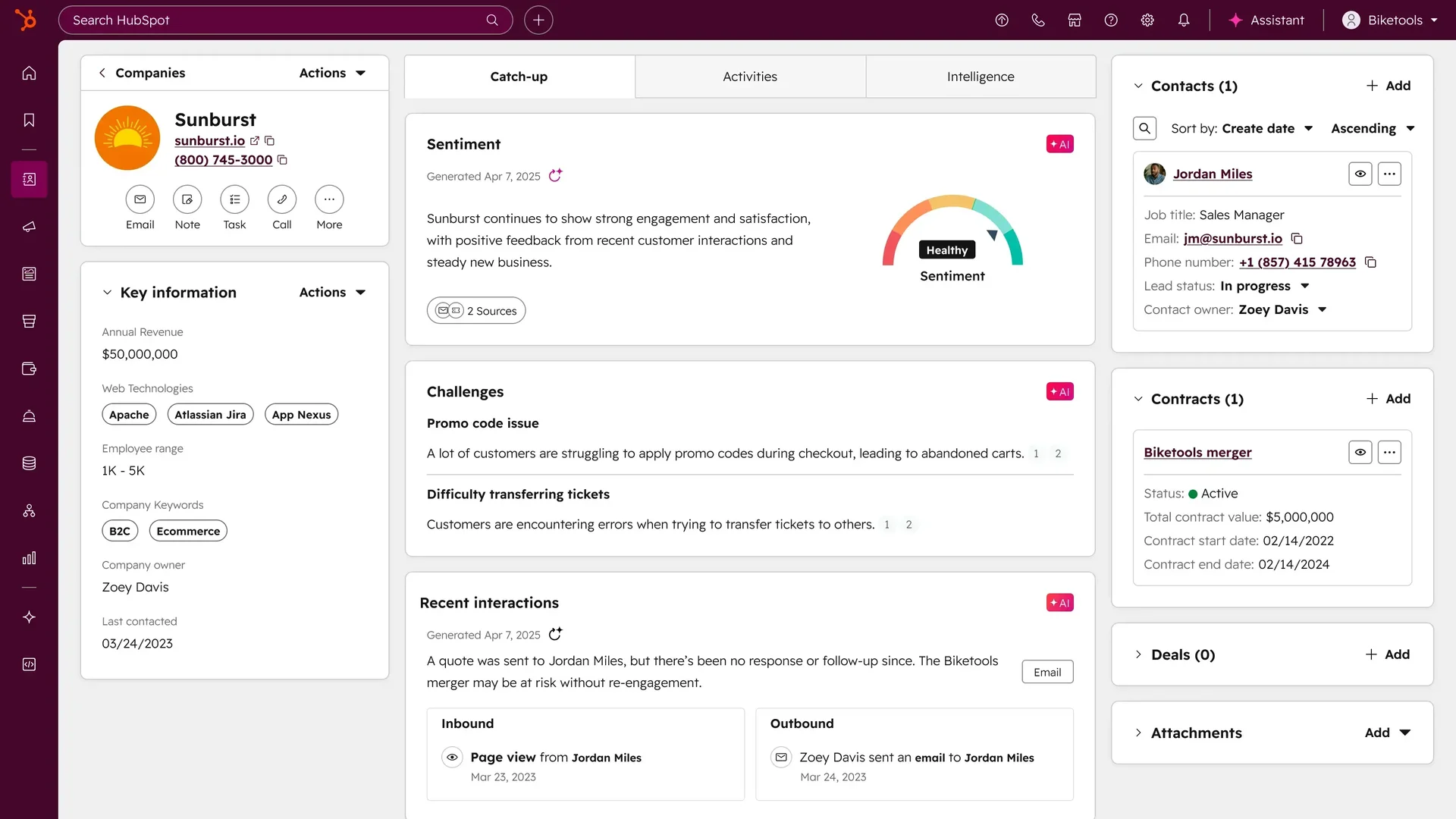
HubSpot is widely known for its strength in marketing, particularly in inbound lead generation, and it also offers a comprehensive Smart CRM solution. It brings together marketing, sales, and customer service within a single AI-powered platform, supporting the entire customer lifecycle. HubSpot is often recognised for its intuitive interface and visual workflow editor, which allow users to configure automated processes for lead scoring, nurturing, email campaigns, and customer support. However, costs may increase as organisations scale, particularly when more advanced marketing, automation, or reporting capabilities are required. Some users also note that customisation options can be more limited compared with enterprise-grade CRM platforms.
Key features:
- Centralised contact database
- Intelligent workflow automation
- Marketing Hub supported by AI-driven tools for lead generation, conversion, and engagement
- Sales Hub for managing visual pipelines, streamline sales processes, and supporting deal progression with AI
- Service Hub, enhanced by AI, to support scalable customer service and improve retention
- AI-powered capabilities for content creation, email drafting, and related tasks.
- Analytics and custom reporting tools
- Access to HubSpot Marketplace, with over 2,000 business applications
Pricing:
Pricing for HubSpot CRM pricing starts from ~£37 per user per month for the Smart CRM solution. The Sales and Service Hubs are priced at ~£69 per user per month, while the Marketing Hub starts at £880 per month for three users.
4. Zoho CRM
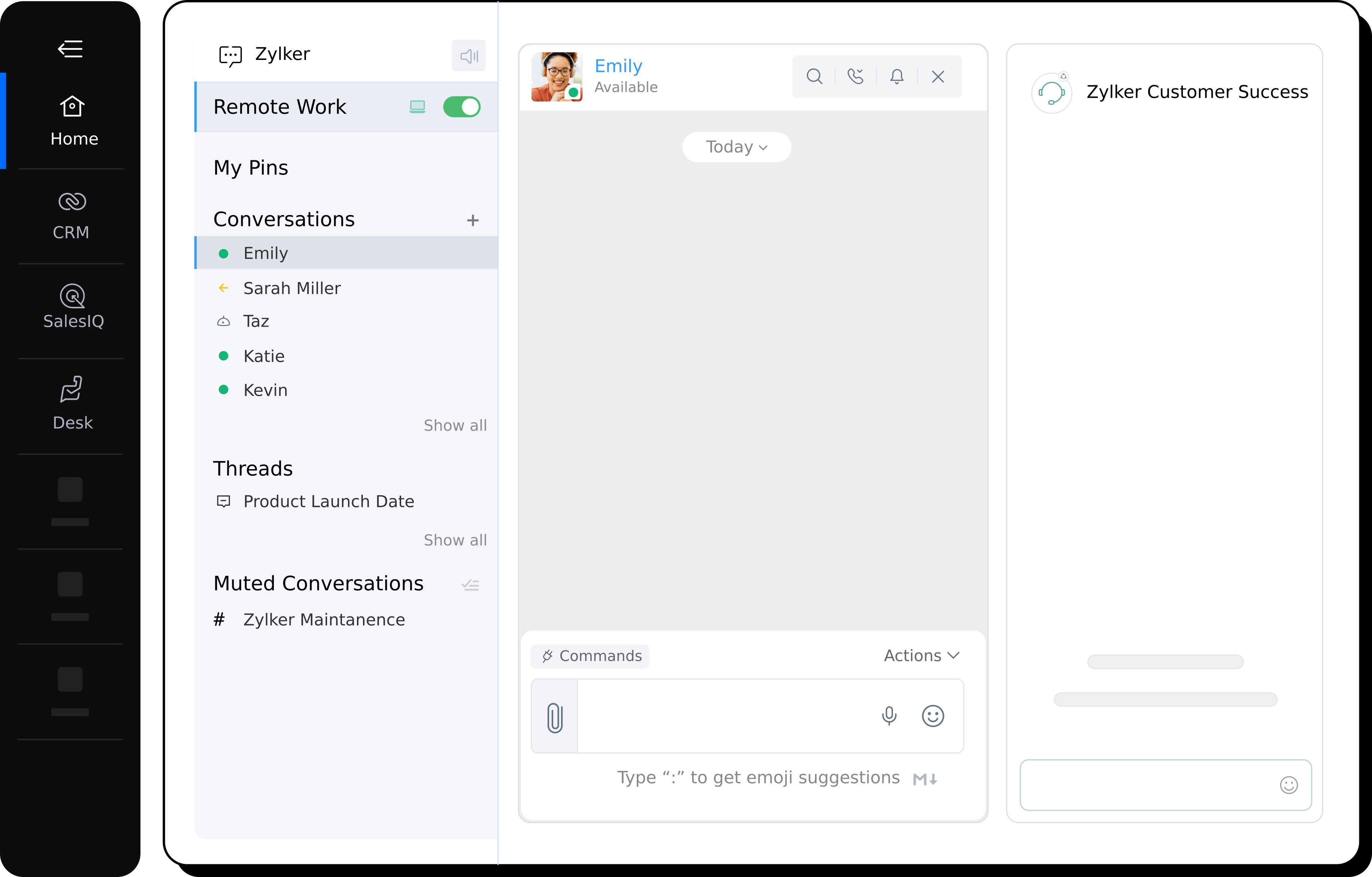
Zoho CRM is a customer relationship management platform that provides a centralised view of customer interactions, supports multichannel communication, and enables the automation of routine tasks across departments. With built-in analytics, workflow tools, and AI capabilities, organisations can streamline processes and improve customer engagement. Zoho CRM is widely used by small and mid-sized organisations; however, its capabilities may prove more limited for larger organisations or enterprises requiring more advanced customisation, sophisticated automation, or highly tailored workflows.
Key features:
- 360-degree view of the customer
- Omnichannel engagement capabilities
- Team collaboration tools
- Process management functionality
- AI assistant Zia for trend prediction, sentiment analysis, recommendations, and offers intelligent dashboards
- Analytics and reporting tools
Pricing:
Zoho pricing starts from ~£44 per user per month.
5. Microsoft Dynamics 365
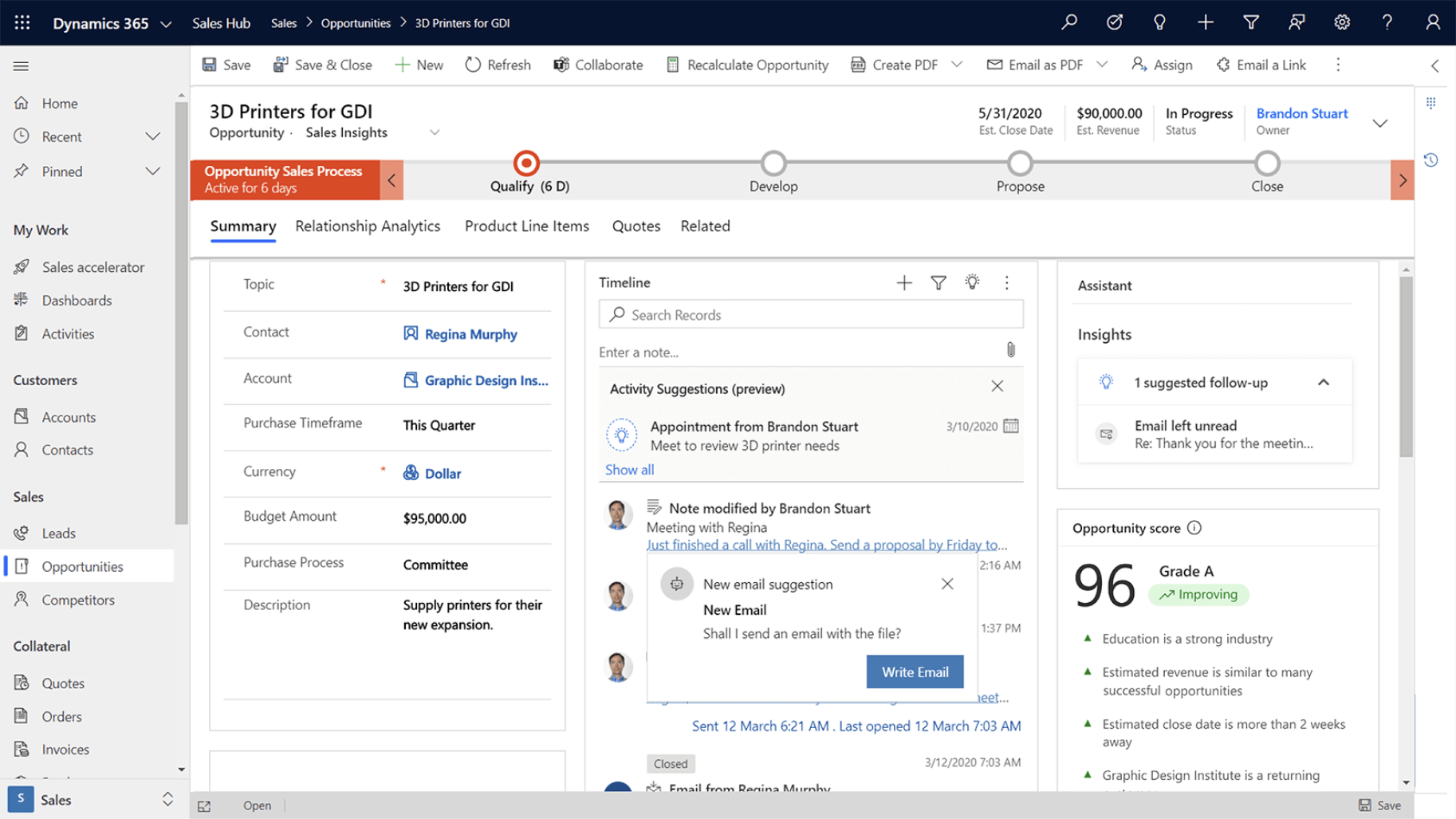
Dynamics 365 is an integrated suite of AI-enabled enterprise resource planning and CRM applications developed by Microsoft. In addition to core sales and marketing functionality, the platform includes solutions for finance, project operations, contact centres, supply chain management, human resources, and commerce. With its AI-powered Copilot, teams can assess churn risk, estimate customer lifetime value, identify patterns, and receive data-driven recommendations to enhance the customer experience. However, Dynamics 365 can be complex to implement and manage, often requiring dedicated IT resources or external consultancy support. The total cost of ownership may also increase as additional modules and advanced capabilities are introduced.
Key features:
- Seamless integration with the Microsoft ecosystem
- Intelligent workflow automation
- Advanced analytics and reporting
- Microsoft Copilot integration
- Dynamics 365 Sales enables teams to close more deals with AI-supported insights
- Dynamics 365 Customer Service supports faster case resolution through automation and AI
- Dynamics 365 Customer Insights enables more personalised customer journeys
Pricing:
Pricing for Dynamics 365 starts from ~£38 per user per month for Customer Service and ~£50 for Sales. Dynamics 365 Customer Insights is priced from ~£1,269 per tenant per month.
6. Flowlu
Flowlu is an all-in-one platform that combines CRM functionality with project management, billing, and team collaboration. It is particularly well suited to service-based businesses that need to manage leads and clients, deliver work, and handle invoicing within a single system, rather than relying on multiple separate tools. The platform enables uses to monitor contacts, companies, and opportunities, link deals to projects, and maintain a complete record of emails, tasks, and files in one place.
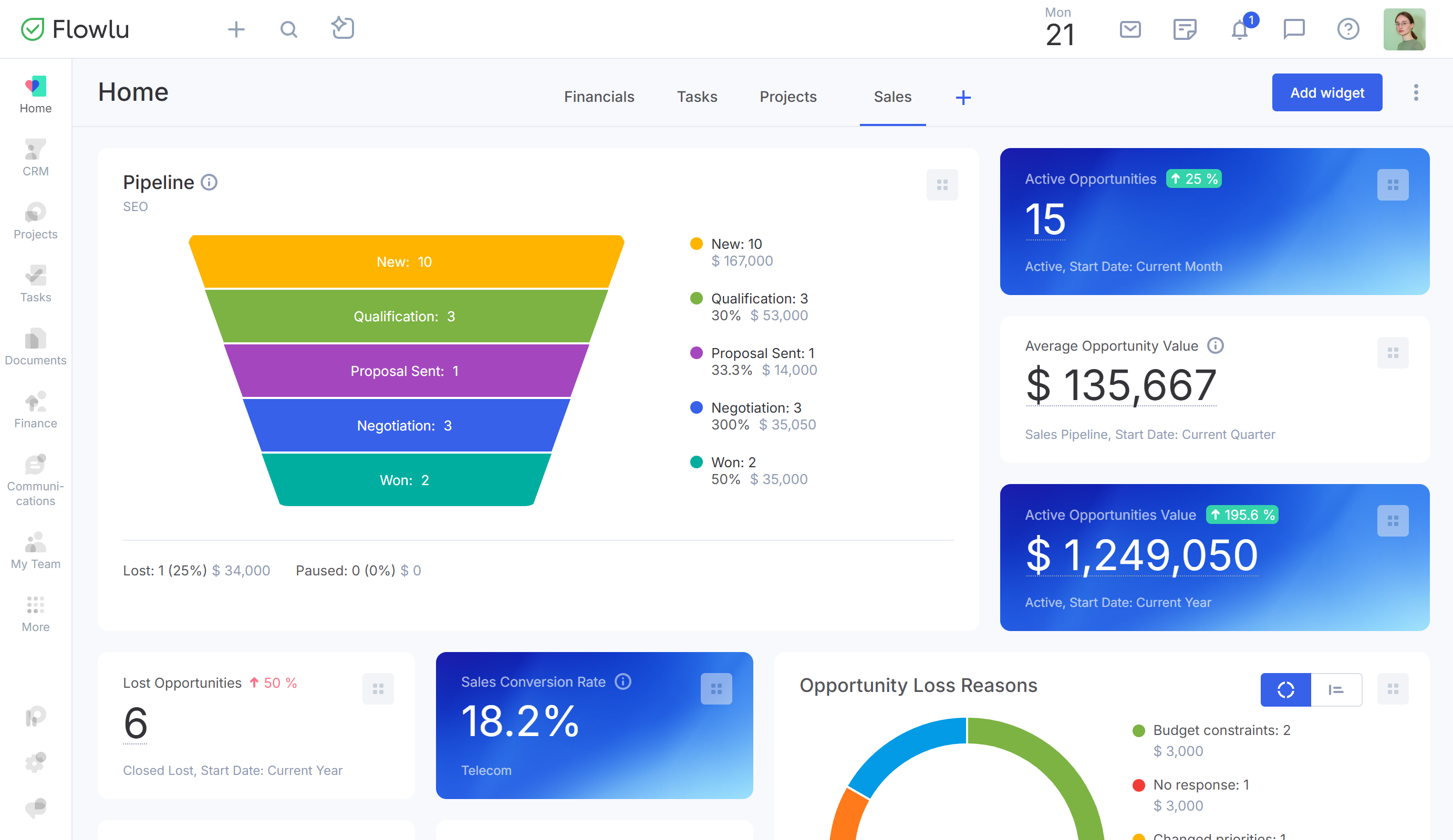
One of Flowlu’s key strength lies in its post-sale capabilities. Teams can manage projects using Kanban and Gantt views, track time and expenses, and generate estimates, invoices, and recurring billing from the same environment. For organisations working with external stakeholders, the client portal provides a controlled view of projects and invoices, reducing reliance on fragmented email communication. In addition, Flowlu includes a knowledge base that can be used internally or shared publicly, helping support teams reduce repetitive enquiries.
Key features:
- Sales pipeline management and opportunity tracking
- Integrated project and task management
- Time tracking and expenses management
- Estimates and invoicing, including online payments
- Client portal for external access
- Knowledge base functionality
- Sales and workflow automation
Pricing:
Flowlu offers a free plan, with paid tiers starting from ~£7 per user per month.
Best Sales CRM Tools
7. Creatio Sales
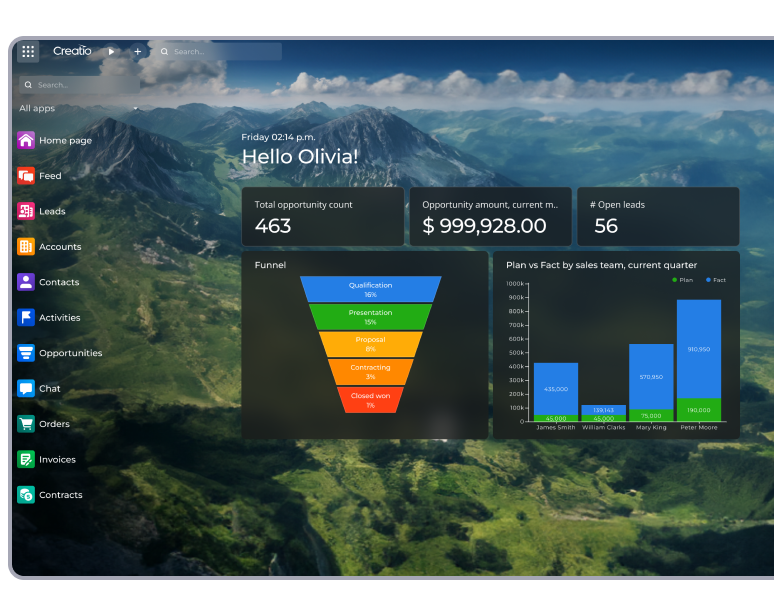
Creatio Sales CRM is a modern sales platform designed to manage the end-to-end sales cycle, with no-code and AI embedded at its core. Creatio enables sales teams to operate more efficiently and with greater strategic focus by leveraging AI agents to automate routine tasks and generate deeper operational insights. With a 360-degree customer view, teams gain a unified perspective across leads, opportunities, accounts and activities, enabling them to manage complex sales cycles and customer relationships.
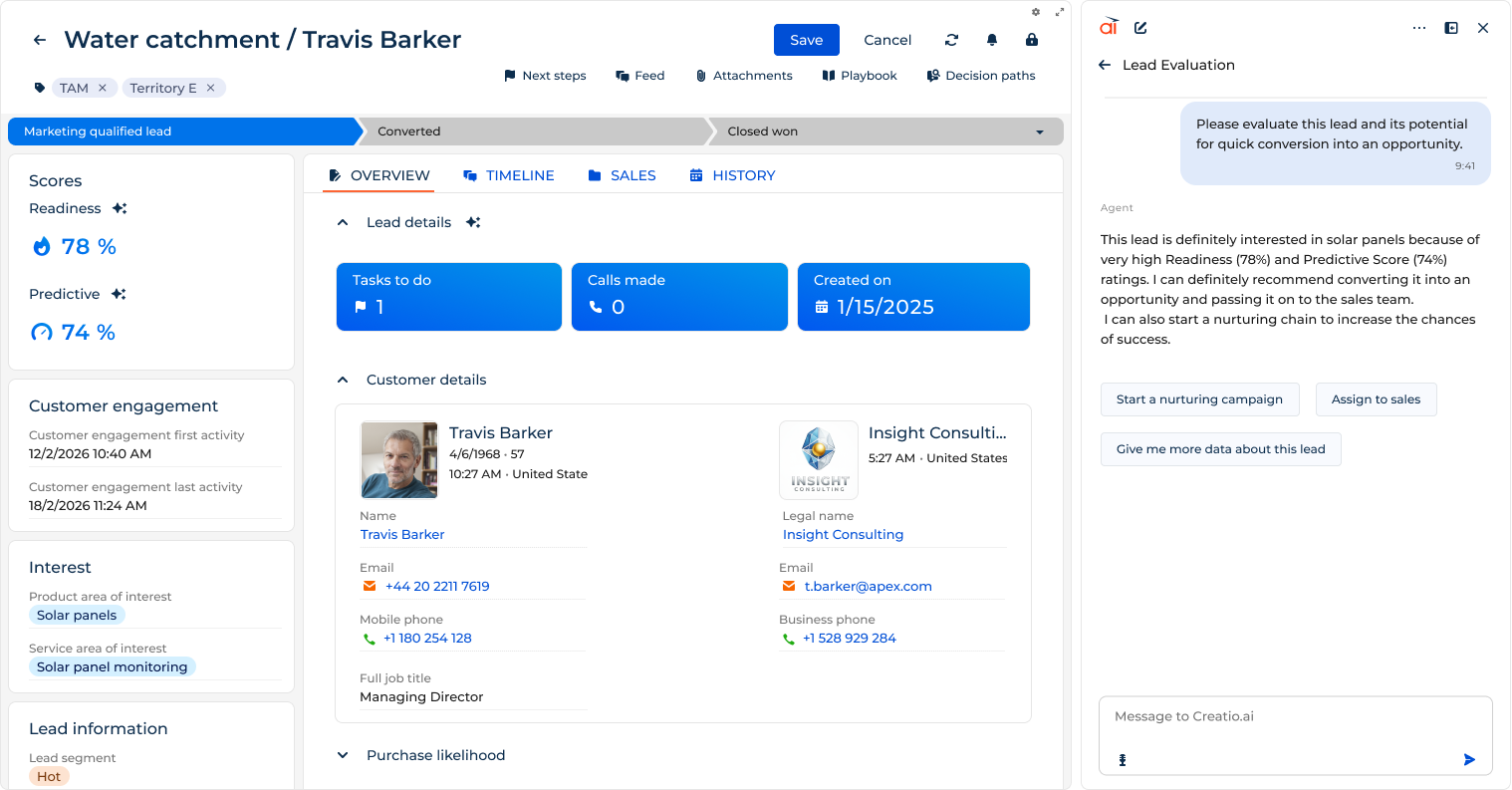
Creatio Sales CRM software leverages AI agents to improve speed, accuracy, and overall sales effectiveness. AI agents support lead capture, scoring, and engagement, ensuring opportunities are qualified and progressed without unnecessary delay. It can automatically identify promising prospects, update pipeline data, and tracks sales activities, reducing manual effort. In addition, real-time AI-driven recommendations help guide next best steps, supporting more consistent deal progression.
Built on composable and scalable architecture, Creatio Sales CRM is well-suited for organisations seeking to streamline sales operations, enhance collaboration across teams, and maintain flexibility as sales processes evolve.
Key features include:
- Customer 360 view
- Lead and opportunity management
- Sales productivity tools
- Sales forecasting
- Order and contract management
Creatio offers a range of AI agents designed to support sales activities, including:
- Account Research Agent
- Lead Scoring Agent
- Quote Generation Agent
- Meeting Preparation Agent
- Forecasting Agent, and more.
Pricing:
Pricing for Creatio Sales starts from ~£15 per user per month.
Creatio Sales
Accelerate the end-to-end sales cycle with AI and no-code automation
8. Pipedrive
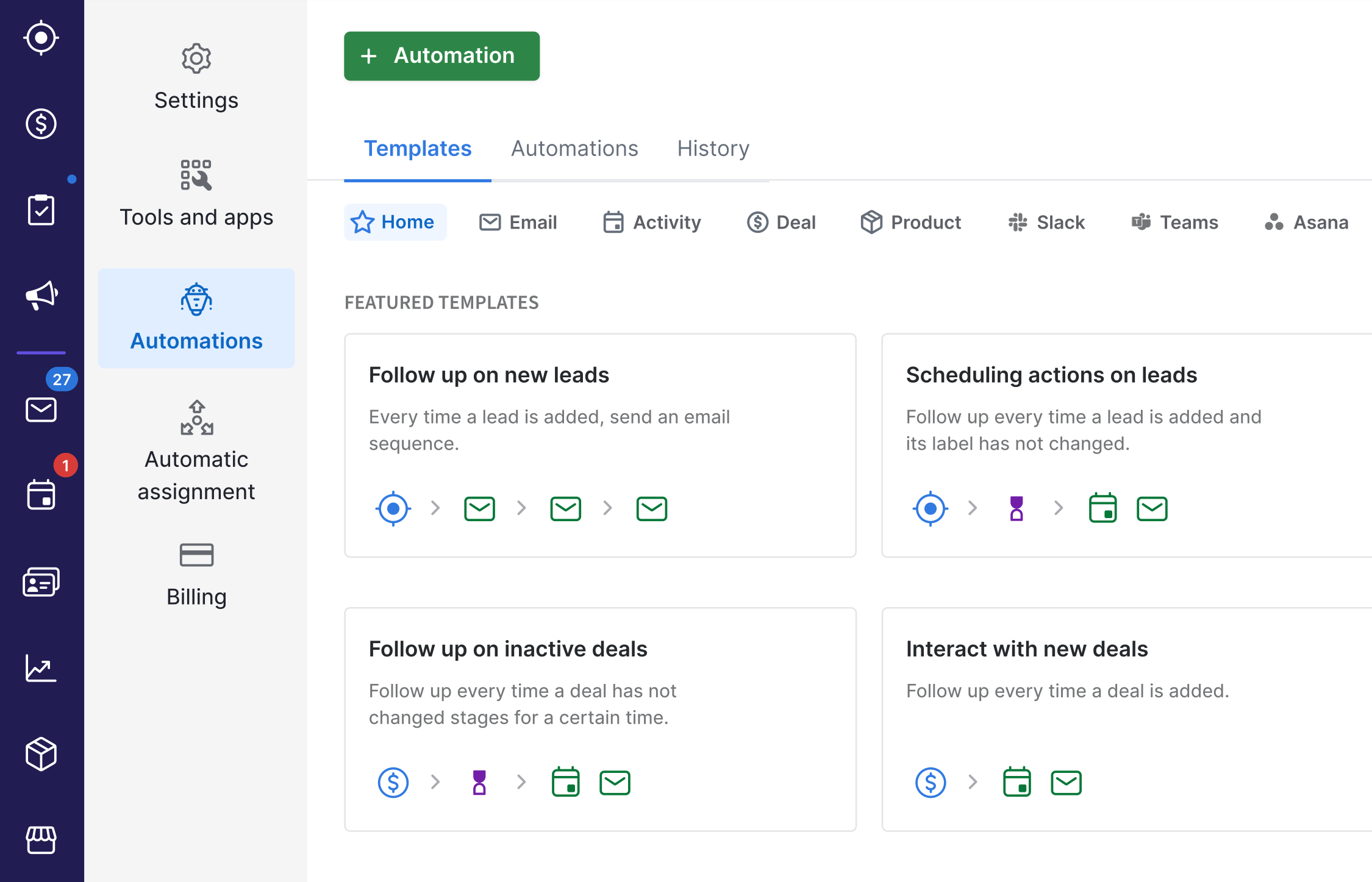
Pipedrive is a cloud-based CRM solution designed to help organisations manage and streamline sales processes. It provides a centralised environment in which sales teams can collaborate, automate workflows, and progress deals through the pipeline in a structured manner. By combining lead management, communication tools, workflow automation, and deal tracking within a single system, Pipedrive supports a more consistent and coordinated approach to managing the customer journey. However, it offers limited support for advanced sales forecasting, extensive customisation, and more complex sales processes. Its reporting capabilities, while straightforward to use, may also be insufficient for teams requiring more advanced analytical functionality.
Key features:
- Sales pipeline management
- Lead generation chatbot
- Lead qualification
- Contact management
- Customisable reports and visual dashboards
- AI-powered next-best-action recommendations, email generator, and sales reporting
- Integrations with over 500 business applications
Pricing:
Pipedrive CRM pricing starts from ~£10 per user per month.
9. Close CRM
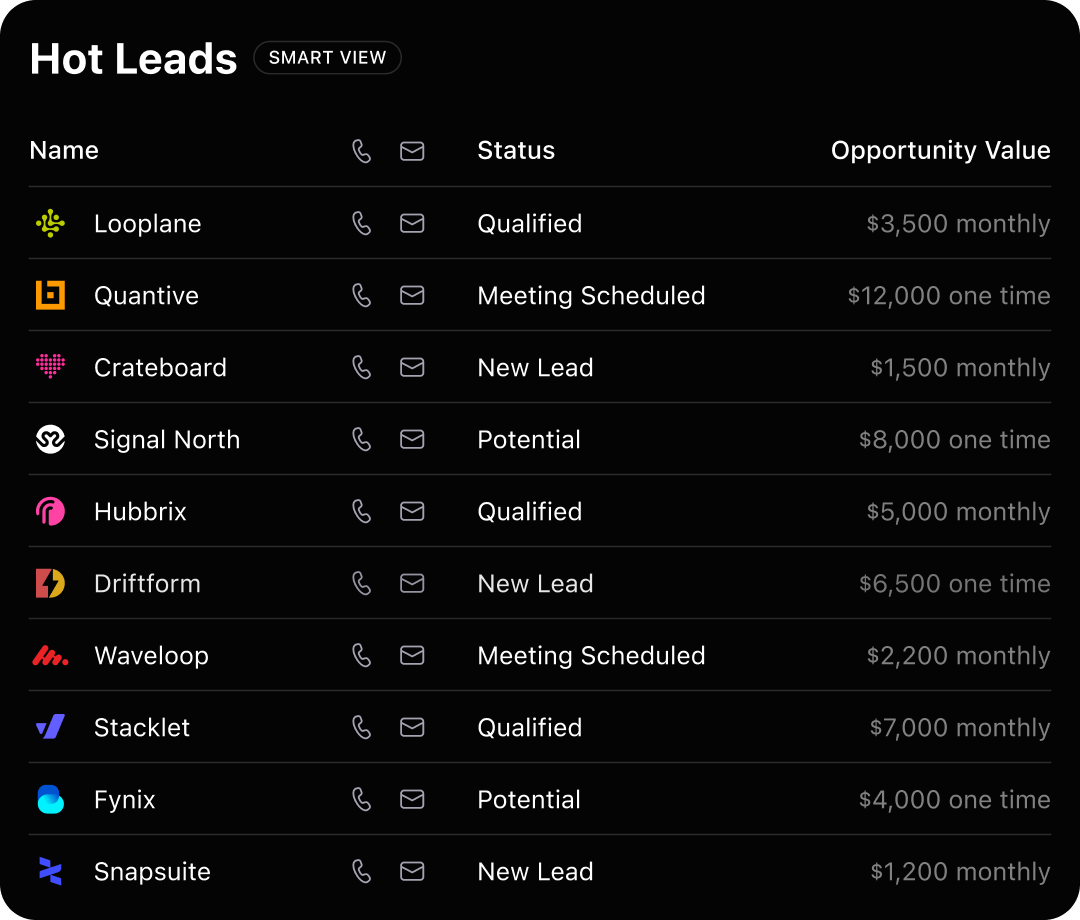
Close CRM is a sales management and outreach CRM platform designed to support organisations in managing lead generation, communication, and deal tracking without the need for a complicated technology stack. By combining lead and contact management with built-in communication tools, automation, and reporting, it enables smaller sales teams to automate repetitive outreach tasks and maintain clear visibility across customer interactions. This approach can contribute to shorter sales cycles, fewer missed follow-ups, and a more structured, sales-focused workflow, particularly for teams that rely heavily on direct engagement. However, its emphasis on communication and outreach means that sales forecasting capabilities and enterprise-level functionality are more limited when compared with broader CRM platforms.
Key features:
- Unified lead view consolidating calls, messages, emails, tasks, notes, and deals
- Contact management
- Workflow automation
- Built-in reporting for sales activity
- Meeting scheduling and automated follow-ups via emails and SMS
- CRM data capture with custom fields
- Integrations with over 100 applications
- Close AI to support sales activities, including call summaries, forecasting, email drafting, research, and lead enrichment.
Pricing:
Pricing for Close CRM starts at ~£26 per user per month.
Leading marketing CRM tools
10. Creatio Marketing
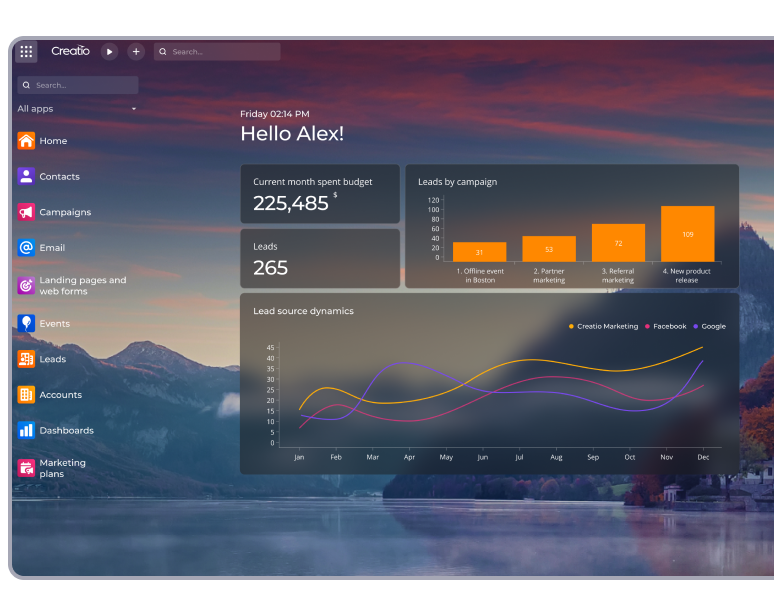
Creatio Marketing is a CRM solution designed to support the entire lead-to-revenue lifecycle by combining no-code flexibility with embedded AI capabilities. The platform enables marketing teams to build and enrich 360° customer profiles, segment audiences based on behaviour, intent, preferences, and lifecycle stage, and mange data without extensive manual input. This results in a dynamic, continuously updated customer database that supports more precise targeting and personalisation.
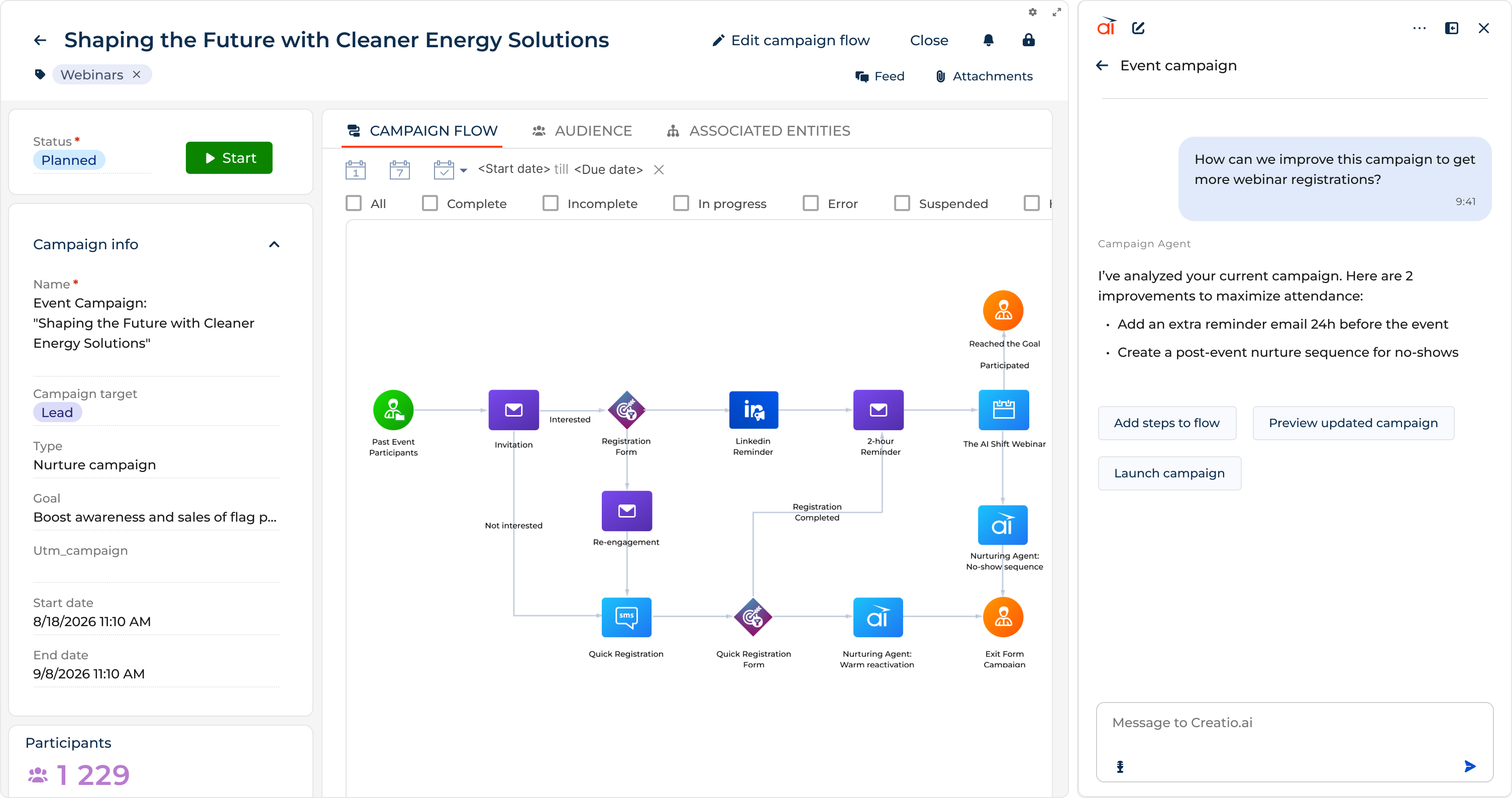
AI agents are increasingly used to improve productivity and the effectiveness of marketing activities. They support the capture, scoring, and qualification of leads, initiate nurturing journeys, and transfer sales-ready prospects to sales teams. AI agents can also coordinate campaigns across email, SMS, digital advertising, and other channels, while monitoring their performance in real time. In addition, they assist with the generation and personalisation of content for different audience segments, journey stages and channels, continuously learning which approaches are most effective and refining them with minimal manual input. r
Key features:
- Customer 360
- Lead management
- Campaign management
- Email marketing
- Digital advertising
- Event management
Creatio offers a range of advanced marketing AI agents, including:
- Marketing Content Agent
- Email Generation Agent
- Campaign Agent
- Lead Scoring Agent
- Lead Distribution Agent
Pricing:
Creatio Marketing is available from ~£15 per user per month.
Creatio Marketing
Optimise marketing campaigns and drive leads with one agentic platform
11. Mailchimp CRM
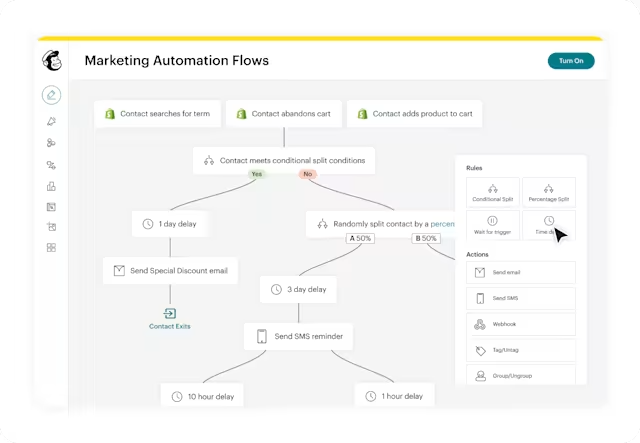
Mailchimp is primarily known as a marketing automation and email marketing platform, although it also offers CRM capabilities focused on marketing. Mailchimp CRM functionality enables marketing teams to gain a more complete view of the audience, organise contact data, derive useful insights, and deliver more personalised communications. Thorough channels such as email, SMS, and social media, organisations can engage customers more consistently and effectively. Mailchimp is generally best suited to small businesses and individual users requiring straightforward marketing tools, whereas organisations with more complex marketing requirements may find the platform’s capabilities limiting over time.
Key features:
- Email and SMS marketing
- Marketing automation
- Content creation tools
- Social media marketing
- Reporting and analytics
- Lead generation capabilities
- Integration with more than 300 third-party applications
Pricing:
Mailchimp pricing starts from ~£15 per user per month.
12. Keap
Keap is a CRM tool designed to support sales and marketing teams in managing contacts, automating outreach, and coordinating customer communications within a single platform. Keap CRM system offers pre-configured templates and customisable automation for follow-up sequences, reminders, and personalised customer journeys, enabling smaller businesses to remain responsive and organised despite limited resources. However, Keap’s CRM solution is less suited to larger organisations or those with more complex marketing operations, as its automation, reporting, and customisation capabilities are relatively limited compared with more advanced CRM solutions.

Key features:
- Sales and marketing automation workflows
- Email marketing tools
- SMS marketing capabilities
- Landing pages and web forms
- AI content assistant for email generation
- AI automation assistant for building campaign workflows
- Automated marketing follow-ups with personalised content and messaging
Pricing:
Keap pricing starts at ~£225 per month for two users, with a limit of 1,500 contacts.
Leading customer service CRM tools
13. Creatio Customer Service
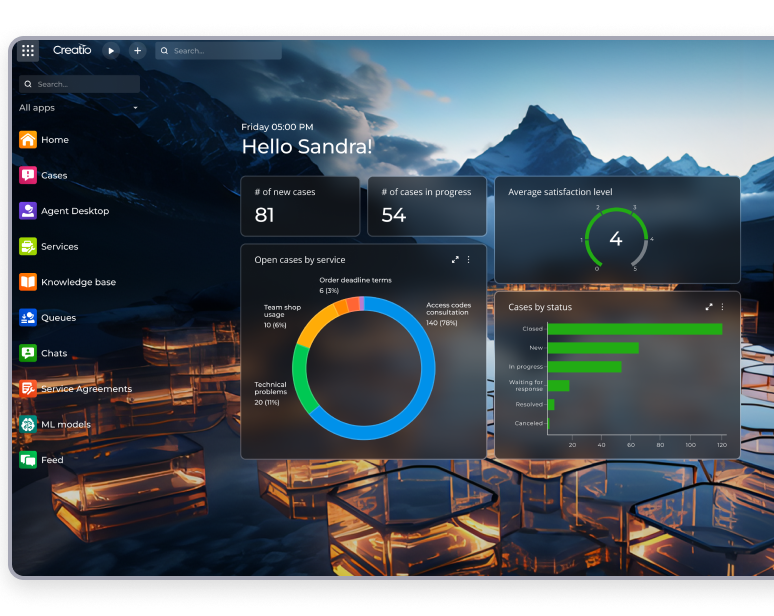
Creatio Service is a modern service platform designed to support the delivery of high-quality customer support through a combination of no-code tools and AI capabilities. The system provides customer service teams with a comprehensive 360° view of every customer interaction, with AI agents consolidating data from multiple channels to deliver relevant context and recommendations. This enables service teams to deliver more personalised resolutions without the need to switch between screens or perform manual search, resulting in faster and more consistent support experiences.

AI-driven automation forms a central part of Creatio Service, supporting a wide range of customer service activities. AI agents autonomously triage enquiries, analyse customer interactions, resolve routine issues, and route more complex cases to the appropriate experts in real time. This reduces handling time, improves first-contact resolution rates, and supports a consistent experience across voice, chat, and digital channels. In addition, customer service AI agents contribute to maintaining and improving knowledge bases by automatically creating, updating, and recommending relevant articles, enabling both service teams and customers to access accurate, up-to-date information through self-service and guided support.
Key features:
- Case management
- Customer 360
- Contact centre
- Knowledge management
- Customer service team productivity
Creatio also provides a range of powerful marketing AI agents, including:
- Customer Support Agent
- Knowledge Base Agent
- Case Classification Agent
- Service Playbook Agent
- Next Best Action Agent
Pricing:
Pricing for Creatio Service starts from ~£15 per user per month.
Creatio Service
Accelerate case routing, resolution, and follow-ups with one agentic platform
14. Zendesk
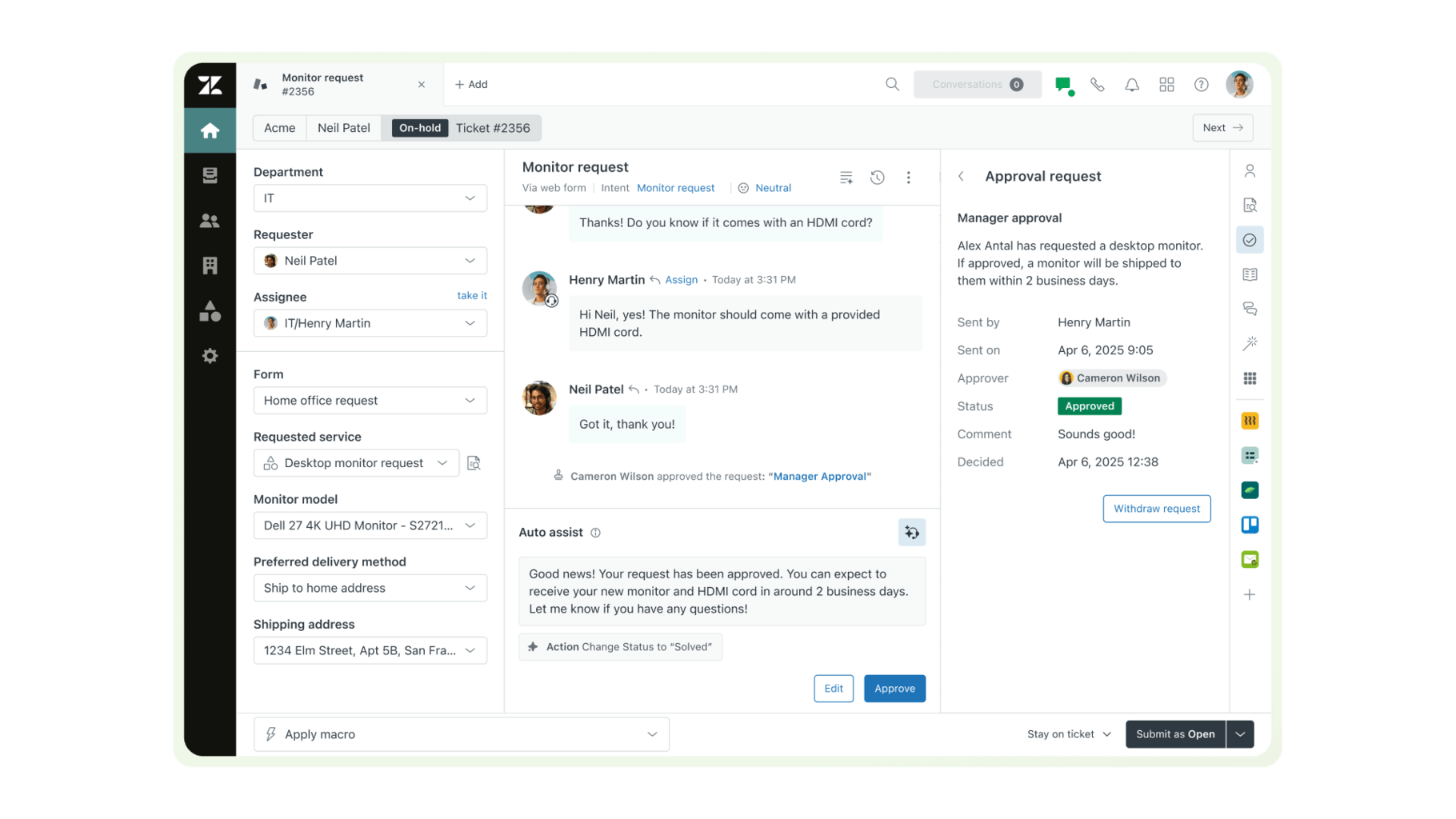
Zendesk is a customer service-focused CRM platform with embedded AI capabilities, designed to support organisations in managing and resolving enquiries across multiple communication channels. It provides customer service teams with the tools to respond to requests, track interactions, and maintain consistent service standards. Zendesk platform consolidates customer data and questions from email, chat, phone, social media, and other channels into a single workspace, enabling agents to work more efficiently with full visibility of previous interactions. While Zendesk is well suited to small and mid-sized organisations, it may be less appropriate for those requiring extensive customisation or more complex workflows beyond standard ticketing models.
Key features:
- AI agents for managing customer interactions
- Help centre
- Messaging and live chat
- Analytics and reporting with pre-built dashboards
- Ticket tracking, organisation, and resolution
- Configurable workflows, data, and workspace
- Integrations with widely used third-party applications, including Slack, Shopify, and Microsoft Teams
Pricing:
Zendesk pricing starts from ~£22 per user per month for core functionality. Advanced AI capabilities and additional features are available at an extra cost.
15. Freshdesk
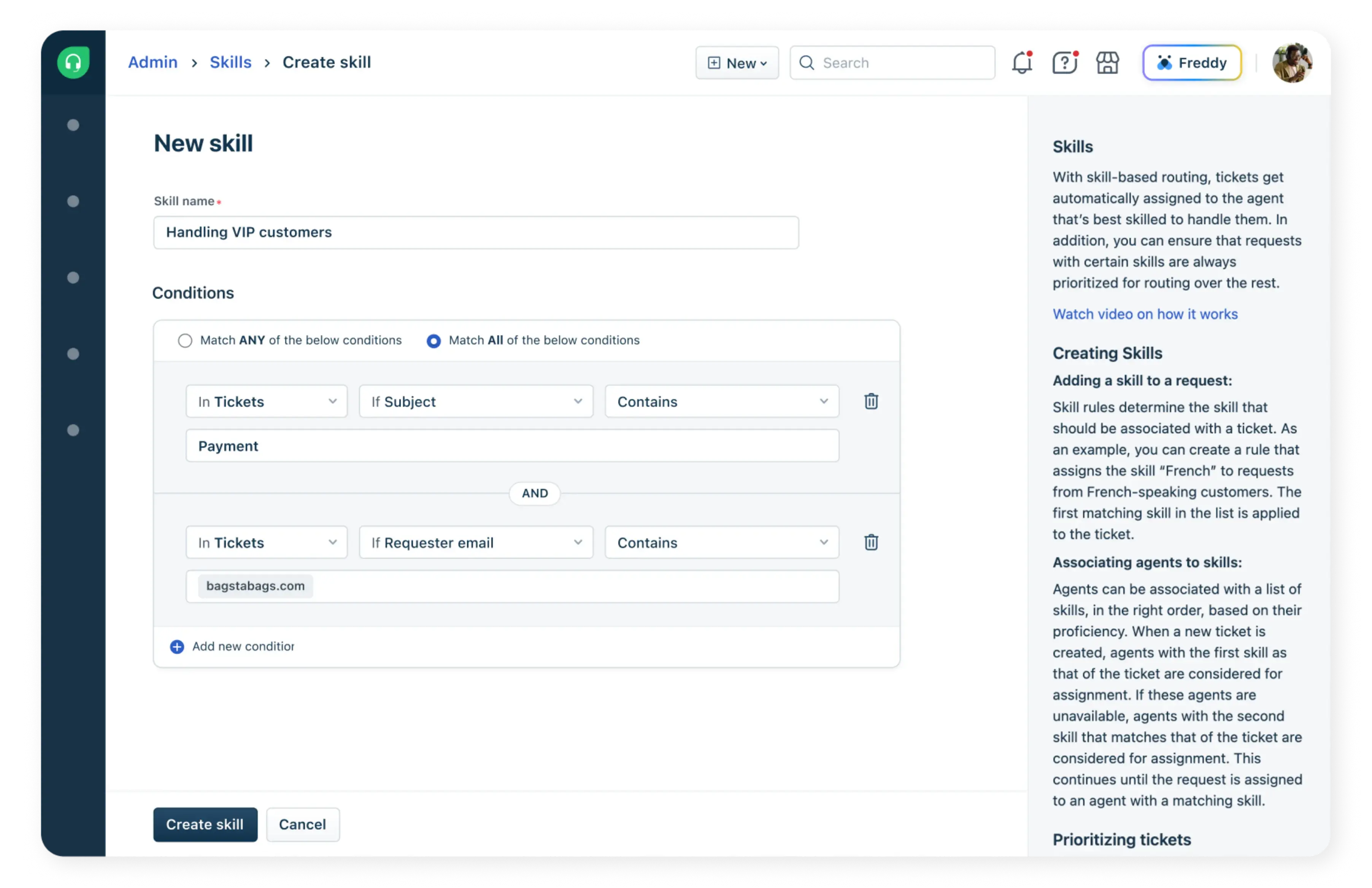
Freshdesk is a helpdesk and customer service CRM software developed by Freshworks, designed to support the efficient management of customer service operations with the assistance of AI-driven tools. Freshdesk consolidates customer communications within a single workspace, converting enquiries into structured support tickets that can be tracked, prioritised, and resolved within a centralised system. This enables support teams to reduce response times, lower manual workload, maintain clearer oversight of customer issues, and improve team collaboration. However, access to more advanced features, integrations, and analytics it typically limited to higher-tier plans, which can increase the overall cost of ownership.
Key features:
- Automated ticketing
- Industry-specific AI agents and pre-built agentic workflows for repetitive enquiries
- Centralised command centre that consolidates conversations, customer insights, and AI intelligence
- AI Copilot providing summaries, real-time translations, and response suggestions
- Integrations with over 1,000 tools and applications
Pricing:
Pricing for Freshdesk CRM solution starts from ~£37 per agent per month, including access to AI capabilities. Certain advanced features are available only within the highest-tier plan.
What to consider when selecting CRM tools
The choice of CRM tool should be guided by the organisation’s specific requirements and priorities. While each CRM platform offers its strengths, the most effective systems share a number of core capabilities that help structure customer data, facilitate clearer internal coordination, reduce manual processes, and provide greater visibility of customer relationships.
The following features are typically considered essential when evaluating CRM software:
- Centralised 360-degree customer view: a unified environment for storing and maintaining customer data, interaction history, preferences, and engagement record.
- Omnichannel communication: ability to manage communications across email, phone, live chat, SMS, social media, and help-desk messages within a single platform.
- Workflow automation: rule-based sequences that trigger actions such as sending communications, assigning tasks, or updating statuses, ensuring business processes run consistently with minimal manual input.
- AI-enabled capabilities: tools such as AI assistants or agents that reduce manual effort, improve productivity, and support data-driven decision-making through predictive insights, next-best-action recommendations, content generation, and intelligent lead routing.
- Role-specific functionality: features tailored to distinct business functions, including sales pipeline management, marketing campaign automation, or customer service case management, aligned with operational requirements.
- Dashboards and reporting: tools that provide clear visibility into performance metrics, customer trends, and potential operational bottlenecks.
- Integration ecosystem: compatibility with existing systems, including marketing automation platforms, accounting software, calendars, customer support applications, or other business systems.
- Scalability and customisation: the ability to adapt data fields, workflows, roles, and permissions as organisational needs evolve.
- Data security and user permissions: robust data protection measures, role-based access controls, and compliance capabilities to safeguard customer information and manage user access effectively.
How CRM systems are used is practice
CRM solutions support a broad range of business functions, with specific applications varying by department. While each team uses the platform capabilities in different ways, several widely adopted use cases highlight the core value of CRM systems across an organisation.
The following examples illustrate some of the most common uses of CRM systems:
- Capturing and qualifying leads: CRM system collects leads from forms, websites, advertising campaigns and events, and automatically scores or categorises them.
- Managing sales pipelines and deals: sales teams are able to track opportunities across each stage of the sales process, forecast revenue, and identify bottlenecks.
- Automating marketing campaigns: marketing teams can design and implement automated email and SMS sequences, lead nurturing workflows, and promotional campaigns.
- Segmenting customers: CRM platforms group customers based on behaviour, demographics, lifecycle stage, or engagement levels to support more targeted communication.
- Personalising customer experiences: data stored within CRM systems can be used by marketing and sales teams to provide tailored interactions aligned with individual customer needs and preferences.
- Managing customer inquiries: CRM platforms capture, analyse, and route customer enquiries to the appropriate teams, supporting timely and effective case resolution.
- Enabling omnichannel engagement: organisations can interact with customers across multiple channels while maintaining conversation continuity through a unified view of all previous interactions.
- Gaining AI-powered insights and recommendations: AI agents support teams with predictive forecasting, churn prediction, account summaries, next-best-action recommendations, and business intelligence.
- Improving productivity through AI-powered tools: AI agents and assistants can automatically draft emails, generate conversation summaries, perform sentiment analysis, and route customer enquiries.
- Automating workflows and routine tasks: CRM systems streamline activities such as data entry, follow-ups, meeting scheduling, task allocation, and internal notifications.
Summary
Customer relationship management systems support each stage of the customer lifecycle, from lead generation and marketing engagement to sales execution and ongoing service delivery. The market comprises a broad range of platforms, each designed with distinct strengths: sales-focused CRM platforms streamline pipeline management and outreach activities; marketing platforms support campaign automation and customer engagement; while service-oriented systems centralise enquiries and enhance support operations. More comprehensive solutions provide wider, often enterprise-level capabilities that bring together sales, marketing, service, and operational functions within a single environment.
While selecting a CRM solution, organisations should assess the priorities and determine whether there is a need for advanced sales automation, marketing capabilities, streamlined service operations, or a comprehensive platform that brings these functions together. With an appropriate CRM system in place, organisations can strengthen customer relationships, improve operational efficiency, and support sustainable business growth. Creatio offers a free demo of the platform for those wishing to explore the capabilities of a modern solution.