







































































Streamline Digital Banking Services With Creatio

Digital banking has become a baseline requirement for financial institutions aiming to grow, compete, and retain customers in 2026. The right digital banking platform enables banks to streamline operations, enhance customer experience, and unlock new revenue opportunities across the entire banking lifecycle.
The market opportunity is significant. According to Statista, global net interest income in the digital banking sector is projected to reach $1.66 trillion in 2026 and grow to $2.20 trillion by 2030. To capture this growth, banks must invest in digital banking software that supports scalability, efficiency, and continuous innovation.
In this article, we explore the top 8 digital banking platforms in 2026 to help banks identify the solutions best suited for their business and technology goals.
Key Takeaways:
- Digital banking platforms are integrated software systems that enable banks to deliver end-to-end digital financial services — covering onboarding, account management, lending, payments, and customer engagement across multiple engagement channels.
- Digital banking platforms are used across retail, corporate, and SME banking to support processes such as online account management, mobile banking, bill payments, invoicing, cash flow forecasting, and remote check deposits.
- The main benefits of digital banking solutions are lower operating costs, greater customer convenience, stronger security, more efficient cash management, and faster, data-driven decision-making.
- AI agents in banking help automate workflows, support decision-making, improve service responsiveness, and surface insights from banking data to enhance both operational efficiency and customer experience. This theme is reinforced throughout the article’s focus on AI-powered analytics, automation, and intelligent workflows.
- The leading digital banking platforms in 2026 include Creatio, Appway, Oracle, Sopra, nCino, FinFlux, Finacle, and NCR Digital Insight.
What Is a Digital Banking Platform?
A digital banking platform is software that enables financial institutions – like banks or credit unions – to deliver core banking services online, including onboarding, account management, lending, payments, and customer engagement. In other words, it allows institutions to move traditional offline banking activities to digital platforms, which allows them to optimize operational performance, improve banking services and enhance customer experience.
Such software products are helpful for different types of financial businesses, big or small. Here are some uses and features:
- Managing loan and asset accounts with minimal human involvement.
- Managing everyday banking activities like deposits and lending.
- Moving funds from current to various types of savings accounts.
- Marketing automation and client database management.
- Adding new functions to the bank’s primary operations using no-code and low-code tools.
With digital banking software, small banks can attract more customers, and big international banks can reduce manual work by changing it into automatic workflows.
Benefits of Digital Banking Platforms
Digital banking software brings many benefits to banks and financial institutions. Here are some key advantages of using digital banking solutions to consider:
Cost efficiency
Digital banking software helps banks save money in several ways. Here are a few of them:
- Reduced staffing needs: Less staff is needed when customers can do things like open accounts or check loans online.
- Less physical space: If more people are banking online, banks don’t need as many physical locations, saving on rent and other building costs.
- Paperless transactions: Digital banking cuts down on the use of paper, which saves money on supplies.
- Automated processes: Tasks get done faster and with less effort when they are automated, saving on labor costs.
- Lowered transaction costs: It's usually cheaper to process digital transactions compared to traditional ones.
Convenience
With digital banking tools, customers can handle their banking needs anytime, anywhere, even from their phones. Think about signing up. Customers won’t have to visit a physical branch. Instead, they can do it right from their phone in minutes. This substantially speeds up the whole process of getting new customers on board. Just a few clicks, and they are set.
More conveniences include:
- Scheduled transfers
- Quick customer service via chat or call-backs
- Budget tracking and management tools
- Digital loan applications and approvals
- Access to financial insights and advice
- Cross-platform accessibility (desktop, mobile, tablet)
Member Insights
Enhanced security
Some people worry digital banking might not be safe, but it’s actually really secure. For instance, digital platforms can use facial recognition or fingerprint scans to make sure only the right person accesses the account. They can also send alerts if someone tries to log in from a strange place. So, in many ways, digital banking provides tighter security than traditional banking.
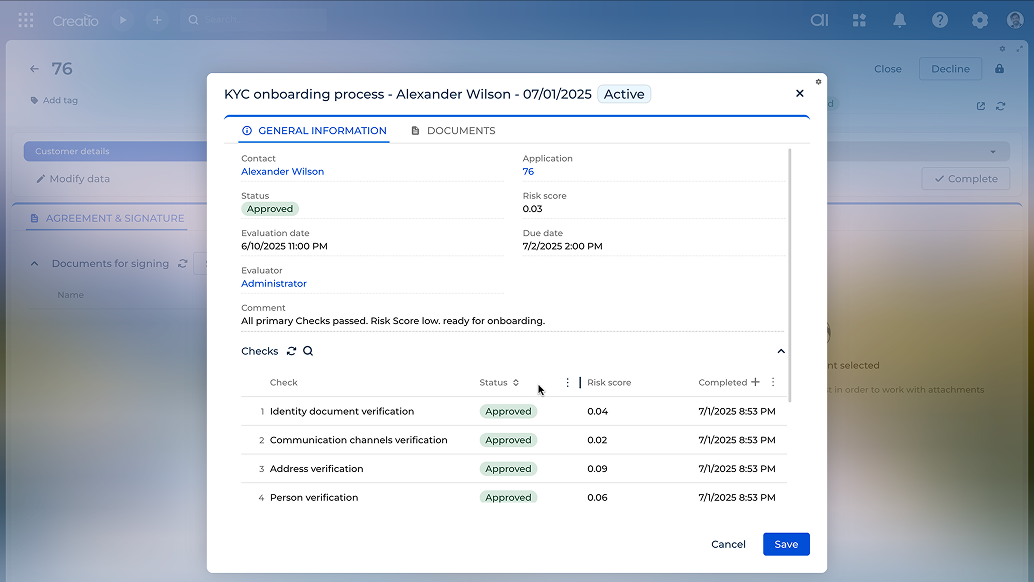
KYC (Know Your Customer) process in banking
Efficient cash management
Cash management features are essential for both banks and customers. Having digital banking software is like having a vigilant assistant that monitors every cash flow meticulously. It lets both the bank and customers plan their finances better.
Streamlined decision-making
Digital banking software efficiently analyzes vast datasets to uncover vital insights. You can easily track what strategies are working and what are not. The simplicity of data presentation makes interpreting insights a straightforward task. Many advanced digital banking platforms also use AI and ML for trend and risk analysis in real-time.
How Digital Banking Platforms Are Utilized
Digital banking software isn't just a modern accessory but a fundamental tool for any banking institution. In every banking aspect, it can deliver a better experience – for the customers and for the banking professionals. Here are a few specific use cases that clearly show how digital banking software is reshaping the industry:
Online account management
Bank managers can streamline lengthy processes like account opening by implementing digital banking. On the other hand, customers no longer need to visit a physical branch or even reach out to the call center. They can now quickly check balances, view customized statements, and transfer funds.
Mobile banking
Mobile banking features bring the bank right to your pocket. You can check account balances on the move or transfer money while shopping. For bank managers, it means fewer people coming into the branches. So, there are shorter queues and less rush in the branches.
Increasing smartphone adoption and expanding internet access remain key drivers of mobile banking market growth. According to Fortune Business Insights, the market is projected to grow from USD 1.58 billion in 2025 to USD 3.66 billion by 2032.
Bill payment and invoicing
No more dealing with heaps of paperwork. Digital banking platforms facilitate easy bill payments and invoicing. Customers can pay bills, set up recurring payments, and manage invoices with just a few clicks. For the bank, it's fewer errors and a streamlined process that requires fewer human resources.
Cash flow forecasting
Cash flow management is one of the activities that make or break a financial institution. As a banking professional, you would always want to clearly visualize the inflow and outflow of your cash balances. Modern-day digital banking software gives you clear pictures and data-driven insights into your cash reserves in real-time. At the same time, your customers would also know their income and expenses. So, it’s a win-win.
Remote check deposits
Even a few years back, depositing a check without a visit to the bank was impossible. Digital banking software has changed it. Customers can now simply take a picture and remotely authorize a check deposit. So, what’s the benefit for the banks? It means you will have fewer human resources to serve the customers.
The Role of AI Agents in Digital Banking
AI agents in banking represent a fundamental shift from simple digital enablement to intelligent execution. Unlike traditional AI tools, which are assistive and provide recommendations for employees, autonomous AI agents are designed to take action, complete defined tasks, and move processes forward across the banking systems.
According to Creatio’s Agentic Banking Blueprint, the two domains where banking AI agents deliver the biggest impact are:
1. Sales and Growth Lifecycle
In this domain, AI agents serve as a revenue-generating engine, turning fragmented data signals into coordinated actions. Their key use cases include:
- Acquisition and Expansion: Identifying high-intent prospects and cross-sell/upsell opportunities through behavioral and intent data.
- Onboarding: Orchestrating end-to-end onboarding journeys, including document collection, verification, and compliance checks.
- Referral Management: Automatically identifying, routing, and tracking referral opportunities across business units.
- Retention and Reactivation: Detecting churn risk signals, triggering proactive engagement, and managing win-back campaigns.
2. Service and Experience Lifecycle
AI agents also play a critical role in standardizing service delivery and reducing cost-to-serve through automating routine, rules-based workflows and enhancing customer interactions. The core use cases of agentic AI include:
- Customer Consultation: Delivering 24/7 natural language support for common inquiries and requests.
- Account Servicing: Automating routine actions such as profile updates, card services, and account maintenance.
- Application Intake: Streamlining eligibility validation to increase "straight-through processing" and reduce cycle times.
- Transaction Integrity: Monitoring for anomalies in payments and guiding customers through complex processes like wire transfers.
- Dispute and Complaint Resolution: Classifying cases, gathering evidence for disputes, and tracking service-level agreements (SLAs) to improve resolution speed and customer satisfaction.
By embedding agentic AI directly into sales and service workflows, banks can move beyond simple workflow digitization to proactive, data-driven execution at scale. This allows institutions to increase operational efficiency and reduce service costs, deliver more responsive and personalized customer experience, and unlock new revenue opportunities across the entire customer lifecycle.
Creatio Bank.AI brings people and AI agents together across the core banking areas, with specialized agents supporting processes such as customer onboarding, prospecting, and card servicing.
— responsibly, measurably, and at scale.
Top 8 Digital Banking Platforms in 2026
When you want to deliver smooth online banking facilities for your clients, choosing the right digital banking solution is among the first steps. Your options are countless. So, we've curated the top digital banking software solutions based on user-friendliness, security, and innovative features.
| Digital Banking Platform | Best for |
| Creatio | End-to-end agentic banking CRM & workflow automation. The platform is specifically known for its "no-code" approach to automating the entire customer journey and operations with autonomous AI agents. |
| FNZ (Appway) | Workflow orchestration in wealth management. It is often adopted for complex client onboarding and lifecycle management in private banking and wealth. |
| Oracle | Large-scale enterprise banking ecosystems. Great for massive transaction volumes and multi-country, multi-currency operations. |
| Sopra | Composable systems for core banking and lending. The platform is known for its modularity and deep regulatory compliance across retail and asset management. |
| nCino | Loan origination, account opening and CRM. Built on Salesforce, it is the leader in streamlining the commercial and retail lending "operating system." |
| FinFlux | Microfinance and loan lifecycle automation. Specialized for high-volume, small-ticket lending and financial inclusion institutions. |
| Finacle (Infosys) | Universal digital banking and embedded finance. The platform is known for its composable architecture and scalability. |
| 8Mambu | Cloud-native, composable core banking. This digital banking solution provides API-first architecture, which is a great option for neobanks and digital-only brands. |
1. Creatio
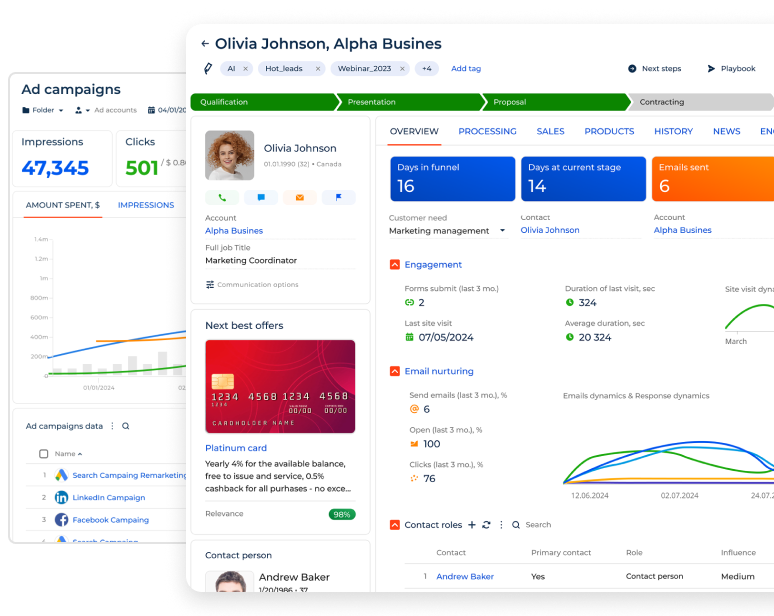
Creatio offers a cutting-edge, agentic CRM and no-code solution that empowers financial institutions to streamline and automate their digital banking operations. These capabilities come together in Creatio Bank.AI, its Banking AI CRM and workflow platform for financial institutions. Unlike traditional digital banking solutions that focus on isolated processes, Creatio enables end-to-end orchestration of customer-facing and operational workflows across the entire banking lifecycle.
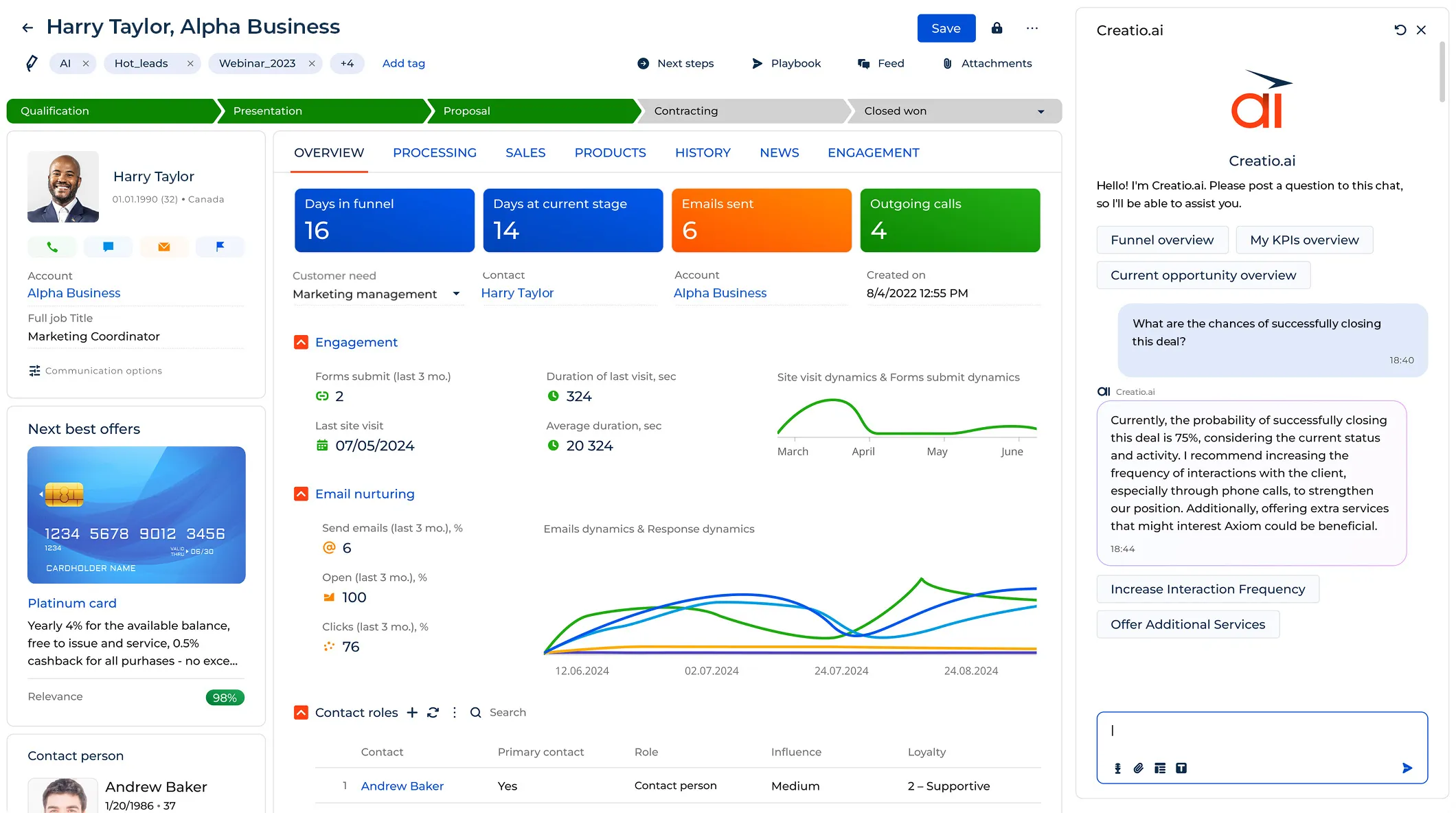
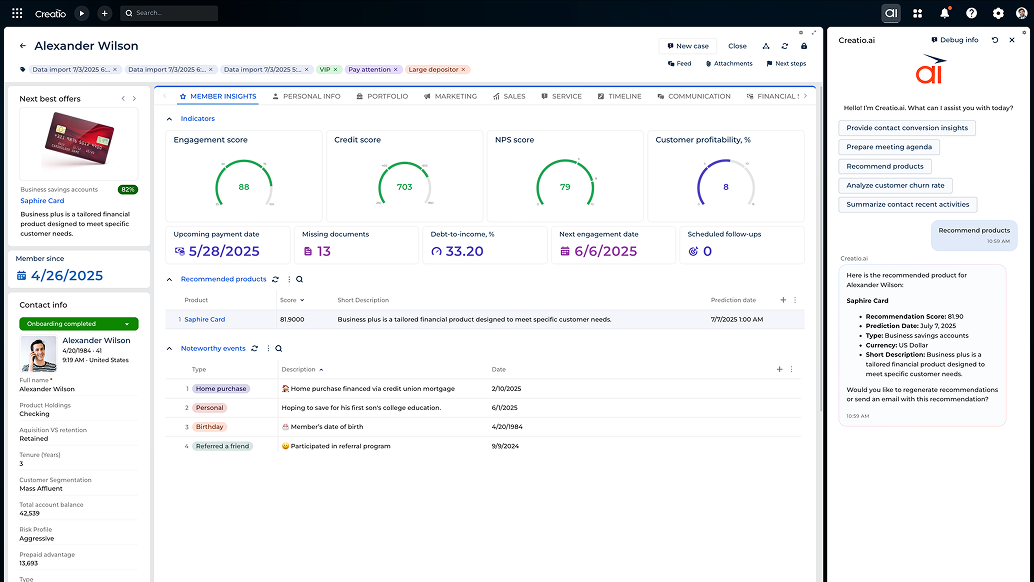
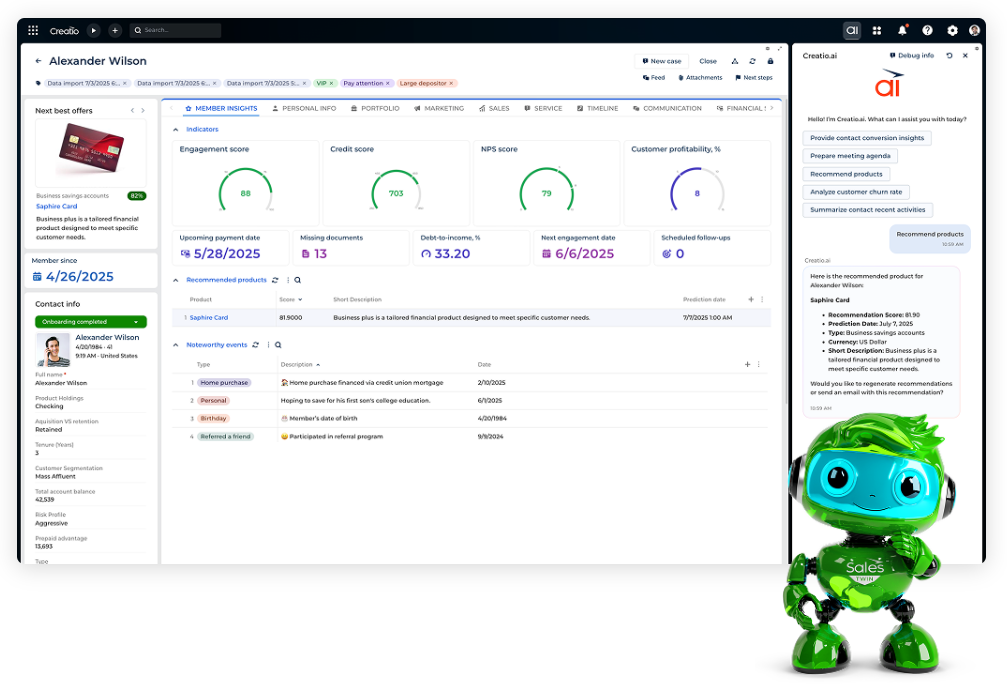
The platform empowers banks to acquire, retain, and grow customer relationships through AI-driven insights, recommendations, and next-best actions. AI agents continuously analyze behavioral and transactional data to identify cross-sell and upsell opportunities, trigger timely engagement, and support bankers in making faster, more informed decisions.
Creatio’s AI-assisted no-code capabilities and composable architecture allow institutions to rapidly build, customize, and evolve their digital banking systems. Business users can design workflows, automate processes, and integrate with core banking systems using intuitive visual tools without extensive coding or reliance on IT teams.
According to Nucleus Research, financial institutions using Creatio achieve up to 70% faster workflow delivery and up to 30% reduction in technology costs, highlighting the platform’s impact on agility and operational efficiency.
Key Features:
- Ready-to-Use banking AI agents that automate specific banking operations with a "human-in-the-loop" approach: referral agent, renewal agent, retention agent, customer onboarding agent, loan prep and servicing agents, and many more.
- Customer lifecycle workflows, which support customer onboarding, lead and referral management, marketing campaigns, sales and revenue, and customer care.
- Product fulfillment workflows, that automate "back-office" execution across deposit accounts, retail loans, credit cards, mortgages, wealth management, and insurance domains.
- Operation management tools for account maintenance, payments, and commercial sales, as well as out-of-the-box banking workflows
- Out-of-the-box solutions to manage compliance, mitigate risk, and generate reports.
- AI-enhanced no-code tools to customize your digital banking applications, automate workflows, and build new solutions without coding.
- AI-powered analytics and decisioning that help bankers prioritize opportunities, predict customer needs, assess risk, and optimize decision-making in real time.
- Seamless integration with core banking systems, document management platforms, and third-party applications.
Pricing
Creatio features a composable pricing model, that allows banking institutions to pay only for the products and capabilities they need. The core Creatio Business & AI platform is available through three plans: Growth ($40 per user/month), Enterprise ($75 per user/month), and Unlimited (custom pricing). All plans include built-in AI capabilities.
Creatio’s Unlimited plan provides access to the full Creatio platform, all CRM products, and AI capabilities — with no limits on users, AI agents, workflows, applications, custom objects, or API calls. It is designed for organizations looking to freely scale AI workflows across the enterprise while eliminating the limitations of traditional per-user licensing.
Additionally, organizations can further extend the platform with Creatio’s CRM products – Creatio Sales, Creatio Marketing, and Creatio Service, each available for $15 per user/month.
2. FNZ (ex. Appway)
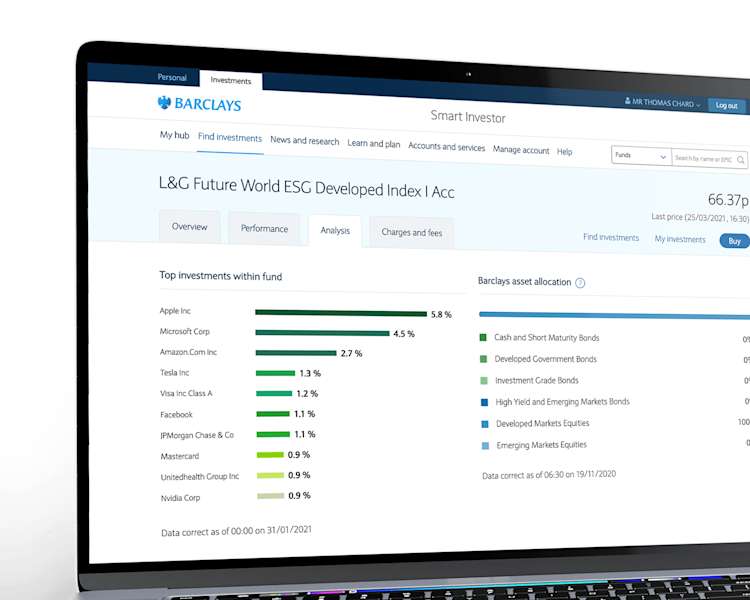
Founded in 2003 and based in Wellington, New Zealand, the FNZ group acquired the Appway Digital Banking platform. The platform is now known as FNZ and serves many banks and financial institutions globally. FNZ lets you develop an intelligent workflow management process. The platform aims to benefit financial institutions through tangible results in terms of improved cost-to-income ratio.
Key Features:
- KYC management
- Regulatory reviews of the customers and loan applications
- Client administration
- Compliance management
- Integrations with external apps
Pricing
The pricing is not publicly disclosed.
3. Oracle
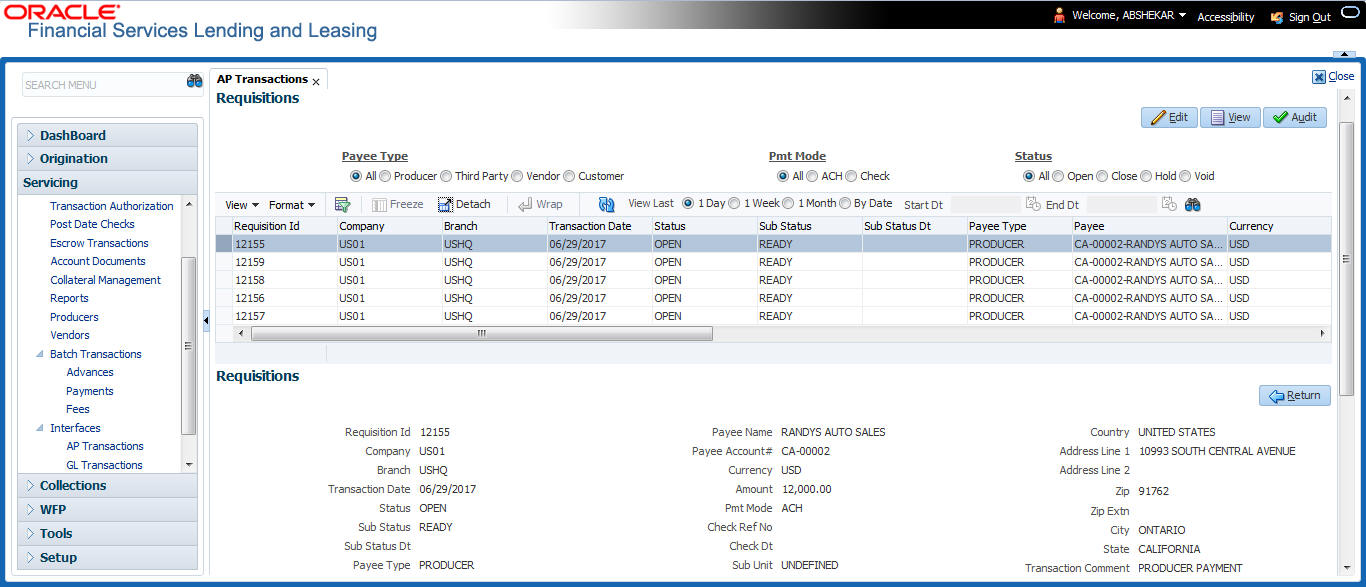
Oracle Banking Digital Experience is a feature-rich SaaS-based digital banking platform. One of Oracle’s key strengths comes with its hot-pluggable features. It means banks, insurance, and financial institutions that use Oracle Banking Digital Experience can quickly add new features to their banking solution menu or remove the less-required ones.
Key Features:
- Document upload, storage, and management
- Unified customer touchpoint experience
- Retail, corporate, and SME, banking integration under one umbrella
- P2P payment management
- iMessage, Siri, and social media integration
- Digital wallet with comprehensive wealth management tools
Oracle serves three areas as a digital banking platform – retail origination or customer onboarding, payment management and transfers, and platform-based solutions through a self-service portal.
Pricing
Oracle offers subscription-based pricing with costs tailored to the scale of the financial institution, specific modules, and deployment approach.
4. Sopra Banking Software
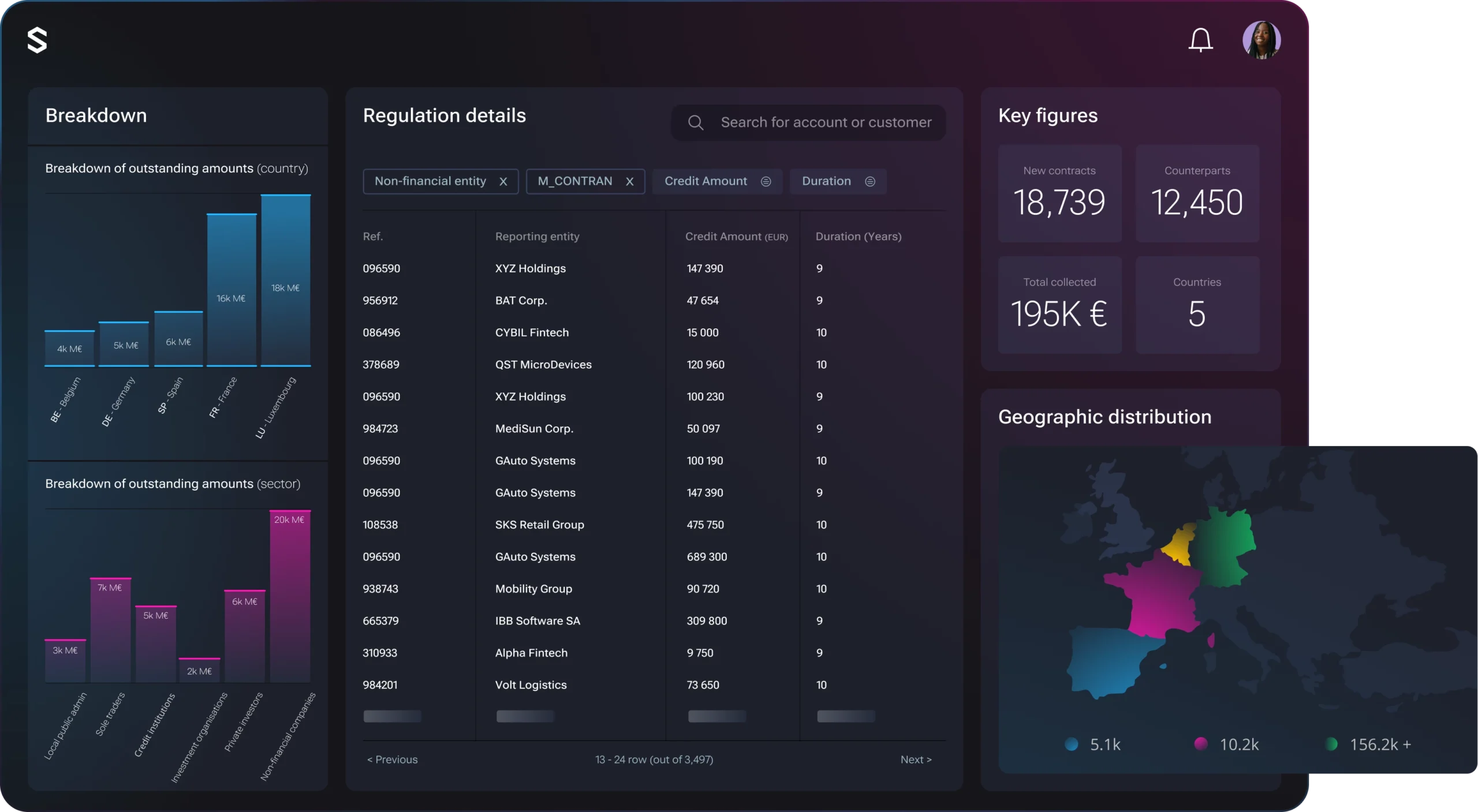
Sopra Banking Platform serves financial institutions and banks as a cloud-based service provider with a programmable and highly customizable platform. The digital banking platform offers various banking services like payment handling, loans and asset management, and compliance management.
Key Features:
- Payment processing through quick integration with external payment platforms like Google Pay and ApplePay
- Regulatory reporting and programmable compliance management
- Compatibility with large-scale API platforms like AWS and Axway
Pricing
Sopra Banking Software does not publicly list its pricing, as solutions are quote-based and tailored for enterprise-level financial institutions.
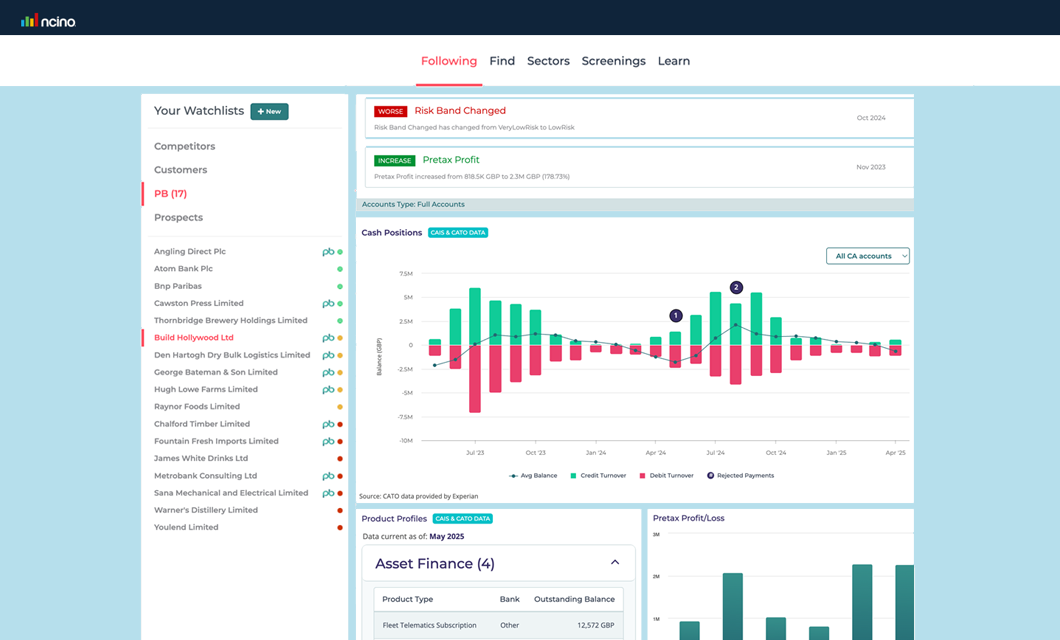
5. nCino
Founded in 2011 and based in North Carolina, the nCino Bank Operating System is an intuitive and user-friendly digital banking platform that can significantly ease retail banking and loan management.
Key Features:
- Account opening and onboarding
- Consumer, SME, and corporate loan management
- Portfolio insights and analysis
- Document management for large enterprises
- AI-powered banking operations known as nCino IQ or nIQ provide low-code automation
Pricing
nCino offers personalized pricing, which depends on the institution’s size and needs. Understanding the platform’s cost requires direct contact with their sales.
6. Finflux
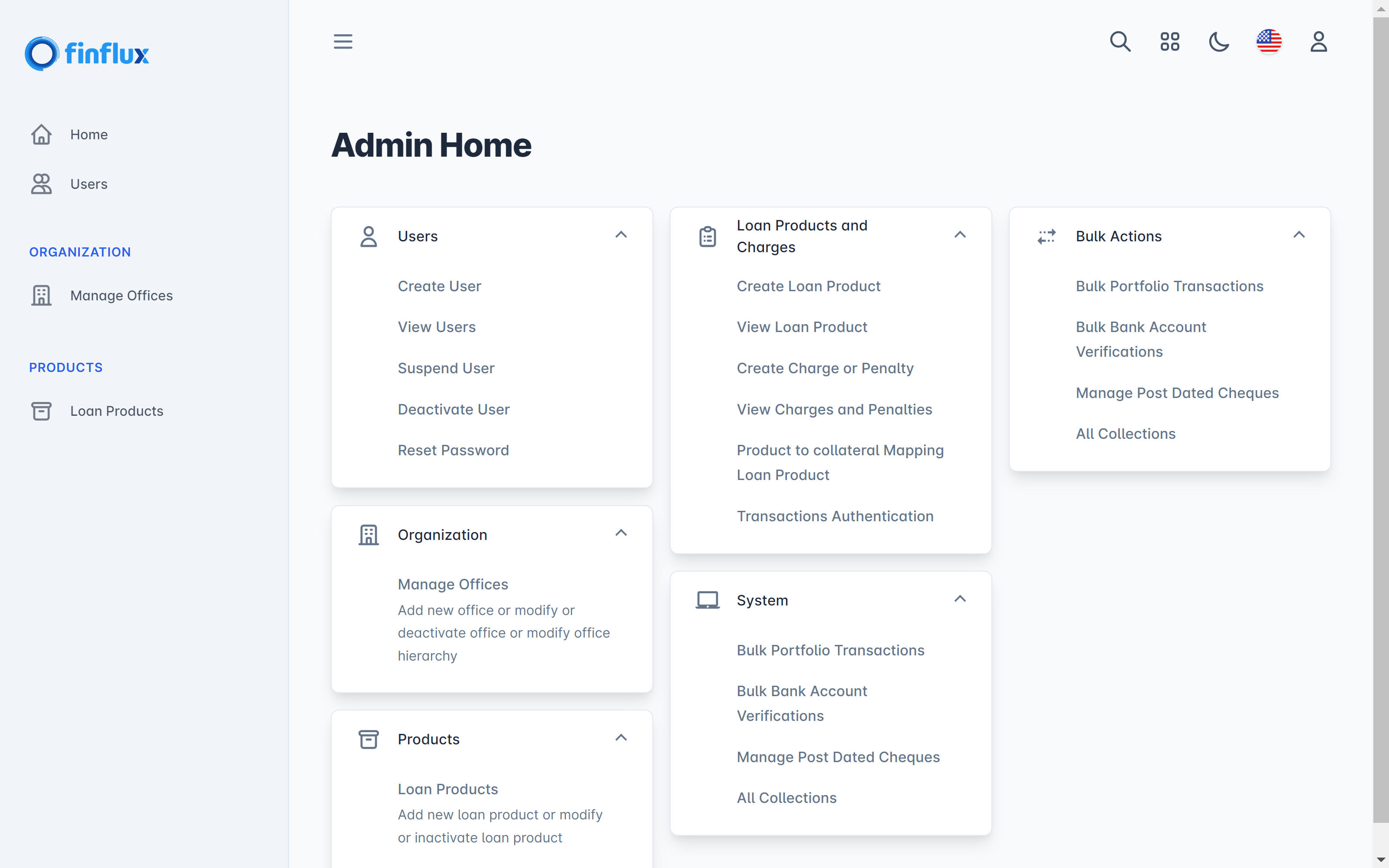
Finflux is a cloud-based automation and digital banking platform. The company boasts over 20 million active individual customers and over 60 institutional clients across 15 countries. Finflux promised to streamline how you deliver financial and banking services.
Key Features:
- Automated debt collection system
- Loan management
- Lending operations
- Liability and asset management with detailed and actionable insights
- Gold loan system with full optimization of your loan portfolio
- Holistic customer journey management
Pricing
Available only upon request.
7. Finacle
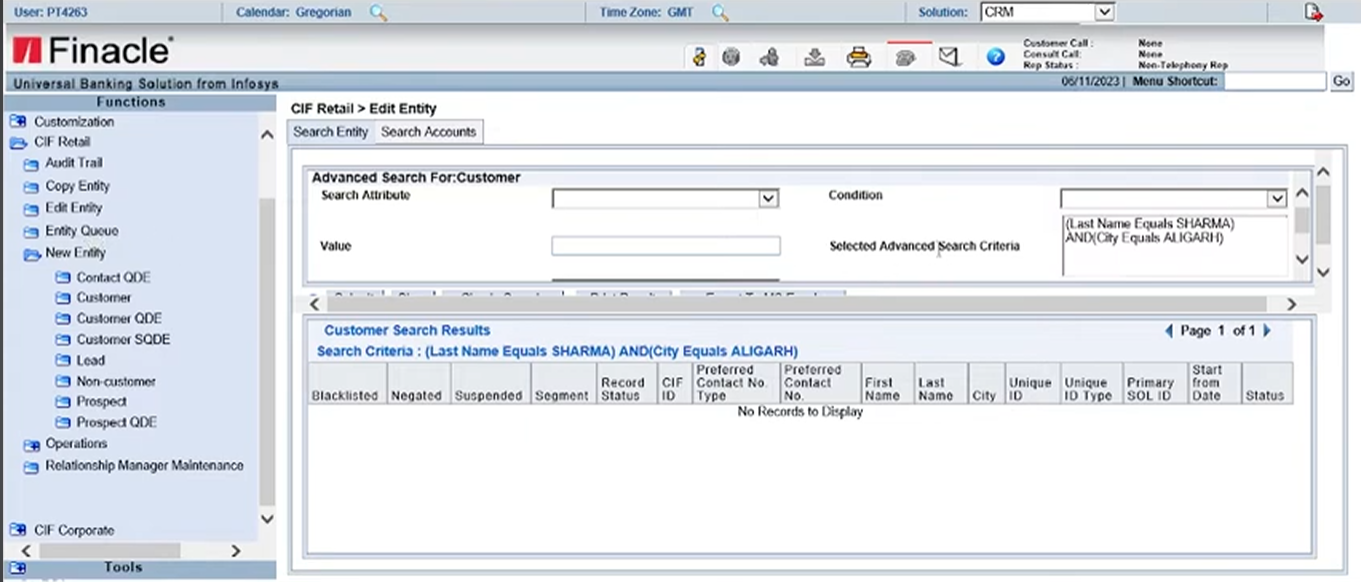
Founded in 2000, Finacle has been serving hundreds of medium and large banks and financial institutions globally as a leading and one of the oldest banking software. Since the release of Finacle online banking as the company’s digital banking platform, they have held the same reputation. Elevated and streamlined customer experience is Finacle’s top priority.
Key Features:
- Cash management
- Corporate banking
- Digital engagement tools
- Trading management platforms with automation capabilities
- Payment handling and fund transfers
- Liquidity management
- Lending automation
Pricing
Finacle’s pricing model is not publicly disclosed and is available only upon request.
8. Mambu
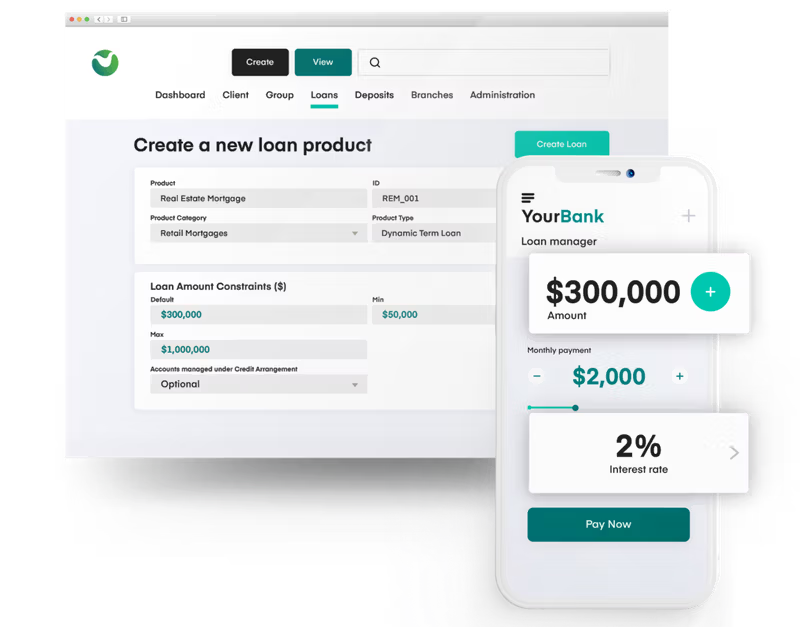
Mambu is a cloud-native, composable platform that helps banks modernize financial services, enabling deposits, lending and payments. This digital banking platform allows institutions build and deploy financial offerings with scale, agility, ease of use and speed in mind.
Key Features:
- Lending and deposits management
- Transactional banking
- Virtual account management
- Composable API-first architecture
- Low-code interface to change and configure workflows
Pricing
The pricing for Mambu’s cloud banking platform is available only upon request.
Summary
Digital banking software solutions have emerged as a necessity for the modern-day financial industries. Both retail and business customers prefer digital banking platforms for the exceptional convenience they can provide.
Yet, many banks and financial companies find it challenging to adapt the solution mostly because of the rigorous IT requirements. This is where Creatio steps in. The no-code digital banking automation platform lets you quickly and easily automate your banking activities, from lending to compliance management and marketing to customer service.
