






































































KYC Software Guide: Definition, Best Software, and Features

Streamline & Automate KYC Workflows With Creatio

Rising regulatory expectations and sophisticated financial crime are forcing organizations to adopt KYC (Know Your Customer), a widely used practice to verify identities, assess risk, and maintain control over customer activity.
Today, KYC is no longer limited to financial institutions. Industries such as fintech, real estate, crypto, and even retail face growing compliance requirements. According to Juniper Research, global spending on KYC and KYB solutions by non-financial businesses is expected to reach $22.5 billion by 2030, growing significantly faster than in financial services.
In this guide, we cover what KYC software is and the key factors that drive its adoption. Additionally, you’ll learn about features, benefits, and best KYC software to help you come up with the right solution for your organization.
Key Takeaways
- KYC software enables organizations to automate identity verification and compliance workflows, helping reduce risk, improve efficiency, and scale customer onboarding and monitoring across the enterprise.
- The core features of KYC software include identity verification, risk scoring, fraud detection and ongoing monitoring capabilities, AI-driven automation and seamless integration with existing systems to support compliance processes.
- The most important benefits of KYC software are automated workflows, reduced manual effort, improved regulatory compliance, and stronger fraud risk mitigation.
- Leading platforms for robust KYC processes include Creatio, Quantexa, Trulioo, Sumsub, iDenfy, Ondato, Salv, and Jumio, each offering different strengths across identity verification, risk analytics, and compliance workflows.
What is KYC Software?
KYC (Know Your Customer) software is a category of technology solutions designed to collect, validate, and continuously monitor customer data to verify identities, assess risk, and ensure compliance with anti-money laundering (AML) and fraud prevention requirements.
KYC software helps automate and standardize core processes such as customer onboarding, identity verification, and regulatory compliance. This allows businesses to reduce manual effort, improve consistency, and effectively detect and prevent fraud risk.
Modern KYC solutions leverage technologies such as:
- Artificial intelligence and machine learning
- Biometric verification
- Digital data and document capture (e.g., OCR, NFC)
- Robotic process automation
- Advanced screening and analytics (e.g., API-driven verification)
Across enterprise organizations, KYC systems are often integrated into broader platforms that connect onboarding, risk assessment, case management, and customer data to enable more efficient and scalable compliance operations.
Why KYC Software is Important for Businesses?
Regardless of industry, Know Your Customer (KYC) is a critical process that enables organizations to perform identity verification, assess the customer’s risk profile, and ensure regulatory compliance with anti-money laundering (AML) requirements.
Key reasons that make KYC software essential are:
- Regulatory Compliance: Organizations, particularly in regulated industries such as banking, fintech, insurance, and telecommunications, must meet AML, capture the flag (CTF), and data protection requirements to avoid fines, sanctions, and restrictions.
- Rising Financial Crime: Increasingly complex fraud methods (synthetic identities, deepfakes, cross-border schemes) require advanced verification capabilities.
- Continuous Risk Monitoring: KYC process is no longer a one-time check; Regulators expect ongoing due diligence, not just one-time checks at onboarding.
- Auditability and Governance Expectations: Organizations must maintain clear audit trails and demonstrate control over the core compliance processes.
- Globalization and Cross-Border Operations: Cross-border business requires consistent KYC processes aligned with multiple regulatory frameworks.
- Customer Trust and Reputation: Strong KYC practices help prevent fraud, protect brand credibility and strengthen customer relationships.
At its core, KYC software replaces manual, paper-based checks with automated AI-powered processes, helping businesses speed up onboarding, drastically reduce operational costs, and prevent fraud.
Core Features of KYC Software
Effective KYC is more than just meeting regulatory requirements; it’s also about building a controlled, transparent, and scalable approach to managing customer risk. Today’s KYC software provides the tools needed to enforce policies, automate decisions, and maintain auditability across the entire customer lifecycle.
Here are the core capabilities to look for in the KYC software solutions:
- Identity Document Verification – Captures and validates government-issued IDs like passports and driver’s licenses using Optical Character Recognition (OCR). It extracts key data, verifies document authenticity, and cross-checks information against trusted sources to ensure accurate and fast identity validation.
- Risk Scoring and Assessment – Assigns a risk level to each customer based on identity data, behavior, and external sources, which allows prioritizing reviews and applying the right level of due diligence. Scoring models can be customized to align with internal policies and specific regulatory requirements.
- AI and Agentic Automation – Uses AI to automate KYC-related tasks, route cases, and recommend next-best actions based on customer risk signals. Customizable AI agents can coordinate multi-step KYC workflows across systems, teams, and compliance processes with greater efficiency and less manual effort.
- Ongoing Monitoring & Audit Trails – Continuously monitors customer activity and profile changes to detect suspicious behavior over time. Additionally, the KYC software maintains detailed audit logs of all actions and decisions to support compliance reporting and regulatory audits.
- Integrations with Third-Party Systems – Connects with external data providers, core banking systems, CRM platforms, and compliance tools, ensuring a seamless data flow across systems.
- No-Code Customization – Allows teams to configure KYC workflows, rules, and data models without extensive development effort. This allows business users to quickly adapt processes to changing regulatory or operational needs, accelerating deployment time and reducing reliance on IT.
- Biometric Verification & Liveness Detection – Uses facial recognition to match a user’s selfie or video with their ID document, ensuring a real person is present. Advanced systems detect spoofing attempts such as deepfakes, 3D masks, or manipulated images.
- AML Screening & PEP Checks – Screens customers against global sanctions lists, watchlists, and politically exposed persons (PEPs) databases to identify individuals or entities associated with financial crime or high-risk activities.
Main Benefits of KYC Software
KYC processes have traditionally relied on manual, document-heavy workflows and fragmented systems. KYC software transforms this approach by automating identity verification, connecting data across systems, and enabling faster, more controlled operations.
Reduced Compliance Burden and Fraud Risk
KYC software helps identify suspicious activity early before it escalates, reducing exposure to fraud, compliance breaches, and regulatory fines. For example, financial institutions can use AI-powered identity verification to flag high-risk users during onboarding, preventing fraudulent accounts from entering the system.
Faster Customer Onboarding and Time-to-Revenue
By automating identity verification and approval workflows, reducing delays and manual checks, KYC software can streamline customer onboarding. This allows institutions to activate accounts in minutes instead of days, reducing onboarding friction and minimizing drop-off during account opening.
Lower Operational Cost
AI-powered automation in KYC software reduces the need for manual reviews and repetitive compliance tasks, allowing teams to focus on higher-value work. It also helps cut down on errors, rework, and audit-related effort, which allows organizations to handle growing volumes of processes without significantly increasing headcount.
Greater Scalability Across Markets
KYC software supports expansion into new markets by adapting to different regulatory compliance requirements. For instance, a company entering new regions can quickly configure KYC workflows to meet local compliance standards without rebuilding processes from scratch or compromising performance.
End-to-End Process Efficiency and Standardization
KYC software standardizes identity and business verification processes across teams, regions, and business units, helping reduce bottlenecks and improve speed and consistency across KYC and AML operations. For example, global financial institutions can apply the same onboarding and compliance workflows across multiple markets while still adapting to local requirements.
Better Risk Management and Decision-Making
Centralized customer data and risk scoring models provide a clear, real-time view of each customer’s profile, enabling faster and more consistent decisions across onboarding and compliance processes. For instance, a robust KYC platform allows compliance teams to access a unified customer profile with risk indicators, transaction history, and verification status, so they can act quickly and respond to potential risks more effectively.
8 Best KYC Software Solutions to Consider in 2026
Choosing the right KYC solution is critical for balancing compliance, customer experience, and operational efficiency. Based on a review of both specialized verification vendors and broader platforms that embed KYC into end-to-end workflows, below is a list of the best KYC software providers to fit different business needs.
Vendor | Best for |
| Creatio | Midsize to large organizations looking for KYC- and AML-compliant CRM and automated workflows, powered by agentic AI and no-code |
| iDentify | Startups, financial institutions, and digital services looking for a dedicated ID verification system |
| Sumsub | Organizations that need a configurable verification solution for onboarding orchestration |
| Salv | Businesses looking for a flexible risk scoring and collaborative system to manage financial crime |
| Ondato | Companies that need a lifecycle-focused KYC and KYB platform |
| Triuloo | Businesses operating across multiple regions that want to build no-code verification workflows aligned with local regulatory requirements. |
| Jumio | Organizations that need a robust identity verification solution with strong biometric and fraud prevention capabilities |
| Quantexa | Large enterprises that need advanced data analytics and entity resolution to enhance KYC, risk detection, and financial crime investigations. |
1. Creatio
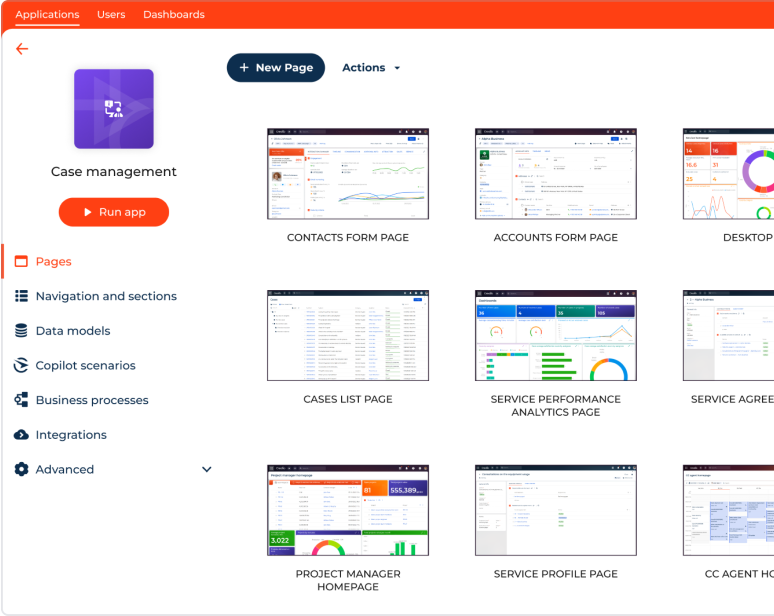
Creatio is a leading AI CRM and workflow platform that enables organizations to design, automate, and scale compliance-ready business processes. It allows businesses across financial services, fintech, telecom, and other regulated sectors to orchestrate KYC-related workflows, as part of customer onboarding and compliance operations in a single system without limits on users, agents, or scale.
Unlike standalone KYC software providers, Creatio provides a broader, platform-based approach that connects KYC with end-to-end business workflows, including customer onboarding, compliance case management, and service operations. This allows organizations to move from fragmented checks to fully orchestrated workflows.
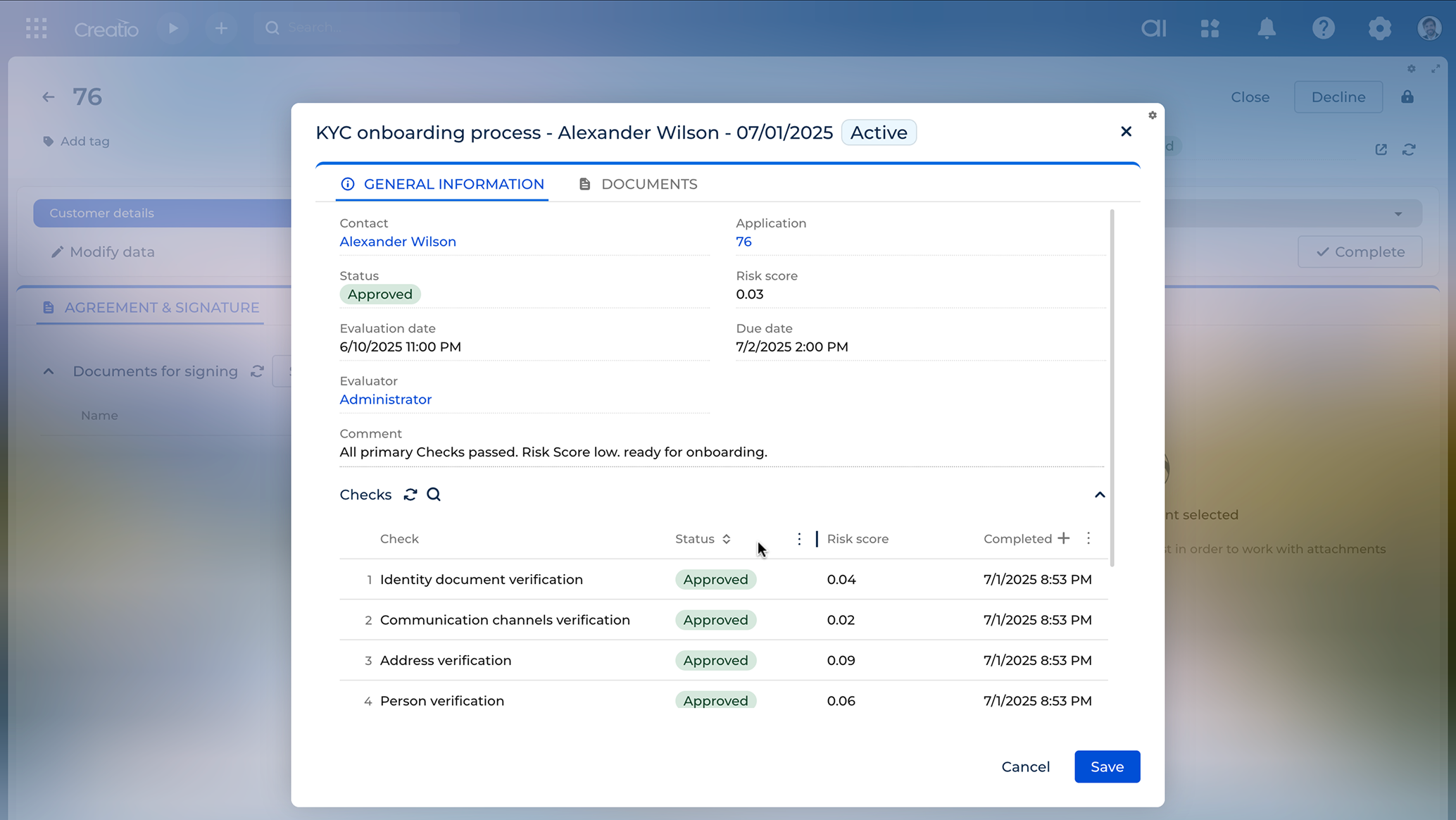
KYC onboarding process - Creatio
With built-in conversational AI, users can interact with the system using natural language to execute tasks and access insights. Creatio’s combination of agentic, generative, and predictive AI allows AI agents to operate in context, leveraging customer data, workflow logic, and historical data to support more efficient and autonomous decision-making.
Creatio also strengthens compliance and audit capabilities by streamlining data collection, workflow orchestration, approvals, and reporting through unified workflows and centralized data management. This helps maintain accurate, up-to-date information and reduce data silos.
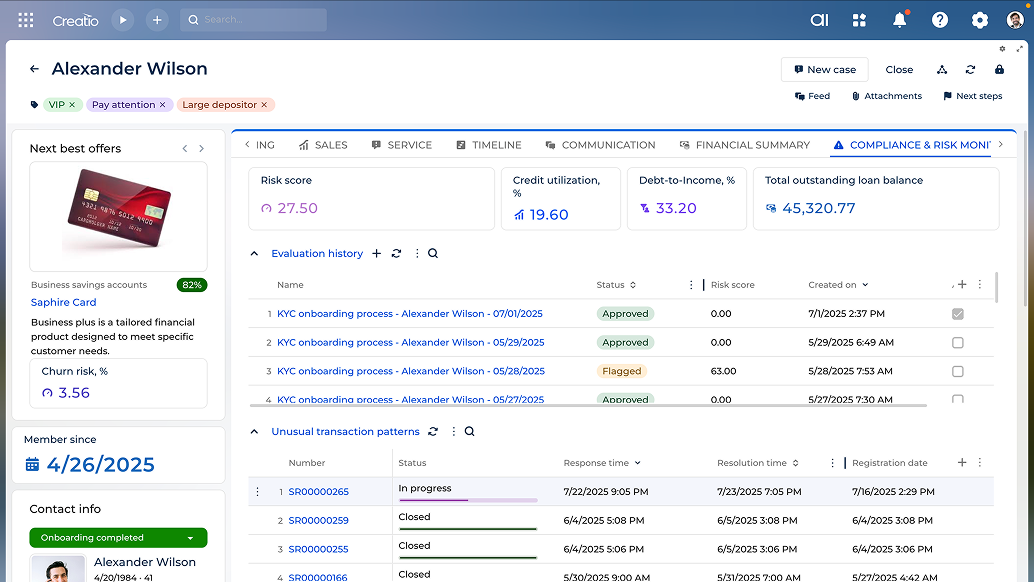
Compliance & Risk Monitoring - Creatio
Creatio’s composable architecture and no-code approach allow teams to build and adapt KYC-related workflows to their specific business and regulatory requirements without heavy development. Organizations can quickly modify processes, integrate external KYC/AML, identity verification, core banking, document management, and eSignature services, and scale operations as needs evolve.
The platform is consistently recognized by leading analysts such as Gartner, Forrester, and Nucleus Research for its innovation in CRM, workflow automation, and no-code development. According to independent Nucleus Research, financial institutions that use Creatio platform achieve 70% faster workflow delivery and 30% lower tech costs, driven by AI and no-code.
Key Features:
- Unified KYC workflow orchestration: Manage KYC and AML-related processes through a single interface, with seamless integration to external identity verification providers.
- End-to-end risk and compliance management: Digitize risk catalogs, support customer risk scoring workflows, and manage compliance processes with full visibility and control.
- 360° customer profile: Maintain accurate, complete customer data with built-in deduplication, AI-driven insights, and integrations with digital identity verification services.
- Connected CRM ecosystem: Integrate with including Creatio Sales, Creatio Marketing, and Creatio Service to streamline both customer-facing and back-office operations.
- AI agents for workflow automation: Use ready-to-deploy AI agents or build your own to automate and coordinate KYC-related workflows across onboarding, underwriting, and compliance, with real-time routing and decision support.
- AI-enhanced no-code workflow design: Build, adapt, and scale KYC-compliant processes using AI-powered no-code tools without complex development.
- Case management and audit trails: Track every step of the KYC process with full case history, approvals, and audit logs to support regulatory compliance and internal governance.
- Dynamic workflow and rule engine: Configure risk-based workflows, conditional logic, and automated routing based on customer profiles, risk levels, or regulatory requirements.
- Seamless integration with third-party systems: Connect easily to core banking systems, third-party KYC/AML providers, data sources, and internal tools via APIs and Creatio marketplace integrations.
2. iDenfy
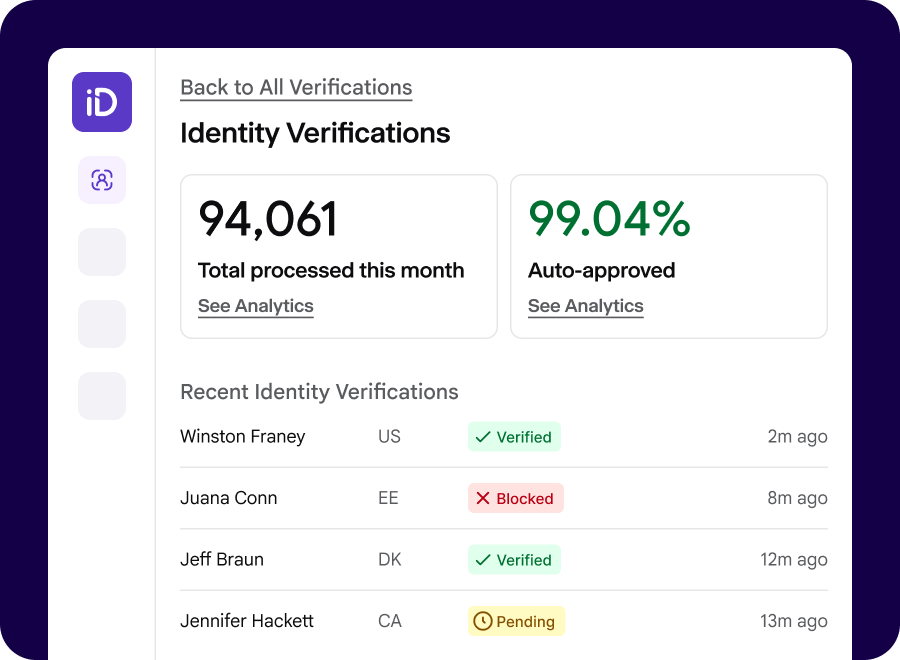
iDenfy is an identity verification platform focused on automated customer onboarding and fraud prevention, supporting core regulations such as Know Your Customer (KYC), Know Your Business (KYB), and Anti-Money Laundering (AML). It combines AI-driven document verification, biometric authentication, and risk assessment to help businesses verify users in real time and reduce operational costs. The platform is primarily designed as a standalone solution with an API-first approach, enabling integration with systems like Zapier, WordPress, Shopify, and other business tools.
Key Features:
- 3D liveness detection and passive verification to identify spoofing attempts and fraudulent activity
- AI-powered document verification with automated data extraction
- Automated AML screening, including sanctions and PEP checks
- Company verification (KYB) for business onboarding
- API-first architecture for integration with onboarding and compliance systems
3. Sumsub
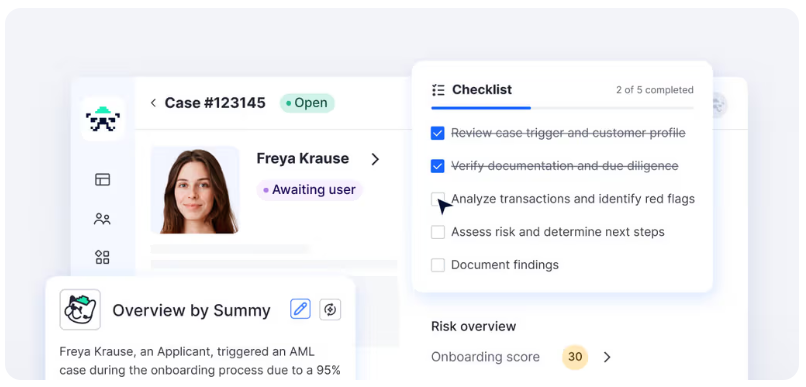
Sumsub is a comprehensive verification platform designed to manage identity and compliance processes across the customer lifecycle. It offers solutions for user verification (KYC), business verification (KYB), transaction monitoring, and fraud prevention, helping companies balance regulatory compliance with a seamless user experience. The platform focuses on unifying verification and risk management capabilities within a single system. While it does not provide native CRM or onboarding functionality, it integrates with external systems to support broader workflows.
Key Features:
- Non-document verification using alternative data sources like credit bureau checks or qualified electronic signatures
- Blocklist checks to screen users against internal and external risk databases
- Live agent video verification
- AML transaction monitoring and behavioral fraud detection
- Unlink, API and SDK integrations for connecting with external systems
4. Salv
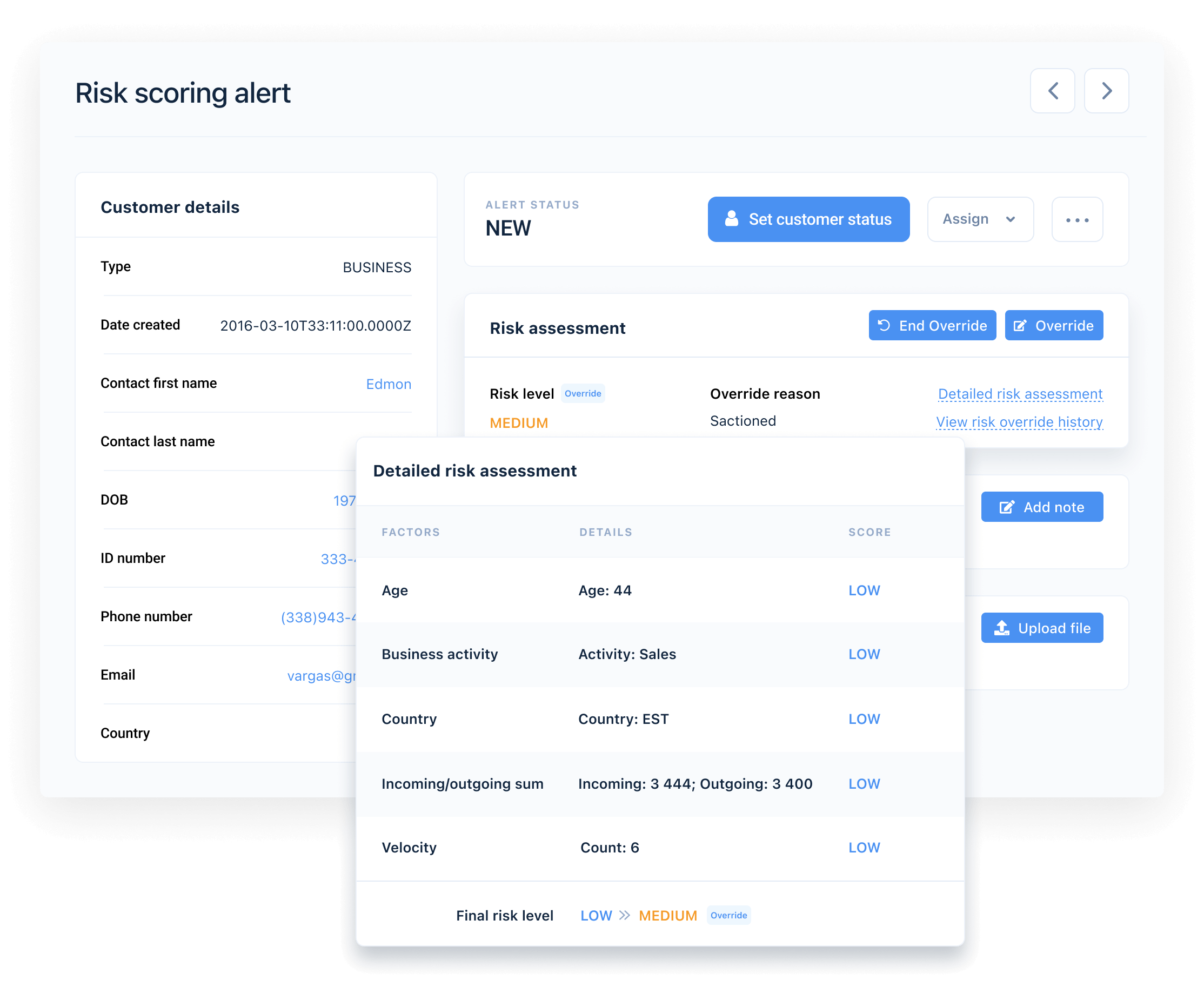
Salv is a fincrime platform that helps timely depend suspicious patterns, identify high- and low-risk customers and launch collaborative investigations. With built-in tools for risk scoring, onboarding, and AML compliance, it enables businesses to build flexible risk models and apply them across customer due diligence processes. Rather than focusing purely on identity verification, Salv positions itself as a system for fincrime operations and decision-making.
Key Features:
- Advanced customer risk scoring with customizable and rule-based models
- Extensive rules library aligned with regulatory guidelines (e.g., FinCEN, FCA)
- AML and compliance workflow support for onboarding and due diligence
- Centralized risk management with a holistic customer risk view
- Reporting and analytics for compliance monitoring and audits
5. Ondato
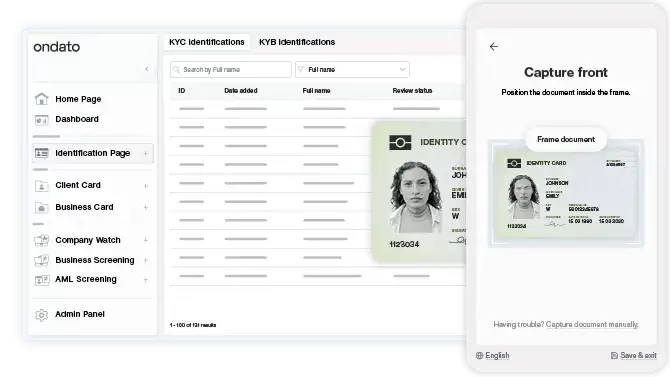
Ondato is a SaaS-based compliance platform that supports KYC processes across the entire customer lifecycle, from identity verification to ongoing monitoring. It combines digital identity services, AML screening, and onboarding tools to help organizations manage both individual and business verification. The platform enables companies to automate compliance workflows while maintaining control over customer data and risk.
Key Features:
- Identity verification for fast and compliant user onboarding
- KYB capabilities to verify and onboard business clients
- Customer data management for a unified view on user profiles
- Authentication tools to ensure secure access and identity validation
- Age verification
- AML screening and ongoing monitoring
6. Trulioo
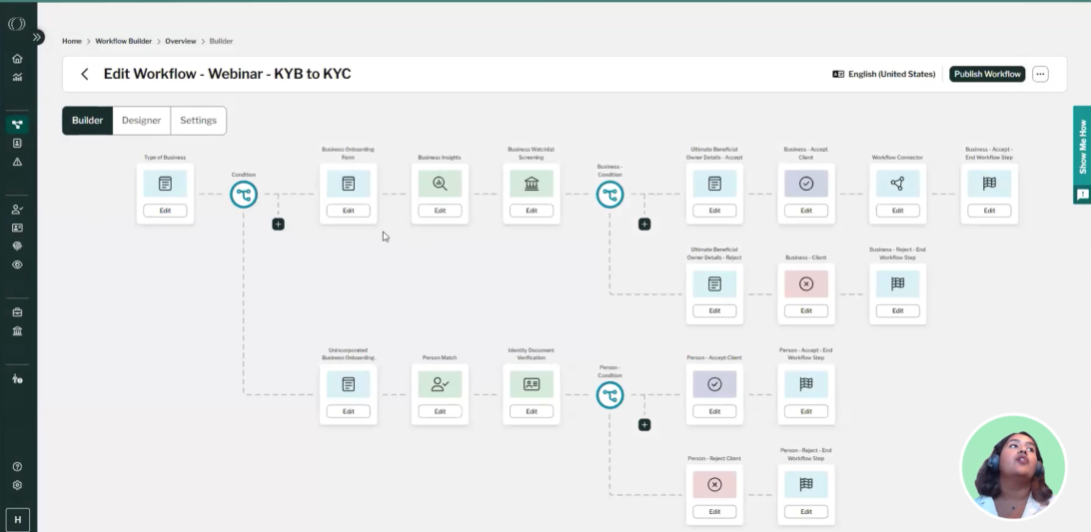
Trulioo is a global identity verification platform designed to support KYC, KYB, and anti-money laundering compliance across multiple markets. It provides a modular approach to verification, in which organizations can build and manage onboarding workflows tailored to regional regulatory requirements. With its no-code Workflow Studio, businesses can create custom KYC processes and automate complex onboarding scenarios to ensure scalable, compliant customer verification.
Key Features:
- No-code Workflow Studio for building custom verification flows
- Global identity verification coverage across multiple data sources and regions
- Modular architecture to tailor verification processes by market and use case
- AML screening and compliance support aligned with global regulations (e.g., FinCEN, FCA, FINTRAC)
- Dynamic workflows for automated onboarding and risk-based decisioning
7. Jumio
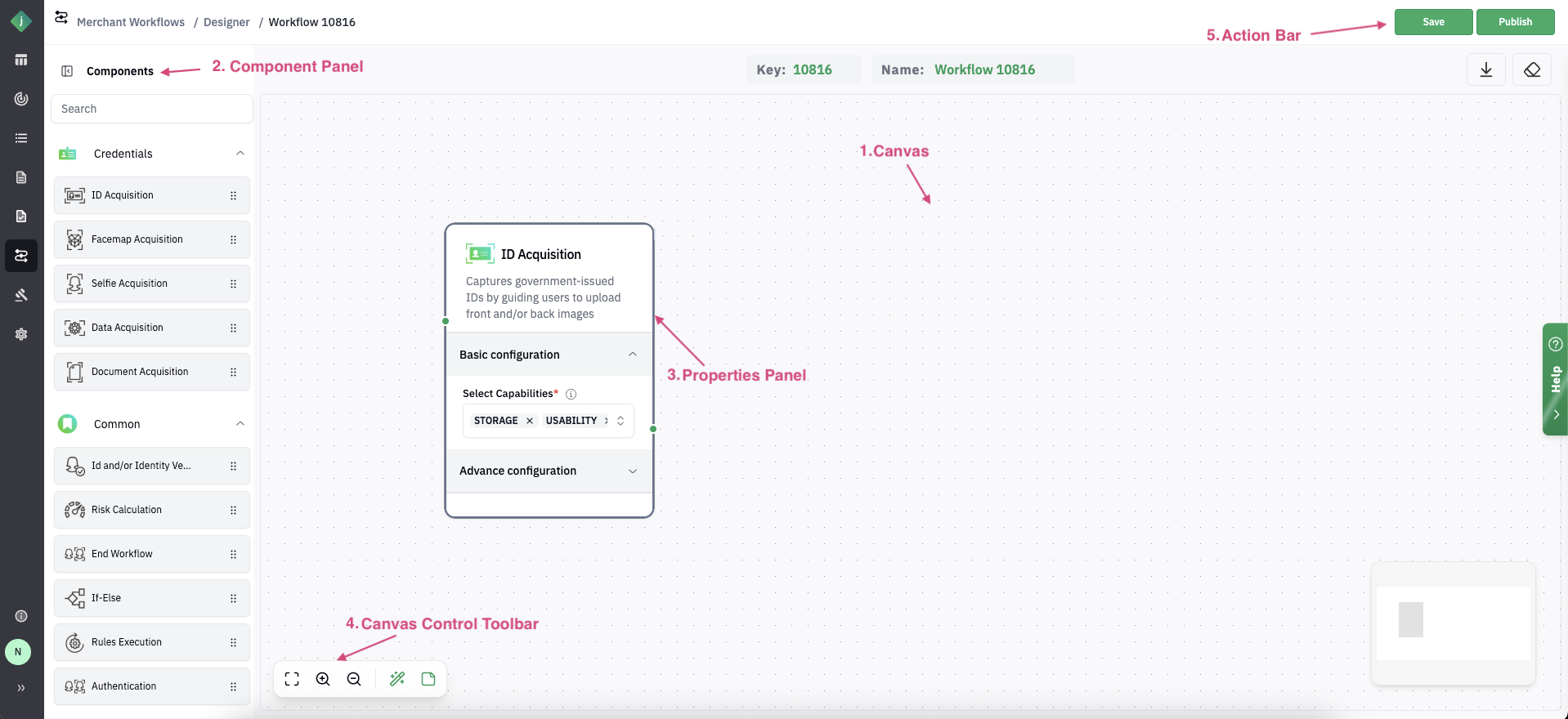
Jumio is an AI-powered identity verification platform that helps businesses verify users online and reduce fraud during the onboarding process. It focuses on automating KYC and AML checks using document verification and biometric technology. The platform is designed to balance security with user experience, making it easier to onboard customers without adding unnecessary friction. Jumio is typically used as a standalone verification tool that integrates into existing onboarding flows.
Key Features:
- ID verification with built-in fraud detection and document authentication
- Biometric liveness checks to confirm a real user is present
- Selfie-based re-verification for returning users
- Video verification for higher-risk onboarding cases
- Document proofing to upload and validate supporting documents
8. Quantexa
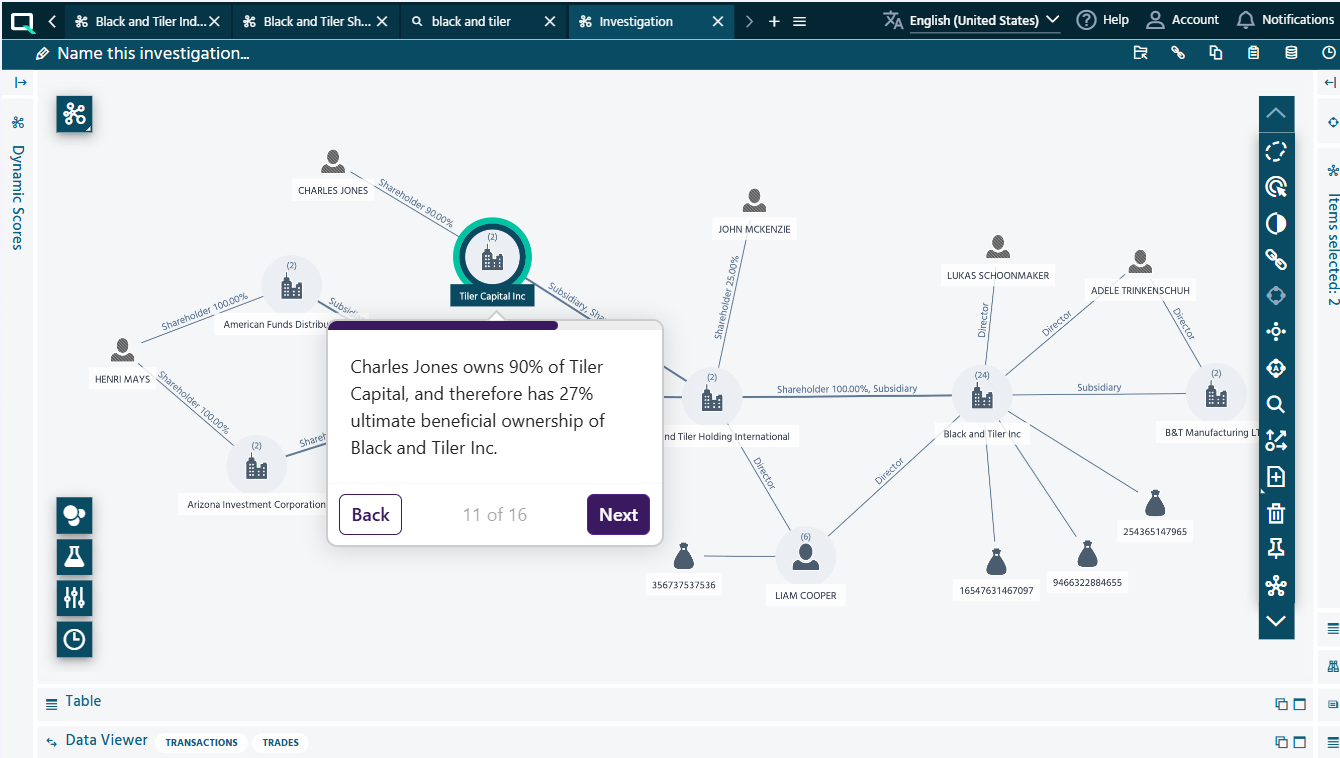
Quantexa is a Decision Intelligence (DI) platform designed to modernize KYC processes using AI, entity resolution, and network analytics. It helps banks and financial institutions move away from static, periodic checks toward a more continuous and context-driven approach known as Perpetual KYC (pKYC). By connecting and analyzing large volumes of data, the platform provides a more complete view of customer behavior and risk. These capabilities also help identify potential financial crime, improve investigation workflows, and reduce false positives.
Key Features:
- 360-degree connected customer view across internal and external data sources
- Perpetual KYC (pKYC) for continuous monitoring and risk assessment
- Contextual network analytics to uncover hidden relationships and risk patterns
- Risk scoring based on behavioral and relational data
Summary
KYC remains a critical part of onboarding and compliance, but its effectiveness depends on how well it is embedded into broader customer processes. When treated as a standalone function, it often leads to fragmented systems, duplicated data, and operational inefficiencies.
That’s why organizations are shifting toward platforms that embed KYC into end-to-end workflows — connecting onboarding, risk, and compliance — while still integrating with specialized verification providers when needed. This approach improves efficiency and maintains flexibility across the business.
Creatio supports this approach by orchestrating KYC within end-to-end onboarding and compliance workflows. Its AI CRM and process automation platform enables organizations to design, automate, and scale compliant processes with no-code tools, AI capabilities and integrations.
Explore Creatio with a guided demo and discover how to streamline your KYC workflows within a unified platform.
