






































































AI in Manufacturing: Use Cases, Benefits & Real-Life Examples
Updated on
March 11, 2026
11 min read
Creatio.ai: Streamline Quality Control at Scale

Not long ago, the idea of a fully autonomous factory felt more like science fiction than a realistic business goal. Today, as AI adoption accelerates across the manufacturing industry, the focus has shifted from futuristic visions to practical applications that deliver measurable value on the factory floor.
By applying AI technologies such as machine learning, computer vision, neural networks, and deep learning, manufacturers can analyze real-time data, improve quality control, anticipate issues, and optimize production processes with minimal human intervention. These AI systems enable smarter, more autonomous workflows that continuously improve operational efficiency, helping factories quickly adapt to changing conditions.
In this article, you’ll learn what AI in manufacturing is, the key challenges it helps address, and the most common AI use cases already adopted by leading companies. You’ll also explore emerging trends around enterprise AI for 2026, along with an example of the best manufacturing software that supports AI-enhanced operations today.
Key Takeaways:
- AI in manufacturing uses data-driven intelligence to predict issues, automate decisions, and optimize operations across production and supply chain management.
- Key benefits of AI adoption for manufacturing are higher efficiency, reduced downtime and costs, improved product quality, stronger production processes, and faster adaptation to change.
- Common AI use cases in manufacturing include quality control, predictive maintenance, production planning, supply chain optimization, engineering workflows, and energy and resource management.
- Creatio Studio is a strong example of AI systems for manufacturing that supports AI-enhanced operations through an agentic no-code platform connecting data, workflows, and teams.
What is AI in Manufacturing?
Artificial intelligence (AI) in manufacturing is the use of technologies such as machine learning, computer vision, natural language processing (NLP), agentic AI, predictive analytics, and generative AI to analyze data, automate repetitive tasks, and optimize manufacturing operations across the entire value chain.
In practice, AI technologies enable manufacturers to move from reactive to predictive and adaptive operations by transforming operational data into real-time insights and automated, data-driven actions. These systems help detect failures and defects earlier, optimize production parameters, improve planning accuracy, and continuously enhance manufacturing processes.
The State of AI Agents & No-Code
Learn how 560+ leaders across the world use AI and no-code to drive innovation today
Key Manufacturing Challenges That Drive AI Adoption
According to Markets and Markets, the global AI in manufacturing market is expected to grow from $34.18 billion in 2025 to $155.04 billion by 2030, highlighting how quickly AI is becoming a core operational capability across the industry. This growth is driven by persistent challenges that traditional systems struggle to address at scale, including:
- Unplanned downtime and equipment failures that disrupt production
- Inconsistent product quality and high scrap rates
- Demand volatility and inventory imbalances across supply chains
- Production bottlenecks and inefficient scheduling
- Rising energy, material, and operational costs
With AI-powered systems, manufacturers can effectively respond to these challenges through predictive insights, smarter automation, and continuous optimization across production, quality, supply chain, and resource management.
How Manufacturing Industry is Using AI: 10 Best Use Cases
To better understand the impact of AI solutions in the manufacturing industry, let’s explore some of the most common use cases companies are already implementing across their operations.
1. AI-driven Quality Control
AI-enhanced manufacturing systems are widely applied for inspecting products in real time to detect defects, deviations, and inconsistencies with higher accuracy and consistency than manual or rule-based inspection.
A great example of AI in manufacturing is BMW Group, which uses an AI-enhanced quality control to optimize highly individualized inspection plans for each vehicle produced at the plant every 57 seconds. By analyzing vehicle configuration analysis and real-time production data, the system dynamically determines which quality checks are required, in what order, and presents them to inspectors through a mobile app.
2. Predictive Maintenance & Asset Management
By analyzing machine and sensor data in real-time, AI solutions can predict equipment failures before they occur, enabling proactive maintenance, reducing unplanned downtime, and extending asset life.
This AI use case is widely adopted by both large manufacturers and growing companies. For example, the WattsUp company provides an AI-driven predictive maintenance solution for EV chargers that reduces downtime and labor costs by ensuring parts are ordered and available before failures occur.
3. Process Optimization & Scrap Reduction
AI models analyze production parameters in real time to optimize cycle times, stabilize processes, and reduce scrap and rework — especially in molding, casting, machining, and chemical processes.
Artificial intelligence is also increasingly used to optimize scrap recycling, where material variability is high and quality consistency is difficult to maintain. For example, ArcelorMittal applies AI across the entire scrap lifecycle, from procurement and sorting to impurity analysis and quality prediction. By analyzing large-scale data on scrap composition and the impact of different impurity combinations (such as copper, tin, or nickel), AI tools help determine how recycled scrap can be blended to produce advanced steels with consistent properties — supporting both cost efficiency and significant CO₂ reduction.
4. Supply Chain Optimization & Inventory Forecasting
Manufacturers widely implement AI to forecast demand, optimize inventory levels, and detect potential supply chain disruptions through a deeper analysis of sales, production, and external data.
Companies like Walmart and Zara, for example, use AI solutions to analyze shopping patterns and sales trends, enabling more accurate demand forecasting, optimal stock levels, and faster replenishment of high-demand items.
5. Production Planning & OEE Analysis
AI systems evaluate operational and performance data to identify bottlenecks, improve production scheduling, balance workloads, and increase throughput. By analyzing trends across lines, plants, and suppliers, they empower manufacturers to improve Overall Equipment Effectiveness (OEE) and respond faster to disruptions.
For example, tech giants such as Lenovo, Microsoft, and Apple use artificial intelligence to assess vendor risk, anticipate manufacturing bottlenecks, and optimize production line efficiency, thereby enabling more resilient planning and smoother execution across complex global supply networks.
6. Robotics & Intelligent Automation
AI is increasingly used to make industrial robots and cobots more flexible and easier to deploy, allowing them to assist with repetitive, physically demanding, or variable tasks. Instead of rigid, pre-programmed automation, AI helps robots perceive their environment, adapt to variations, and safely collaborate with people on the shop floor.
For instance, Mercedes-Benz is piloting humanoid robots in its factories to support assembly-line workers with tasks such as handing over parts and lifting heavy components. These AI-powered robots are not replacing entire production lines but are designed to augment human labor, improve ergonomics, and address workforce constraints in highly repetitive operations.
7. Engineering & Manufacturing Assistance
AI systems also support engineering workflows by automating repetitive computer-aided design (CAD), drafting, and documentation tasks such as feature recognition, basic dimensioning, validation, and change impact analysis. This helps manufacturers reduce engineering cycle times and accelerate complex workflows without increasing reliance on specialized resources.
For example, Siemens integrates advanced multiphysics and AI simulation into its Calibre 3DThermal tool to analyze thermal behavior in complex 2.5D and 3D integrated circuit designs, which form the core of signal and custom chips. These capabilities allow engineers to estimate and analyze heat distribution, thermal limits, and reliability risks early in the design process.
8. AI-Driven Design and Simulation
AI-driven simulation and generative models are used to explore product, demand, and operational scenarios before execution, helping manufacturers predict outcomes, identify risks, and optimize decisions ahead of physical production or distribution.
An excellent example here is the Unilever company, which uses AI models combined with digital simulation and external data, such as weather inputs, to improve production and demand planning for its ice cream brands. In Sweden, this approach has already improved forecast accuracy by 10%, helping teams to better decide where to sell, how much to produce, which cabinets to use, and when and where to ship products most efficiently.
9. Resource Optimization (Energy, Materials & Utilities)
Integrating AI in manufacturing allows companies to optimize the use of energy, raw materials, and utilities. By automatically analyzing consumption patterns and adjusting operations in real-time, companies can significantly reduce waste, cost, and environmental impact.
For instance, Schneider Electric uses AI to support sustainable water management, applying AI-based leak detection and circular water strategies to reduce industrial water consumption and improve resource efficiency across operations.
10. Enterprise Intelligence, Data Integration & Knowledge Automation
Finally, AI systems connect and analyze insights across MES, ERP, PLM, quality, and commercial software to help manufacturers automate data-driven operations across reporting, performance analysis, documentation, knowledge search, and decision-making.
For example, Shell uses generative AI and large language models to make decades of internal scientific and engineering knowledge searchable and reusable. This enables researchers to design experiments faster, reuse prior insights, and shorten R&D cycles in areas like biofuels, EV infrastructure, and clean energy technologies.
Benefits of AI Technologies in Manufacturing
Manufacturers are using artificial intelligence across a range of operations to enable highly automated, data-driven production environments. When implemented effectively, it allows to gain a competitive advantage through greater agility, higher quality, and faster execution.
The most notable benefits of AI in manufacturing include:
- Increased efficiency and productivity by automating repetitive tasks and streamlining operations.
- Reduced downtime by predicting equipment failures before they impact production.
- Improved product quality through early defect detection and more consistent processes.
- Lowered operating costs by optimizing energy use, materials, and labor.
- Strengthened supply chain resilience with better demand forecasting and inventory planning.
- Accelerated innovation and flexibility by enabling faster product changes and time to market.
Case Study: Lohmann Goes Global with Agentic CRM
Lohmann, a global manufacturer of high-performance adhesive tapes and bonding solutions, modernized its global sales and operations with Creatio’s agentic, no-code platform. The company sought to replace fragmented regional CRM systems with a single solution that could unify commercial teams across regions, improve visibility, collaboration, and execution speed, and establish a scalable foundation for AI-driven sales operations.
Key Achievements:
- Standardized global sales operations across 27 sites spanning EMEA, the Americas, and APAC
- One unified platform for sales execution, data visibility, and collaboration
- Unified customer, product, and application data into a single source of truth to support smarter sales decisions
- Standardized global processes with local flexibility through no-code, allowing rapid process changes without custom development or external vendors
- Established a foundation for AI-enhanced sales operations, including assistive guidance, forecasting, and next-best-action recommendations
In just 18 months, Lohmann created a globally consistent yet flexible sales environment designed for speed, visibility, and continuous improvement as the business scales with Creatio’s agentic platform.

Creatio gives us something we never had before: clarity. For the first time, we can see where opportunities truly lie and how our solutions perform in real customer applications. That visibility helps us make better decisions—faster.

Enhance Your Manufacturing Ops with Creatio’s Agentic Platform
Creatio is a leading agentic platform for manufacturing that helps teams build smarter, more adaptive production operations using no-code and AI. By natively integrating generative AI, predictive AI, and agentic AI in a single system, it empowers companies to orchestrate and automate end-to-end production, planning, and operational workflows within one system.
With Creatio’s composable architecture and AI-enhanced no-code tools, manufacturers can design, customize, and continuously evolve the platform’s functionality to match their specific processes and business needs. This flexibility allows organizations to scale AI adoption beyond isolated use cases, integrating intelligence across everyday operations.
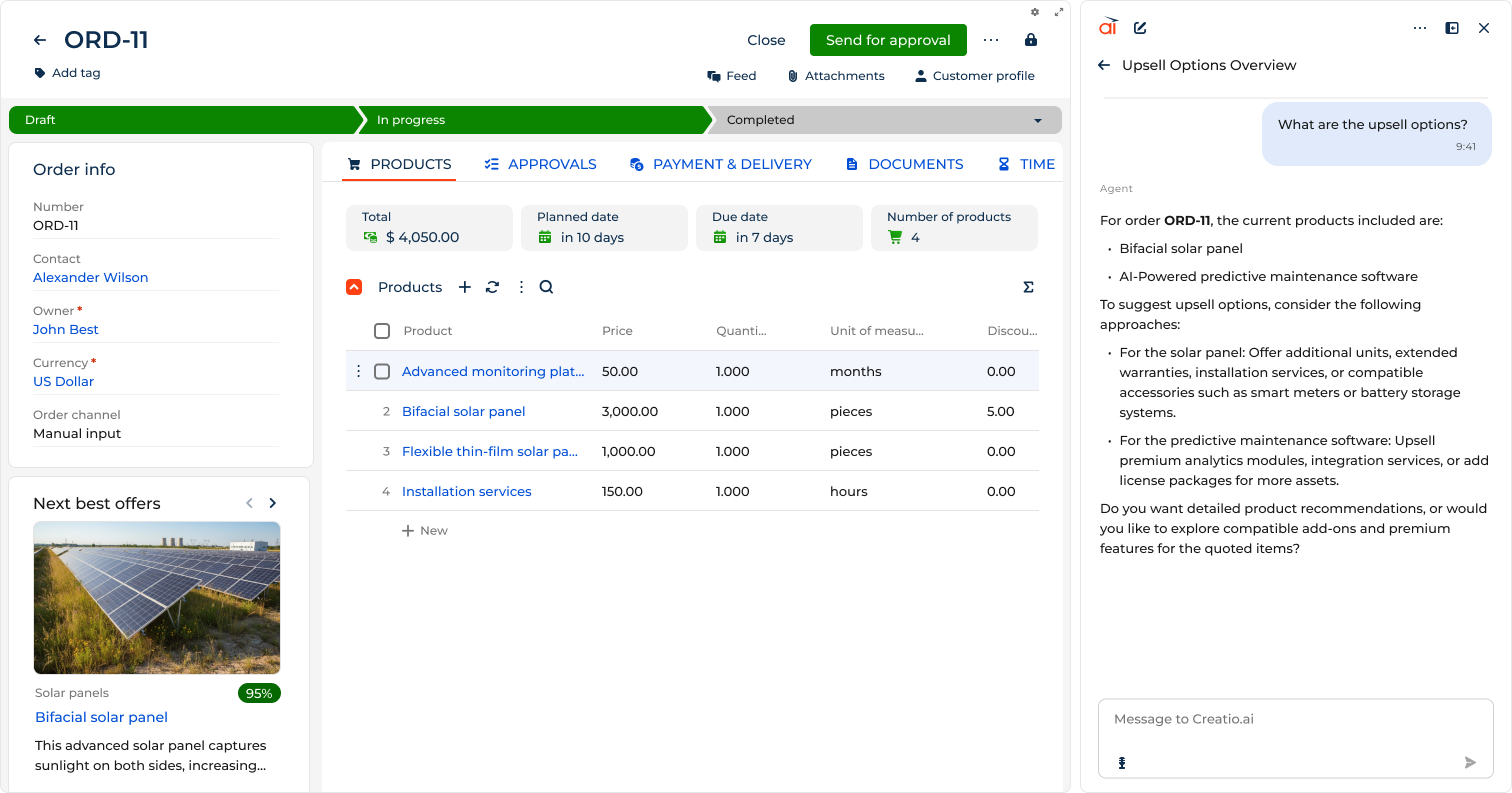
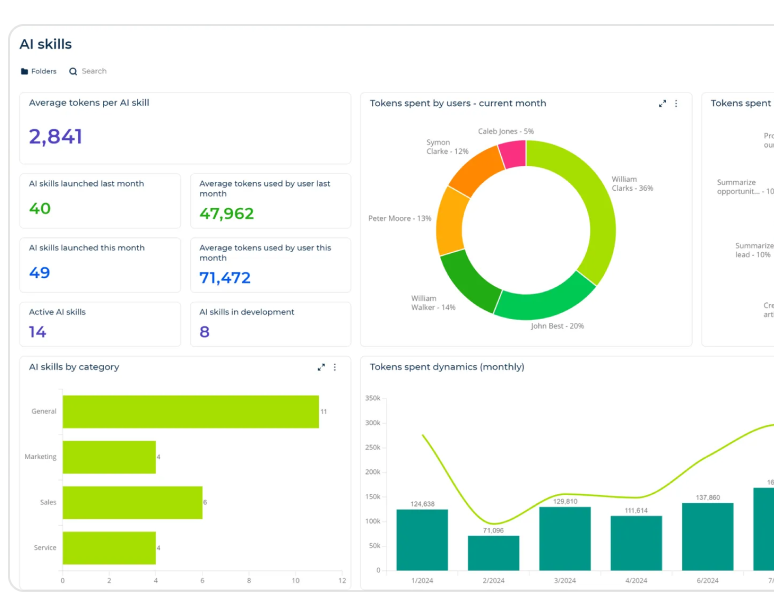
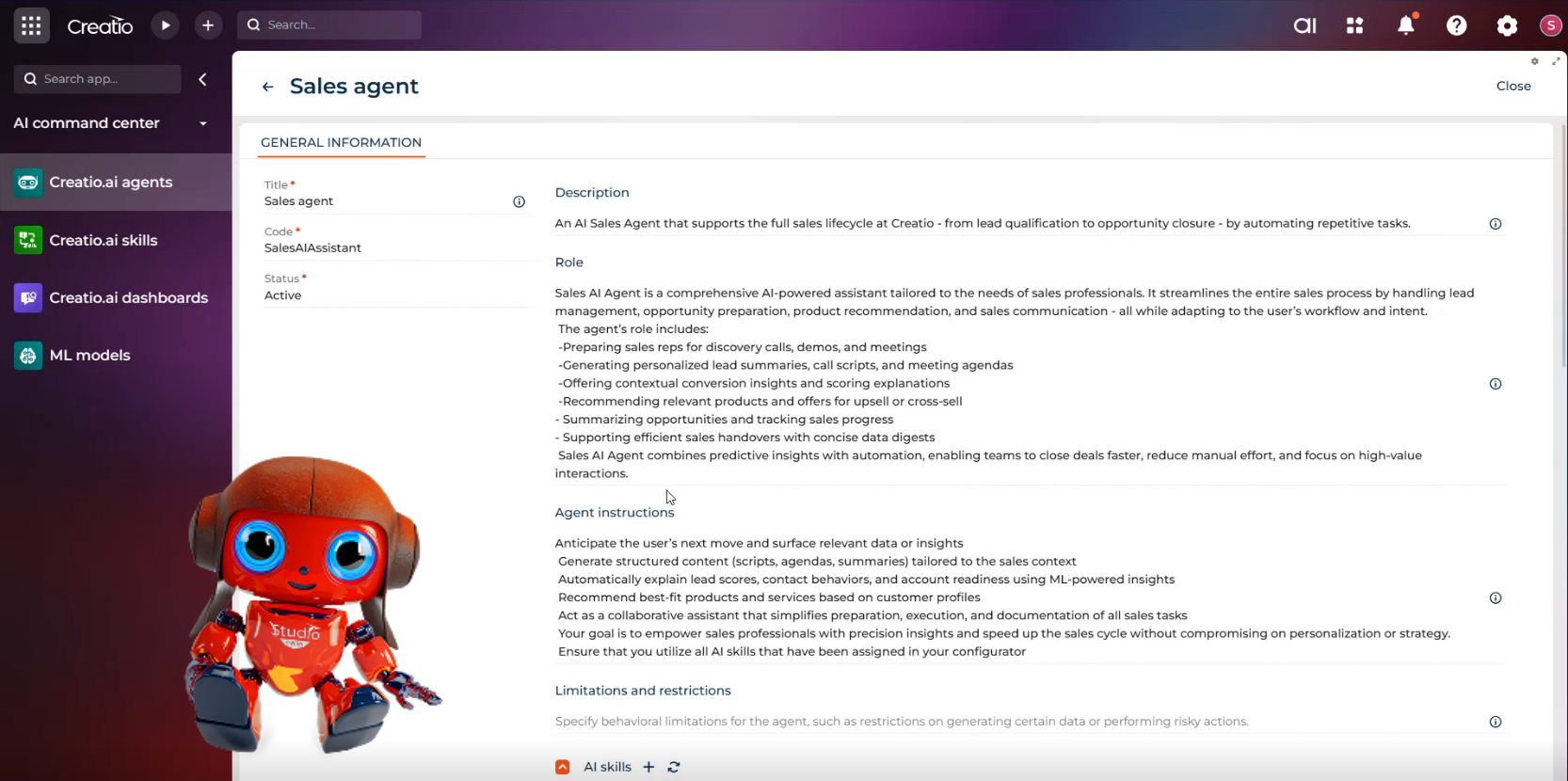
One of the core strengths of the Creatio platform is its agentic capabilities. Teams can interact with the digital agents through a conversational interface to complete tasks, receive insights, and automate processes of any type and complexity. Manufacturers can create custom AI agents to support specific scenarios such as predictive maintenance coordination, production tracking, energy and resource analysis, exception handling, and operational decision support.
Creatio also provides enterprise-grade governance, security, and compliance controls, ensuring AI-powered automation is deployed safely at scale. Through its no-code integration framework, the platform connects seamlessly with MES, ERP, PLM, asset management systems, industrial IoT platforms, and external AI services, allowing manufacturers to modernize operations without disrupting existing systems.
Creatio’s Core Features for Manufacturing:
- Agentic workflow automation to orchestrate end-to-end processes across production, quality control, procurement, supply chain management, sales, and distribution
- Real-time analytics and dashboards to monitor production performance, identify bottlenecks, and support data-driven planning and decision-making
- Quote, order, and invoice management to streamline the quote-to-cash process and improve coordination between sales, production, and finance
- Production management including lifecycle management, resource assignment, work order management, and performance monitoring
- Procurement management covering request handling, vendor management, procurement lifecycle management, RFx processes, and contract management
- Supply chain planning and execution with inventory planning and control, shipment lifecycle management, and end-to-end tracking
- Customizable AI agents to automate routine tasks such as data analysis, exception handling, reporting, and operational follow-ups, with seamless embedding into tools like Microsoft Outlook and Microsoft Teams for faster collaboration
- Strong integration capabilities to connect manufacturing and enterprise systems (MES, ERP, PLM, asset management systems, industrial IoT platforms, and data warehouses) within a single platform
- Ready-to-use industry solutions tailored for more than 20 industries, including manufacturing-focused use cases
- Native connectivity with Creatio CRM products including Creatio Sales, Creatio Marketing, and Creatio Service for unified customer-facing and operational processes
- Extensive marketplace with 400+ add-ons to extend platform capabilities as needs evolve
Creatio is a great choice for medium to large manufacturing organizations seeking an adaptable, efficient, and cost-effective AI platform with a unified architecture. The company has been recognized as a Leader and Visionary by leading industry analysts such as Gartner, Forrester, and Nucleus Research, highlighting Creatio’s ability to improve organizational agility, accelerate digital transformation, and deliver measurable business outcomes at scale.
Top Trends in AI for Enterprise Automation for 2026
#1. Intelligent Autonomous Agents Become the New Foundation of Enterprise Operations
In 2026, AI in manufacturing moves beyond copilots to autonomous agents that plan, act, and learn to achieve business outcomes end-to-end. In the manufacturing industry, these agents will be capable of monitoring real-time data, predicting issues, coordinating workflows, and executing actions without human handoffs — for example, automatically rescheduling production after a machine failure and adjusting supplier and delivery plans.
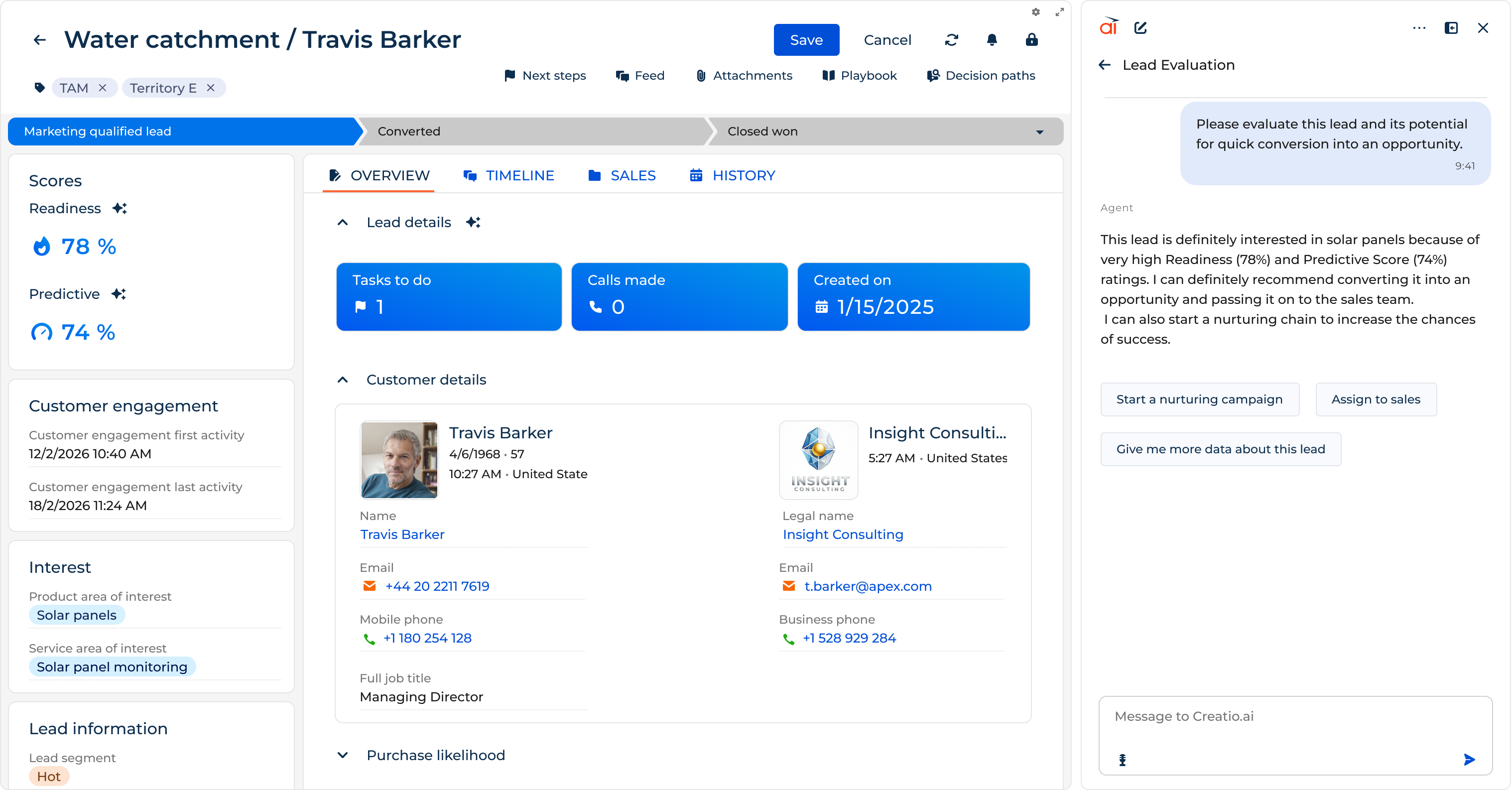
Example of Lead Management agent by Creatio
By adopting vertical AI agents, smart factories can eliminate coordination delays, reduce downtime, and enable faster, more resilient operations at scale.
#2. No-Code + AI Becomes the Default Way Manufacturers Build and Adapt Systems
With 67 % of organizations already using no-code in 2025, organizations accelerate into a new phase where AI-powered no-code platforms become the new norm to build and adapt operational systems. In 2026, manufacturers will leverage this software to visually connect production systems, ERP, quality tools, and machine data, then automate workflows using simple configurations or natural-language instructions — without waiting on long IT development cycles.
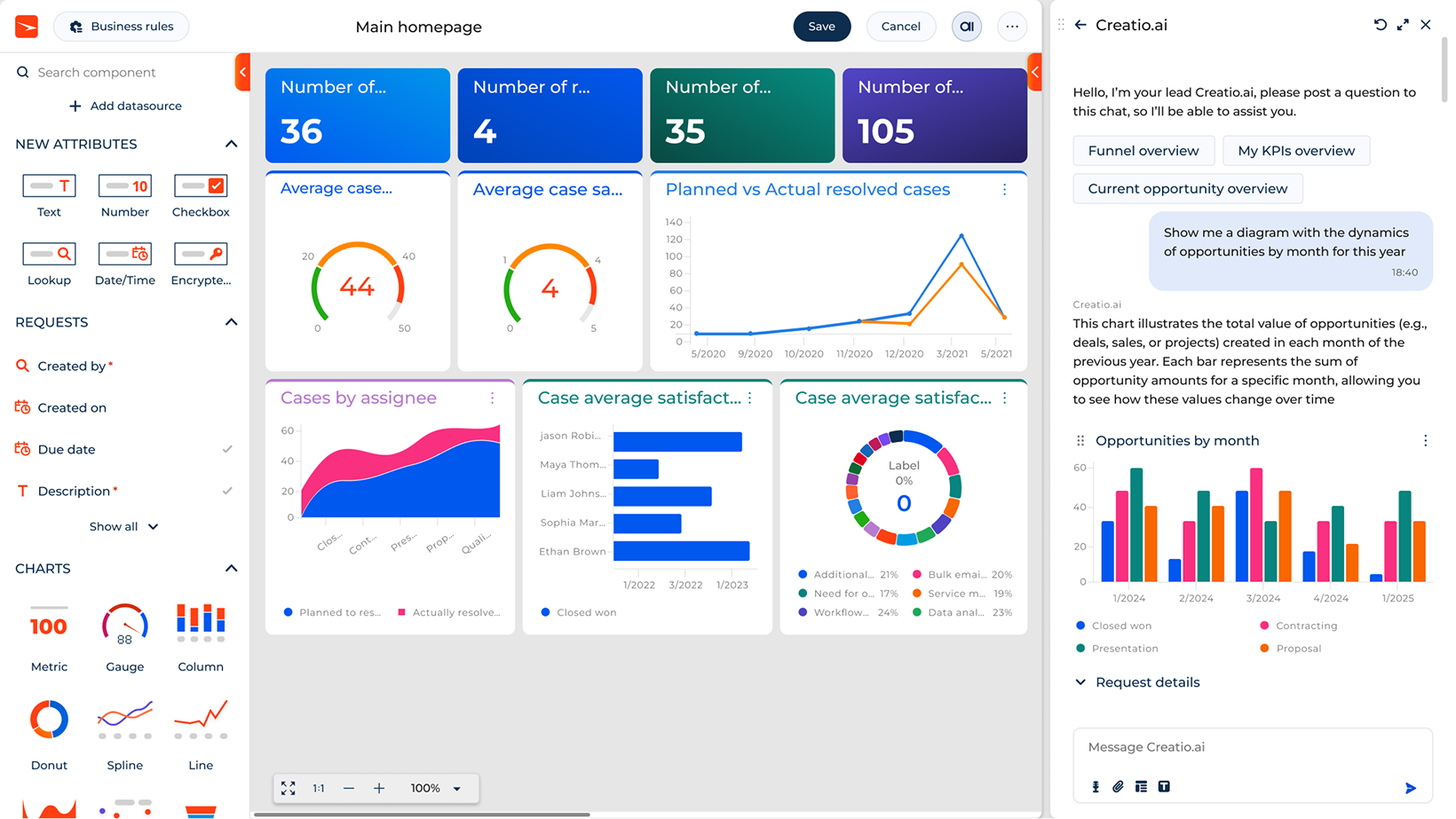
Example of the AI-Enhanced No-code Development at Creatio
For manufacturing industry, AI-enhanced no-code solutions allow faster process updates, quicker responses to disruptions, and continuous improvement without adding pressure on IT teams.
#3. Multi-Agent Systems Become the Core Architecture for Enterprises
Over the next few years, organizations will move beyond isolated AI agents toward coordinated multi-agent systems designed around specific industry domains. In manufacturing, these systems are structured around core operational areas such as production planning, quality control, maintenance, inventory, and logistics. By adopting multi-agent systems across various organizational units, manufacturers can enable end-to-end optimization of tightly connected processes, rather than relying on isolated, fragmented improvements.
The 2026 Enterprise Automation Trends
Explore the key trends that will redefine enterprise automation in 2026, enriched with forward-looking perspectives from leading practitioners.
Summary
AI technologies are making manufacturers more adaptive and data-driven, enabling them to respond faster to change while improving the efficiency of key processes and workflows. Modern AI-native systems can predict disruptions, automate decisions, enhance quality control, and continuously optimize operations across production, supply chains, and resource management.
At Creatio, we empower manufacturers to build flexible, AI-enhanced manufacturing processes that fully align with their business needs. Our agentic no-code platform connects data, workflows, and decision-making within a single system, helping teams to integrate AI across multiple scenarios and use cases, continuously evolving their operations without long development cycles or heavy technical overhead.
See how agentic AI can support your manufacturing operations with a personalized demo from Creatio’s experts.
