







































































Finance CRM: What It Is, Key Features & Best Platforms

Experience Creatio - Leading CRM for Finance

In financial services, every customer relationship is an opportunity to drive revenue growth and long-term loyalty. Finance CRM software helps financial institutions capitalize on these opportunities by connecting customer data and automating workflows. As AI adoption grows, financial institutions can use CRM to identify cross-selling opportunities, reduce manual work, and deliver more relevant customer experiences.
In this article, we explore how CRM software works in financial services, its key features and benefits, and the best platforms for financial institutions.
Key takeaways:
- Finance CRMs help banks, credit unions, and other financial institutions manage complex client relationships, customer onboarding, lending processes, and regulatory requirements.
- Modern finance CRMs connect customer and financial data to uncover cross-selling opportunities, improve client retention, and increase operational efficiency.
- AI-driven CRM capabilities help financial institutions identify revenue opportunities and improve decision-making. Leading finance CRMs also offer AI agents that execute multi-step workflows across specific workflows like customer onboarding, servicing, and retention with appropriate human oversight.
- The best financial service CRMs include Creatio, Salesforce, Microsoft Dynamics 365, and HubSpot, with varying strengths in financial services functionality, AI automation, customization, and enterprise scalability.
What is a Finance CRM?
A finance CRM is a Customer Relationship Management system designed to help financial services organizations manage client relationships more effectively. Used across banking, insurance, lending, and wealth management, finance CRM centralizes customer and account data in a single, secure environment, enabling financial professionals to deliver personalized services, anticipate client needs, and strengthen long-term relationships.
Finance CRMs also help streamline operations through industry-specific workflows, including compliance management, Know Your Customer (KYC), Anti-Money Laundering (AML) processes, client onboarding, lending, and support, depending on the business’ needs.
Modern finance CRMs increasingly leverage AI for the financial industry to execute complex workflows, support customer-facing teams, and improve operational efficiency. According to Creatio's 2026 “State of Enterprise AI Adoption” research, 81% of financial services organizations are already scaling AI agents or plan to do so within the next 12 months.
Finance CRM vs Traditional CRM: What’s the Difference?
The main difference between a finance CRM and a traditional CRM is its ability to address the specific data, operational, and regulatory requirements of the financial services sector. These capabilities can be built in or enabled through customization and integrations:
- Relationship and household data: Connect clients, households, business entities, and financial accounts.
- Onboarding and KYC/AML: Coordinate identity verification, due diligence, and regulatory screening.
- Compliance and audit trails: Manage regulatory controls, approvals, and audit records.
- Lending and product origination: Streamline financial product applications and approvals.
- Financial system integrations: Connect core banking, lending, insurance, and other financial systems.
Types of Finance CRM Software
What works for a retail bank may not meet the needs of a commercial lender or wealth management firm. Finance CRM software addresses these differences with solutions tailored to each financial services segment.
| Type | Primary use cases |
| Retail Banking CRM | High-volume customer acquisition, account opening, deposit growth, and everyday banking services |
| Commercial Banking CRM | Complex corporate relationships, multiple stakeholders, commercial lending, and portfolio management |
| Credit Union CRM | Member-centric relationships, member onboarding, deposit and loan growth, and retention |
| Insurance CRM | Policyholder lifecycle, policy renewals, claims coordination, and agent and broker relationships |
| Mortgage and Lending CRM | Borrower acquisition, application intake, document collection, and loan origination |
| Wealth management and financial advisor CRM | Household relationships, financial goals, portfolio-related interactions, and ongoing advisory services |
Why Do Financial Institutions Need a CRM?
Financial institutions rely on CRM software to strengthen customer relationships, drive revenue growth, and improve operational efficiency. Here's what makes CRM essential to achieving these goals:
- Single source of truth for client data & customer interactions - consolidates all customer and member data, communication history, and financial data into one platform, ensuring every department has access to up-to-date information.
- Stronger customer relationships & retention - helps financial professionals deliver highly personalized service and proactive financial advice, building trust and long-term loyalty.
- Faster onboarding & lending decisions - provides tools to automate credit checks and document verification to accelerate client onboarding and loan approvals while reducing manual work.
- Built-in support for KYC/AML, compliance, and data security- protects sensitive financial data through encryption, access controls, audit trails, and also supports KYC/AML compliance through automated workflows and integrations.
- Better cross-sell/upsell visibility - helps identify new revenue opportunities based on customer profiles, life stages, and product usage, equipping sales representatives with relevant product and service recommendations.
- Operational efficiency across front, middle, and back office - breaks down data silos between departments, improving collaboration, reducing redundant processes, and enabling end-to-end visibility across the client lifecycle.
Interested in CRM for fintech companies? Read our article.
How Different Financial Departments Use CRM
CRM solutions for financial services are versatile tools applicable across multiple departments within a financial business. These systems cater to the unique processes of various organizations, including banks, credit unions, insurance companies, and investment businesses, making everyday tasks simpler and enhancing departmental effectiveness.
Here, we delve into typical departments found in almost any financial business and examine how modern financial services CRM software streamlines their daily tasks with the help of AI agents.
Marketing
A financial CRM supports marketing teams by enabling precise targeting and personalized communication across every channel. It streamlines essential workflows, such as campaign management, lead nurturing, email marketing, and digital advertising, helping teams generate more qualified leads and engage audiences more effectively. Marketing AI agents further elevate efficiency by generating personalized content at scale, automatically delivering nurturing content to prospects, and autonomously optimizing campaigns and budgets for higher ROI.
Sales
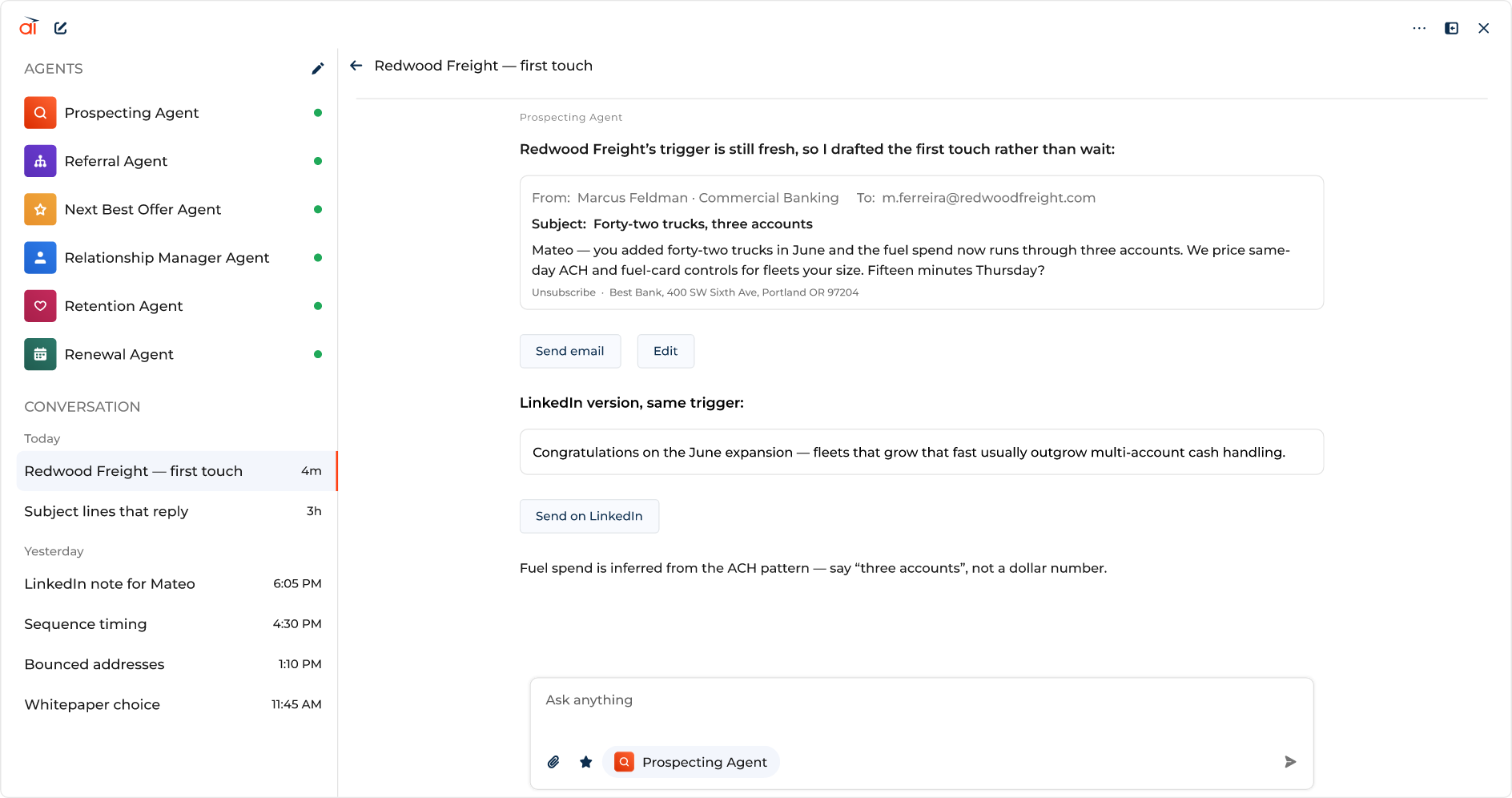
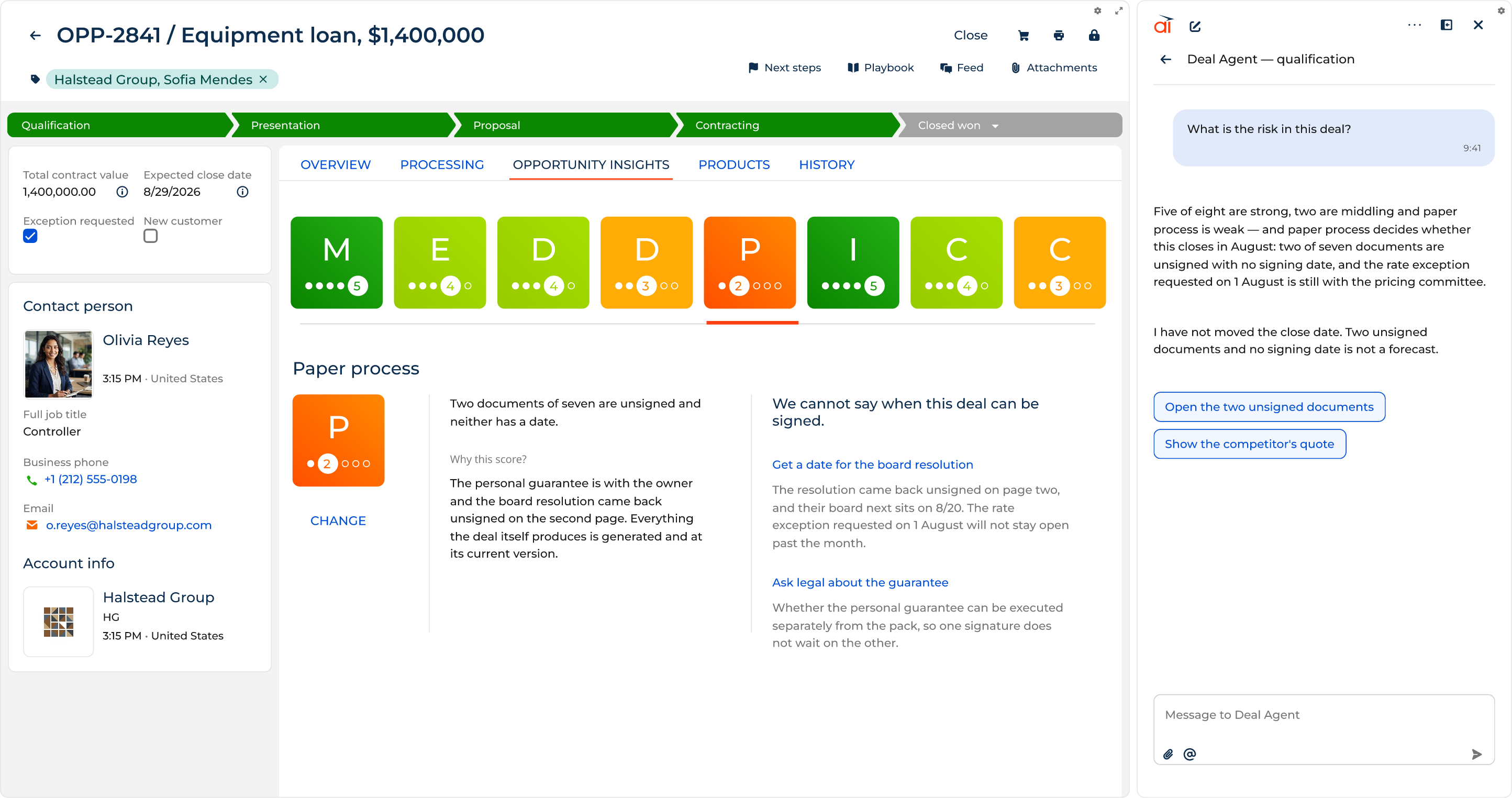
A financial CRM centralizes client interactions, leads, and opportunities, giving sales teams real-time access to accurate prospect and customer data. This unified view enables sales representatives to personalize conversations and tailor recommendations to each client’s needs. The financial services CRM also streamlines core sales processes, such as lead management, pipeline tracking, and follow-up activities, reducing administrative burden and helping move deals forward. AI agents for sales further enhance productivity by automating routine tasks, prioritizing high-value leads, generating personalized offers, and recommending next best actions, freeing up valuable time for the sales team to focus on building lasting customer relationships and closing deals.
Customer service
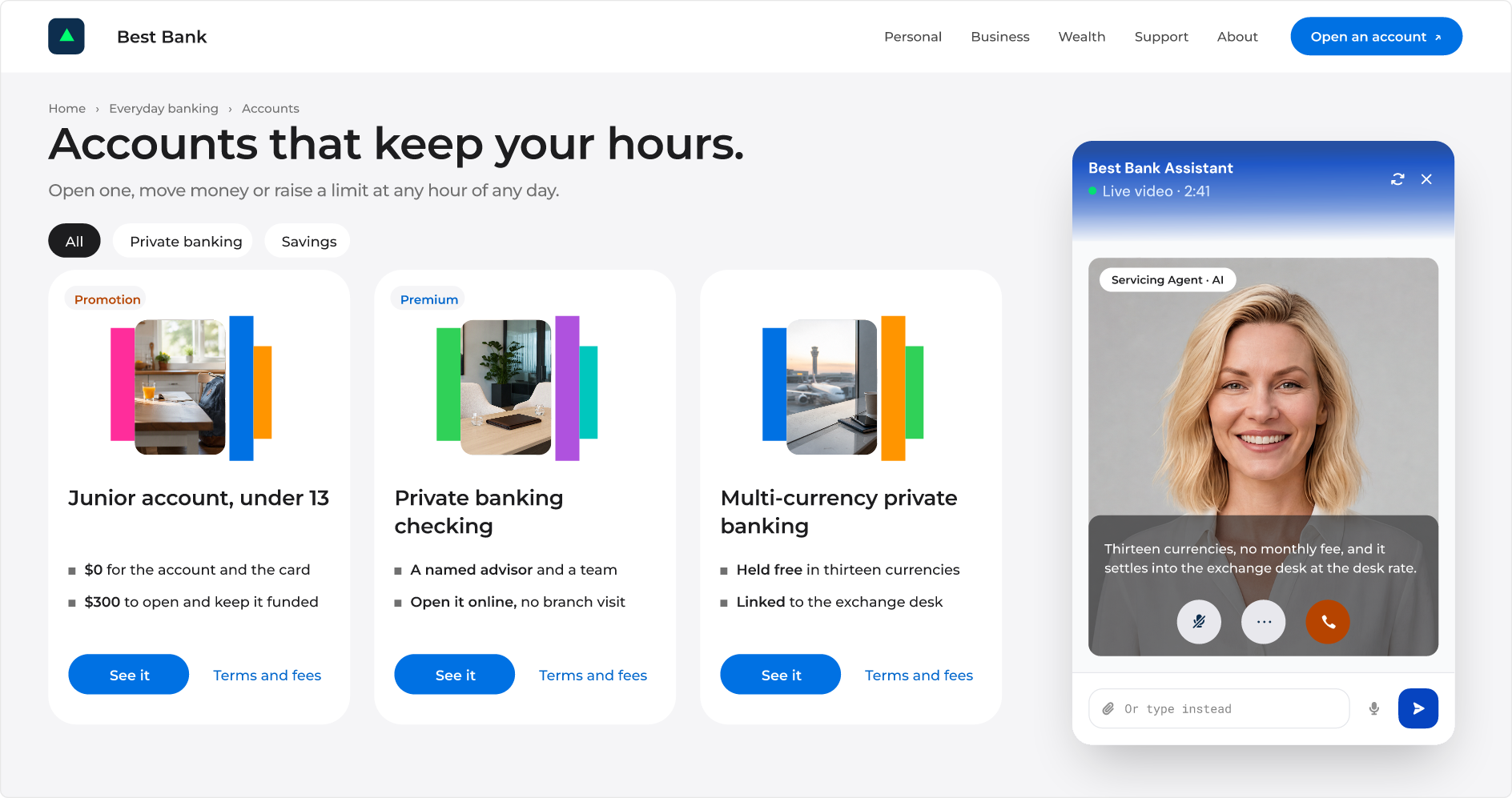
A CRM for financial services supports customer service teams by automatically routing cases and providing agents a unified view of client data, interaction history, and product usage, allowing them to resolve issues quickly and accurately. Customer service AI agents can handle routine inquiries autonomously and route more complex cases to customer service representatives with recommended next steps, and relevant knowledge-base articles, ensuring faster, more consistent support.
Front-office
Financial CRM systems can be used by various front-office roles, including relationship managers, financial advisors, and portfolio managers, to deliver personalized financial advice and enhance client engagement. AI agents further support this process by analyzing vast amounts of behavior data and portfolio trends and generating tailored advice or product suggestions. These AI-powered insights enable advisors to deliver more relevant guidance, anticipate client needs, and improve the overall client experience.
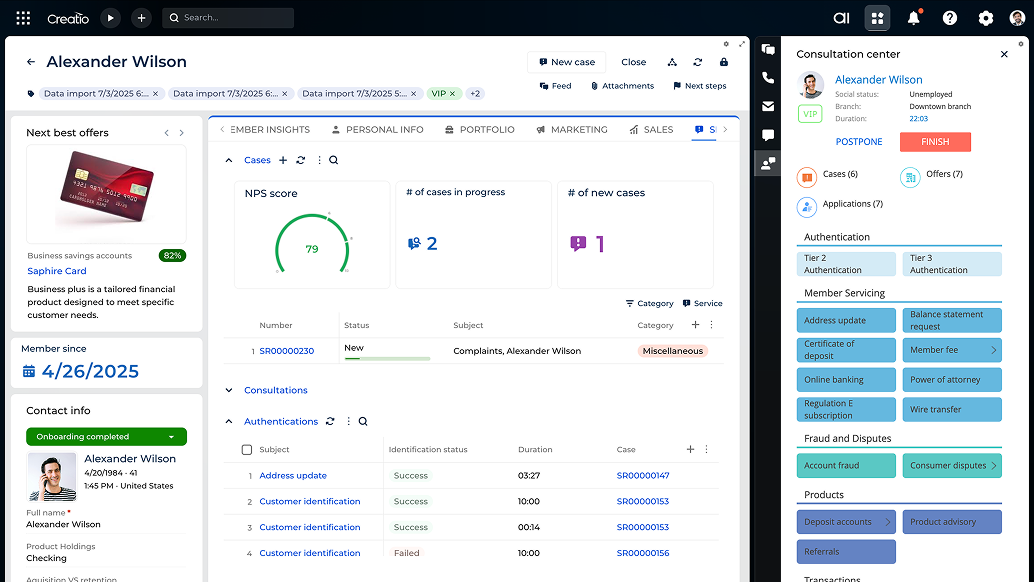
Loan origination and underwriting
In lending departments, a finance CRM system streamlines loan origination by centralizing applicant data, documents, and communications in one secure platform, making it easy for teams to track applications from start to finish. AI agents handle routine tasks, such as data entry, document verification, and status updates, reducing manual work and accelerating turnaround times. With complete borrower profiles and financial histories, underwriters can assess risk more accurately and make better lending decisions.
A CRM system in a financial advisor business isn't limited to client-facing teams. It extends its utility to administrative departments like accounting, legal, HR, and others. As a result, it improves productivity and collaboration across the entire organization by facilitating data sharing and streamlining processes.
Compliance and risk
Compliance and risk teams use finance CRM to manage customer due diligence, investigate flagged activity, and prepare for regulatory audits. Integrated with KYC/AML systems, it supports identity verification and transaction monitoring workflows. The built-in centralized case records and audit trails also help teams track compliance decisions and respond to regulatory reviews.
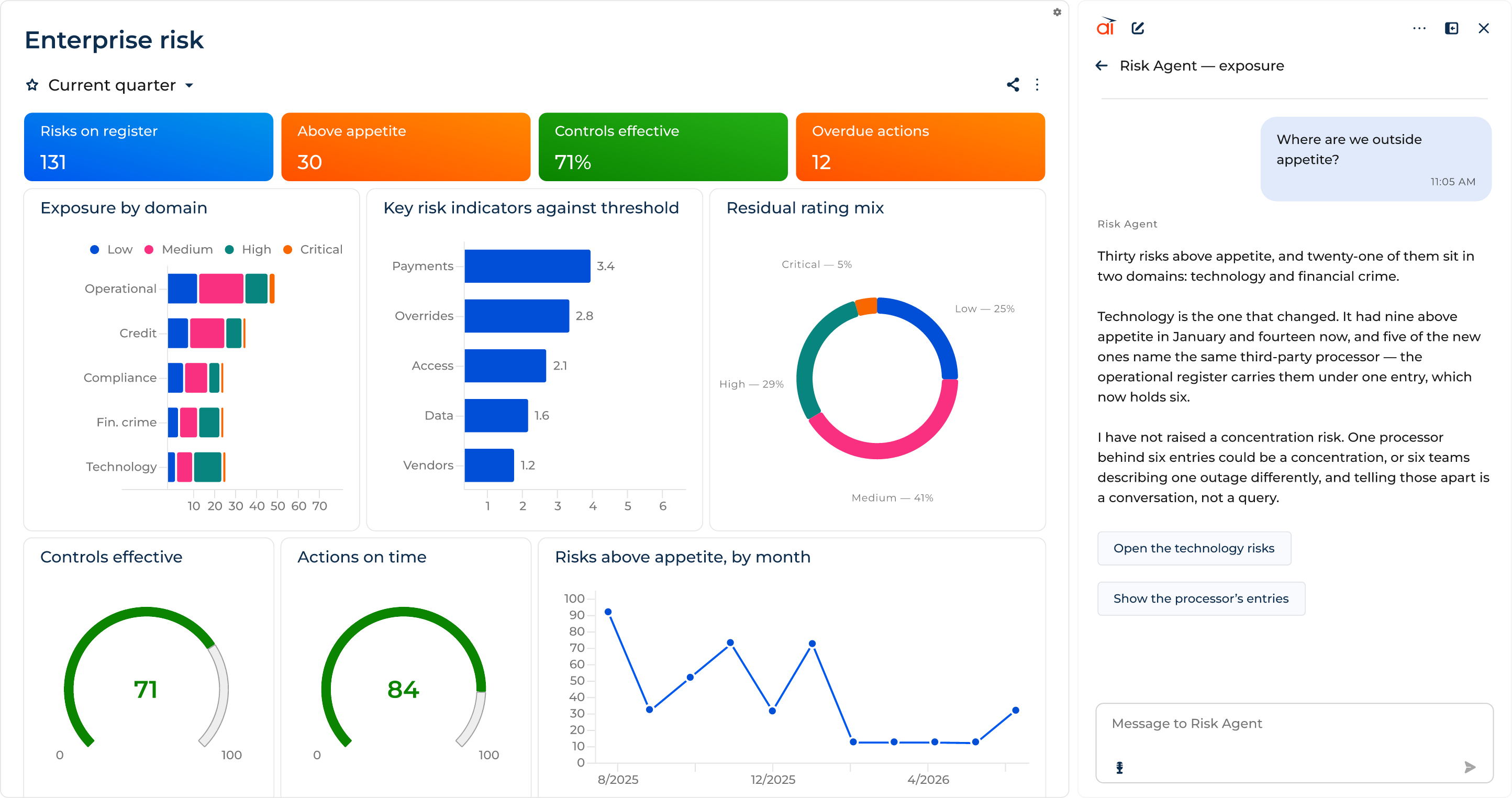
Benefits of a CRM for Financial Services
Finance CRM software offers many benefits to financial advisors, streamlining key operations, and improving customer interactions. Here are the main advantages of CRM for financial services:
- Better lead and pipeline management - 360-degree account view, centralized lead tracking, and AI-driven prioritization help teams focus on high-value opportunities.
- Higher customer retention and wallet share - personalized products and services, proactive outreach, and deeper insights provided by AI agents help strengthen relationships and expand product usage, with opportunities for cross- and up-selling.
- Enhanced customer experience and engagement - AI agents for finance enable personalized communication, faster service, and proactive support, resulting in a more consistent client experience and higher customer satisfaction.
- Faster response and onboarding times - with automated workflows, centralized data, and AI-driven insights, financial professionals can provide faster client servicing, approvals, and onboarding.
- Fewer errors and stronger regulatory compliance - standardized processes and secure data management reduce mistakes and support regulatory adherence, while AI helps detect anomalies, flag compliance risks, and ensure information is accurate and complete.
- Stronger collaboration across departments - a unified financial CRM system enables seamless information sharing between sales, service, lending, operations, and compliance teams.
- More predictable pipeline & revenue - real-time analytics and AI-driven forecasting provide clearer visibility into business performance, helping leaders anticipate market trends, plan confidently, and allocate resources more effectively.

Key Features of a Modern Finance CRM
Financial institutions require more than basic customer management tools. They need systems that support complex workflows, regulatory requirements, and personalized client experiences. Below are the essential features that define today’s leading financial CRM platforms.
1. Customer 360
A finance CRM unifies all client data, including financial accounts, interactions, products, goals, households, and documents, into a single, comprehensive view accessible to relationship managers and field teams on mobile devices. AI agents notify financial advisors about significant life events, such as the addition of new dependents or changes in employment status. This enables teams across the organization to deliver personalized service and make data-driven decisions.
2. Pipeline & opportunity management
Sales teams can track leads, opportunities, and deal progress through a centralized pipeline with full visibility into next steps and revenue forecasts. AI-driven scoring and recommendations help teams prioritize the most promising opportunities.
3. Onboarding and account opening workflows
Automated onboarding workflows simplify account opening and reduce manual errors by guiding clients and employees through required steps, forms, and approvals. This accelerates time to value and ensures consistent, compliant onboarding experiences.
4. KYC/AML and compliance support
Built-in KYC/AML tools streamline identity verification, risk management, and ongoing monitoring. Audit trails, automated alerts, and AI-driven anomaly detection help firms maintain compliance and reduce operational risk. Additionally, AI agents automatically route fraud cases and escalate issues based on risk score.
5. Lending and underwriting flows
Lending workflows in the CRM for financial services support the full loan lifecycle, from application intake to underwriting and approval. Centralized borrower data and AI-powered risk scoring enable more informed, efficient credit decisions.
6. Integrated omnichannel communications
Financial CRM systems support communication across email, phone, SMS, chat, and digital channels, ensuring consistent engagement wherever clients interact. Automated routing and conversation history make it easy for teams to provide timely, informed support.


7. Document management
Secure document storage centralizes client files, application forms, compliance records, and contracts in one place. Automated version control, access permissions, and e-signatures streamline collaboration and reduce administrative workload.
8. Analytics and reporting
Dashboards and reporting tools provide real-time insights into sales performance, client behavior, portfolio health, and operational KPIs. AI-enhanced analytics identify trends, surface risks, and highlight new opportunities for growth that might have gone unnoticed during traditional analysis.
9. Automation and AI-assisted workflows
Automated workflows eliminate repetitive tasks across service, sales, and marketing processes. AI agents enhance processes by generating personalized recommendations, detecting risks, predicting outcomes, and triggering next-best actions across the client lifecycle.
According to research conducted by Creatio, 87% of business and technology leaders in the financial industry view AI agents as a means to drive productivity, create growth opportunities for existing staff, or establish new roles within the organization.
10. Integrations with core banking and financial systems
Modern finance CRMs integrate with core banking systems, KYC/AML providers, payment gateways, e-signature tools, accounting/ERP, BI, and telephony platforms. These integrations synchronize customer data and automate workflows across systems, reducing manual work and improving operational efficiency.
10 Best CRMs for Financial Services (2026)
Selecting the best CRM for your financial institution might be challenging. Below is a curated list of the top CRM solutions for financial services in 2026, highlighting their strengths, key features, and considerations to help you make an informed decision.
Software | Best for | G2 rating | Starting Price |
| Creatio CRM | Financial service institutions looking for a comprehensive CRM with native no-code and AI capabilities | 4.6/5 | $40/user/month |
| Salesforce Financial Services Cloud | Very large financial institutions requiring expansive features & integrations | 4.2/5 | $325/user/month + $700 for AI capabilities |
| Microsoft | Organizations already using the Microsoft stack | 4.0/5 | $65/user/month for Microsoft Dynamics 365 + $20,000/tenant/month for Financial Services Cloud |
| HubSpot CRM | Growing finance firms seeking advanced marketing capabilities | 4.4/5 | $90/user/month |
| Zoho CRM | Small to mid-size finance firms needing a customizable CRM | 4.1/5 | $35/user/month |
| Wealthbox CRM | Wealth-management firms and advisors who need a purpose-built CRM | 4.6/5 | $59/user/month |
| Oracle | Large retail and corporate banking looking for solutions with AI-driven insights | 4.2/5 | Pricing upon request |
| Redtail CRM | Financial advisory firms that want to build strong client relationships | 4.3/5 | $39/user/month |
| Pipedrive | Smaller financial firms or advisory teams that primarily need sales tools | 4.3/5 | $49/user/month |
| BUSINESSNEXT | Financial advisors with unique processes | 4.0/5 | Pricing upon request |
1. Creatio
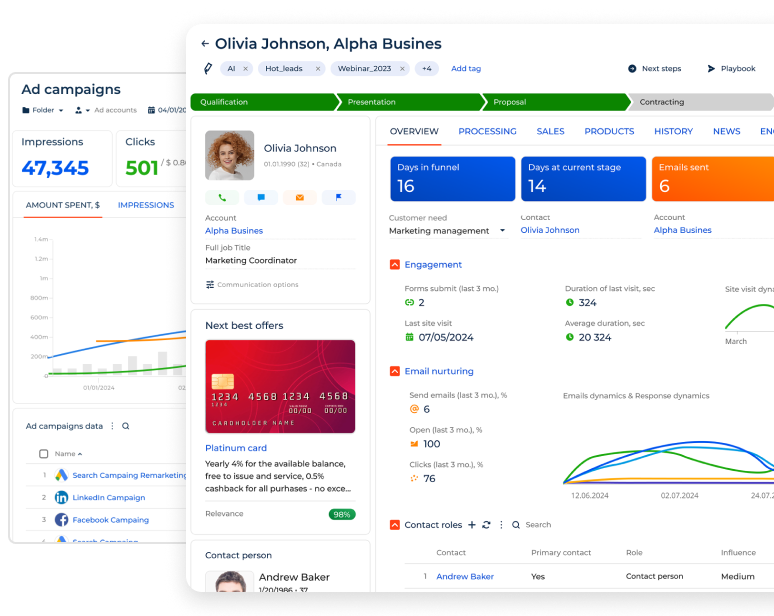
Creatio CRM is an AI-powered CRM platform that helps financial organizations manage customer relationships and automate sales, marketing, service, and other customer-facing workflows. With embedded AI, visual designers, and no-code tools, it enables organizations to tailor CRM processes to their specific needs, automate complex workflows, and seamlessly integrate AI into everyday work.

Financial services organizations can use Creatio CRM to centralize customer data, manage leads and opportunities, personalize customer engagement, and streamline sales, marketing, and service workflows. Built-in CRM AI agents support these processes by automating routine tasks, surfacing relevant insights, and recommending next-best actions, while no-code tools enable organizations to adapt applications and workflows to their specific business requirements without extensive development.
For banks and credit unions specifically, Creatio also offers Creatio Bank.AI — a dedicated Banking CRM and AI Platform designed around the processes and requirements of the banking industry. It combines banking-specific CRM capabilities, pre-built workflows, and specialized AI agents to support commercial banks, retail banks, and credit unions across the customer lifecycle.
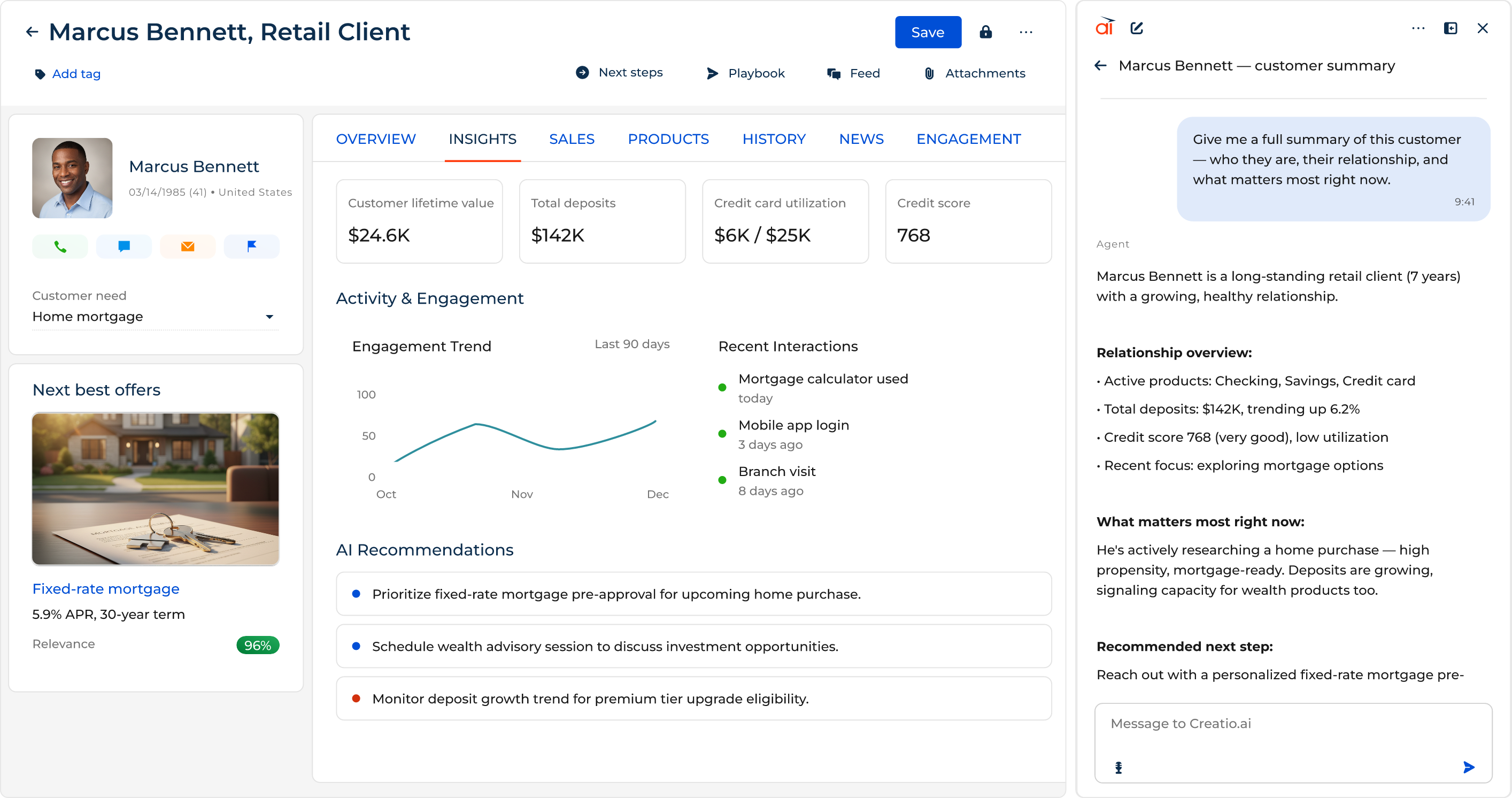
Creatio Bank.AI supports processes such as customer acquisition and onboarding, relationship management, account and product servicing, KYC and AML, risk, compliance, and banking operations. Its specialized AI agents bring banking context and process logic into these workflows, helping institutions execute specific tasks autonomously or with a human in the loop.
The two offerings address different needs: Creatio CRM provides broad CRM and workflow capabilities across industries, while Creatio Bank.AI combines dedicated CRM, automation, and AI for banking.
Key features of Creatio CRM:
- Sales, Marketing, and Customer Service applications for managing customer-facing processes.
- No-code customization with visual tools, pre-built templates, and a composable architecture for adapting applications and workflows to specific business requirements.
- AI capabilities and agents to automate routine work, surface insights, support decision-making, and improve employee productivity.
- Workflow automation for designing and automating customer-facing and operational processes.
- Integration capabilities and an extensive Creatio Marketplace for connecting CRM with third-party applications and enterprise systems.
- Enterprise-grade security and AI governance capabilities for managing AI securely and responsibly.
Key features of Creatio Bank.AI for banks and credit unions:
- Customer 360 and relationship management to provide bankers with a unified view of customer relationships, interactions, portfolios, and opportunities.
- Customer acquisition and onboarding workflows for managing prospects and moving customers through onboarding processes.
- Relationship expansion and retention capabilities supporting referrals, personalized offers, renewals, and retention.
- Contact center and case management for managing customer conversations, service requests, complaints, and cases.
- Account and product servicing workflows for account requests, product applications, disputes, cards, and other banking processes.
- KYC, AML, risk, and regulatory workflows connecting customer-facing processes with compliance, risk management, document processing, and regulatory requirements.
- Specialized AI and autonomous agents for banks and CUs, including Customer Onboarding Agent, Referral Agent, Retention Agent, Account Servicing Agent, Dispute Resolution Agent, Document Processing Agent, and more.
Key limitations:
- Creatio's extensive customization and configuration capabilities may require additional learning for organizations and users new to no-code application development.
- Organizations should evaluate Creatio CRM and Creatio Bank.AI based on their specific use case: Creatio CRM provides broad CRM capabilities across industries, while Creatio Bank.AI is specifically designed for banks and credit unions.
Pricing:
Creatio CRM pricing starts at $40 per user/month for the core platform, which includes built-in AI capabilities. The CRM products — Creatio Sales, Creatio Marketing, and Creatio Service — are priced at $15 per user/month each.
For organizations evaluating Creatio Bank.AI, pricing should be assessed separately based on the banking solution and implementation requirements.
2. Salesforce Financial Services Cloud
Salesforce is an enterprise financial CRM powered by AI that unifies customer information from core banking, wealth, and insurance platforms. It enables professionals from the financial services sector to better analyze customer interactions, understand their clients, personalize interactions, and streamline processes across various departments. With its data-driven insights, AI capabilities, and seamless integration with other Salesforce products, Financial Services Cloud helps financial organizations enhance customer satisfaction, drive growth, and ensure compliance.
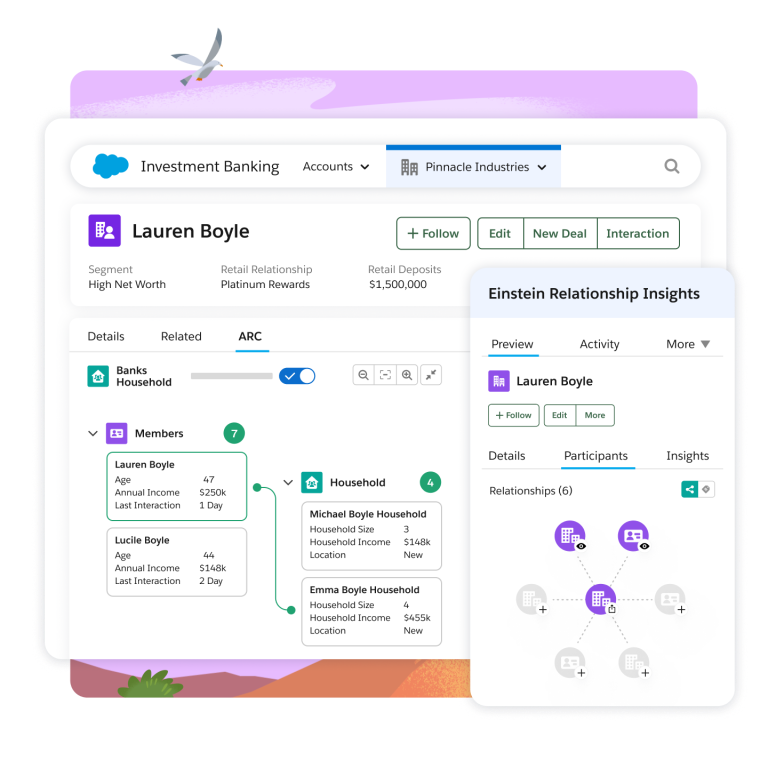
Key features:
- Pre-configured templates for customer onboarding, financial planning, account management, and more.
- AI capabilities through Agentforce to automate tasks, optimize processes, and improve customer experiences.
- Seamless integration with other Salesforce products.
- Enterprise-grade security and compliance.
Key limitations:
- High cost of ownership, with additional fees for advanced tools, including AI agents, digital lending, collections, and compliance.
- Significant implementation effort that often requires assistance from an IT department or Salesforce support.
- Steep learning curve due to an unintuitive interface.
- Complex customization can lead to a longer time-to-value.
- Slow when processing large amounts of data.
Pricing:
Salesforce Financial Services Cloud starts at $325/user/month, with advanced AI capabilities available in higher-tier editions costing up to $700/user/month.
See also: Salesforce Alternatives & Competitors and Salesforce Marketing Cloud Alternatives & Competitors
3. Microsoft
Microsoft Cloud for Financial Services is an all-in-one suite of integrated solutions, featuring Microsoft Azure, Microsoft 365, Dynamics 365, Microsoft Teams, and Power Platform, tailored to meet the unique demands of the financial industry. It equips financial advisors with deeper insights and the latest AI innovations, enabling the delivery of differentiated customer and client experiences, improving employee productivity, and combating financial crime.
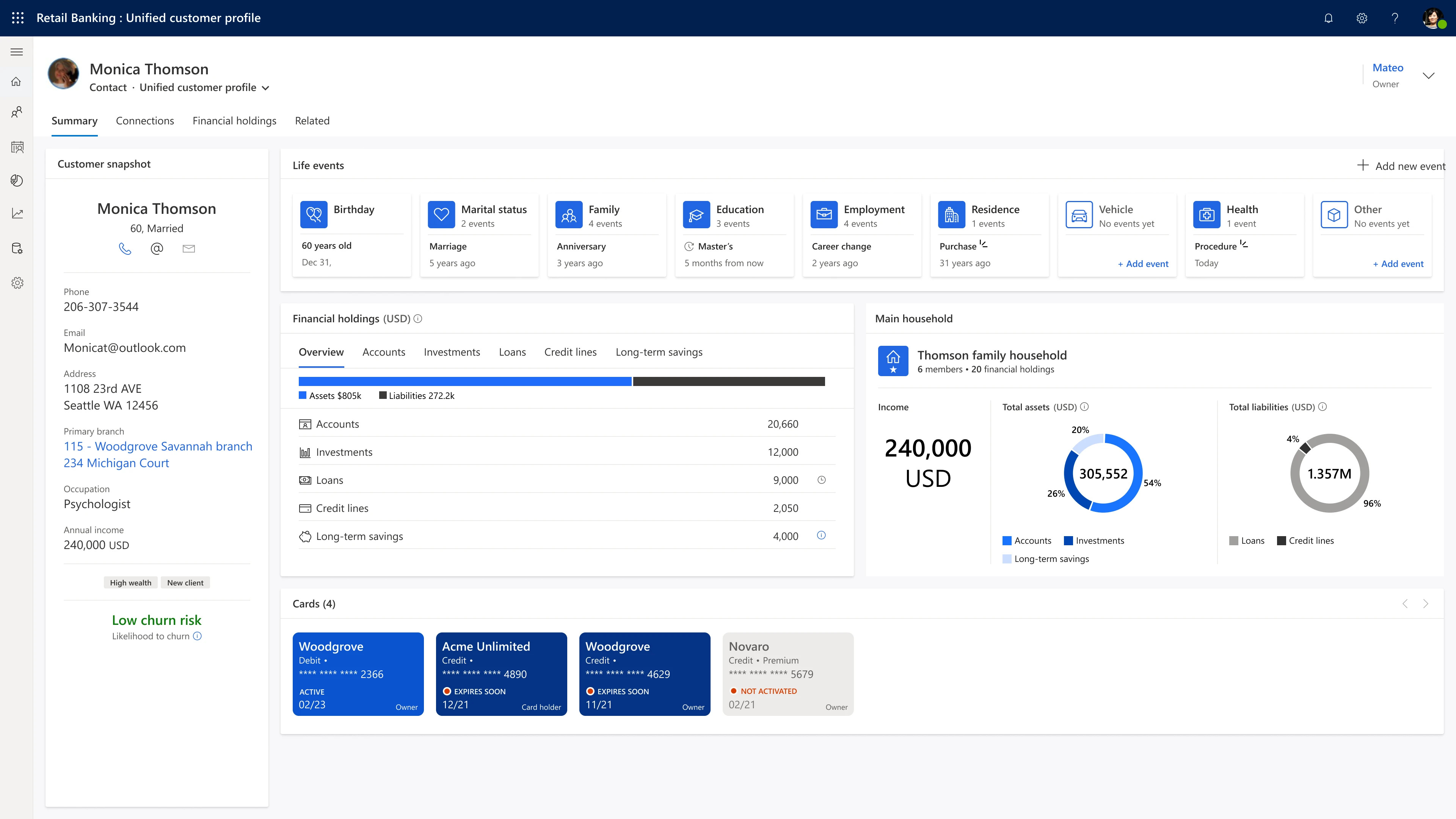
Key features:
- Seamless integration with Office 365, Teams, Power BI, and Azure.
- Pre-configured, AI-powered solutions for banking, insurance, and capital markets.
- Flexible deployment and modules for sales, service, and finance operations.
- Strong analytics, customization, and enterprise security.
Key limitations:
- Very high total costs of ownership.
- Complex implementation and customization process.
- Financial services cloud is an add-on and entails additional fees on top of Microsoft Dynamics 365.
- Licensing structure can become complex and costly at higher tiers.
- Microsoft Cloud for Financial Services is only available in selected countries.
Pricing:
The pricing is available upon request.
4. HubSpot CRM
HubSpot is a general-purpose CRM frequently adopted by small or fast-growing financial firms seeking combined marketing, sales, and service functionality. It offers a straightforward user experience and can support outbound and digital-led growth strategies. This unified platform allows financial advisors to organize, track, and nurture client interactions effectively, enhancing customer relationships.
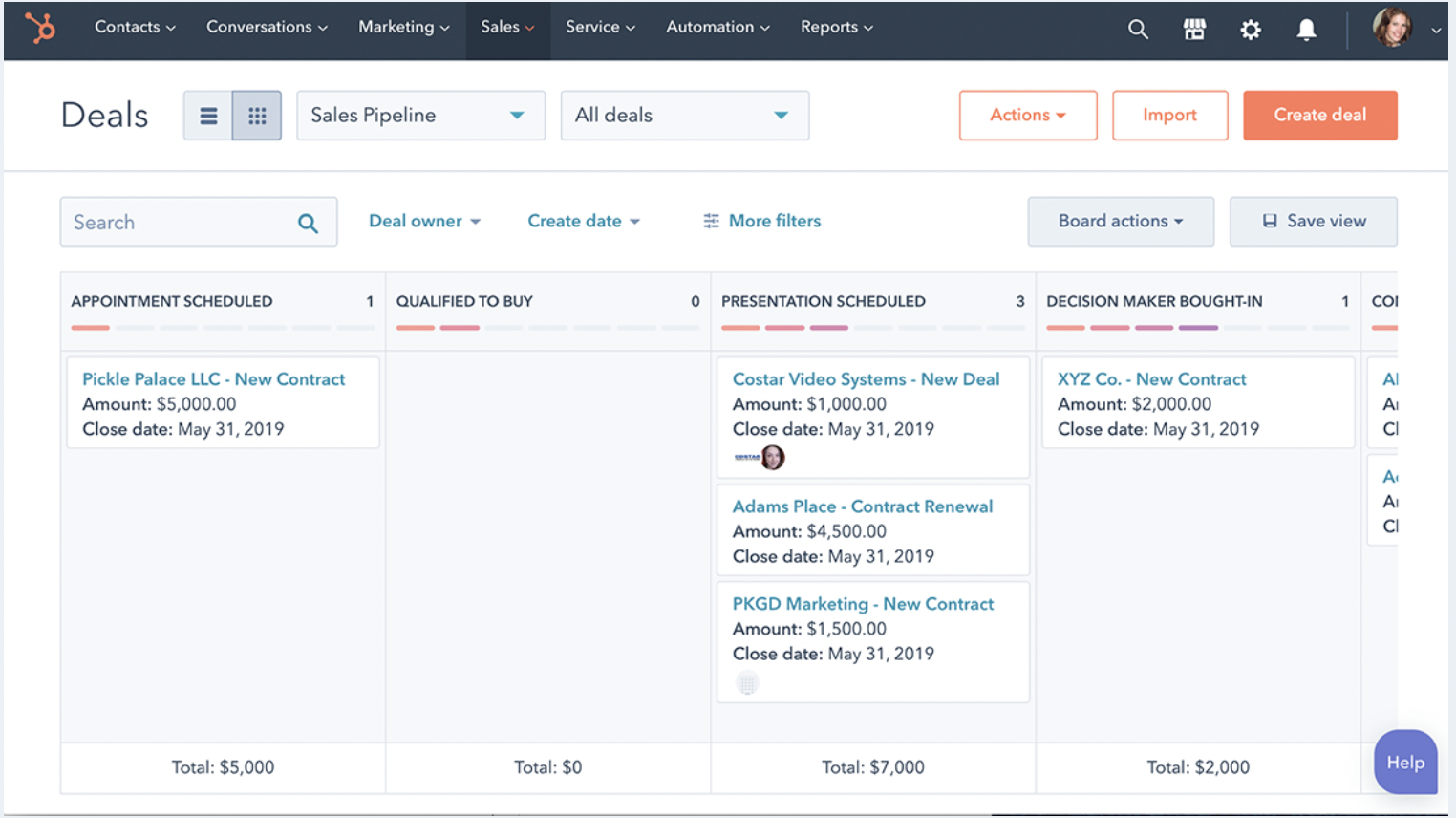
Key features:
- Easy to adopt with a free tier, strong marketing automation, and unified customer experience.
- Seamless integration with other HubSpot tools streamlines data sharing and communication across the organization.
- User-friendly interface and seamless scalability.
- HubSpot Breeze - AI assistants and agents to automate routine tasks, generate content, streamline social media campaigns, and manage customer data.
- Pipeline management, email tracking, and outreach tools built in.
- Analytics and reporting features for data-driven decision-making.
Key limitations:
- Not built specifically for financial services, lack of out-of-the-box workflows for compliance/KYC/AML processes.
- Advanced capabilities require higher-tier plans, which can significantly increase costs.
- May lack built-in complex product origination tools needed by larger financial firms.
Pricing
Pricing for HubSpot depends on the selected products and starts from $90/user/month for Sales and Service Hubs, and from $800/month for the Marketing Hub (includes 3 core seats). Additional fees apply for onboarding and certain AI capabilities.
See also: Top 10 HubSpot Alternatives & Competitors
5. Zoho CRM
Zoho CRM is a custom-built CRM software for banking and financial services designed for small to mid-sized organizations that seek sales and marketing tools. It offers a wide suite of products within the Zoho ecosystem, allowing firms to assemble a broader operational stack if needed. Zoho CRM helps increase employees' productivity with automation, custom workflows, and AI-driven insights.
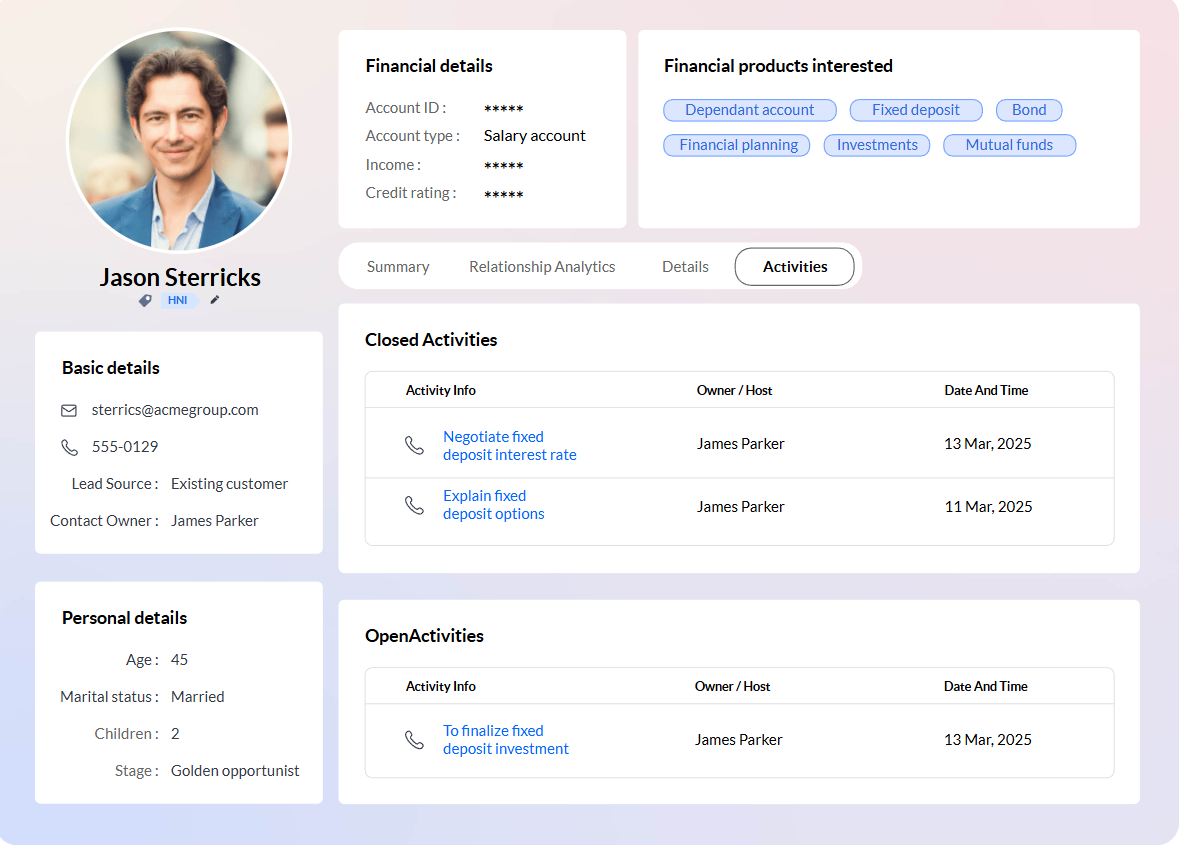
Key features:
- 360-degree customer view, lead management, and lead nurturing tools.
- Automated customer onboarding and KYC verification.
- Personalized wealth planning and investment plan recommendations based on key life milestones.
- Loan Origination System to support loan application from submission to disbursal.
- Integration with fintech platforms through APIs.
- Analytics dashboards for actionable insights and regulatory compliance.
Key limitations:
- Not suitable for larger organizations that require more advanced capabilities and security standards.
- Difficult and time-consuming customization and integration with third-party applications.
- Artificial limitations that require an upgrade to higher plans to fully benefit from all CRM capabilities.
- Outdated user interface with some key features buried in menus.
Pricing:
Pricing for Zoho CRM with AI capabilities starts at $35/user/month, or $50/user/month for Enterprise with advanced AI capabilities, billed monthly.
See also: Top 10 Zoho CRM Alternatives and Competitors
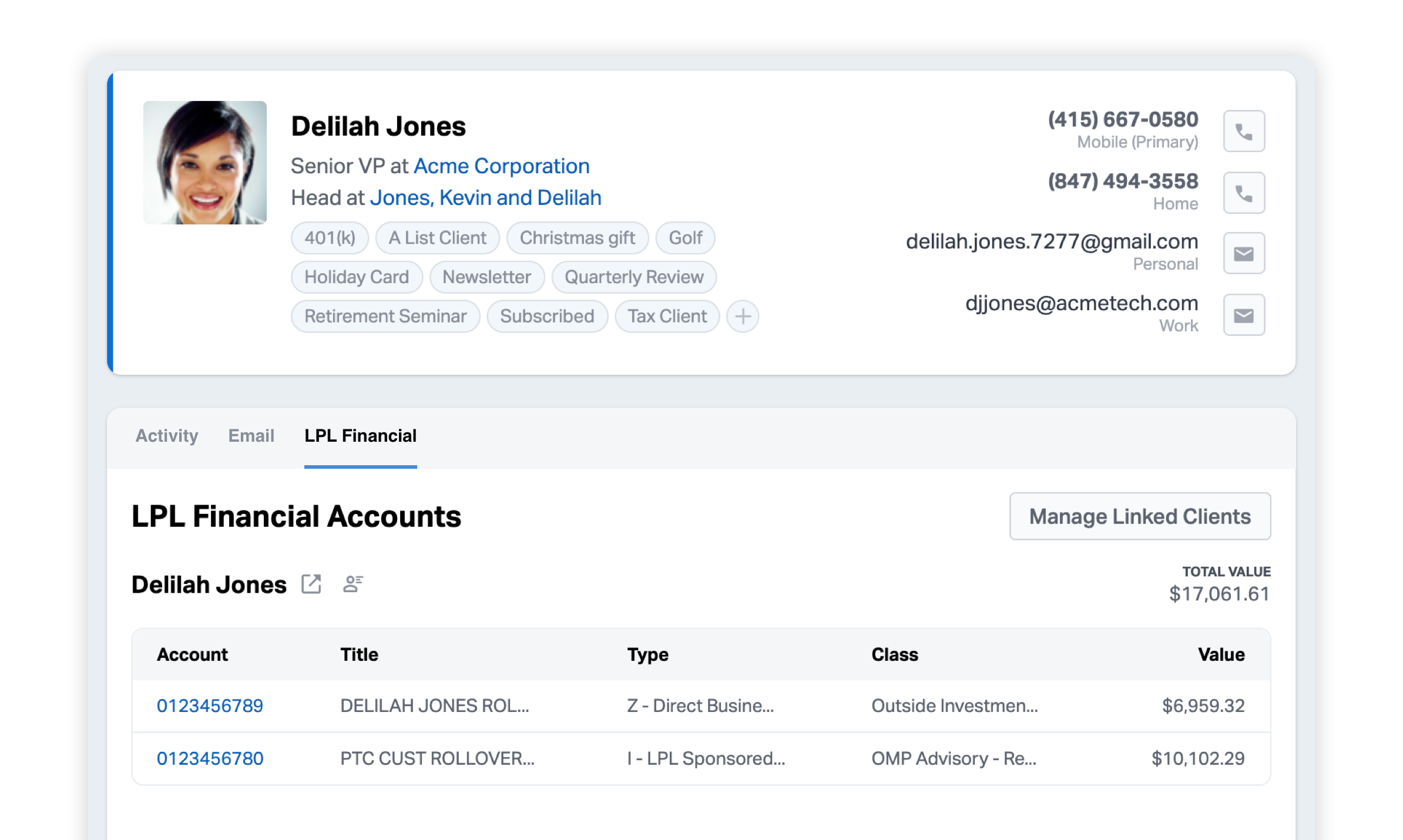
6. Wealthbox CRM
Wealthbox is a specialized software solution designed for financial advisors and RIA firms that need simple client tracking and streamlined daily workflows. It focuses on relationship management and activity tracking, offering integrations with custodians and advisor tools. The system is designed for advisory teams rather than comprehensive banking or lending operations.
Key features:
- Robust contact management for seamless tracking and sharing of client activity updates across the entire organization.
- Automated workflows with customized templates for increased business efficiency.
- Wealthbox Mail with a two-way email sync for streamlined email management and analytics.
- Drag-and-drop interface for building and managing sales pipeline.
- Security features with visibility permissions and SOC 2 certification.
Key limitations:
- Not suitable for the advanced needs of banks and credit unions.
- Customization and automation capabilities are more limited compared to enterprise platforms.
- Scalability may be constrained as the firm grows or needs more complex workflows.
- Missing compliance and product origination features.
Pricing:
Pricing for Wealthbox starts at $59/user/month for basic CRM capabilities.
7. Oracle
Oracle CX for Financial Services empowers retail and corporate banking institutions to transform their operations and transition to a digital client experience. Offering a comprehensive 360-degree view of customer data, financial organizations can manage client interactions, nurture personalized relationships with each customer, and provide tailored financial solutions to meet their specific requirements.
Key features:
- Guided selling and self-service personalized product recommendations with chatbots.
- Automated onboarding and account origination workflows.
- Built-in generative AI and ML capabilities for business, customer, and wealth and cash management insights.
- Configurable dashboards with dynamic no-code design elements that leverage machine learning.
- Oracle Banking Routing Hub for integrations across multiple domains and product processors.
Key limitations:
- Implementation is typically complex and resource intensive.
- May require heavy customization for specific advisory or niche workflows.
- High licensing costs may not be suitable for smaller firms.
Pricing:
Pricing for Oracle is determined by the selected products and is available upon request.
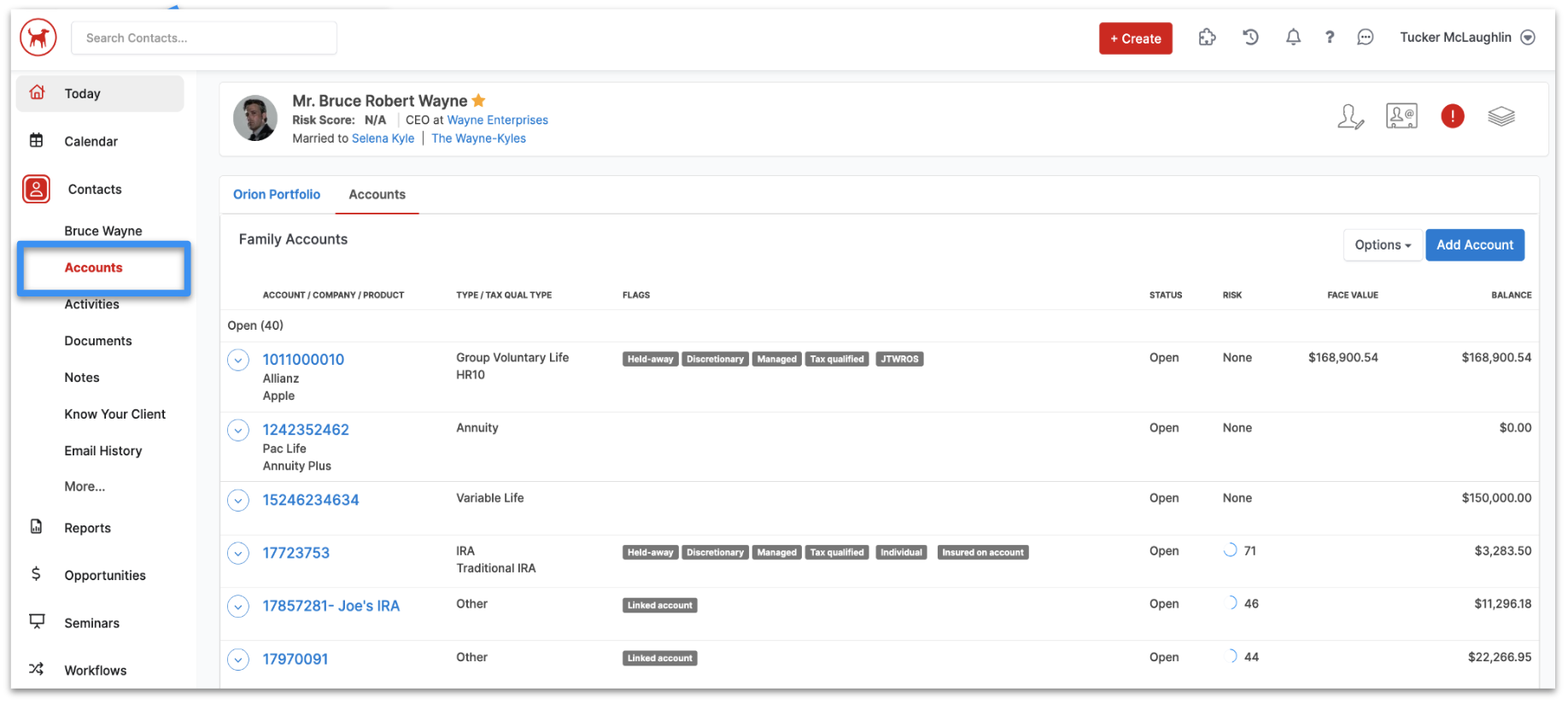
8. Redtail CRM
Redtail is a financial CRM commonly used by wealth and financial planning firms to enhance client relationships and support compliance requirements. It provides core CRM functions alongside tools for basic workflow management and recordkeeping. Its structure is purpose-built for financial advisors rather than complex, multi-department financial organizations, and is not suitable for banks or credit unions.
Key features:
- Built-in advisory workflows, such as opportunity tracking, onboarding, reviews, client communication, and financial planning tools.
- Comprehensive view of all client and household data in one place
- Calendar and activity tools for automatic scheduling, assigning, and tracking of client meetings.
- Seamless integration with core advisory tools, such as Orion, Schwab, and eMoney.
Key limitations:
- The platform lacks advanced enterprise-level automation or AI-driven analytics.
- Compared to full-service CRMs, it has fewer capabilities for non-advisor workflows.
- Not suitable for banks or credit unions.
Pricing:
Redtail CRM pricing starts at $39/user/month for the Launch plan (up to 5 users), billed annually. The Growth plan starts at $59/user/month.
9. Pipedrive
Pipedrive is a sales-focused CRM solution designed to simplify pipeline management, deal tracking, and daily sales activities. While not specifically built for financial services, it offers intuitive workflows, customizable pipelines, and straightforward tools for managing leads and client conversations. Its visual interface helps teams monitor deal progress, while AI-driven insights assist with prioritizing opportunities, forecasting outcomes, and recommending next steps.

Key features:
- Visual deal pipeline interface with drag-and-drop stages and customisable workflows.
- Workflow automation for key sales processes.
- AI-powered Sales Assistant recommending next steps and prioritising deals.
- An extensive integration marketplace with over 400 third-party apps.
Key limitations:
- Lacks built-in finance-industry-specific workflows (e.g., underwriting, onboarding) out of the box.
- Advanced features are locked behind higher plans.
- Less suited for full customer-lifecycle management (marketing, service, compliance) compared to full finance CRMs.
- Less advanced customization options for reporting dashboards.
- Lacks scalability for complex, enterprise processes.
Pricing:
Pricing for Pipedrive CRM, featuring full-cycle sales tools is featured under the Premium plan at $59/user/month, billed annually.
10. BUSINESSNEXT
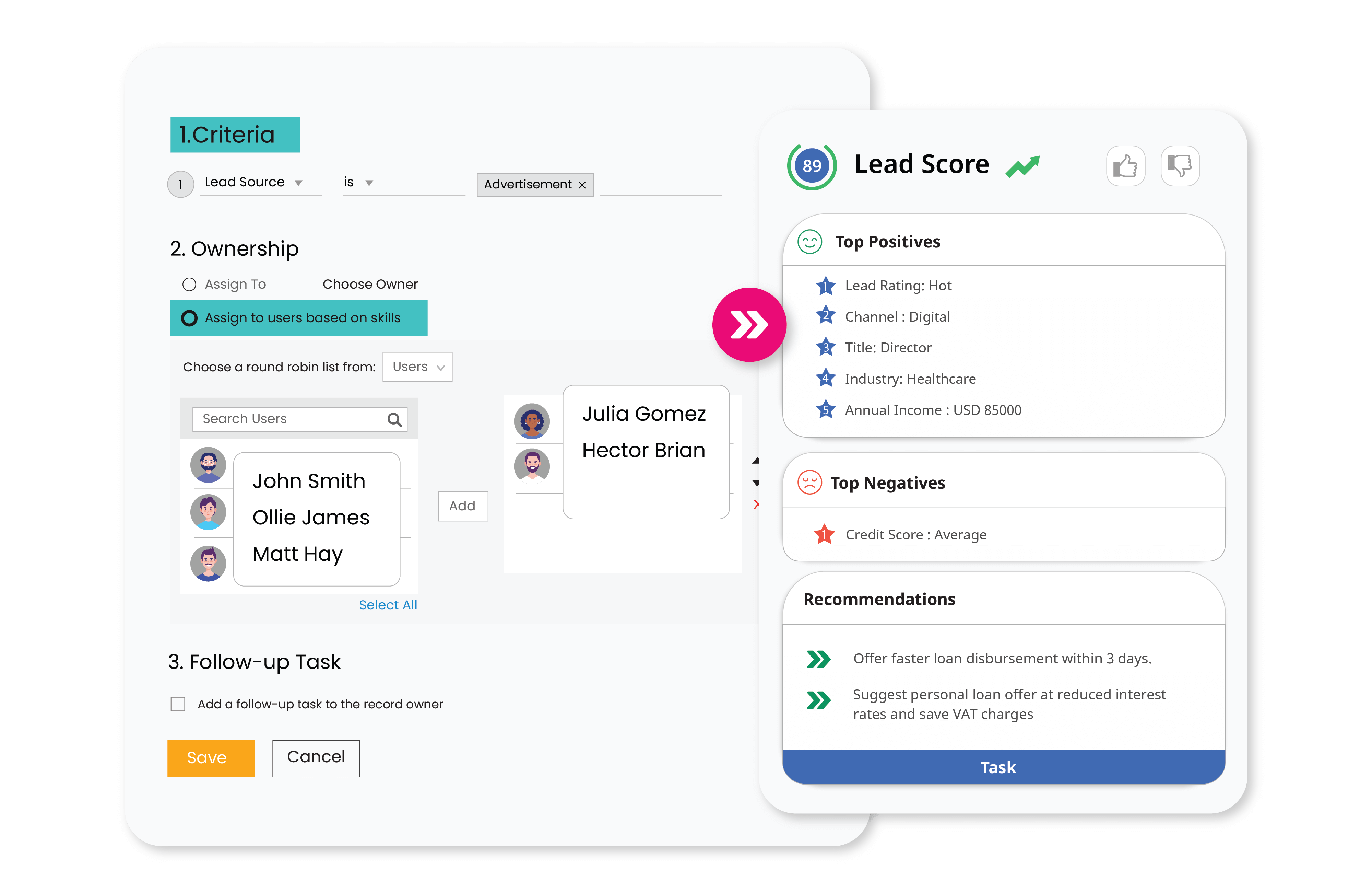
BUSINESSNEXT is a CRM suite tailored for financial advisors. It implements its vision of bringing about autonomous banking through a composable set of platforms, including CRMNEXT, DATANEXT, CUSTOMERNEXT, and over 12 pre-assembled products. With the help of AI tools, BUSINESSNEXT empowers financial institutions to convert leads more efficiently, personalize offers, and streamline tasks.
Key features:
- 360-degree member and customer views and lead management tailored to financial institutions.
- AI-driven opportunity management, real-time insights, and next best actions for sales teams.
- Automated workflows, an intelligent knowledge base, and Gen-AI-powered smart bots for enhanced customer service.
- Composable platform architecture, with ready connectors and modules for lending, onboarding, and digital engagement.
Key limitations:
- As a niche finance industry CRM, deployment and support may be region- or market-specific, requiring local adaptation.
- Smaller ecosystem and third-party marketplace compared to larger vendors.
- Some user reports complex setups and slow loading times.
Pricing:
Pricing varies by institution size, product lines, and deployment scope, and it’s available upon request.
How to Choose the Right Finance CRM
Choosing the right financial CRM is a critical decision for financial advisors. To make the best choice, consider the following key factors:
- Business requirements - define your workflows, pain points, compliance needs, client base size, and product complexity to determine the features and functionalities that are most critical for your business.
- Feature scope - ensure the CRM of your choice includes finance-specific capabilities, such as onboarding, KYC/AML, lending, service, analytics, and strong security.
- AI agents and governance - assess whether the CRM offers AI agents that can execute multi-step workflows, not just generate insights or recommendations. Look for configurable autonomy, human oversight, and audit trails.
- Customization - prioritize flexible platforms with no-code tools that allow business users to adapt workflows and applications without extensive development.
- Ease of use and adoption - consider usability across departments, training requirements, and vendor support to encourage adoption and minimize disruption.
- Integrations - check compatibility with core banking systems, KYC/AML providers, payment gateways, e-signature tools, accounting/ERP, BI, and telephony platforms.
- Security and compliance - assess data encryption, access controls, audit trails, and support for applicable regulatory requirements.
- Scalability - ensure the platform can support growing customer volumes, additional users, new products, and more complex workflows.
- Total cost of ownership and time to value - compare licensing, AI add-ons, implementation timelines, consulting costs, and ongoing maintenance. Consider how quickly business users can launch and modify workflows without external development support.
Summary
Modern finance CRMs help financial institutions strengthen customer relationships, automate workflows, and support regulatory compliance. With AI agents, advanced analytics, and no-code customization, they enable more personalized service, greater efficiency, and faster innovation.
Creatio offers an AI-native CRM and workflow platform that helps financial institutions automate complex processes and adapt to changing business needs. For banks and credit unions, Creatio Bank.AI provides a dedicated banking CRM and AI platform with specialized banking AI agents. See Creatio in action with a guided live demo.
FAQ
What CRM software do banks and financial institutions use?
Financial institutions use popular CRM platforms such as Creatio, Salesforce, and Microsoft Dynamics 365. Banks and credit unions can also choose dedicated banking solutions like Creatio Bank.AI designed for more specific industry needs.
Can financial CRM software use AI agents?
Modern finance CRMs offer pre-built, customizable AI agents that execute multi-step workflows across onboarding, customer service, and compliance, with configurable autonomy and human oversight.
How much does financial CRM software cost?
Finance CRM pricing ranges from under $50 to several hundred dollars per user/month, with some enterprise solutions offering custom pricing. Implementation, integrations, and AI capabilities may add to the total cost.
How long does it take to implement a financial CRM?
Implementation typically takes a few weeks to several months, depending on customization, data migration, integrations, and regulatory requirements.
