






































































What is Omnichannel CRM? A Complete Guide for Business Teams

Unify Customer Data & Channels With Creatio CRM

As customer interactions spread across different channels, managing each one separately becomes a real business challenge. CX teams spend more time switching between tools and trying to gain visibility into each customer than building strong customer relationships.
Omnichannel CRM brings structure to this process through a unified system. By connecting customer data across different touchpoints in a single platform, it allows teams to collaborate more effectively and deliver consistent, highly personalized interactions at scale.
In this article, we explain what omnichannel CRM is, its key features and benefits, and how it supports delivering better customer experiences.
Key Takeaways:
- Omnichannel CRM is a unified system that centralizes customer data and interactions across all channels to help businesses manage engagement from a single, shared customer view.
- Core omnichannel CRM features include unified customer profiles, real-time data sync, cross-channel interactions, AI capabilities and workflow automation, seamless integrations, and advanced analytics, all designed to support a complete view of the customer journey and enable consistent engagement at scale.
- The main benefits of omnichannel CRM systems include seamless customer experience, operational efficiency, and personalization, better sales/marketing alignment, and increased revenue.
- Omnichannel CRM connects interactions across all channels within a single unified platform, while multichannel CRM enables teams to manage each channel independently.
- A CRM for omni-channel engagement should support flexible channel expansion, unified conversation history, automation, and integration with core business systems to ensure a seamless brand experience.
- Creatio is one of the best omnichannel CRM solutions for medium and large organizations, combining a unified customer view with no-code automation and agentic AI to deliver consistent, personalized engagement across sales, marketing, and service.
What is Omnichannel CRM?
Omnichannel CRM is a unified customer relationship management system that consolidates customer data, interactions, and workflows across all communication channels into a single platform. It allows businesses to deliver a consistent, and personalized customer experience regardless of how or where customers choose to engage – through the website, emails, social media, phone, chat, SMS, or in-person visits to a physical store.
By providing a real-time, 360-degree view of customer behavior and interaction history, omnichannel CRM allows teams to track, manage, and continue conversations seamlessly across channels. This unified view helps businesses maintain context, personalize engagement, and coordinate customer interactions at scale.

Key Features of Omnichannel CRM
Omnichannel CRM offers a range of capabilities designed to connect customer data and cross-channel interactions, maintain context across all touchpoints, and support consistent customer engagement at scale.
Below are some of the crucial features of omnichannel CRM systems:
Unified Customer View
By consolidating data from all customer touchpoints into a single, shared customer profile, omnichannel CRM gives teams full visibility into each customer’s interaction history, preferences, and behavior. This unified view enables consistent and personalized engagement across all channels and touchpoints.
Cross-Channel Interaction
A defining feature of omnichannel CRM is the ability to maintain conversation context as customers move between channels. Whether an interaction starts on social media and continues via phone or email, the full history remains available and always up-to-date, eliminating repetition and improving continuity.
Real-Time Data Sync
Omnichannel CRM system updates customer profiles in real time by collecting data and insights from all channels and teams. This ensures that every touchpoint is based on the most current information, allowing teams to respond faster and more effectively, yet avoid conflicting or outdated communication.
AI Tools & Agentic Capabilities
The new era AI capabilities in omnichannel CRM systems allow teams to drive intelligent automation and enhance decision-making. For example, the autonomous AI agents help analyze customer data in real time, recommend next-best actions, handle routine tasks, generate conversation summaries and assist teams with contextual insights throughout the customer journey.
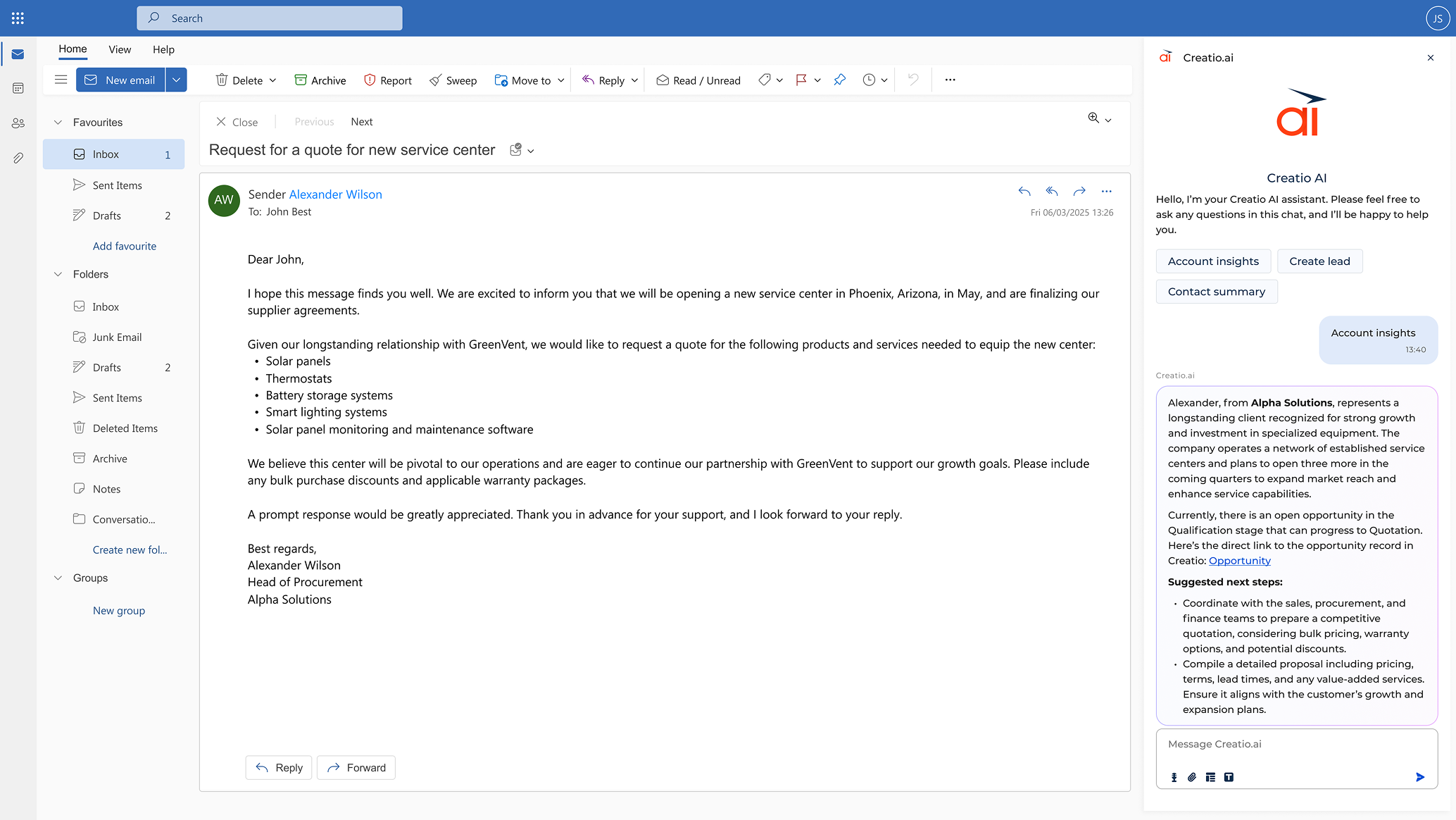
Built-in Agentic Capabilities at Creatio CRM
Workflow Automation
The built-in workflow automation capabilities allow omnichannel CRMs to streamline repetitive and time-consuming tasks like routing inquiries, triggering follow-ups, and managing leads across channels. Automation reduces manual effort, ensures timely responses, and helps business teams handle high interaction volumes without sacrificing consistency or quality.
Automated reminders and next-best-action suggestions also help ensure that no lead or sales opportunity is overlooked, supporting smoother progression through the sales pipeline and sustained customer engagement.
Integration with Third-Party Systems
Effective omnichannel CRM platforms integrate with core business systems such as Enterprise Resource Planning (ERP) systems, marketing automation tools, e-commerce platforms, customer support software and more. These integrations ensure seamless process flows across the organization, supporting complete alignment between the business units.
Advanced Analytics and Reporting
Through the real-time dashboards, customizable reports and analytics, omnichannel CRM provide comprehensive insights into customer engagement, channel performance, and the overall effectiveness of campaign strategies. These insights help businesses understand how customers interact across touchpoints and optimize strategies to improve efficiency and experience.
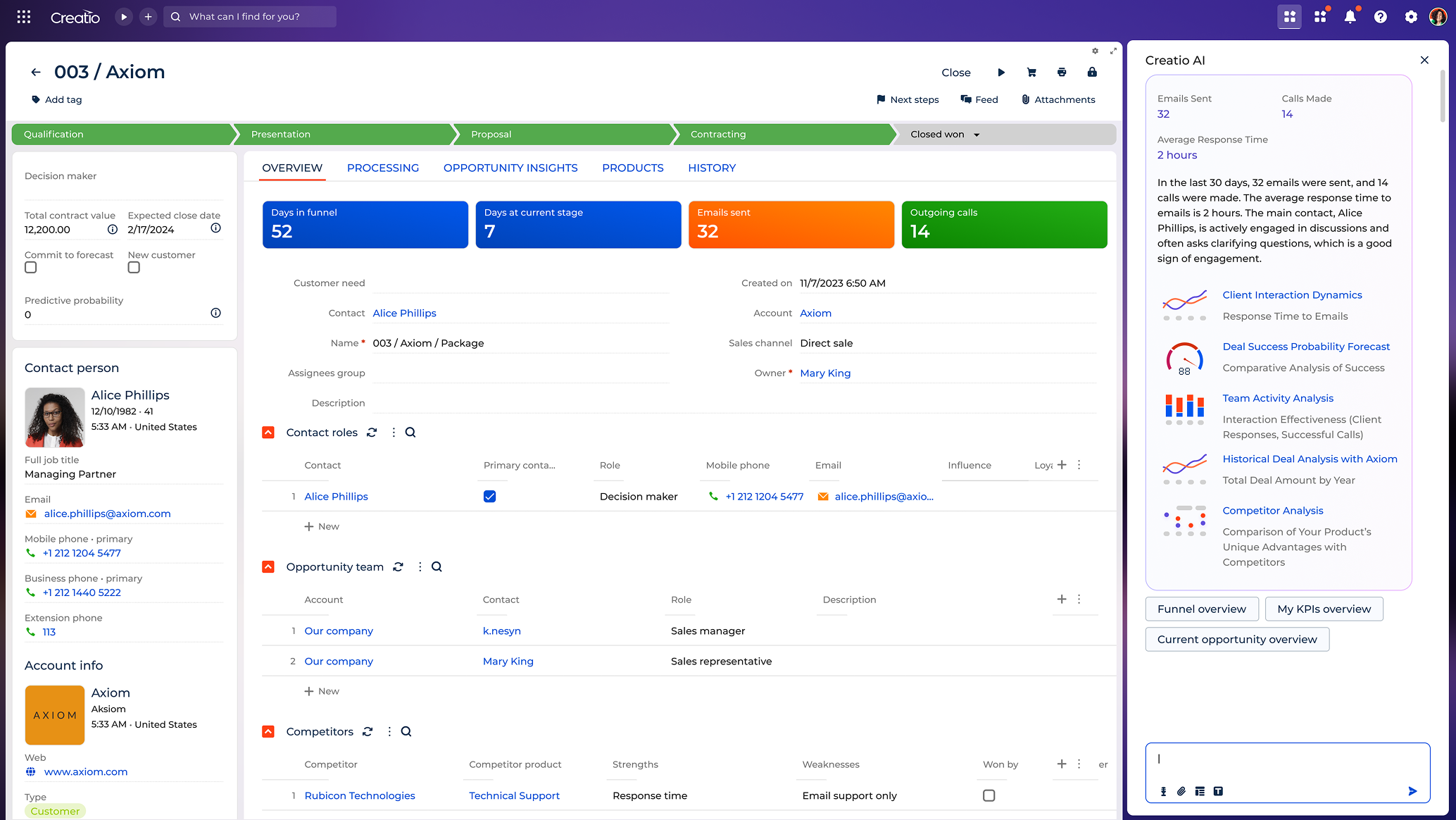
AI-enhanced Analytics by Creatio CRM
Benefits of Omnichannel CRM
Implementing an omnichannel CRM system offers numerous benefits that can significantly enhance customer relationships and business performance:

1. Improved customer experience (CX)
Omnichannel CRM helps organizations deliver a seamless and consistent experience across all communication channels.
Customers can interact with a business on their preferred platform without losing context or having to repeat the same information multiple times when they switch between channels. This fluid experience increases customer satisfaction and loyalty, as interactions feel personalized and responsive to their needs.
2. Personalized customer engagement
Omnichannel CRM enables businesses to tailor interactions based on a customer’s history and preferences. By leveraging data collected from various channels, companies can offer targeted recommendations, personalized offers, and relevant content.
For example, if a customer frequently engages with a brand via social media and shows interest in certain products, the CRM can trigger personalized promotions or content through the customer’s preferred channel. This tailored approach not only increases the likelihood of conversion but also deepens customer satisfaction by making each interaction more relevant.
3. Streamlined communication
By integrating all interactions into a single platform, omnichannel CRM ensures that customer communication across different channels is coordinated and consistent. This omnichannel approach prevents miscommunication, reduces response times, and ensures that all team members are on the same page.
For customer service agents and sales representatives, this streamlined communication leads to greater efficiency and effectiveness. With all the necessary information at their fingertips, agents can handle more inquiries in less time, and sales reps can engage in more meaningful and targeted conversations with prospects.
4. Better customer understanding
By consolidating data from various touchpoints, omnichannel CRM gives businesses a 360-degree view of their customers. This shared perspective enables teams to anticipate customer needs, address issues proactively, and provide a unified experience that strengthens customer relationships.
CRM also provides insights into customer behavior, preferences, and trends, enabling more personalized and effective marketing and service strategies.
5. Higher conversion rates and sales
When a customer interacts with a brand through multiple touchpoints, an omnichannel CRM ensures that all these interactions are connected. This allows businesses to guide customers more smoothly from awareness to consideration, and purchase.
Because the CRM captures and integrates data from all channels, it can identify where customers are in their buying journey and deliver the most relevant messages or offers at the right time. This way it helps companies increase the relevance of their marketing and sales efforts, leading to higher click-through rates and conversion.
6. Stronger customer loyalty and retention
By delivering consistent, personalized experiences, businesses can build stronger relationships with their customers. This approach not only fosters a sense of trust and loyalty but also enhances customer engagement by making each interaction more relevant and meaningful.
As customers feel recognized and valued, they are more likely to remain loyal to the brand, provide positive feedback, and become advocates. Strengthening these relationships ultimately leads to increased customer retention and higher lifetime value.
Omnichannel CRM also helps identify at-risk customers by analyzing patterns and signals across various touchpoints. This allows businesses to detect early signs of potential churn, such as declining engagement or dissatisfaction, and implement proactive measures to address issues before they escalate.
7. Data-driven decision making
Businesses can utilize actionable insights provided by CRM to refine their strategies, optimize resource allocation, and make informed decisions that help them achieve better outcomes.
For instance, CRM insights into channel performance enable businesses to determine whether to increase investment in a successful communication channel or discontinue the one channel that isn’t delivering results. This data-driven approach ensures that marketing and sales efforts are focused on the most effective channels, maximizing return on investment and enhancing overall business performance.
Omnichannel CRM vs. Multichannel CRM:
The key difference between omnichannel and multichannel CRM lies in how each system integrates and manages client interactions:

- Multichannel CRM focuses on supporting multiple communication channels, such as email, phone, social media, or chat, but typically manages them independently. This means that each channel operates in isolation, which can fragment customer data and require customers to repeat information when switching between channels.
- Omnichannel CRM focuses on delivering one connected customer experience across multiple communication channels. All channels are integrated into a single system with unified and up-to-date data, allowing interactions to continue seamlessly as customers move from one channel to another.
Below is a comparison of the core characteristics that differentiate omnichannel CRM from multichannel CRM systems:
Characteristics | Omnichannel CRM | Multichannel CRM |
| Channel integration | One connected experience across all channels | Multiple channels managed separately |
| Data management | Centralized in a single source of view | Stored separately by channel |
| Customer experience | Consistent across all channels | Can be fragmented across the channels |
| Customer view | Unified, 360-degree customer profile | Partial, channel-specific views |
| Scalability | Designed to support engagement at scale | Can be harder to manage as channels grow |
As shown above, multichannel CRM supports presence across multiple sources individually, while omnichannel CRM connects those channels into a single, continuous experience. This makes omnichannel CRM more effective for businesses managing complex and high-volume customer engagements.
How to Choose the Best Omnichannel CRM Software for Your Business
The right omnichannel CRM should support connected customer experiences across channels, teams, and workflows, while aligning with your business goals and operational needs.
When evaluating omnichannel CRM software, focus on the following criteria::
- Unified conversation history across channels: Ensure your CRM connects all the data about customers and interactions, as it allows you to keep the conversation context across email, chat, social, calls, and in-person touchpoints.
- Flexible channel expansion: Your omnichannel CRM platform should allow you to add or scale channels — such as WhatsApp, social messaging, live chat, or voice —without redesigning workflows or data models.
- Support for cross-team and bot-to-human handoffs: Choose CRM systems with built-in capabilities that ensure smooth handoffs between automated systems and human agents, and across all your business teams.
- Routing and SLA management: Omnichannel CRM should provide intelligent routing, prioritization, and service-level policies to effectively manage response times and workloads across channels.
- Contact center and service integration: If service is part of your omnichannel strategy, ensure the CRM can integrate with or support contact center operations within the same customer context.
- Governance and control: Enterprise-grade omnichannel CRM should include permissions, audit trails, and controls for automation and AI usage to ensure compliance and consistency.
These omnichannel-specific capabilities help ensure your CRM platform supports connected engagement today and can scale with future channels as you need it.
Unify Data, Workflows, and Engagement with Creatio CRM
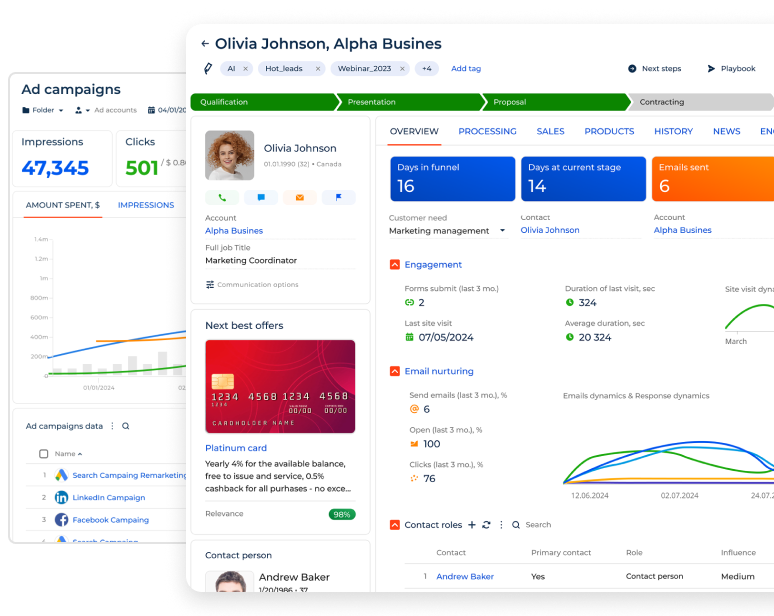
Creatio CRM is a unified platform to manage all customer and operational workflows with no-code and AI at its core. The platform connects sales, marketing, and service teams around a shared customer view, enabling consistent and coordinated interactions at any pipeline stage, across every channel.
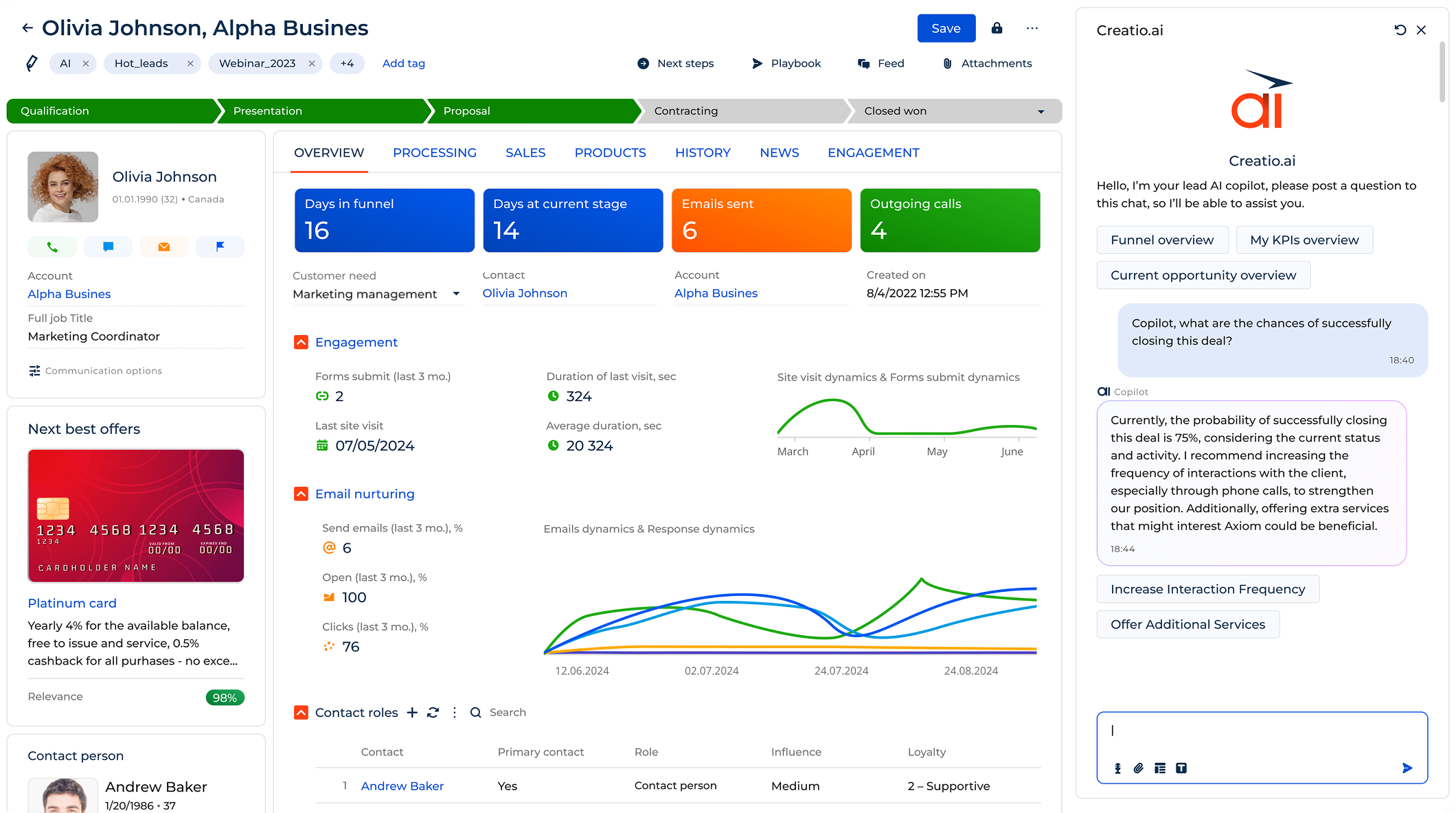
Built on a flexible no-code platform, Creatio CRM allows organizations to design, automate, and adapt customer-facing processes without heavy development effort. Its composable architecture supports seamless integration with enterprise systems, while embedded AI capabilities help teams automate routine tasks, access real-time insights, and make informed decisions across the customer journey. This unified approach enables consistent and personalized experiences, whether customers engage via email, social media, phone, chat, or in person. With over 700 connectors and add-ons available through Creatio Marketplace, this CRM platform ensures seamless data flow across third-party tools and systems.
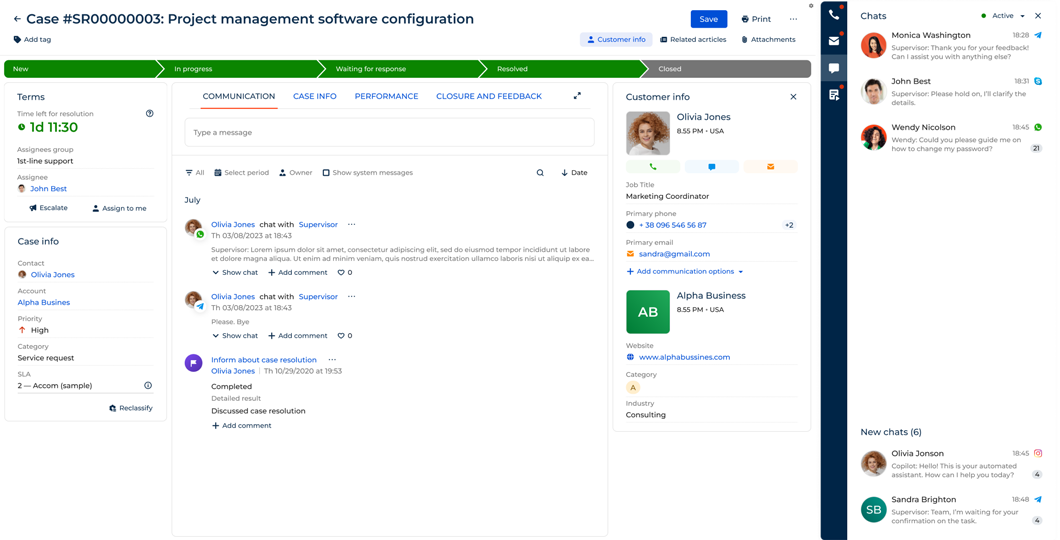
Each product from Creatio’s CRM suite — Creatio Sales, Creatio Marketing and Creatio Service — is enhanced by agentic AI capabilities that allow teams to create autonomous agents tailored to their specific needs. These agents can be configured by business users to handle tasks such as routing and prioritizing omnichannel interactions, recommending next-best actions, generating contextual responses, and supporting employees during live customer engagements.
By operating with shared context across channels, Creatio’s role-specific AI agents help teams manage omnichannel engagement more efficiently, maintain consistency, and scale personalized interactions with ease.
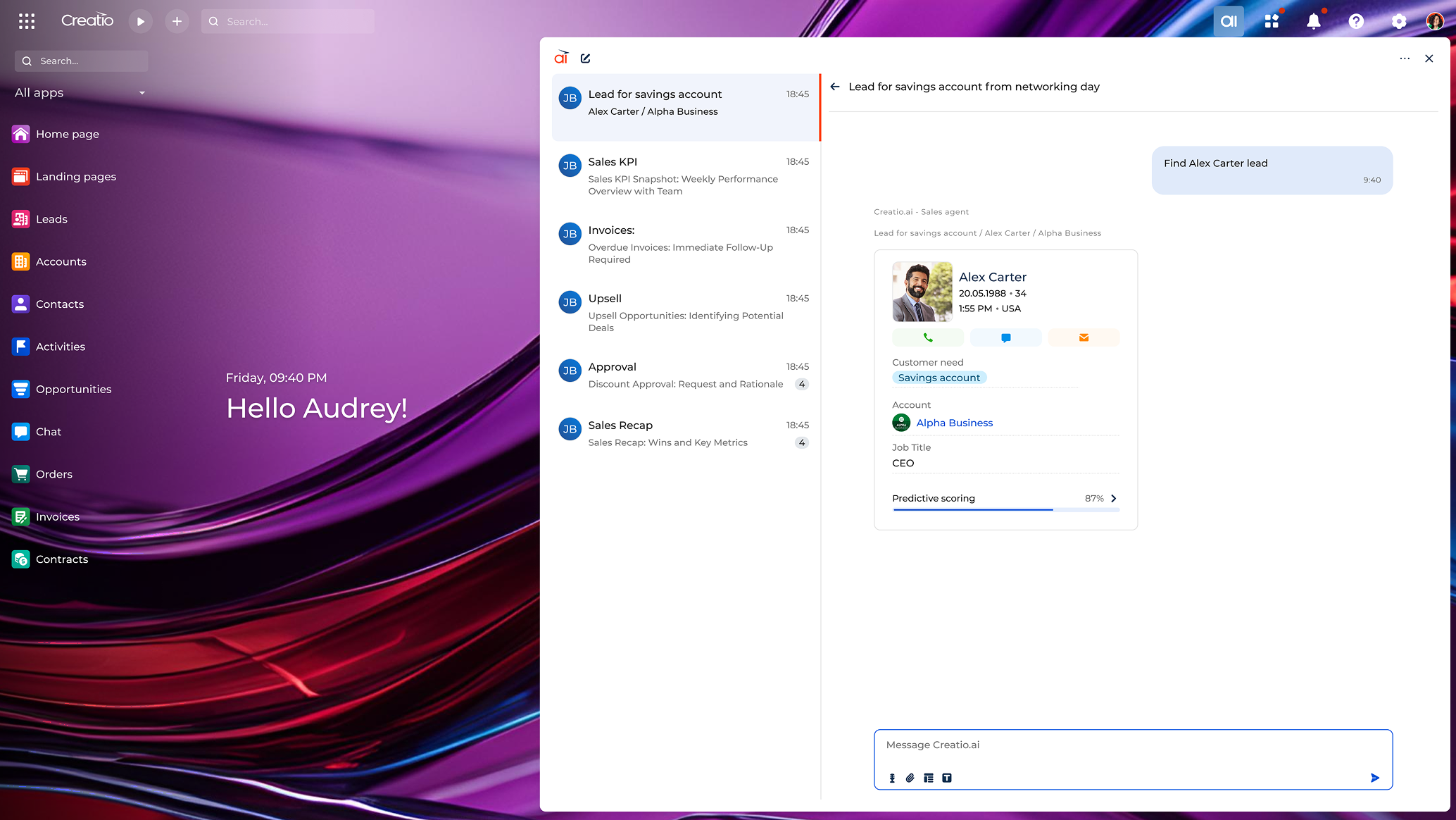
Creatio’s composable CRM applications include:
- Customer 360 – a core CRM application that unifies customer data from sales, marketing, and service into a single, shared customer profile, enabling consistent omnichannel engagement across all touchpoints.
- Unified Service Center – consolidates all service interactions—across digital and assisted channels—into a single workspace for consistent and efficient omnichannel service delivery.
- Case Management – manages customer inquiries and service cases across multiple channels within a unified service environment, maintaining shared context and interaction history.
- Campaign Management – orchestrates multi-channel marketing campaigns from a single system, ensuring coordinated messaging and consistent engagement across channels.
- Lead and Opportunity Management – enables omnichannel lead capture, qualification, and opportunity tracking, allowing sales teams to engage prospects with full visibility into prior marketing and service interactions.
- Email Marketing – supports personalized, data-driven email engagement as part of coordinated omnichannel campaigns and customer journeys.
- Productivity – supports coordinated work across channels by managing tasks, activities, and interactions in one platform, helping teams maintain continuity as customer conversations move between channels.
- Knowledge Base – centralizes internal and customer-facing knowledge to ensure consistent information is used across sales, marketing, and service interactions, regardless of channel.
- Order and Contract Management – connects customer engagement with downstream commercial processes, ensuring continuity between sales interactions, contracts, and order execution.
- Event Management – connects offline and online event interactions with the broader customer journey, ensuring event-based engagement is part of a unified omnichannel experience.
- Digital Ads – enables management and evaluation of digital advertising campaigns that integrate with other engagement channels and customer data.
Creatio is a great solution for medium to large organizations seeking flexible and efficient omnichannel CRM software powered by no-code and agentic AI capabilities. The company is recognized as a Visionary and Leader by independent industry analysts such as Gartner and Forrester, which again underlines its quality and performance.
Summary
Omnichannel CRM has already become a go-to solution for managing and enhancing customer interactions across multiple channels. By unifying customer data, conversation history, and workflows, it enables teams to maintain context, reduce friction, and deliver consistent customer experiences at scale.
Creatio provides a unified omnichannel CRM platform powered by no-code and agentic AI capabilities. It connects sales, marketing, and service teams around a shared customer view, enabling flexible automation, seamless integration with enterprise systems, and efficient omnichannel engagement that supports long-term brand success.
