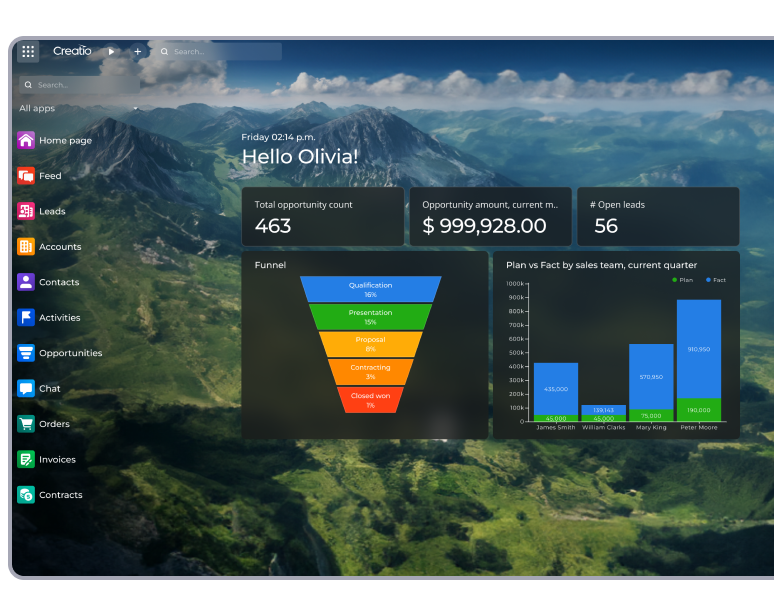
Ultimately, most business decisions relate to one measure: revenue. As sales plays a central role in generating that revenue, there is little tolerance for gaps in information, guesswork, or inefficient processes. Sales teams therefore require structure, reliable visibility, and a consistent way to manage the interactions that influences each deal.
As selling becomes faster and increasingly personalised, sales representatives rely on systems that consolidate customer data, streamline workflows, and automate routine tasks. A sales CRM provides this foundation, offering a shared platform for managing the pipeline from initial contact to deal completion, ensuring opportunities progress in a structured and transparent way.
This guide explains what a sales CRM is, how it supports sales performance, and the key factors to consider when selecting a suitable platform. It also provides an overview of several leading sales CRM solutions, helping organisations identify the options that best aligns with their operational needs without unnecessary complexity.
Core findings:
- A sales CRM is a system designed to help sales teams manage customer relationships, monitor opportunities, and maintain consistent sales processes throughout the entire sales cycle.
- The principal benefits of CRM for sales include clearer pipeline visibility, reduced manual work through automation, improved decision-making, and more reliable revenue forecasting.
- Core CRM functionality for sales centres on consolidating customer data and simplifying operational processes. Typical capabilities include contact and lead management, pipeline management, workflow automation, omnichannel communication, reporting tools, and integrated AI features.
- Leading sales CRM platforms include Creatio Sales, Microsoft Dynamics 365, Salesforce CRM, HubSpot, and Zoho CRM.
What is CRM in Sales?
In a sales context, CRM (Customer Relationship Management) refers to the software designed to manage interactions with both existing and prospective customers. It brings together sales data, tracks pipeline activity, supports the planning of next steps, and helps streamline day-to-day tasks, improving sales efficiency and supporting deal progression. A well-implemented sales CRM is more than simply another business tool; it functions as a central operational system that enables teams to nurture leads, manage opportunities, and maintain consistent engagement throughout the sales process.
Sales-focused customer relationship management software typically supports processes such as:
- Organising complex lead and customer data within a single system
- Automating outreach, follow-ups, and handovers between teams
- Identifying high-potential opportunities and recommending next steps in real time
- Maintaining clear pipeline stages to monitor deal progress across regions and teams
- Streamlining approval processes for pricing, proposals, and contract reviews
- Supporting more reliable forecasting through AI-assisted insights and trend analysis
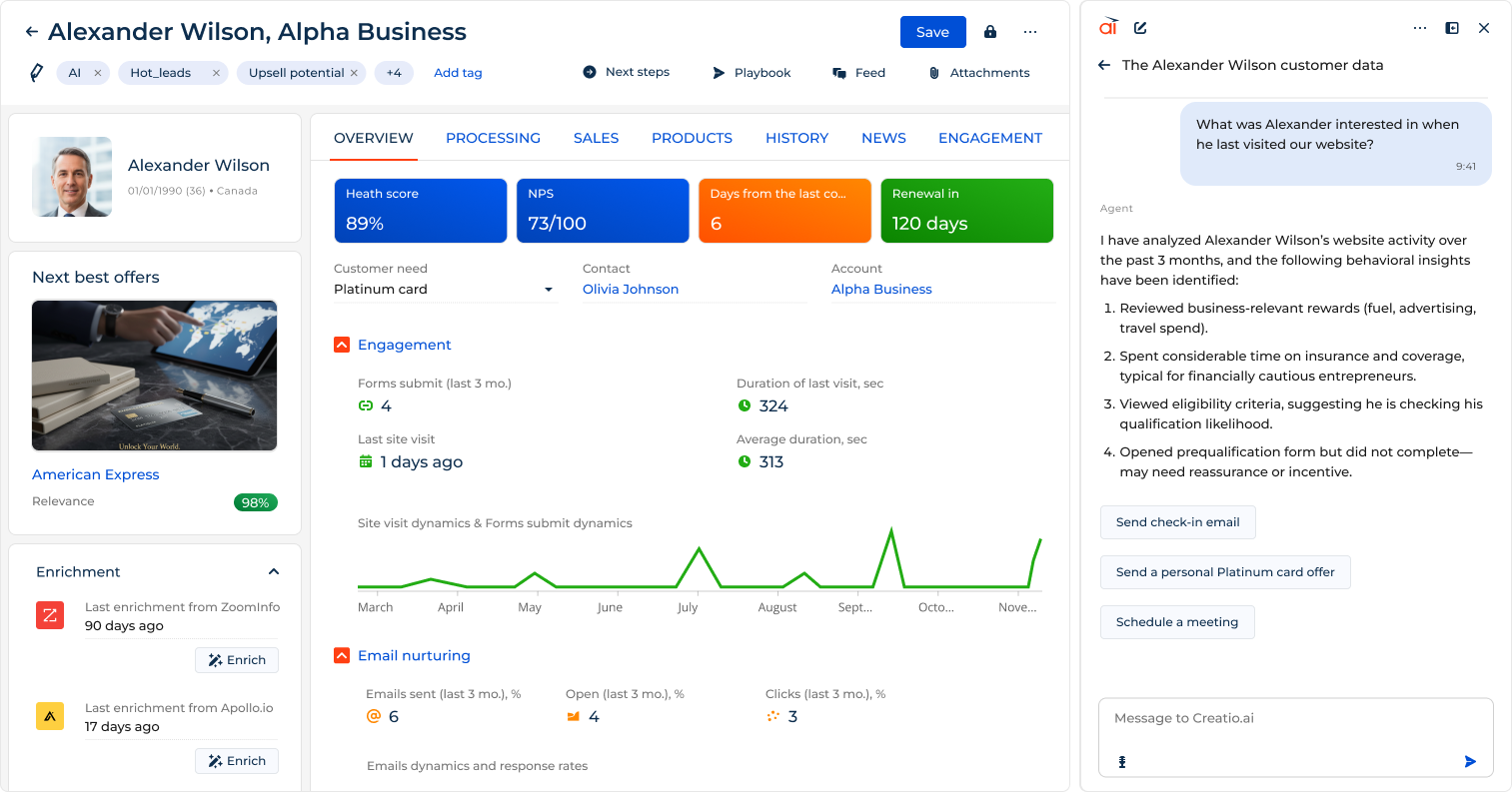
Example of customer relationship software for sales
Core features of sales CRM software
To support consistent sales performance, CRM systems should combine essential sales functionality, workflow automation, collaboration features, and centralised customer data, to enabling reliable execution across the entire sales pipeline.
- Customer 360. A unified customer view of every lead, contact, and account, bringing together interaction history, communications, and key account details. This allows sales teams to assess opportunity status quickly, prepare for client discussions, and maintain clear information sharing across departments.
- Lead and opportunity management. Organises leads, standardises qualification, and tracks opportunities throughout the sales cycle. This enables sales representatives to prioritise the most relevant opportunities, while giving sales leadership a consistent view of pipeline activity.
- Order and contract management. Supports the management of quotations, pricing information, proposals, and contractual stages within a single system. Streamlines document updates, approval processes, and coordination among stakeholders during negotiations.
- Pipeline visibility and management. Provides clear oversight of each opportunity’s stage, status, and progress. This enables teams to identify potential bottlenecks, focus on active opportunities, and maintain consistent sales processes across regions.
- Sales forecasting. Uses pipeline data and historical performance to estimate future revenue. AI-powered forecasting tools can highlight potential risks and identify early indicators, supporting more informed planning and decision-making.
- Activity and task management. Records calls, emails, and meetings while scheduling follow-up actions directly within the CRM. Maintains consistent engagement and provides clear visibility of the tasks requiring attention at each stage of the sales process.
- Sales workflow automation. Automates routine steps such as lead allocation, reminders, approvals, and record updates to reduce administrative effort and help ensure sales processes run in a structured and consistent manner.
- Reporting and analytics. Dashboards and reporting tools consolidate performance metrics, pipeline insights, and team activity in a single view, supporting more informed and data-driven decision-making.
- AI and agentic tools for sales teams. AI-driven capabilities provide guidance on prioritisation, generate insights, offer recommendations, and enrich data records, helping sales teams manage day-to-day activity.
- Collaboration tools. Shared notes, files, and communication threads that allow sales, marketing, operations, and service teams to remain aligned on customer interactions and ongoing opportunities.
- Integrations and mobile access. Connectivity with marketing systems, ERP systems, CPQ solutions, support tools, and email services, alongside mobile access for teams working remotely or in the field.
- Customisation and no-code flexibility. Enables business teams to configure sales processes, fields, and workflow automations without the need for complex development work.
Expanding sales opportunities with AI-driven CRM
AI is becoming an integral capability within modern CRM platforms, and sales teams are increasingly adopting it to improve efficiency and support more consistent execution. According to Creatio’s global survey, nearly 46% of business leaders are currently exploring or implementing AI within CRM processes.
In sales environments, AI tools and digital agents introduce new levels of automation, intelligence, and personalisation. By reducing routine administrative work, these capabilities allow teams to devote greater attention to customer engagement and opportunity development. The following points outline the principal ways in which AI supports modern sales operations:
- Automation. Captures information from calls and emails, schedules follow-ups, generates proposals, and manages routine administrative tasks.
- Predictive analytics. Analyses patterns to support forecasting, highlight high-potential opportunities, and identify early indicators of changing customer needs.
- Intelligent assistance. Offers context-aware recommendations on next steps, suggested discussion points, and tailored content to help sales representatives approach conversations more effectively.
- Data-driven insights. Delivers dashboards and analytical views that support informed decision-making, help teams prioritise workloads, and manage effective resource allocation.
- Enhanced personalisation. Supports more tailored communication and engagement based on customer behaviour, preferences, and historical interactions.

Example of forecasting quota growth with Creatio.ai
Core advantages of sales CRM
CRM systems provide several advantages for sales teams. The following benefits are among the most important:
1. All data in one place
A sales CRM consolidates every interaction, document, and customer record within a single system, secure system. For teams managing longer sales cycles involving multiple stakeholders, this eliminates information gaps and ensures that account executives, SDRs, customer success teams, and leadership work from the same shared view of each opportunity.
2. More informed decision-making
A sales CRM provides sales teams with clearer visibility of where attention should be focused, for example by identifying promising accounts, highlighting cross-selling opportunities, and signalling which deals require immediate attention. Leaders benefit from the same level of visibility, gaining a clearer understanding of pipeline stages, opportunity progress, performance patterns, and sales forecasts that informed planning and resource allocation.
3. Increased revenue and retention
A structured CRM supports consistent engagement throughout longer and more complex sales cycles by organising outreach activity, follow-ups, and key customer information, ensuring that interactions remain timely and relevant. It also strengthens post-sale relationships by providing visibility of renewal schedules and potential expansion opportunities, helping organisations maintain more stable, long-term revenue.
4. Improved sales productivity
Sales teams operate more efficiently when administrative tasks and sales processes are organised, simplified, and automated. A sales CRM provides a central place to manage activities, monitor progress, and maintain account information, allowing teams to focus on higher-value work. This is particularly valuable for larger or distributed teams, as it supports clearer structure and more consistent workflows.
According to Nucleus Research, organisations that implemented Creatio CRM reported a 61% reduction in lead response time and a 17% reduction in manual data entry for sales teams.
5. Enhanced collaboration
The success of most organisation depends on coordinated efforts across sales, marketing, operations, finance, and customer success teams. A modern CRM provides shared visibility into accounts and opportunities, making collaboration more straightforward and reducing communication gaps. With a single source of reliable information, teams can align on priorities, remain informed about account changes, and manage complex opportunities with greater consistency.
Five leading sales CRM to consider in 2026
Sales CRM Vendor | Well suited to | Pricing | Rating(out of 5) |
| Creatio Sales | Medium to large organisations seeking a highly customisable sales CRM with advanced sales automation and integrated AI capabilities. | Starts from £30 per user/month | G2: 4.5 Capterra: 4.7 |
| Zoho CRM | Growing sales teams requiring a flexible CRM platform with embedded AI functionality and a wide range of integration opportunities. | Starts from £15 per user/month | G2: 4.1 Capterra: 4.3 |
| Salesforce Sales Cloud | Large and enterprise sales organisations that require a configurable sales platform supported by built-in analytics and AI tools. | Starts from £20 per user/month | G2: 4.4 Capterra: 4.4 |
| HubSpot Sales Hub | Small to medium-sized teams and growing organisations seeking a standard sales CRM with straightforward, assistive AI capabilities. | Starts from £74 per user/month | G2: 4.4 Capterra: 4.5 |
| Microsoft Dynamics 365 Sales | Medium to large organisations that require an enterprise-grade CRM with strong integration across the Microsoft ecosystem. | Starts from £49 per user/month | G2: 4.4 Capterra: 3.8 |
1. Creatio Sales
Creatio Sales is a modern sales CRM platform designed to support teams in managing and automating the full sales cycle, with AI and no-code capabilities at its core. The platform combines AI-enhanced sales functionality with composable process design, enabling organisations to adapt and scale sales workflows while improving execution and team productivity.
Creatio Sales can be deployed as a standalone solution or as part of a unified CRM platform alongside Creatio Marketing and Creatio Service. This approach provides organisations with the flexibility to align sales activity with marketing and service operations, while keeping customer data, workflows, and execution consistently connected across teams.
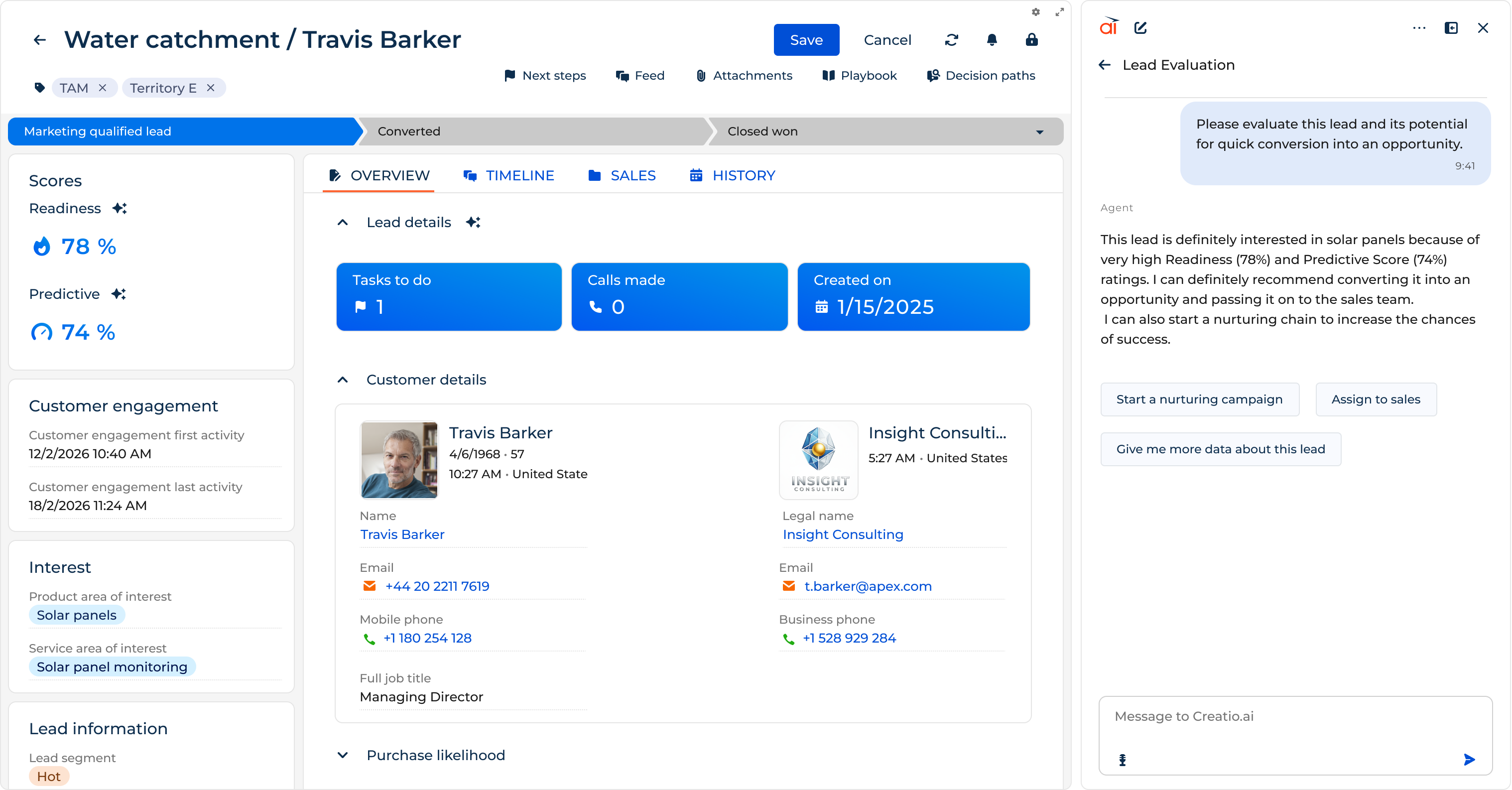
With a comprehensive Customer 360 view and advanced sales automation, Creatio Sales enables teams to identify high-value accounts, prioritise opportunities, and progress deals more efficiently. AI-powered forecasting and analytics provide greater visibility into pipeline health, performance trends, and customer behaviour, supporting more informed sales planning and execution. Agentic AI capabilities are integrated directly into everyday tools such as Microsoft Outlook and Teams, allowing professionals to access relevant insights without switching between applications.
Creatio’s built-in AI sales agents assist teams throughout the sales cycle — from initial outreach to deal completion — helping to reduce administrative workload and ensure each customer interaction is timely and relevant. Role-based agents can be configured or extended using natural language, enabling organisations to adapt them to specific sales processes and operational requirements.
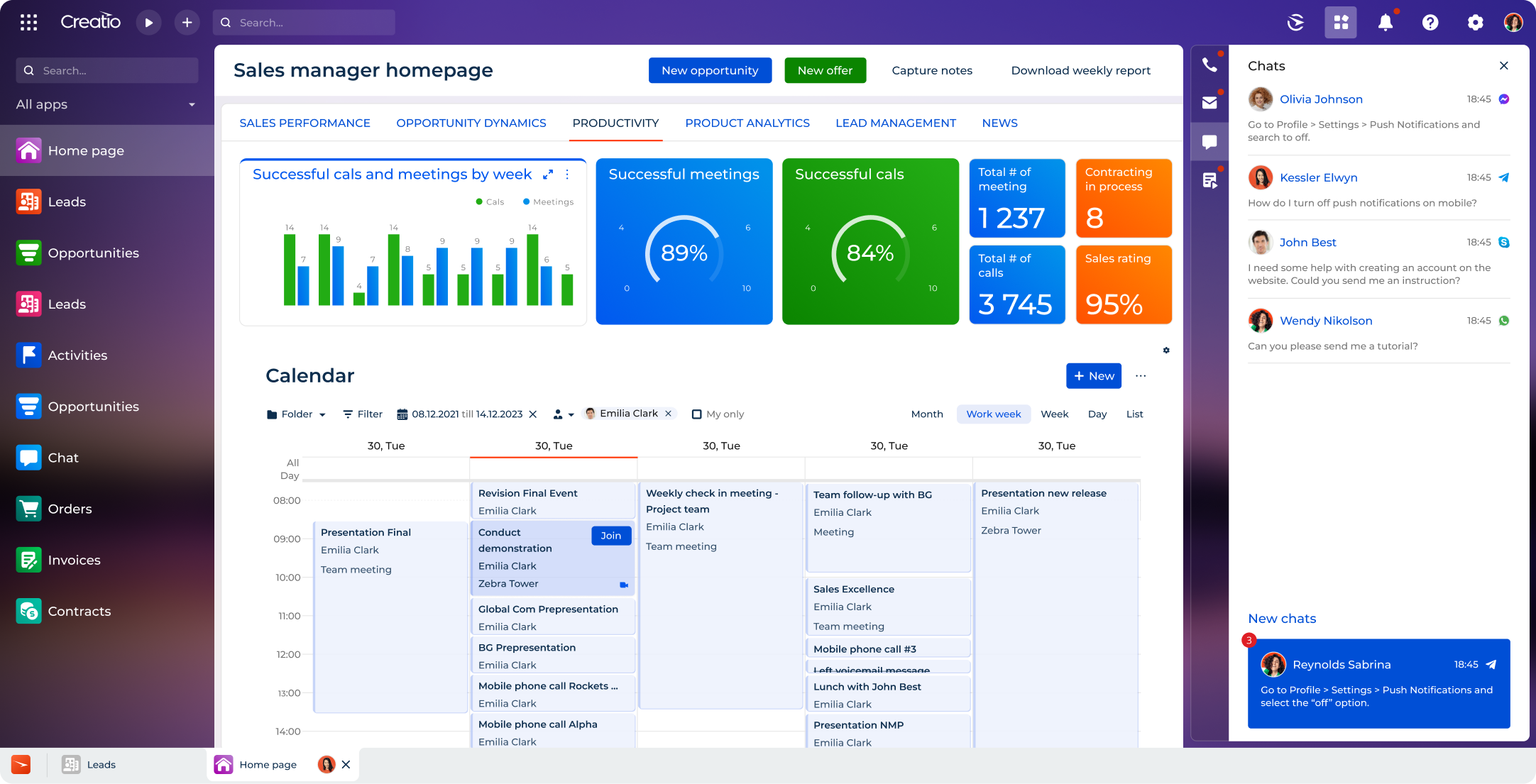
Creatio’s capabilities have been recognized by both industry analysts and customers. Notably, Creatio Sales was positioned as a Visionary in the Gartner® Magic Quadrant™ for Sales Force Automation Platforms, reflecting acknowledgment of its AI-native, no-code approach as an alternative to more traditional CRM systems.
Core features:
- Pre-built applications for sales, including Customer 360, lead and opportunity management, order and contract management, sales productivity tools, guided selling, and sales forecasting
- Built-in and customisable AI sales agents supporting activities such as account research, quotation preparation, forecasting, territory planning, and meeting preparation
- A modern conversational workspace designed to support multitasking and improve sales team productivity
- AI-assisted no-code tools enabling sales teams to create, configure, and deploy workflows, applications, and agents without the need for development work
- Preconfigured solutions for more than 20 industries
- A mobile application designed to enhance productivity for field-based and remote sales teams
Advantages:
- Generative, predictive and agentic AI capabilities embedded within the core of the platform
- Seamless integration with Creatio Marketing and Creatio Service
- No-code customisation, enabling teams to tailor workflows without requiring IT support
- Flexible, composable pricing that allows organisations to pay only for the required capabilities
Limitations:
- Users who are unfamiliar with no-code platforms may experience a slight learning curve during the initial stages of adoption
Pricing:
Creatio offers a composable pricing model, allowing organisations to purchase only the products and capabilities required. Creatio Sales is available from £30 per user per month, while Marketing and Service solutions can be added as separate modules from £11 per user per month each. This structure enables organisations to assemble an agentic CRM platform that aligns with their operational requirements.
Creatio Sales
Accelerating the end-to-end sales cycle through AI and no-code automation
2. Zoho CRM
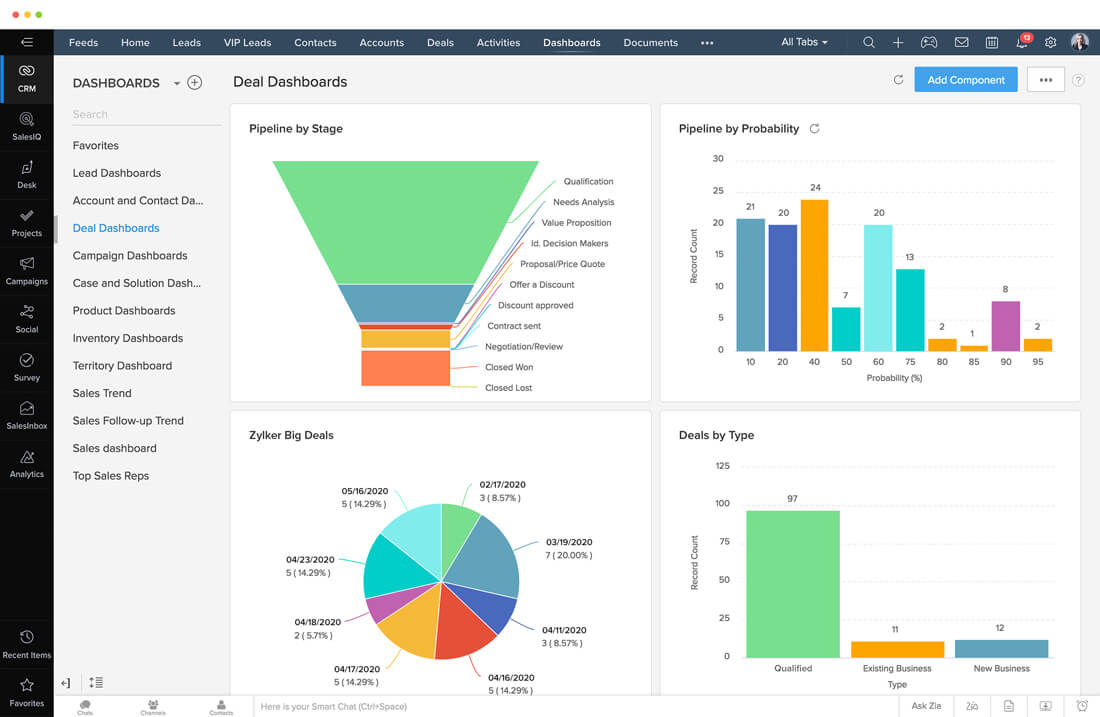
Zoho CRM is a sales-focused platform developed to help small to medium-sized businesses centralise customer information and manage sales activities. The platform combines core CRM functionality with sales automation, analytics, email marketing, and inventory-related tools within a single environment. AI-powered assistance is provided through Zoho’s digital assistant, Zia, which supports routine sales activities such as lead scoring, forecasting, and customer insight generation, rather than autonomous or agent-led execution. Zoho CRM is widely recognised for its accessibility and for offering a balanced combination of functionality and cost-effectiveness.
Core features:
- Zia AI assistant supporting lead scoring, anomaly detection, and sales forecasting
- AI-driven deal insights highlighting trends, potential risks, and performance changes
- Workflow automation for lead allocations, follow-up actions, and task assignment
- Sales forecasting tools based on historical performance and pipeline data
- Email and activity intelligence for monitoring engagement and response patterns
Advantages:
- Strong integration across Zoho’s wider suite of applications
- Built-in AI available across several pricing tiers
- Competitive pricing compared to enterprise-focused CRM platforms
Limitations:
- Customisation options may be less suitable for complex enterprise sales models
- Advanced analytics and automation features are restricted to higher-tier plans
- AI functionality is primarily assistive rather than fully agentic or autonomous
Pricing:
Zoho CRM is available in several editions, with pricing ranging from £15 to £49 per user per month, depending on the selected plan and billing model. Sales teams requiring more advanced functionality often opt for the Enterprise plan at £37 per user per month or the Ultimate plan at £45 per user per month, both of which include advanced automation, analytics, and AI-powered capabilities.
3. Salesforce Sales Cloud
Salesforce Sales Cloud is a CRM platform designed to support complex sales operations, large pipelines, and teams operating across multiple regions. It enables organisations to manage leads, contacts, accounts, and opportunities within a single configurable interface.
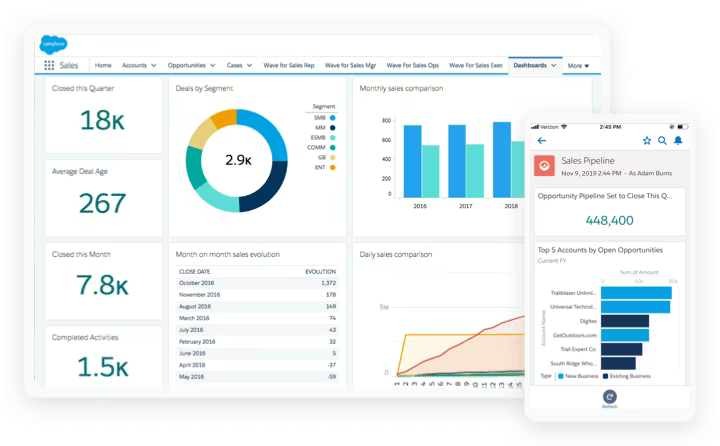
The platform includes tools for sales engagement, conversation intelligence, lead and opportunity management, productivity support, workflow automation, and access to a wide ecosystem of integrations. Advanced AI capabilities are available through higher-tier editions and additional modules, supporting analytics, forecasting, and sales insights.
Overall, the platform is particularly well suited to organisations that require extensive integration capabilities and the ability to scale sales operations across global teams.
Core features:
- Built-in AI capabilities for lead scoring, deal prioritisation, pipeline insights, and predictive forecasting
- Advanced pipeline and forecast management with configurable roll-up reporting
- Sales analytics and dashboards for monitoring performance and identifying trends
- Comprehensive workflow automation supported by Salesforce Flow
- Sales engagement and conversation intelligence tools designed to capture more profound insights from sales conversations
Advantages:
- Strong AI-driven analytics, forecasting, and sales insights
- Highly configurable platform capable of supporting complex and industry-specific sales processes
- Suitable for large, global, and multi-entity sales organisations
- A broad ecosystem of third-party integrations and partner solutions
Limitations:
- Implementation and long-term ownership costs can be higher than many other sales CRM platforms
- Advanced AI and automation capabilities are typically available only within higher-tier editions
- Onboarding and deeper customisation may require external consultancy or specialised expertise
- The platform’s complexity may lead to a steeper learning curve for some users
Pricing:
Salesforce Sales Cloud is offered in several editions, with pricing ranging from £19 to £411 per user per month. Sales teams most commonly adopt Professional at £130, Enterprise at £245, Unlimited at £260 or Agentforce 1 Sales at £411 editions, which provide access to AI capabilities and more advanced customisation options.
4. HubSpot Sales Hub
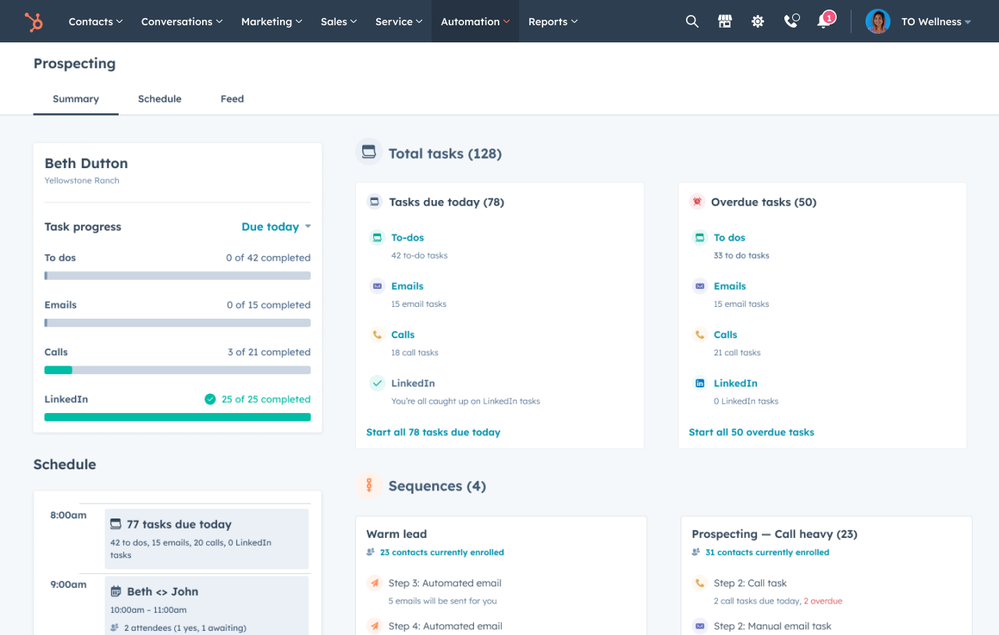
HubSpot Sales Hub is a CRM system designed to help teams manage deals, automate outreach, and coordinate sales workflows within HubSpot’s Smart CRM platform. It unifies prospecting, engagement, and deal management within a single interface, making it particularly effective for organisations already using HubSpot’s service or marketing tools.
The platform includes built-in AI capabilities that support daily sales activities, including content generation, performance insights, and workflow automation, while remaining focused on assisting users rather than operating fully autonomously. HubSpot Sales Hub combines an intuitive interface with strong integration across the HubSpot products, making the platform easy to implement and use across teams.
Core features:
- AI-powered meeting assistant for call recording, transcription, and conversation insights
- Breeze Prospecting Agent to assist with account research and prospect prioritisation
- Email insights and AI-assisted content to support outreach and follow-up communication
- Pipeline visualisation and deal tracking to support day-to-day sales management
- Sales analytics and dashboards for monitoring team performance
- Forecasting tools based on pipeline activity and historical data
Advantages:
- Strong integration with HubSpot’s marketing, service, and operations tools
- Easy adoption supported by an intuitive interface and guided workflows
- Centralises prospecting, engagement, and deal management within a single platform
- Facilitates collaboration across teams and organisational units
Limitations:
- AI capability is largely assistive rather than fully agentic or autonomous
- Advanced AI features, forecasting capabilities, and deeper customisation are available only in higher-tier plans
- Customisation options may be limited for complex or unconventional sales processes
- Professional and Enterprise plans require one-time onboarding fee of £1,120
Pricing:
HubSpot Sales Hub offers a free plan that includes basic CRM functionality, alongside paid tiers providing more advanced capabilities. For most sales teams, the Professional plan, priced at £75 per user per month, or the Enterprise plan at £112 per user per month will be the most appropriate options.
5. Microsoft Dynamics 365 Sales
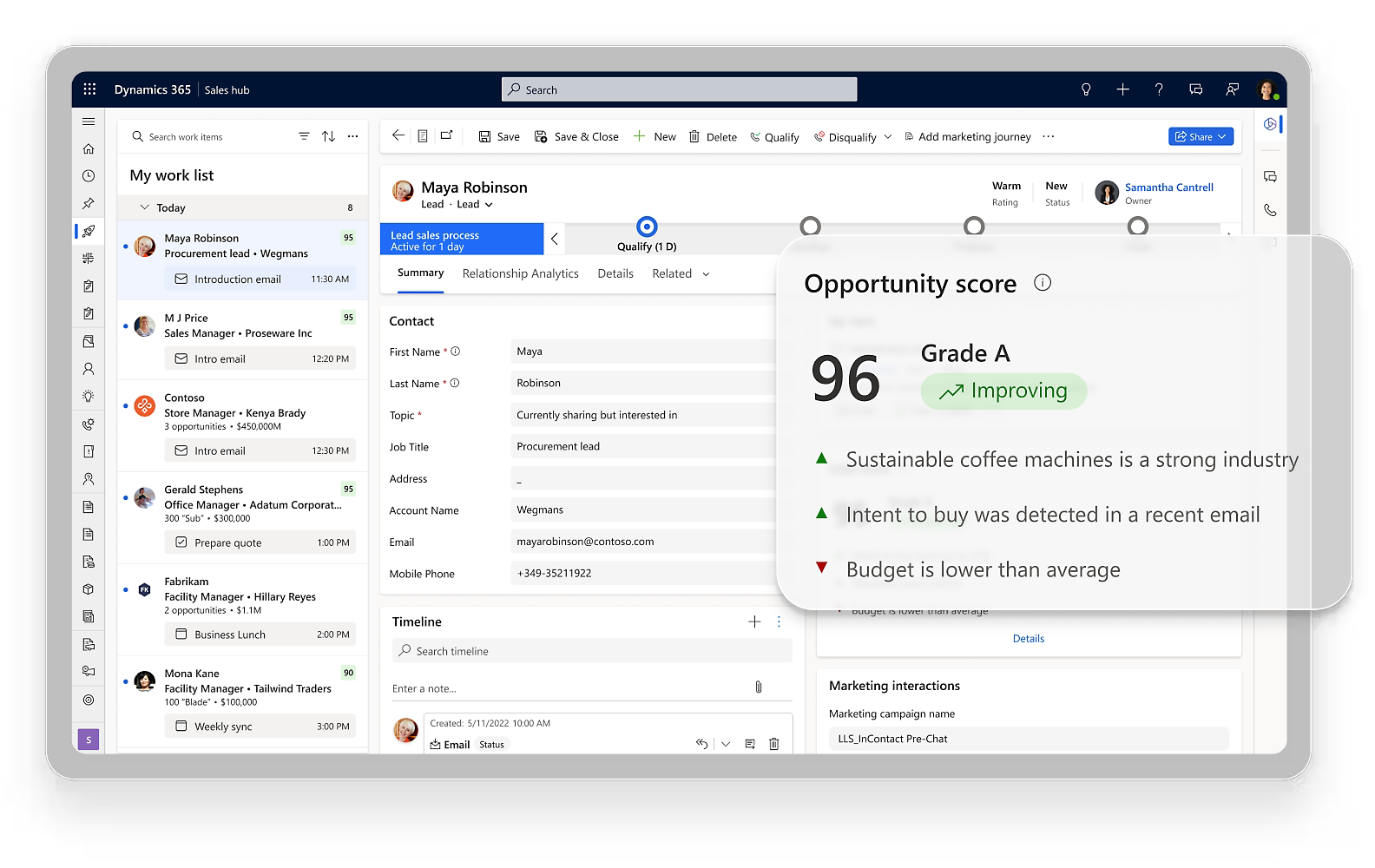
Microsoft Dynamics 365 Sales is designed to support complex sales processes, including extended deal cycles and large sales teams. The platform combines core CRM capabilities with data-driven insights powered by Microsoft Copilot, embedding AI directly into pipeline management, forecasting, and daily sales activities. This enables sales teams to prepare more effectively for customer interactions, take informed actions, and assess performance to continually refine engagement strategies.
The platform is particularly well suited for organisations already operating within the Microsoft products, as it extends sales workflows seamlessly across familiar tools such as Outlook, Teams, and Excel.
Core features:
- Autonomous lead research and qualification
- AI-based scoring models and prioritised work lists to support opportunity qualification
- Microsoft Copilot assistance for reviewing open sales tasks, new assignments, and pipeline updates
- AI-generated opportunity summaries and meeting preparation notes, including customer status, relevant news, and records of previous interactions
- Automated sales guidance highlighting potential gaps or failure points within the sales process
Advantages:
- Seamless integration with Microsoft 365, Teams, and Power Platform
- Strong AI-driven forecasting, analytics, and sales insights
- Well suited to large, distributed, or multi-regional sales teams
- Extensive customisation options through low-code and enterprise development tools
Limitations:
- Greater complexity compared to CRM systems designed for smaller businesses
- Successful adoption typically requires structured onboarding
- Advanced AI automations and analytics are available only within Enterprise and Premium editions
- Certain customisation and automation capabilities require familiarity with Power Platform
Pricing:
Microsoft Dynamics 365 Sales is offered in three editions: Professional plan at £49 per user per month, Enterprise plan at £78 per user per month, and Premium plan at £112 per user per month.
How sales CRM software is used in practice: examples from leading companies
Sales CRM software is widely used to support day-to-day sales activity, from early prospecting to deal completion and post-sale engagement. In practice, CRM systems help sales teams organise workflows, guide actions, and record outcomes at each stage of the sales cycle.
The following examples illustrate how organisations apply these capabilities in practice:
Prospecting and qualification
At the earliest stage of the sales cycle, sales CRM software helps teams identify suitable accounts more efficiently and tailor outreach with significantly less manual efforts. Common ways in which CRM platforms support sales teams include:
- Automatically scoring leads based on engagement, firmographic, and behaviour
- Using AI agents to support account research, identify key decision-makers, and enrich customer profiles
- Generating personalised email sequences for outreach, supported by accurate contact information sourced through email finder tools
- identifying promising accounts and recommending the most appropriate next actions
- Highlighting priority segments for targeted prospecting
Use case: Purplebricks achieves stronger lead performance with AI-driven CRM
Purplebricks enhanced its lead management and outbound prospecting by replacing legacy systems with Creatio’s agentic CRM platform. Within six months, the company recorded a 35% increase in lead volume and a 50% improvement in lead conversion rates, supported by intelligent automation and more responsive engagement.
By categorising and routing thousands of daily enquiries from platforms such as Rightmove and Zoopla, the sales teams gained real-time funnel visibility and were able to identify additional opportunities arising from single customer.
Lead and contact management
CRM software provides sales teams with structure, visibility, and consistency in the way leads are captured, managed, and developed into active opportunities. Typical use cases include:
- Monitoring every call, email, meeting, and interactions within a chronological timeline
- Automatically assigning leads to the appropriate representative based on region, expertise, or current workload
- Segmenting accounts by sector, company size, priority level, or stage in the buying process
- Using AI agents to monitor engagement within opportunities and notify representatives when activity declines
- Guiding opportunity progression through clearly defined stages and recommended next actions
Use case: Americar accelerates customer journey with No-code agentic CRM
Americar unified previously fragmented processes on Creatio’s agentic platform, enabling immediate lead capture, AI-driven prompts, and guided opportunity workflows. Sales managers are now able to respond within one to two minutes, supported by real-time stock and pricing data that ensures offers remain accurate. The result is quicker response times, fully aligned sales process, and a complete view of the customer journey.
Omnichannel communication
Sales CRM enables teams to manage conversations with prospective and existing customers across multiple channels while maintaining context and continuity. In practice, sales teams typically use it to:
- Manage email, calls, chat, web enquiries, and messaging from a single interface
- Maintain a complete record of interactions across both sales and service channels
- Use AI-enabled chatbots to handle routine enquiries and qualify inbound requests
- Automate standard sales communications, including follow-ups, proposals, and quotation delivery
- Schedule product demonstrations and meetings using built-in calendars and reminders
Use case: Astana Motors improves service delivery with a dedicated no-code platform
Astana Motors modernised CRM processes across the dealership network using Creatio’s no-code platform. A centralised omnichannel contact centre, supported by AI-powered chatbots and a unified customer interaction interface, now enables teams to manage customer communications consistently across channels. The organisations also streamlined digital document management, reducing contract approval time from two to three months to just two to three days. This has significantly improved the speed of service delivery and strengthened operational efficiency.
Sales pipeline management and forecasting
Sales CRM software helps teams maintain clear visibility of deal progress, anticipate potential risks at an early stage, and plan revenue with greater confidence. In practice, sales teams and managers use it to:
- Provide real-time visibility across deal stages, pipeline progress, and potential bottlenecks
- Assess opportunities based on momentum, engagement levels, and stage progression
- Apply predictive analytics to improve the accuracy of revenue forecasts
- Identify stalled or at-risk opportunities that may require intervention
- Produce regular pipeline summaries for both sales representatives and leadership teams
Use case: Howdens improves sales conversion with a no-code sales CRM platform
Howdens enhanced pipeline visibility and sales execution by implementing Creatio’s no-code sales CRM across its depot network. Within six months, the company increased its sales conversion rate from 32% to 38% (+18.75%) and captured more than 1,200 new qualified leads that had previously been difficult to monitor. Improved pipeline oversight of the sales pipeline also enabled teams to manage higher volumes of leads more effectively, particularly during peak periods, without losing potential opportunities.
Closing execution and sales outcomes
Sales CRM systems enable teams to bring deals to completion in a structured and consistent manner, while capturing the information needed to improve future execution. This typically involves managing the final stages of the sales process, standardising completion procedures, and turning closed deals into actionable performance insight. Common examples include:
- Managing contract workflows, approvals, and document routing in a structured process
- Monitoring completion tasks such as signatures, reviews, and stakeholder approvals
- Identifying opportunities for cross-selling and up-selling based on customer history and engagement
- Standardising documentation associated with deal completion to support consistent execution
- Capturing results and performance indicators to support coaching and process optimisation
Use case: BSN Sports strengthens proactive, data-led sales with all-in-one CRM
BSN Sports moved from a reactive, inbound-driven sales model to a more structured and proactive approach following the adoption of Creatio CRM. Customisable shared dashboards and improved pipeline visibility helped refine prioritisation, support targeted coaching, and encourage closer collaboration between teams. Over a five-year period, the organisation reported a 50–60% increase in the value of sales managed per representative, with further growth anticipated as digital capabilities continue to develop.
Creatio Sales
Accelerating end-to-end sales cycle with agentic AI and no-code
How to select CRM software for Sales
The most suitable CRM should reflect how sales teams operate today, while remaining flexible enough to support future growth in revenue operations. The following criteria can help guide the evaluations of sales CRM platforms before a purchasing decision is made.
Step 1: define sales objectives and processes
Begin by reviewing how the sales organisation currently operates and where improvements may be required. Identify any bottlenecks in areas such as prospecting, opportunity progression, forecasting, or handover between teams. Involving sales representatives and managers in this process can help surface daily challenges and clarify the capabilities the system must support.
Step 2: validate core sales functionality
A dedicated sales CRM should support the entire sales cycle without limitations. Priority should be given to platforms that feature lead and opportunity management, clear pipeline visibility, activity tracking, and support for quotation and contract processes, as these capabilities form the foundation of an effective sales operation.
Step 3: assess AI and sales automation capabilities
AI has become a core component of modern CRM systems, particularly for revenue-focused teams. When evaluating solutions, it is important to consider the extent of embedded AI functionality and the ways in which it supports more efficient processes, informed decision-making, and improved customer retention. For example, agentic CRM platforms such as Creatio Sales incorporate AI agents directly into sales workflows. These agents can automate activities including account research, quotation preparation, meeting briefing, forecasting, and territory management, allowing teams to manage essential business processes within a single system.
Step 4: ensure compatibility with the existing sales ecosystem
A CRM system should integrate smoothly with the organisation’s existing sales stack, including email and calendar tools, business phone systems, sales engagement platforms, CPQ or ERP systems, marketing platforms, and customer support applications. Strong integrations help prevent data silos within the CRM, reduce manual work, and maintain a consistent flow of information across sales managers and external teams.
Step 5: plan for scale, adoption, and long-term value
Once potential CRM vendors have been shortlisted, their long-term suitability should be considered beyond the available feature sets. Consider factors such as ease of use, onboarding and training requirements, no-code configuration capabilities, scalability across teams and regions, total cost of ownership, and the strength of the vendor’s partner and support ecosystem. Modern CRM platforms can translate these capabilities into measurable business value. For example, Nucleus Research found that organisations moving from Salesforce or Microsoft to Creatio CRM reported technology cost reductions of around 37% along with implementation timelines shortened by up to a 70%. Such results demonstrate the operational advantages of greater flexibility and faster time to value.
Summary
A CRM plays a fundamental role in supporting consistent execution across the entire sales cycle. By introducing structure to sales process and data, it provides teams with clear pipeline visibility, reduces manual effort, and allows sale representatives to focus on progressing opportunities and strengthening customer relationship that contribute to revenue growth.
Creatio Sales is designed for organisations seeking both automation and flexibility without unnecessary complexity. As a unified, no-code CRM supported by agentic AI, it enables sales teams to automate core activities, guide day-to-day execution, and manage the full sales lifecycle from prospecting to deal completion, while remaining adaptable to evolving sales models and growth needs.